
Translated material
Dreamer
"Medusa" tells the story of Kenzo Takada, a famous designer who was not afraid of bright colors and wild prints. He died of complications after Covid
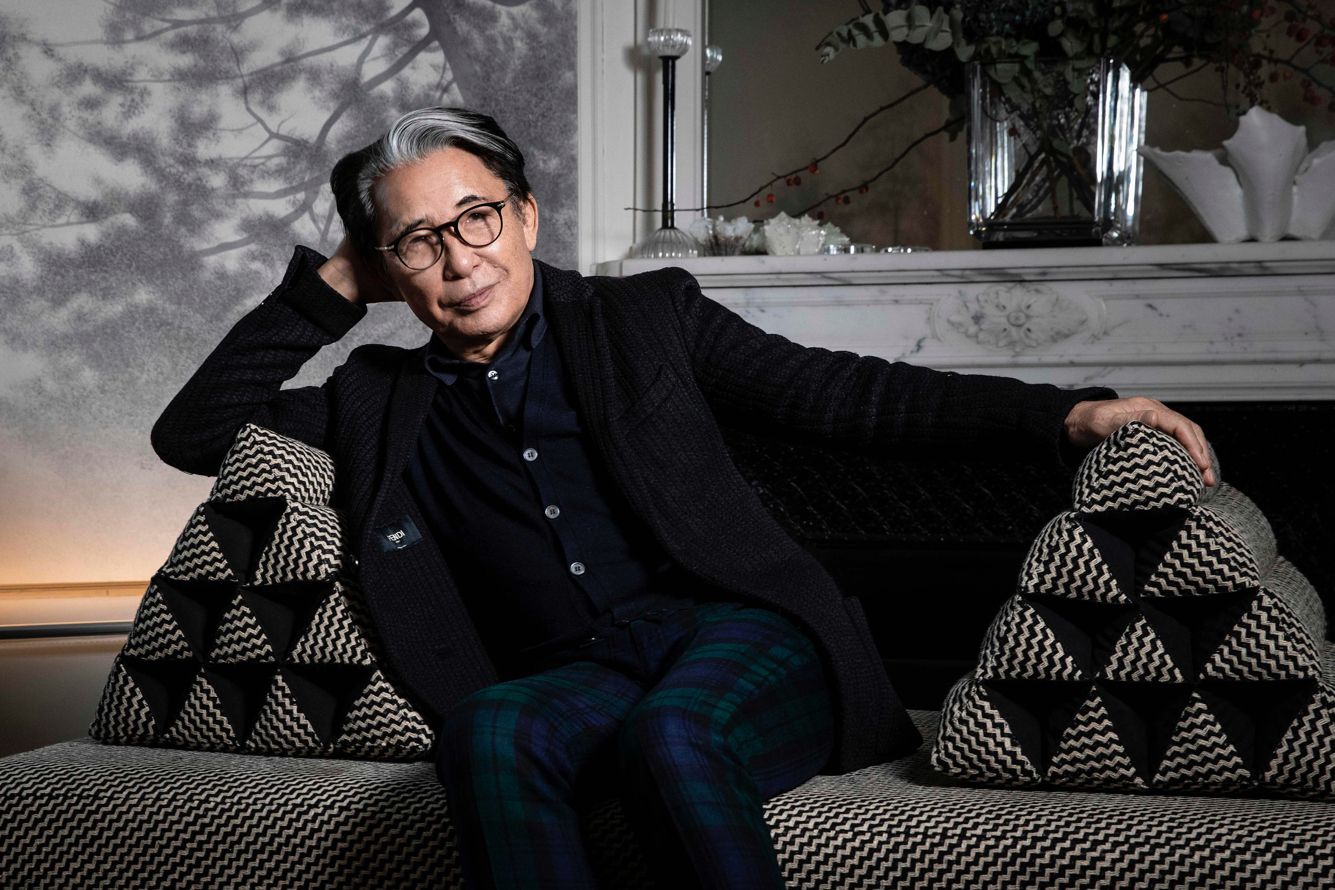
The Japanese fashion designer Kenzo Takada, the founder of the Kenzo fashion house, died on October 4 at the age of 81 from the complications caused by the Covid-19. In recent decades, after the sale of the Kenzo fashion house LVMH, there was almost no news about him, but his contribution to the history of world fashion is invaluable. Takada influenced not only the style of Yoji Yamamoto and Rei Kawakubo, but also the love of Europeans for bright and original design. At the request of Medusa, the former editor of the Russian publications Vogue, Interview and the author of the telegram channel "Good Morning, Karl!" Katya Fedorova recalls the story of Kenzo Takada.
Kenzo Takada was born near Osaka, in large - he was one of the seven children - the family of the owner of the guest house, where geisha and fabric traders often came to tea. As a child, Kenzo could look at their luxurious outfits and goods for hours, and having matured a little and reaching the magazines of the fashion of older sisters, he finally decided to devote his life to the creation of beautiful clothes. Without much success, he tried to study literature at the university, but in the end, contrary to the desires of his father, he became one of the first male students in the famous Bunka Fashion College in Tokyo. Then Kenzo quickly won the main award of the most prestigious Japanese magazine of the Soen Magazine and got a job as a designer at a local department store, where he could have stayed forever, if not for a happy case.
In 1964, Kenzo found out that the house where he rented an apartment was going to demolish-the district was rebuilt in front of the Olympic Games. As compensation, residents paid money for 10 months of rent. The young designer decided to spend them on fulfilling his old dreams and bought tickets to Paris. To save money, he went there on the ship, in two months on the way he managed to visit Singapore, India and Spain and fell in love with travel for life.
Having reached Paris, Kenzo rented a tiny apartment - nine francs overnight. Here he began to sell his exotic drawings for the French to fashion houses and magazines, at the same time buying bright ethnic fabrics on local flea markets.
On one of them, he met a “crazy old woman”, who invited him to rent her store for nothing. Kenzo painted the walls of his first boutique himself. Inspired by his beloved painting by Henri Rousseau "Dream" , he created fabulous jungle in the boutique. The designer called his Jungle Jap store, using a slang and slightly humiliating term, which the Japanese were called in Europe and America. The unusual, bohemian outfits of Kenzo, his branded combination of colors and prints, unusual for the primary Parisian Fest industry, the spirit of freedom quickly found fans among critics, journalists and young fashionistas. In his own words, by 1970 he became the best -selling designer in the world.
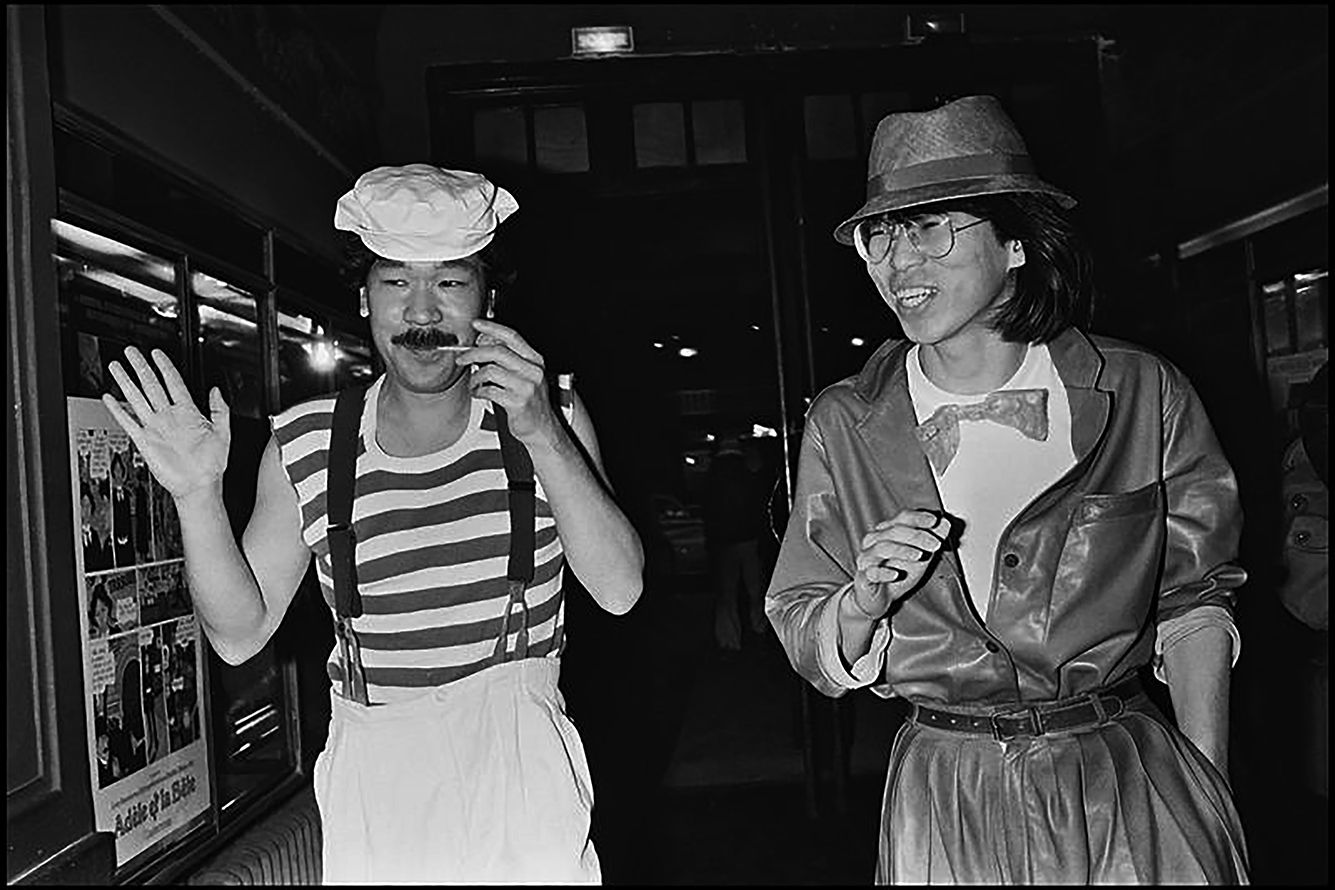
The ironic name of the brand “Jungle Jap” took root in Europe, but the American market already considered it with inappropriate. In 1972, the Japanese reached protests in front of the MACYQUE department store, where Kenzo’s first show was supposed to take place in the States, and the US Japanese League even sued the designer, claiming that the word “JAP” reminds them of the oppression of the Japanese in the United States after the bombing of the Gavani Pearl-Harbor. The cosmopolitan of Takada, who said that in Paris he feels like a Japanese, and in Tokyo - a Frenchman, did not share their opinion. However, in order not to lose this market, he renamed the brand in Kenzo.
Thanks to his exotic background, a non -standard approach, and sometimes simply a lack of money, Kenzo anticipated many trends in the modern fashion industry. He sold his clothes right from the catwalk, and not six months after the collection, as all other designers did. He arranged enchanting theatrical performances around the world instead of standard shows. “It was madness,” said the makeup artist Patrick Urkad, who worked at the debut show Kenzo in the 1970s, “he decorated the entire store with silk, carpets and some kind of cheap ugly tulle selected in flea markets. When one of the models came with a terrible acne, we painted her acne with green circles. Full surrealism. "
In 1975, in the final of the show, which was held in the arena of the Zurich circus, Kenzo went to bow to the elephant. And two years later, models and celebrities showed his new collection in New York in the decadent nightclub Studio 54 for a live performance by Grace Jones.
Takada was one of the first to make a collaboration with a democratic American retailer - The Limited. Then it seemed such a radical step for the luxury brand that it cost him several orders from expensive boutiques. Kenzo Takada was an excellent designer, but not the best businessman. He was helped to turn the flight of fantasies into real incomes by his boyfriend and partner Xavier de Castella and his right hand, and in combination the Closer Atsuko Kondo.
Castella died in 1990, after a five-year fight against AIDS, and soon, due to a stroke, she could not continue the work of Kondo. “I lost both of my wings,” said Kenzo. In order to at least somehow recover, the designer went on a yacht on a trip around Corsica without communication with the outside world. Returning, he found out that his mother had died during the trip - he did not even have time for her funeral.
After a series of losses, Kenzo took up the design of his own home in Paris, where he embodied all the dreams of his poor childhood: a pool with columns, hammams, a party room and even a roof garden.
In 1993, Kenzo sold his fashion house to the LVMH concern, but remained its creative director until 1999. Kenzo noted his departure from fashion, which, in his opinion, noted another extravagant show, during which he sent the audience on a virtual trip to Hong Kong, Russia, Africa, Japan and, of course, Paris.
In the early 2000s, Kenzo became interested in the design of decor for the house, created the form of the Japanese team for the 2004 Olympic Games, and in 2019 he came up with costumes for the production of Madame Butterfly in Tokyo opera.
Kenzo died on October 4, 2020, in the midst of the Parisian Fashion Week, from complications caused by Covid-19. Its style cannot be confused with anyone else: a riot of colors, a cell, a strip, flowers, Mexican scarves, Japanese kimono, Russian sundresses and Scandinavian sweaters and other seemingly incompatible things in his hands turned into ultramodes and modern ones. His success was inspired by a whole generation of Japanese designers, including Yoji Yamamoto and Rei Kawakubo.
Katya Fedorova