
Translated material
Anarchy came: historian and ex-percatter of MGIMO about the revolution and collapse of the USSR
The historian and ex-Prime Minister of MGIMO for scientific work Evgeny Kozhokin wrote the book “Revolution and its overcoming. Essays on the history of Russian mentality. " He told Taiga.info that the state should be fed by his democracy about thoughtless attempts to copy the United States at the end of the 20th century. The expert is convinced that after the collapse of the USSR, anarchy came to the state, but looks into the future with optimism.
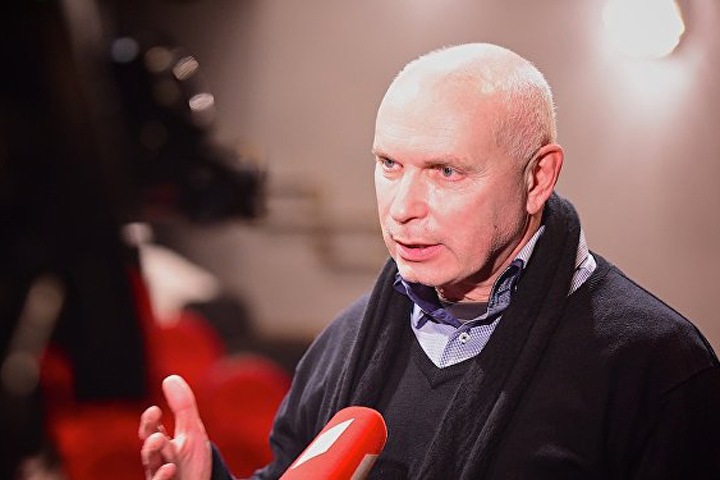
Kozhokin's gaze is interesting not only because he is a professional historian, but also taking into account his great political experience. In 1990-1993, he was a people's deputy of the Russian Federation. At the height of the political crisis, he acted as a parliamentarian between the administration of President Boris Yeltsin and the leadership of the Supreme Council opposing this. He worked as deputy chairman of the State Committee on Federation Affairs and Nationalities, Director of the Russian Institute of Strategic Studies, in other noticeable federal structures. Recently, I have focused on scientific activities and work on documentaries and books.
Taiga.info: The name of the book already sounds unusual. Why did you decide to write about it?
- I was still interested in the problems of human consciousness and subconscious from the student bench. We always say that we are very rational, and our history is also very rational. But in fact, this is not at all! When you come across the same policy, but not as a scientist, then you see how much boiling passions there! And sometimes it turns out to be more important than the rational constructions of smart people. Well, we have a lot of what we do not have time to reflect, and this is spilled into politics. All this is very interesting for me to study.
Taiga.info: It is impossible to get around the theme of the Russian revolution at all ...
- In Soviet times, scientific space was not homogeneous. I was engaged in the West simply because I felt much more freely than I would deal with the history of Russia. I'm not talking about the history of the USSR. I was engaged in the history of France, studied workers, their consciousness. I myself worked as a loader, and the controller of the OTO, and the shabashnik, so the psychology of such people was not for me something far and closed. However, I still wanted to study my own country. I went to this step by step. I really wrote this book for a very long time. I rewrote some texts many times, because something new appeared. Studying your country, you can sometimes understand something that it is difficult to understand from afar, and sometimes impossible.
What is the book about? First of all, can we get out of the cycle of the authoritarian system: the system crisis is a revolution - the reconstruction of authoritarianism? I do not consider the revolutionary path to optimal and at the same time I see that for at least two centuries we have been moving along such a trajectory. And we need to comprehend how to avoid it?
I described not so much a revolution as pre -revolutionary situations. Are there alternatives then? Why was the reform scenario not implemented, and Russia has embarked on the path of revolutions (1905 and 1917)? By the way, I don’t know yet what to call the events of 1990-1991 in our country. Was it a revolution or a counter -revolution? Be that as it may, there was a severe screening of the country. We have lost a lot with the collapse of the country. This does not cause me any doubt.
Taiga.info: That is, you agree with the famous statement that the collapse of the Soviet Union has become the largest geopolitical catastrophe of the twentieth century?
- I do not use the term “geopolitics”, it smells bad. The Nazis loved him painfully! I'm talking about us, about people living in Russia. We, as Russians and as Russians, have lost a lot. But at the moment when we lost this, we did not understand this yet. My teacher Mikhail Yakovlevich Gifter, whom I consider one of our greatest thinkers of the twentieth century, once said in his letter to Gorbachev that if the republics leave, then we will still remain a rich country, but in human terms we will lose.
Let us lose because in human relation they constituted some unique society, where each of the peoples introduced something unique, and together we were much stronger and smarter. Now we were left without those with whom we did a lot of things together. We did not know a lot of things about our country, and it only now opens.
Taiga.info: A large country, as they say, have big problems ...
- There is such a very heavy hat that our rulers wore on their heads - a Monomakh hat. The emperors wore her, then the Secretary Generals, now here is the president. And it is always necessary to correlate what is desirable from the point of view of our national interests, and what we can withstand from the point of view of external pressure. Moreover, we are used to the fact that we are a very large country and can afford a lot. And our field of opportunities, unfortunately, has decreased, although we mentally we have largely remained where we were. And it is incredibly difficult for us to convey the truth about ourselves simply because our propaganda capabilities are much less than that of the United States.
Alas, the West after the collapse of the Soviet Union has also changed for the better. But then we not only provided balance, but also represented an alternative model - both economic and social. Now the Americans began to allow themselves a lot of what they could not allow before.
Taiga.info: That's probably why we have so many questions about ourselves?
- We have a number of restrictions on humanitarian knowledge, which is largely developed outside our country. This applies more to economists and political scientists. There are impulses that are even incomprehensible how they are broadcast, how they fall into our heads.
Why do we perceive some models of behavior, concepts in the economy, which it would seem that only strange people of historians have already left and know about? And what historians write can read few.
The fact that the state plays a huge role in our economy is not only the aspirations of some individual people associated with life structures. For these people, the state is value. When such a person finds himself in a different area, he wants the state to be there.
Taiga.info: And always the state will play a decisive role in the most important areas?
-So far, we somehow do not succeed without it. But I do not see something catastrophic in this. State corporations can actually be very effective. The whole thing is how control is carried out above them, how management is built. The same France showed that state -owned companies were very active. De Gaulle clearly demonstrated this.
Taiga.info: Can we say that everything that happens to us ultimately determines our mentality?
- One of my topics is the understanding that in our country did not change after the revolution. I see such a phenomenon: in Russia, one of the features of political culture is that it is monarchical. Over the centuries, there were monarchs, then we destroyed the monarchy, but quickly formed a structure of power that ensures the concentration of an incredible amount of powers in the hands of one person. And this power was not limited to anything! In the charter of the CPSU, were the authority of the Secretary General somehow stipulated? No way! The powers were limited only by informal mechanisms: they were proclaimed at the concept level and situationally worked for some time. After the coup, when Nikita Sergeyevich was overthrown, there was a collective leadership for some time. And then Leonid Ilyich decided everything.
Such a system safely reached Gorbachev. He could not have so safely destroy the country and state institutions if he had not had incredible power. Gradually, he lost it at all. But before that, he succeeded in plans to destroy his own state.
Taiga.info: It turns out that we are afraid of changes?
- We find ourselves hostages of the system where everything is so closed to one person that the whole system is closed to him. We have one historical party, which, I think, will not even leave with a change in psychology. This is the Communist Party. All other parties ... how much they will last is a question. The paradox is that democracy is not a beautiful woman that we can either love or not. Democracy is a necessity for the capitalist system. In order for capitalism to work effectively, he needs an addition in the form of democracy. This system is dynamic, more dynamic than any other. Accordingly, she also needs a dynamic political system.
Taiga.info: Do we try to just reproduce how it was?
-In the 1990s, we tried to copy the United States. But the capitalist countries are very different! Different even from the point of view of the economy, not to mention the political system. I studied this and I can say that the genesis of French capitalism was different from German, and he was from the American one. The American political system is extremely effective, but it is also very peculiar!
Where else is there such a phenomenon that when a representative of another party becomes the president, is not only the previous president, but with him a huge number of officials? Other people come instead - from universities, business, non -governmental organizations. This is not in Europe and we do not have it. But if someone says that it is necessary to quickly do this with us, then the craces of our statehood then! It works in America, but we will not. Russia is a large and very peculiar country. We must find our democracy.
Taiga.info: But how much time will it take?
- God knows him! Not even talking about their grandchildren, but I really hope that my children will live in a democratic country. We have an internal dichotomy. And this is not an "autocratic system - democracy." Unfortunately, we have another couple: "Democracy is anarchy." This is definitely ours! Who is the best thinkers in anarchist tradition? Bakunin and Kropotkin. Our people! And we came to this periodically and come. The same Boris Nikolaevich Yeltsin was not any democrat, but the anarchist component was sitting in his head. Its slogan: take the sovereignty as much as eat - this is anarchic slogan and it has nothing to do with democracy.
We destroyed the Soviet system. By the way, with Brezhnev, she had her own specific features. It was a complex system of totalitarianism, which describes simple systems, later Soviet times can no longer describe.
We crushed everything, but what came? Anarchy! And with her some archaic elements. For example, in the same Chechnya where there was a restoration of a tagging economy in which they lived in the 19th century. They returned to this! Therefore, our movement to democracy should be such that we do not fall into the anarchy again.
Taiga.info: You say that passion plays a huge role in politics.
- We have people in whom this burning passion is simply visible. There is now a well -known politician who lives with this passion. It doesn’t matter what politics, the left you or the right one is absolutely anyway. His goal is power. And from what move he will go into her - for him absolutely unprincipled.
Taiga.info: Do you still have any optimism?
- Yes! After all, I am a historian. Reading the sources, re -reading Solovyov or Klyuchevsky, you see: we should have been destroyed so many times, but Russia always rose from the ashes and went forward. I really like to travel around Russia. I meet people who have pain for their country and is power. I really appreciate strong men. They are in Russia, which means that not everything is still lost.
Distant Vladimir Kuzmenkin