
Translated material
Apple introduced the iPhone 12, 12 mini and 12 Pro
IPhones now support 5G, and their screens are protected by a "ceramic shield"
At first - about the general of all new iPhones
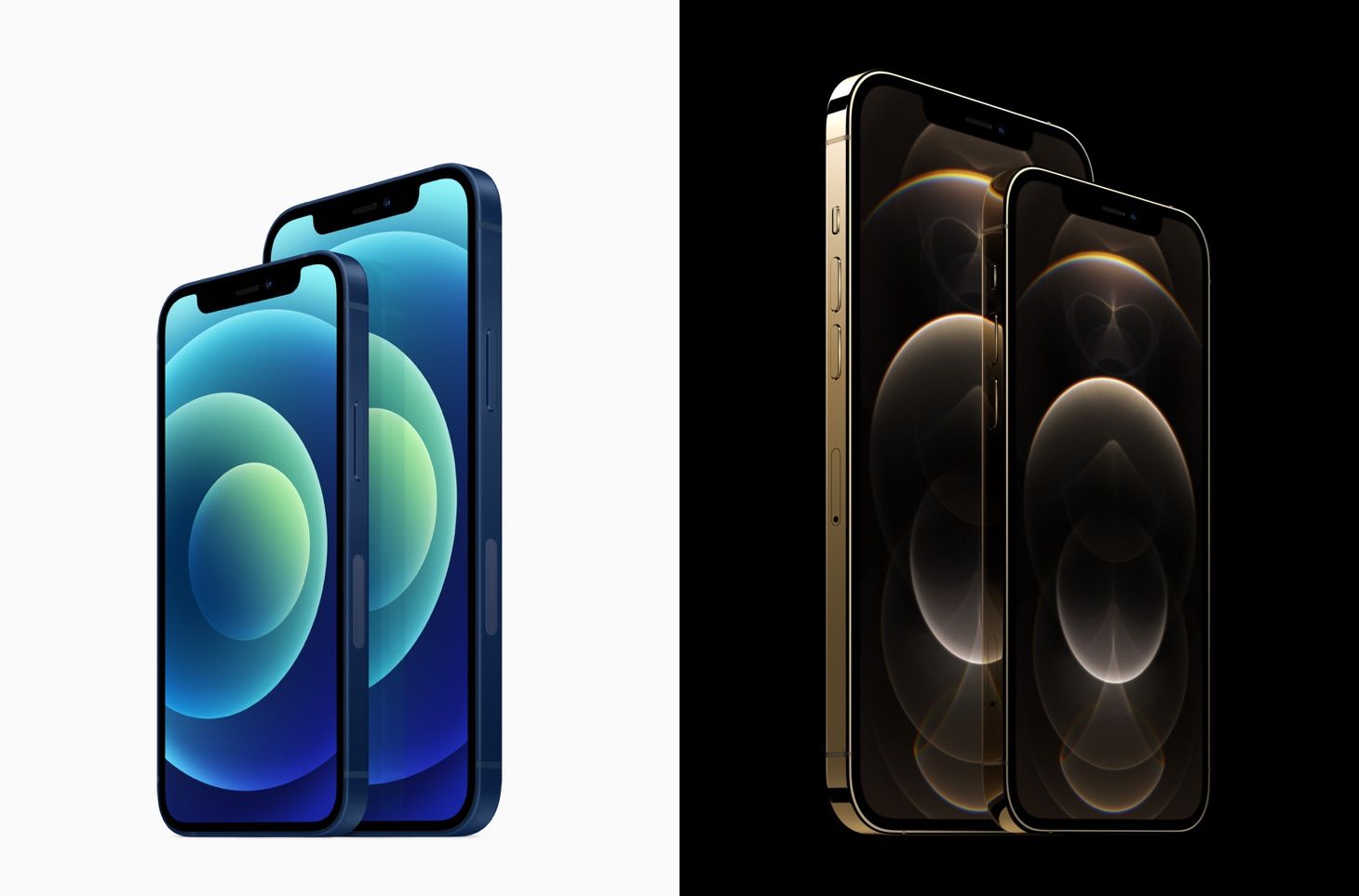
New (old) design
Apple returned the iPhones to the angular design that the iPhone 4, 5 and SE had - and which is used in the iPad Pro in recent years. Otherwise, the new phones retained the features of previous models: the “bang” in the upper part of the screen did not go away, a large square ledge with two or three cameras on the rear (glass) panel - too.
5G
Apple finally introduced its first models with 5G support - and all four versions will work in new generation networks. This is later than many competitors who produce Android smartphones, but not to say that it is late: the 5G networks are still available where they are available.
With 5G support on iPhones there is one subtle moment: only models sold in the USA will support millimeter ranges. This is important because it is in these ranges that the network of the new generation demonstrates gigantic, up to several gigabits per second, the speed of the connection. Another thing is that such ranges are suitable only for stadiums and other places with a large accumulation of people - radio waves of this frequency very poorly penetrate through walls, trees and other obstacles.
In general, 5G in iPhones outside the United States will most likely give up to several hundred megabit per second-this is often faster than LTE, but commensurate with good Wi-Fi.
A14 Bionic processor
New iPhones, as expected, are equipped with the most modern Apple processor. In the iPhones of the twelfth series, A14 Bionic is installed, which, according to the company, is much faster than the predecessor (it is also used in the 2020 iPad Air). This is the first Apple processor made using a 5-nanometer technology-so few can do. A decrease in the size of the transistors made it possible to fit them into an iPhone by 40% more, but at the same time not to lose the battery in the time of operation.
Among other things, the new processor improved the work with neuralates-the Neural Engine system is responsible for it, in which there are 16 cores instead of 8. This, for example, should accelerate the use of the Deep Fusion algorithm to photographs: it improves the details of the pictures after shooting, but due to its work, the owners of the iPhones could notice a small delay in the actual surveillance and the appearance of a quality versions of the picture.
Ceramic Shield
This is a new technology for the production of glass covering the screens of new iPhones (but not the rear panels that are also glass). We are not specialists in the production of glass, but Apple wants to show that this is a breakthrough - the company has learned to add ceramic nanocrystals to the structure so as to add strength without harm to transparency of the material.
The screen with Ceramic Shield does not stick out from the case, and, according to Apple, this increases the 4 times a chance not to damage the iPhone when falling - compared to the iPhone 11.
Magsafe
It sounds familiar, right? Apple has already used the Magsafe brand for charger ports of macbooks until USB-C appears. There, the charging cable joined the port with the help of magnets, and if you touched the wire, he simply disconnected from the computer - without breaking anything and without tearing.
Magnets left the macbooks and came to iPhones. Now Magsafe is a system of accessories that use magnets in the rear of the case of all versions of the iPhone 12. First of all, it is wireless charging, which are primed exactly where the iPhone charger is located. And also-covers, including curtain cases with a clip for a clock, and a pocket for a card that can be primed to the phone (before they had to glue it).
Headphones and charging adapter
They will not be included - we protect nature from excess garbage. ¯_ (ツ) _/¯
But in the kit there will be a charging cable with Lightning and USB-C. So if you have an adapter from an old iPhone with a classic USB port, it will not work. But now phones are sold in small stylish boxes.
Now about the features of each model
iPhone 12
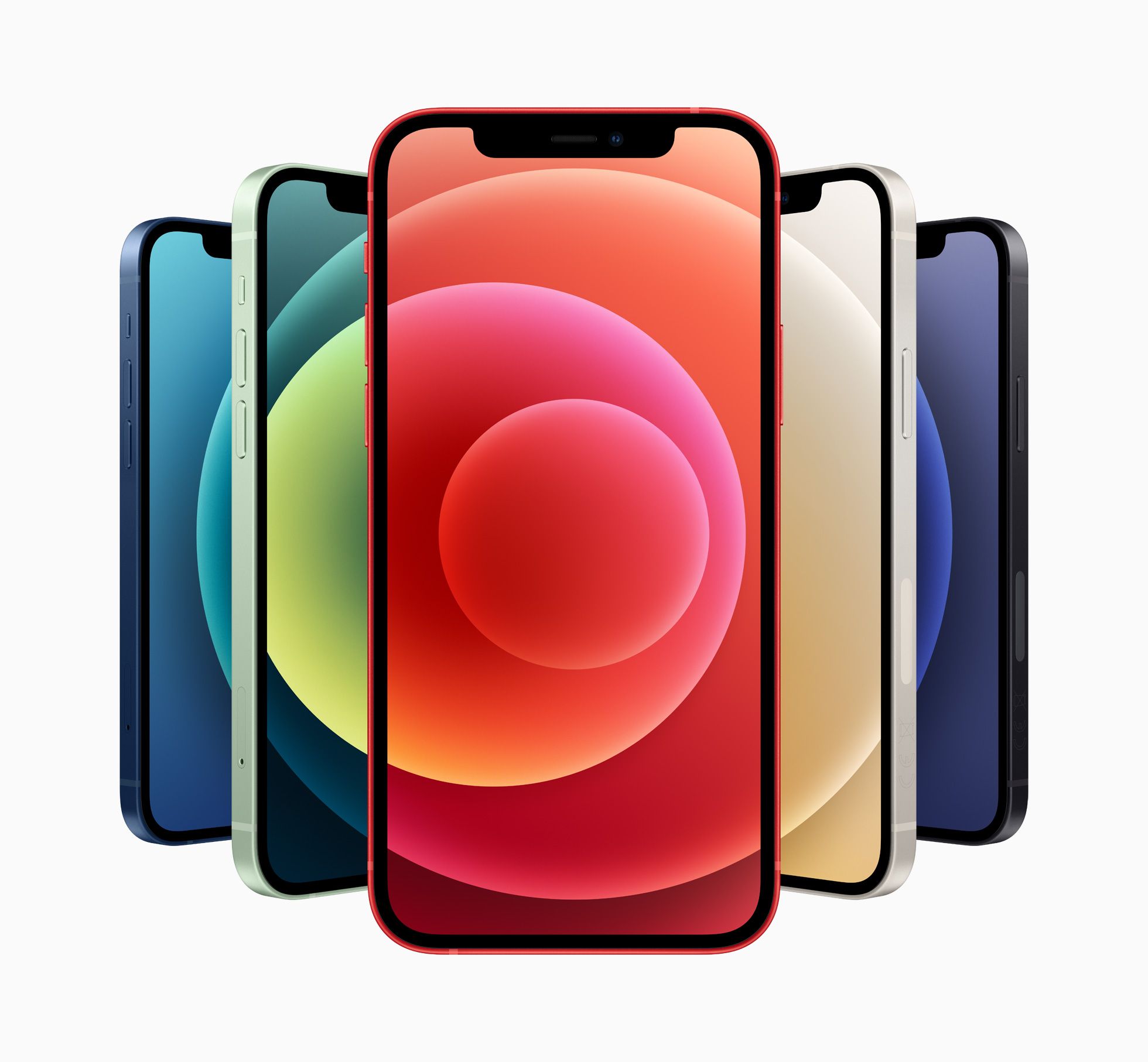
The basic model of the iPhone is now equipped with an OLED display of Super Retina XDR, which will be more difficult to damage thanks to a stronger front panel of Ceramic Shield. At the same time, the peak brightness is two times higher than that of the iPhone 11. The display diagonal is 6.1 inches.
The new iPhone is available in five colors: red, white, green, blue and black. The device has three cameras, one on the front panel and two on the rear: a super -richell and updated wide -angle with a diaphragm F/1.6. The night mode and function Deep Fusion operates on all three chambers. New cameras do better with shooting in dull light, including due to computing photography (that is, neural networks).


The devices support the recording and editing of the HDR video in the Dolby Vision format, which the company compares with films shot by professional studios. In addition, in night shooting mode, you can record time lapses.
iPhone 12 will go on sale on October 23. Official prices for the device begin at 79,990 rubles for a version with 64 gigabytes of memory.
iPhone mini
The iPhone 12 mini knows how to do the same as the iPhone 12 is the only difference in the size of the display and battery capacity. 12 mini looks like a device for those who are tired of the “shovels”, and wants a phone that easily fit in a pocket - but does not want to take the obsolete iPhone se.
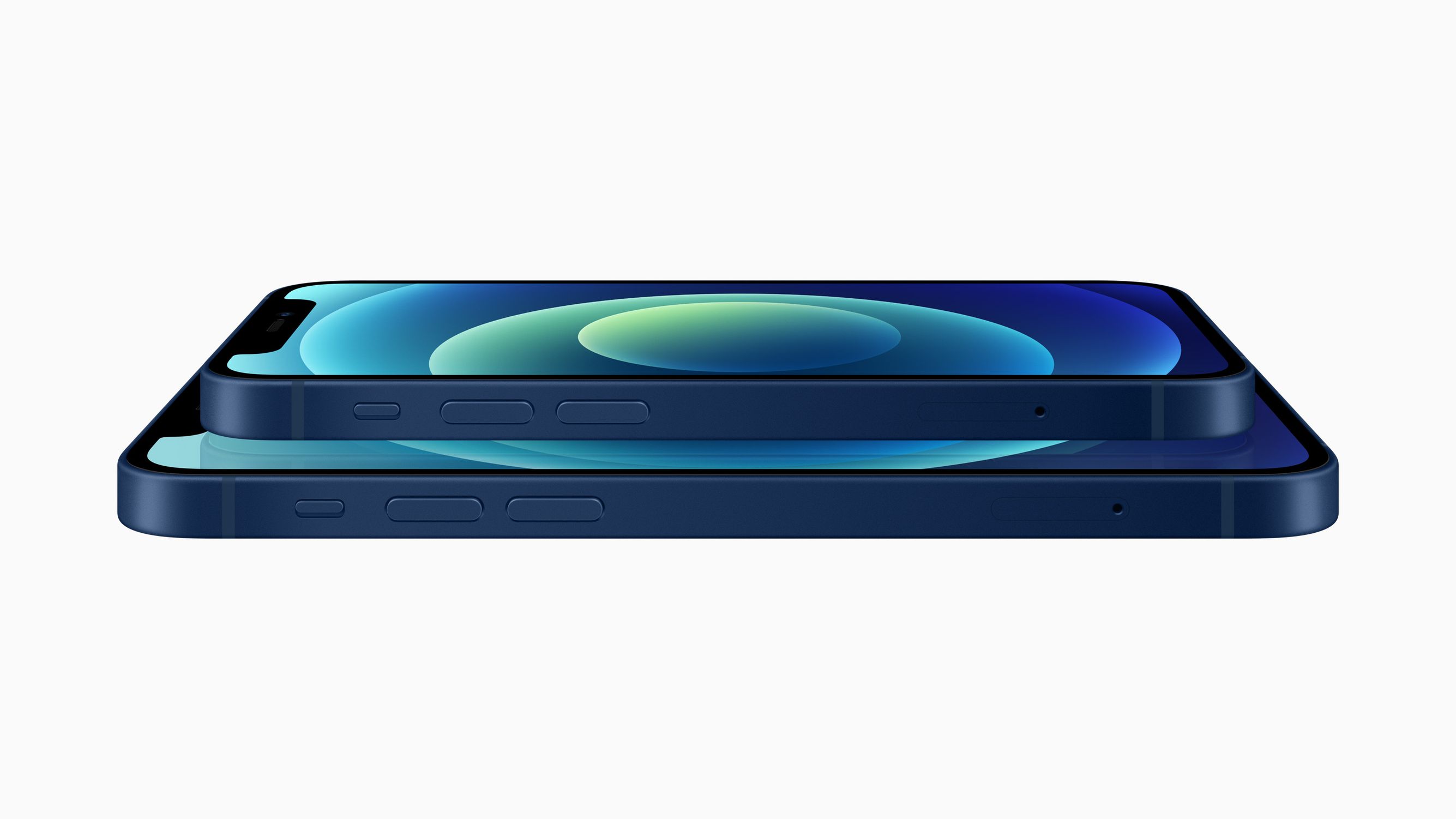
By the size and weight of the iPhone 12 mini is somewhere in the middle between the iPhone Se and the second generation iPhone SE. Only unlike budget devices, the Mini display (also OLED) occupies the entire front panel. Its diagonal is 5.4 inches against 4.7 of the second generation iPhone Se.
As for the battery, judging by the description of the model, 12 mini works a little less from one charge than the iPhone 12: in the video reproduction mode for up to 15 hours instead of 17, when watching a video in streaming mode - 10 hours instead of 11.
In Russia, the iPhone 12 mini will go on sale on November 13. The price of the basic model with 64 gigabytes of memory will be 69,990 rubles.
iPhone 12 Pro and iPhone 12 Pro Max
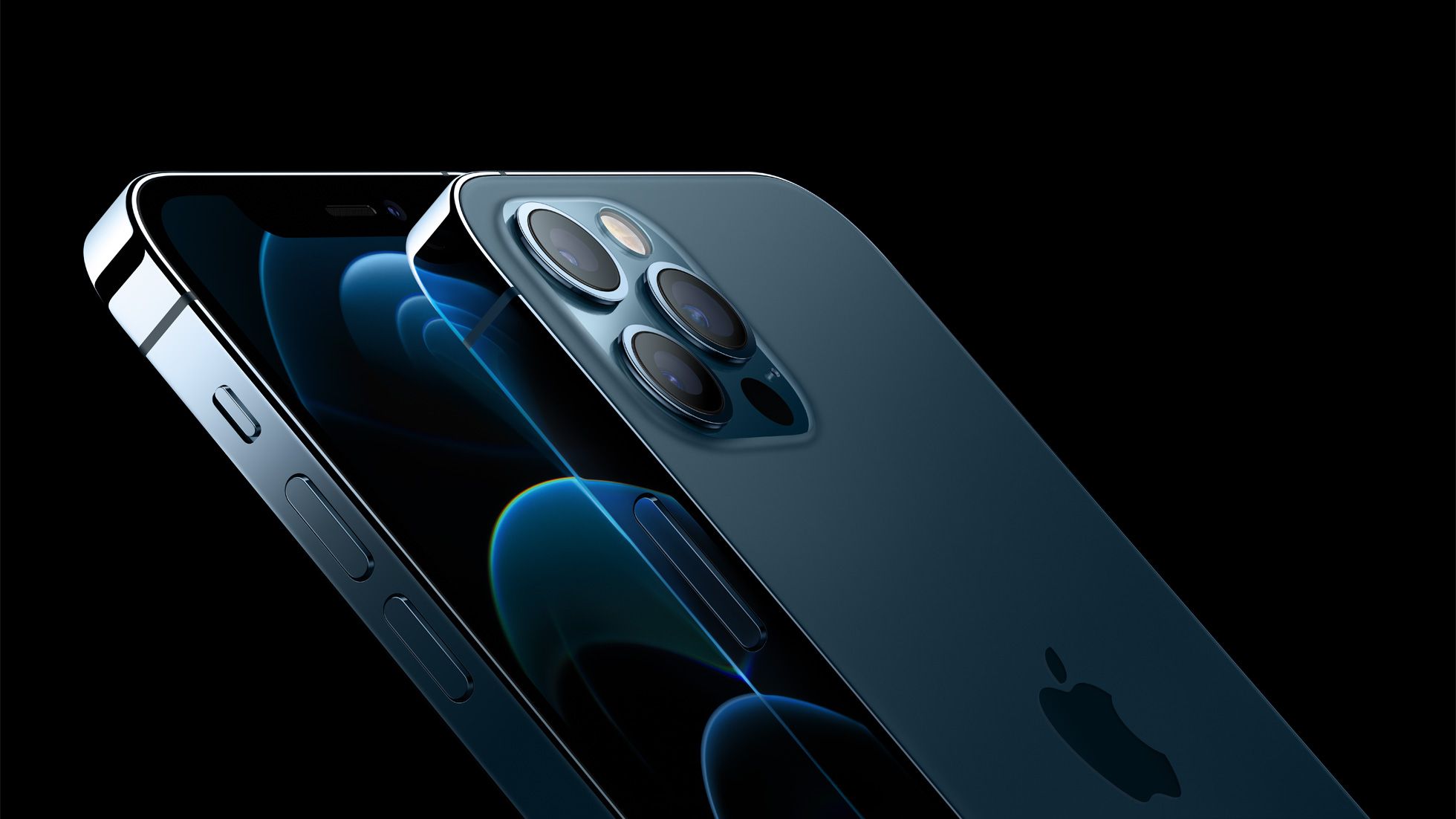
In front of the more expensive iPhone 12 Pro is no different from the iPhone 12: the same size, the same Super Retina XDR OLED screen with the same resolution. The difference is in the material made of stainless steel instead of aluminum and in the system of chambers.
As in last year’s models, Pro version has three rear chambers: basic, super-foam-round and telephoto. Apparently, the ultra -hot -round camera remained unchanged, but she learned to shoot at night mode.
But the main one was updated - it with F/1.6 diaphragm instead of f/1.8 (in the iPhone 12 is also new). If you simplify, these numbers suggest that the lens began to pass more light and more tightly blur the background when shooting objects located near the camera.
In the iPhone 12 Pro Max, the main camera is also new, but it is different: the matrix and pixels in it became larger, which allows them to catch more light. In addition, there was a stabilization of the image of the matrix with a shift.
The telephoto chamber in 12 Pro and 12 Pro Max is also different: in the first it is with a double increase, as it was before, and in the second - with an increase of 2.5 times.
Both Pro versions received another sensor in the camera block-Lidar. It allows you to measure the distance to objects in the frame, which greatly improves the possibilities of augmented reality (virtual objects interact better with real surfaces). And the sensor also helps the camera focus in poor lighting.
More iPhone 12 Pro and Pro Max received support for the night mode for portraits and the shooting of Timeslaps-Video in night mode. Night mode and Deep Fusion were added near the front chamber.




The iPhone 12 Pro Max has the largest screen in the history of iPhones, its diagonal is 6.7 inches. New Pro-models will be available in four colors, including the new Pacific blue. There will be no dark green version, as in the iPhone 11 Pro.
The iPhone 12 Pro will go on sale on October 23, in Russia it will cost from 99,990 rubles. The iPhone 12 Pro Max will begin to sell on November 13 at a price of 109,990 rubles.
Homepod mini
Let's start with the main one: alas, Homepod Mini, a reduced spherical version of the Apple smart column will not go on sale in Russia. It is a pity - in the USA it costs three times cheaper than the original Homepod.
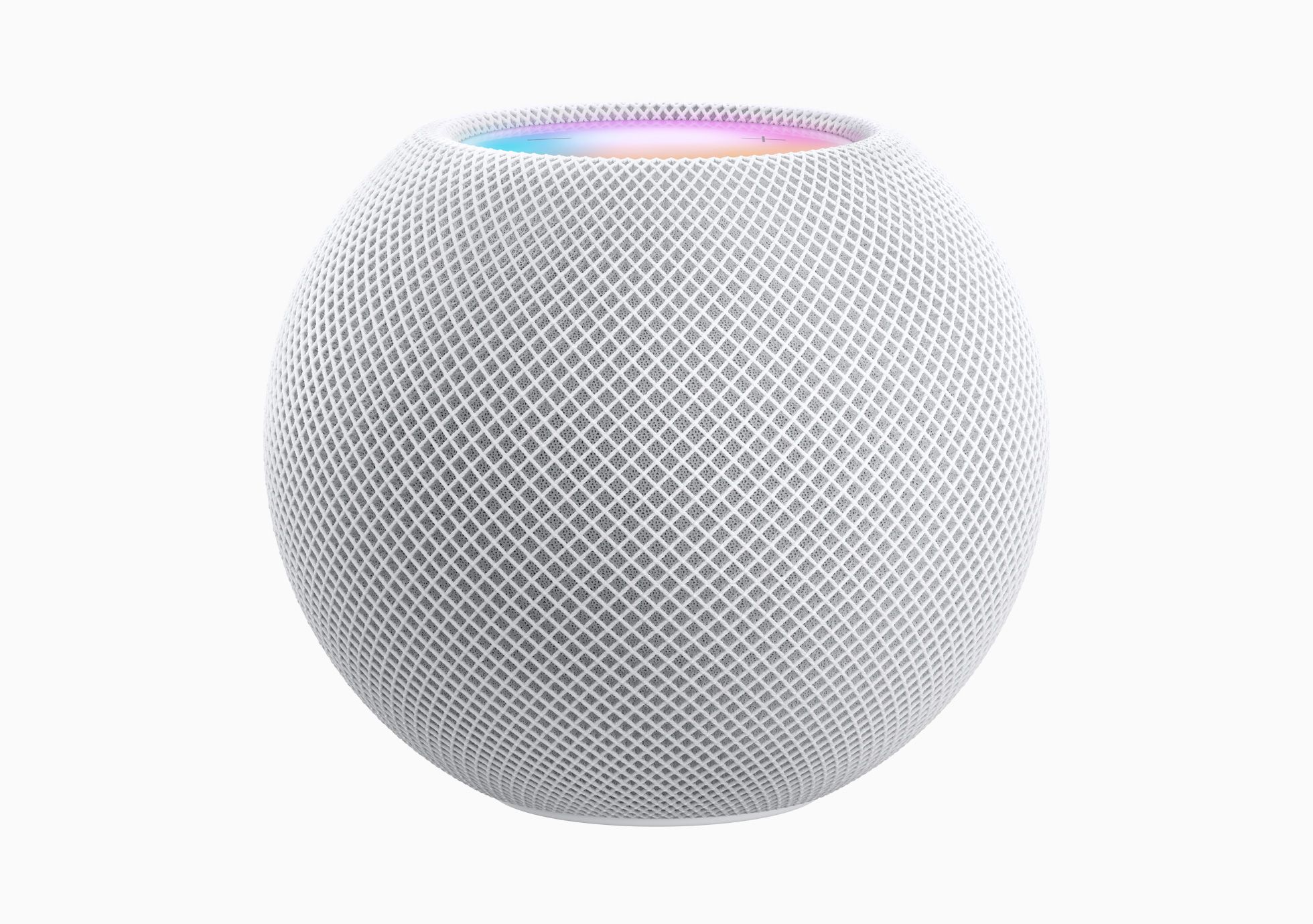
The company built the S5 chip in Homepod Mini, the same as in the fifth -generation Apple Watch watch. Several columns can be synchronized so that they in different rooms without delay reproduce the same music or podcasts. Two Homepod Mini can be combined into a stereopar for a more voluminous sound.
The U1 chip is also built into the column - with its help the device understands when the owner brings an iPhone to it. In this case, information about a reproducible audio will appear on the phone.
In general, Homepod Mini can be considered as a physical deposit Siri. The column learned to recognize and respond to the voices of different family members. Thus, you can turn the light in the garage on the sofa in the living room and even send a vocal message to another room with a column (in order, for example, to hurry the child being late for school).
The device is available in white and gray. In the USA it costs $ 99.
Sultan Suleimanov and Maxim Ivanov