
Translated material
Who broke the ocean?
Old missiles, abandoned torpedoes, merged waste, flooded ships. Technogenic version of the catastrophe in Kamchatka from the sources of "New"

The "natural" version has become a priority in the investigation of an emergency off the coast of Kamchatka. Officials of the regional government and scientists of the Russian Academy of Sciences say that the marine animals were probably destroyed by toxic microalozols. According to experts, their influence felt on themselves and surfers, which, after immersion in the ocean, arose problems with vision. A burial ground with pesticides under the Kozelsky volcano is now beyond suspicion. The water from the Mutnushka and Nalychev rivers, flowing near the burial ground, according to the regional government, can be drunk (although I, frankly, did not risk it).
However, the technogenic version of the authorities does not completely exclude. On weekends, the commission, led by Governor Vladimir Solodov, examined the landfill by Lake Trivnaya. There they took the samples of water and soil.
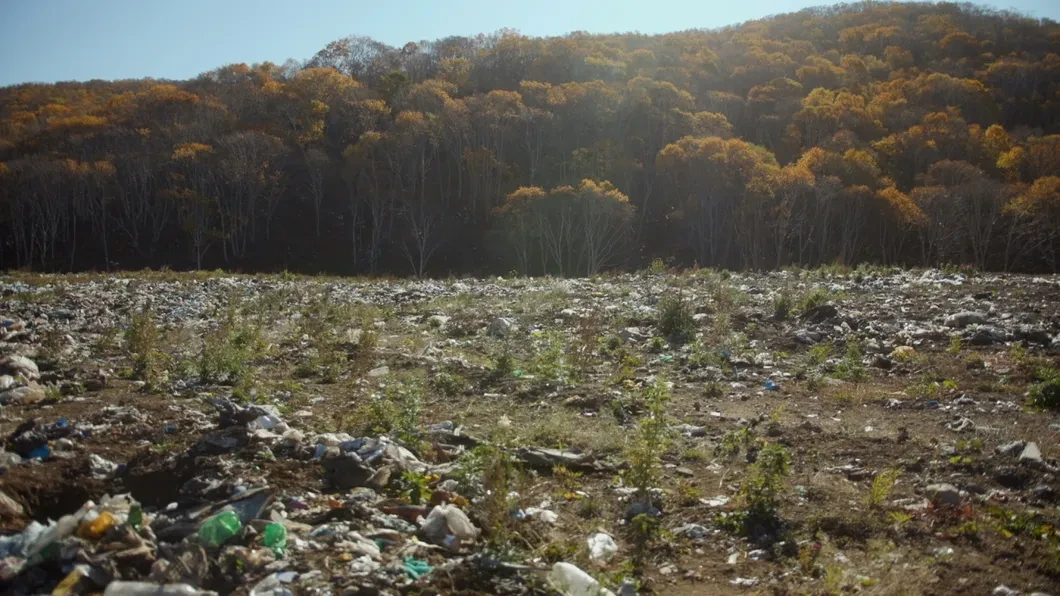
The tide, by the way, can only be called a lake conditionally. In fact, this is a small bay of the Pacific Ocean south of the Khalalaktyrsky beach. Moreover
The main danger for him is rather not a landfill, but a military oil depot nearby.
Previously, it stored a reserve of diesel fuel - about 60 thousand tons. But the containers were leaked, and the fuel began to seep into the lake. As one of the former oil depot employees assured me, it lasted several years. Then the solarium was pumped out. Now, various waste from the anti -caval forces and means located near the shore of the military unit is drained in the reservoir. There are no treatment facilities there.

Of course, the military unit (even together with the oil depot) could hardly poison the ocean to such an extent that it became dangerous to be in it for people and animals. But in Kamchatka there are enough other potential sources of pollution. The deputy of the regional Legislative Assembly Mikhail Puchkovsky , who used to work as deputy director of the Petropavlovsky state farm, told me that
In the 90s, the military offered farmers to use diluted rocket fuel as nitrogen fertilizer.
The fact is that there were several units next to the state farm, including the Radygin Air Defense Division with S-200 missiles. They were seasoned with liquid fuel AK-27 (melange). About a quarter of a century ago, the division and other parts fell under reduction (some a little earlier, some a little later). Here the commanders decided to share the remaining melange with farmers.
“We did not go for it. Therefore, as informed people told me, the military leaked part of the fuel in the ground, and some were buried with capacities, ”Puchkovsky presented his version of events.
The deputy recalls that the villagers could then get hold of not only melange, but also technology. The units, which were once considered combat, were actively plundered before the closure, and the warrant officers and officers were animal reserves. The fields of the state farm "Petropavlovsky" border with the Khalalactyr beach. In this regard, Puchkovsky suggests that
Buried missile fuel could still get into the ocean.
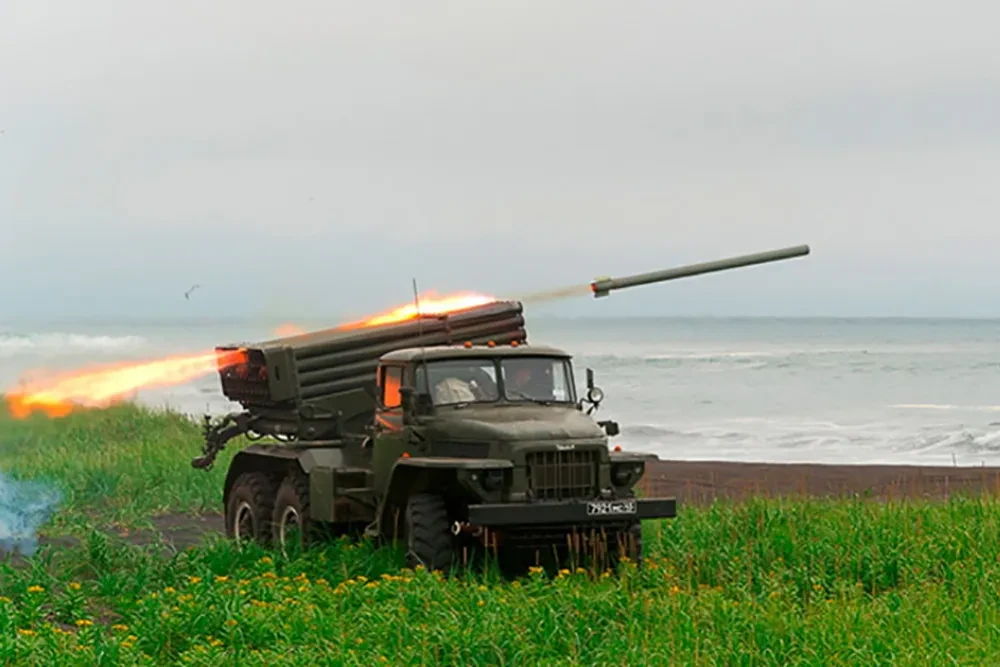
Another Mikhail-the former foreman of the 182nd separate brigade of submarines, which was based in the Bachevin Bay, also has its own version of the incident. The brigade was disbanded in 1996. The retired foreman, who now lives in the Krasnodar Territory, says that the Ministry of Defense was in a haste of haste to get rid of unnecessary property. True, he was not buried in the ground, but drowned in the Gulf of Avachin.
“There were sealed barrels with reagents, equipment, ammunition - not only ours, but also those that rackets delivered to us. They were taken out 15 miles and dumped into the water. Something was drowning and closer to the shore.
This was done not only by us, but all the coastal parts. It was a mess and chaos. I am sure that the bottom of the ocean hides many military secrets. There are flooded ships, and submarines, and torpedoes. Now all this rotted and the beginning of “fony,” Mikhail believes.
By the way, other military confirm that the ammunition, which had a term of storage, was considered in the order of things in the water. Some areas of flooding of military cargo are known. It is forbidden to crawl in the fishing vessels. And then there will be some kind of torpedo or barrel with chemicals in the form of a foot.
Another dangerous place on the map -
The section of the coast of Krasheninnikov Bay in the city of Vilyuchinsk. There are equipped with a nuclear waste burial and a special platform for draining the oxidizing agent (this is a component of rocket fuel).
As the captain of the 1st rank of reserve explained to me, the remains of the R-29 emergency missile rest on a special site under a concrete stove. In 1970, this rocket exploded in the shaft of the submarine. As a result, a nuclear warhead flew out of it. Fortunately, nothing terrible happened to the warhead. She just fell in shallow water, she was pulled out and disposed of.
The emergency on the Khalalaktyr beach, of course, is not connected with the emergency missile, and with the Vilyuchin burial ground, probably, too. But each of these objects clearly does not affect the environment in the best way.
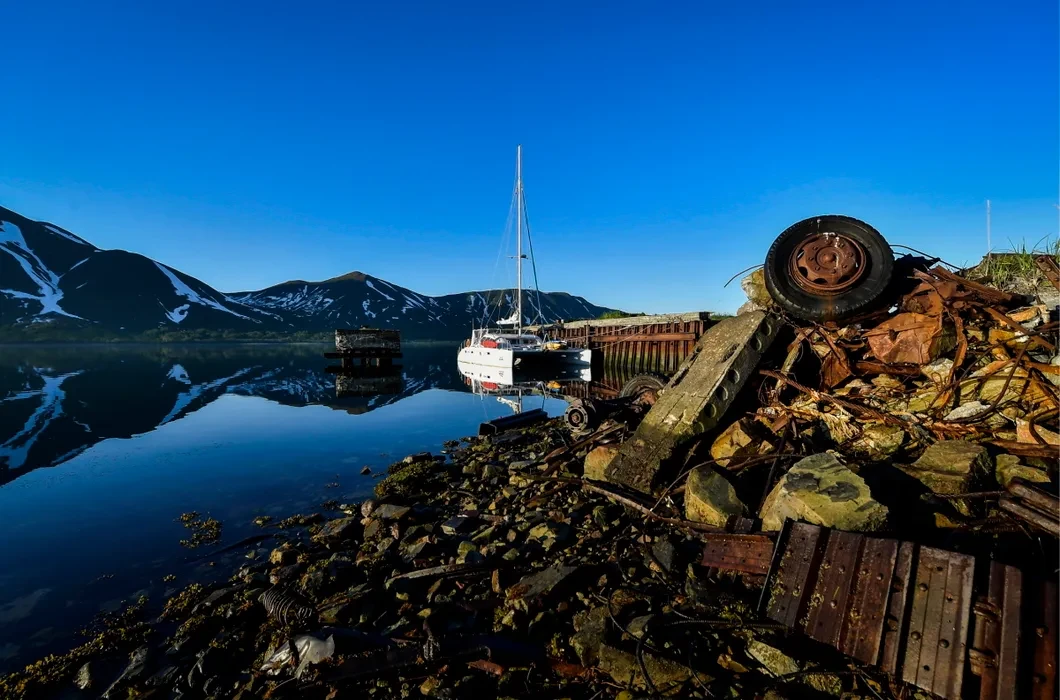
Meanwhile, not only the military acts on the ecology of the peninsula. The Avacha Bay, on the shore of which Petropavlovsk-Kamchatsky was built, is a huge cemetery of old sunken ships and a storage of various waste. The authorities proudly call the bay a landmark, one of the most beautiful in the world. At the same time, every day and every day, in a huge amount, household drains from all over the city are merged into this miracle of nature. Moreover, a significant part of the plums does not pass any cleaning. They say that
The bottom of the bay is covered with black silt with the smell of hydrogen sulfide.
One of the versions of the emergency off the coast of Kamchatka, which is now discussed by local residents: the incident is not caused by any one phenomenon. Just the ocean began to return to people what they “gave” him. These are reagents from rotten barrels, and the remains of ammunition, and chemicals, and much more. The ocean for many years took thousands of tons of toxic substances. But this barrel, which seemed bottomless, was overflowing.
As for the “natural” version of pollution, at which officials and scientists stopped, it is generally seen logical. But no less logical is that this version convinced of far from all. On the one hand, because the conclusions of the authorities regarding various emergencies cause, to put it mildly, not much trust. And on the other, because over the past decades, too much poison has really poured into the ocean. And the inhabitants of Kamchatka are well aware of this.
Petropavlovsk-Kamchatsky