
Translated material
The Petersburger for the sake of the experiment moved for a week from Petrogradskaya to Murino
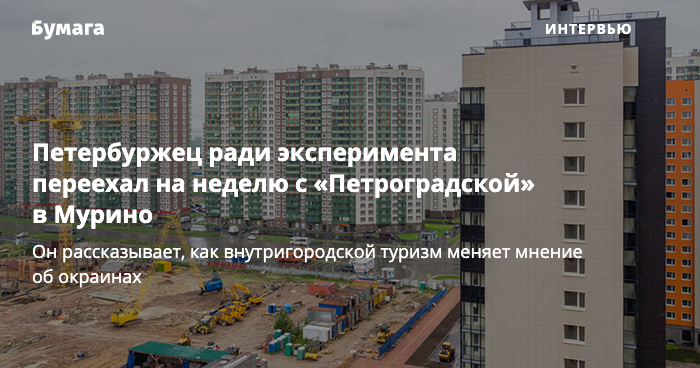
Petersburger Maxim Sobolevsky arranged an experiment on intracity tourism. It changes apartments with his friends to see how life works in different areas. In September, he went to live in Murino for a week.
Maxim told the “paper” how the experiment changed his opinion about the outskirts of St. Petersburg, how he got out of Murin on a bicycle and where else he plans to move.
About the idea of intracity tourism and moving to Murino
- I moved to Petersburg ten years ago. At first, he lived for four months in the electric power metro area, then rented apartments in the center: on Nekrasov Street, on Gagarinskaya, now [I live] on a little animal.
My friend came up with the idea of intracity tourism - to change apartments with different people to get to know the city and its areas, but in the end he did not realize this. And I decided to try. Changing the situation is always fun, especially now, when traveling is not particularly available and it is quite difficult to get new impressions. I wonder how other areas are arranged, other people's apartments.
The first experience was moving to Murino to Vorontsovsky Boulevard: we changed apartments with a friend. Before that, I have been in this area a couple of times, but I have never lived there. All that I knew about Murino was that there is a bunch of “persons” and that there is hardly not to get out of there. In general, it is, but I did not find some depression. There live many ordinary young people, they did not seem marginal or dangerous to me. The first time I came there at one in the morning, and there was no feeling that something could happen to me.
I was surprised that there was a little Soviet design in the area: the quarter was built in the field, but at the same time, for example, there are no bike paths. This is completely incomprehensible to me, especially since there is quite logical to move there on a bicycle. If you live far from the metro, then go to it for 25 minutes, and you can get on a bicycle in five minutes.
Of the advantages that met, is a freight elevator: he greatly eased my life with a bicycle. But, on the other hand, to get to this elevator, you need to overcome three doors, and all of them with rather serious closers. I think people with strollers and bicycles suffer from this. In general, communications are better than in the center. More light - because I lived on the high floor, and there were few houses around.
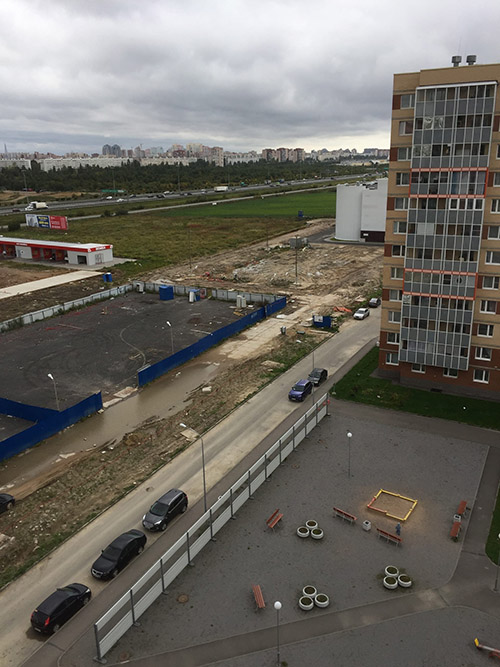
Of the problems, I would single out the fact that the border of a residential area and construction is quite blurred. I lived in the last house, that is, a construction site immediately began behind it. This created a headache: a bunch of dirt, some concrete slabs, you constantly need to jump over something. While you have a construction site nearby, it is dumb, as soon as the house is surrounded by other residential buildings - everything is fine.
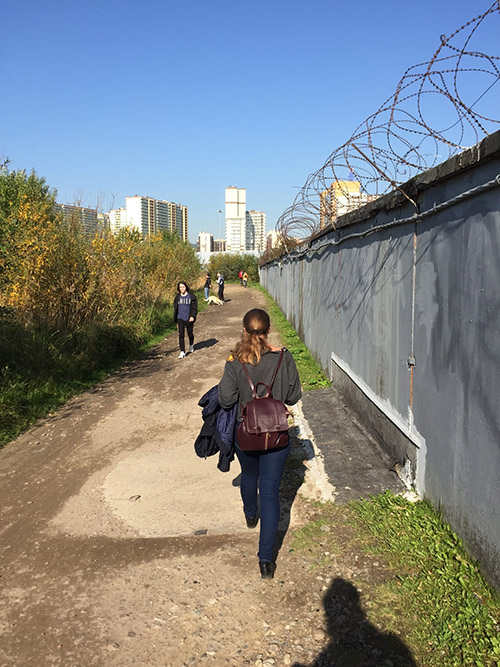
Another problem is that normally from Murin you can go on a bicycle in just one way - through the village of Bugra, making a giant hook. Therefore, everyone uses the folk path that is not intended for either a bicycle or a pedestrian. To get out of Murin, you need to go through the gravel, which was poured into the field bypassing the construction, drive along the concrete slabs, get out under the heating system, then overcome clay, climb onto the railway embankment, carefully looking around that you are not knocked down by the commodity train, because they are very quiet, go between the garages - and finally be on Suzdalsky Prospect. This is as uncomfortable as possible, and besides, there is hellish darkness. At the same time, the trail is very popular: I think that at least a thousand people go there a day.
There is another option - to cross through the railway line in Devyatkino, but this is also not easy. First [you need] go along the paths, then under the cado, and only then you will find yourself in a more or less civilian place.
About how experience changed the view of the city, and further plans
- The experience of moving slightly changed my gaze to the outskirts. I realized that this is not as scary as everyone tells. It seems that I could live there in theory, but some needs and interests are difficult to satisfy, living there. I traveled from Murin on a bicycle on business to the city - it was a long time. But if there is a car, then I think that there is normally lives there, if you avoid a peak watch.
This story became more fun and interesting, due to the fact that my friend and I gave each other feedback on how our apartments were arranged. I have extremely positive impressions of the experiment, I will definitely repeat it.
At the end of October, I plan to move for a week to the area of the sand. Then I was offered to change [apartments] friends from the Vasilievsky Island, there is an option on the far commandant - this will be, I think, an experience similar to Murino. It seems to me that in each area there is some kind of joke, so I have the same interest in any location. It is boring to live in one place.
Photo on the cover: Photo Bank Lori
Maxim Sobolevsky
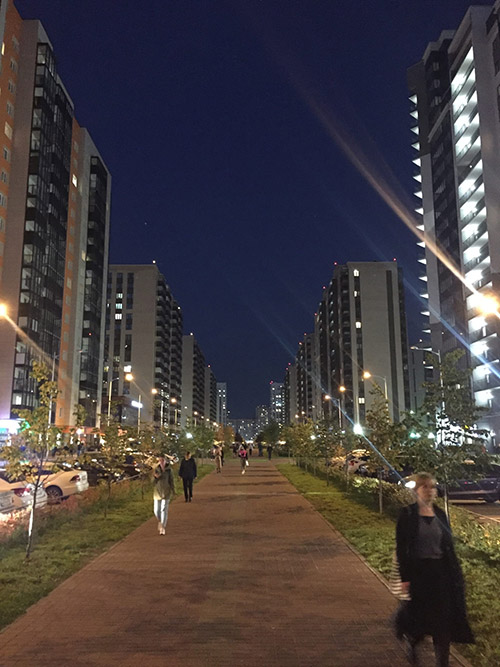
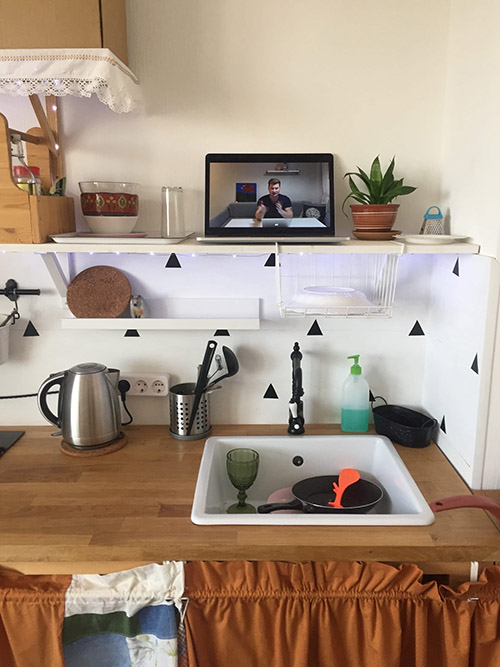
Directed areas with many new buildings - like Murin, Parnas and Kudrov - are often dismissively called "ghetto" and "anthills."
Sociologists and urbanists told the “paper” whether new areas can really turn into a ghetto, whether it is true that residents are trying to leave at the first opportunity and how the owners of apartments are united to increase the standard of living.