
Translated material
‘How do you feel?’
A ‘Meduza’ special correspondent continues cataloging her experience as a volunteer in Russia’s coronavirus vaccine trials
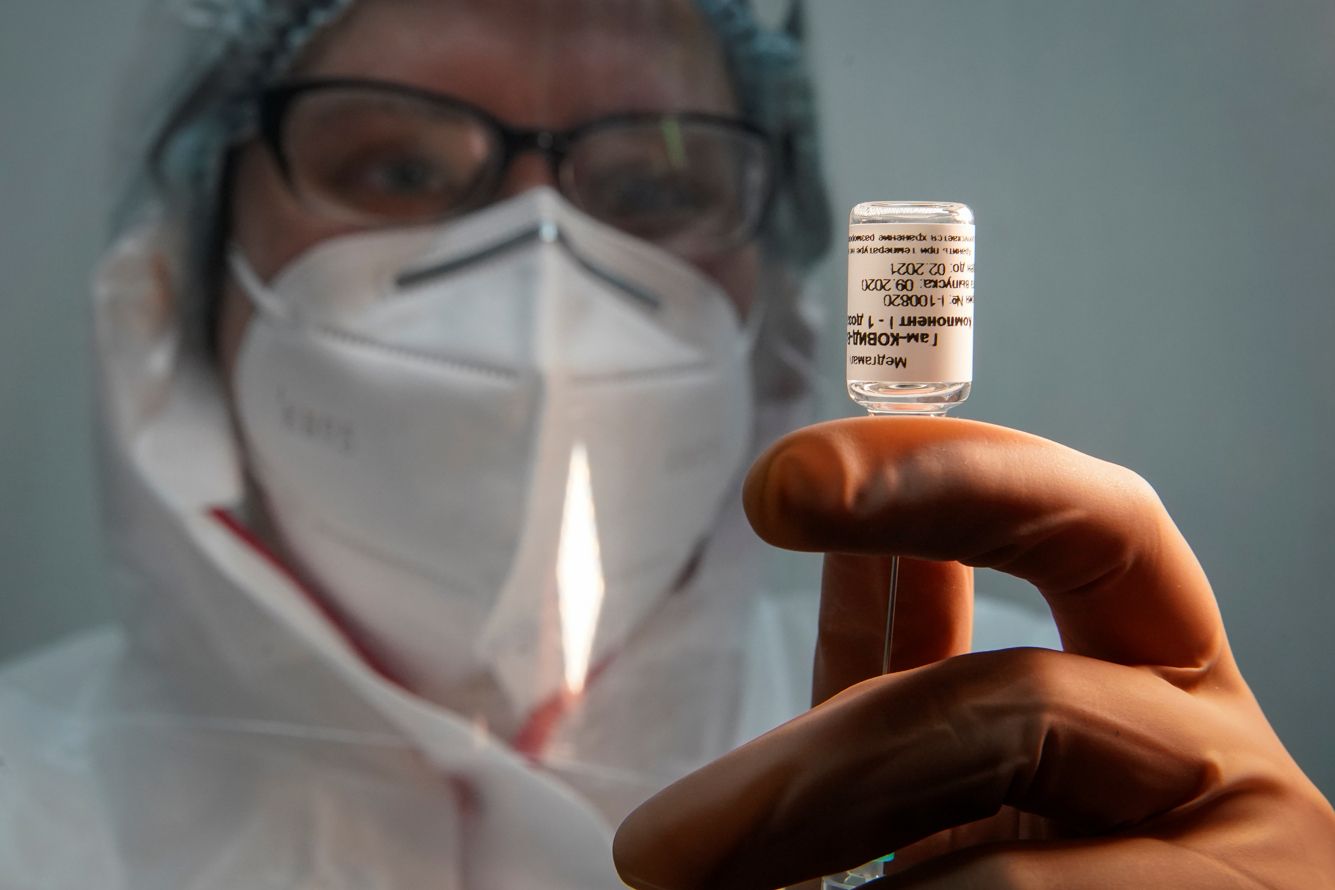
In August 2020, Russia announced the registration of the world’s first coronavirus vaccine, named “Sputnik V.” However, to finalize the vaccine’s registration, its developers at the Gamaleya National Research Institute of Epidemiology have to conduct large-scale clinical trials involving tens of thousands of volunteers. In September, “Meduza” special correspondent Svetlana Reiter became one of them. After receiving her first injection, she catalogued her impressions of the process, as well as her body’s reaction, day by day and hour by hour (it wasn’t the most pleasant experience). But the study didn’t end there: the coronavirus vaccine trial includes two injections. After her second trip to a Moscow clinic to get another shot, which took place in mid-October, Reiter continued to record her experience. Here’s the second part of her diary.
October 12
12:00
The second injection, which I’m going to three weeks after the first, it’s already a routine. The same Moscow Clinic Number 46 on Kazakova Street, the same elderly nurse in PPE [personal protective equipment] at the entrance — she has an electronic thermometer in her hands. I seem to have the same temperature as last time: 36.2 [degrees Celsius, or 97 degrees Fahrenheit].
As for what’s new — the streams of volunteers are divided between two floors. The examination before the first jab is on the third floor, the vaccination is on the second. When I came for the first injection they did everything in one place.
I’m expecting to see a crowd of people, but there’s a total of ten people on the first floor. A bored young nurse sits at the reception desk on the second floor — she’s leaned over a folder marked “Mosgaz,” in front of her is a list of the last names of those who are registered for the second injection. I’m not on the list or in the general database — I go into the office of a bored, young general practitioner who, swearing silently, finds me by my policy number on the fifth try.
I’m wondering what would have happened if they hadn’t found my information in the database: would I have been listed as an official volunteer somewhere at least? Instead of answering, the general practitioner takes my blood pressure. The top number is 138.
“Kind of high,” I worry.
“It’s acceptable,” the doctor replies.
“Doctor, in case you’re wondering. You know, I still have pain in my arm, where they gave me the first injection, and three weeks have gone by.”
“It’s acceptable.”
“And you know, I’m just so weak, either it’s the autumn or it’s your vaccine.
“It’s acceptable.”
After me, a fit, youthful woman of about sixty comes into the general practitioner’s office. She’s getting the vaccine so [she can] “go to the regions and not infect anyone.” She says that “one girl at the front desk promised to say [if] it’s the vaccine or the placebo.” Behind her, Pavel, a bioinformatics specialist, is waiting his turn — he wants “to convince his relatives by setting an example.” Two more women in their fifties say that now they can go to work at the office, “but sitting like that, letting the grass grow under your feet, you don’t know who to believe and who is telling the truth.” An elderly man, who looks to be about 70, is getting vaccinated so he can “watch his grandchildren”; one of them is seven years old and the other is ten.
13:00
A young nurse gives me the shot: before the injection, he asks [me] to warm the vial with the vaccine in my hand (the first time they injected me with a cold one). We conferred for a while over which arm to inject — the one that still hurts from the first injection or the other one? We agree that we need to inject the other one — for the symmetry.
16:36
An abruptly stuffy nose, my muscles ache and I feel hot.
18:06
My head has started to hurt.
23:44
My muscles still ache, my neck hurts terribly.
October 13
12:00
Headache.
23:00
Throat ache. The telemedicine center calls everyday, like clockwork.
October 14
Nothing.
October 15
Nothing.
Since I don’t have any symptoms, I start tallying what I did during the three weeks between the injections.
- Answered the question “How do you feel?” 56 times.
- Answered affirmatively to the question “Are you a fool for signing up for this?” 45 times and negatively 12 times.
- Was unable to answer the question “But are you sure the authorities will stop the tests if someone gets seriously ill?” because no, I’m not sure.
- Read in the comments on the first part of my diary [that] I want to die and get the compensation for it, as well as theories that participation in the studies is a) an order from the Presidential Executive Office; b) an order from the liberals; c) just an order.
- Realized that the television series “Stranger Things” is better for getting rid of muscle aches than paracetamol — if you watch it in reverse order starting with season three.
- Listened to the song “My Way” [by Frank Sinatra] 64 times.
October 16
In the entryway, they posted a notice that says “[Dear residents! Get vaccinated against COVID-19 for free! A safe vaccine based on modern technology. A vaccine, created at the Russian Health Ministry’s N.F. Gamaleya National Research Institute of Epidemiology, has passed pre-registration clinical trials and has arrived at City Clinic Number 46, address: 17 Kazakova St.”
The notice doesn’t say a word about the fact that the vaccine is still undergoing clinical trials.
October 18
They call me from the clinic and say that now they’re putting together a list for checking coronavirus antibody levels. “We’ll definitely tell you when it’s your turn, Svetlana Sergeevna,” they say.
Story by Svetlana Reiter
Translation by Eilish Hart