
Translated material
Capitalism is in advance
What are the authors of the system of compulsory marking of drugs
The covid summer of 2020 in Russia was earned by a system of mandatory marking of drugs. It involves the mandatory application of a 14-digit identification number to the packaging, so you can track the path of the medicine from the supplier to the consumer. The system has been introduced since 2016 and was presented as a panacea from tax evasion and counterfeiting supplies in the pharmaceutical market. The company “CRPT operator”, which belonged to Alisher Usmanov’s structures, was the only executor of the project without the competition. The corresponding order was signed by Dmitry Medvedev at the moment when he acted as the prime minister.
The introduction of this peculiar analogue of the Plato system for drugs was presented as a great achievement, but presumably good undertakings crashed about practice. The New Latynina Yulia Latynina observer found that the shortage of medicines in the Russian regions is associated not only with high demand for them during the pandemic period, but also with malfunctions in the compulsory marking system, as a result of which hundreds of thousands of packages of drugs are stored in warehouses and cannot be implemented in pharmacies. Some drugs from the list of vital as a result of “optimization” simply cannot get to Russia.
The situation is clearly incompatible both with common sense and with the official position of the Russian government (“We are doing everything possible to combat pandemia”). After the publication of Latinina, the Minister of Industry and Trade Denis Manturov said that the system of compulsory marking "is temporarily converted into a notification regime." In other words, the system, the introduction of which investors were estimated at 200 billion rubles two years ago, can be ignored. And Russian citizens, if everything goes well, finally receive their medicines.
The history of this traditionally Russian Happy End seems to us a sign for the current state of the country.
Large political and economic decisions are made with us in the complete ignoring of public interests and in the absence of public discussion.
The parliamentary discussion died many years ago, and the government, if it reports to someone about its work, then only in front of a socially close large business that has grown up with the state. So where is the “state interest”, and where is the benefit of the same Usmanov, no one will figure it out.
By analogy with the history of the “CRPT operator”, the sensational history of the Russian vaccine from the coronavirus created by the Center “Vector” under the leadership of Mikhail Kovalchuk works today. We made it the first in the world, while the governments of developed countries for some reason did not line up to the Kremlin door with a request to share an innovative development. Probably envious. In the domestic pharmacological market, various kinds of “funmies” flourish, the production of which is also controlled by respected people. And the already mentioned Plato system, created by the structures of the Rotenbergs, in better times was the main social problem of the country.
The logic of such "economic activity" is very recognizable: it stems out of the desire of very rich people to become even richer. They offer the poor to share or - as in the case of a system of mandatory marking of drugs - to suffer a little without medical care, while investors set up their system.
In rare cases and thanks to emergency circumstances like a pandemic, society manages to arrange a scandal and ask the authorities what they are doing there and in whose interests all these decisions are made. Then the system “temporarily switches to a notification nature” - up to the next brilliant decision made without examination and discussion. Then the circle is repeated:
Dear people come to the government with brilliant projects for hundreds of billions of rubles, for which we will pay with you. And who will refuse them?
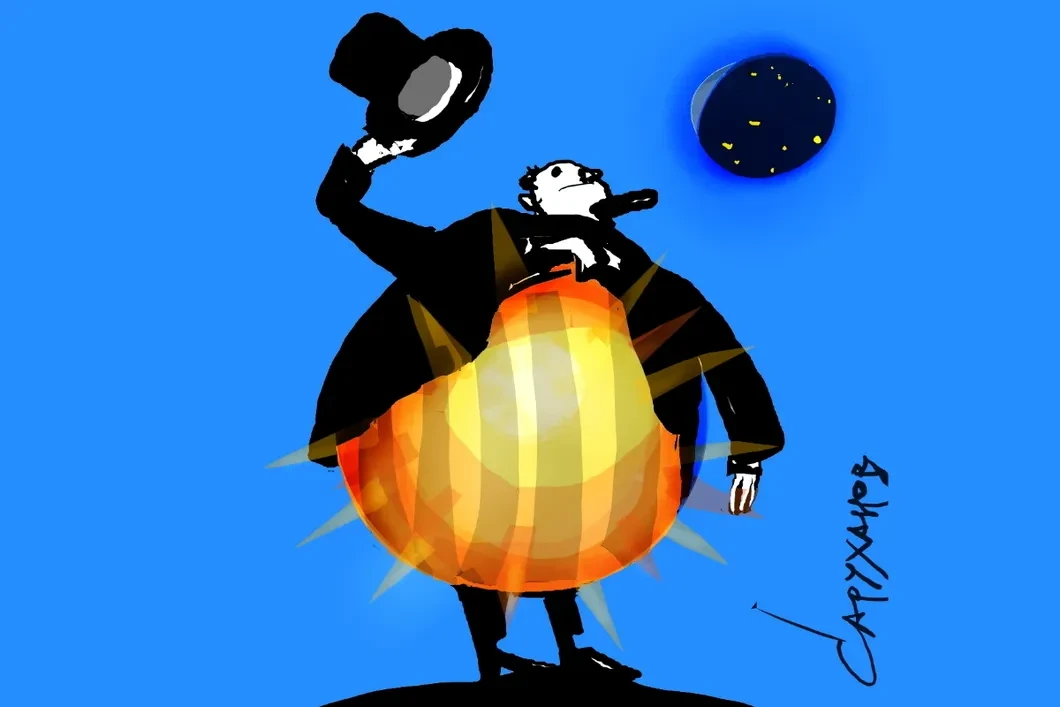
To deal with how all this happened to our country, more than one generation of sociologists and historians will be required. Here is one small hypothesis. All major beneficiaries of the modern Russian economic structure received Soviet education, and many were even members of the party. In the lessons of scientific communism and in popular books scouring the “decaying West”, they received a clear picture of the structure of the capitalist society. It is ruled by purebug and greed, workers are erasing a miserable existence, and the caricature bourgeois in the cylinders eat foie grabs, looking from the windows of their ecologically clean palaces at the dirty slums of the poor.
And now everything came true, because in the USSR there was a good education. When it came to the construction of unknown capitalism in Russia, the former Soviet people had something to be inspired.