
Translated material
Documents of this future
The time of the cinema is ontologically different from the time of the railway schedule: the moment on the screen is extended from the past to the future, burdened by the memory of the past and the foresight of the future (so the lexical unit of the film, the mounting joint is born in the minds of the viewer from a combination of two frames and the gap between them). Also, films from this collection see the present as transit from the past to a vague, poorly articulated, but nevertheless very real future, the absence of the prospects of which philosophers and sociologists are so often lamented today.
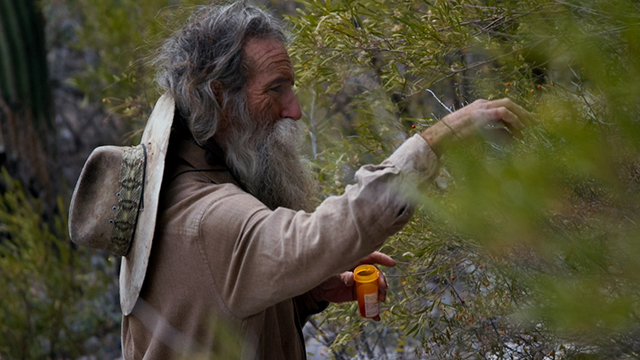 © International Film Festival "The Meridians of the Pacific" "The Essays of the Coming" ("A Shape of Things to Come") directors Jay Pi Rastydka, Lisa Malla
Jay Pishadetka is a director close to the Harvard Laboratory of sensory ethnography, known for his experimental approach to documentary and actively using the affective capabilities of the cinema in his anthropological studies (their most famous work is Leviafan, shot using the Gopro Two -Council of Rybolovets; about another experimental picture - about another experimental picture - about another experimental picture. Audio movie - we recently wrote here ). In 2017, the shooting-off, together with the Canadian filmmaker and sound artist Joshua Bonnett, released the iconic film “El Mar La Mar” , immersed Sonor's deserts in the world, which is located on the border of Mexico and the United States and which is searching for a better life on foot by numerous migrants; Many of them do not get to the destination (the name refers to another deadly migration frontier - the Mediterranean Sea). Two years later, Rastyki, taking the debutant Lisa Mall, returns to Sonora to the co -author to look at this landscape from a completely different prospect. “The outlines of the future” - the film is much more minimalistic and not directly pronouncing its political context. Nevertheless, this is the continuation and expansion of the previous work of the Writing, giving the new film additional volume.
This time, the focus is the white American hermit Sandog (we learn the name of the hero only from the credits), buying his everyday life and symbiotic relationships with the surrounding nature: hunting for wild boars, caring for homemade cattle, collecting herbs and psychedelic toads distinguishing buffotoxin, which he dries and smokes.
 © International Film Festival "The Meridians of the Pacific"
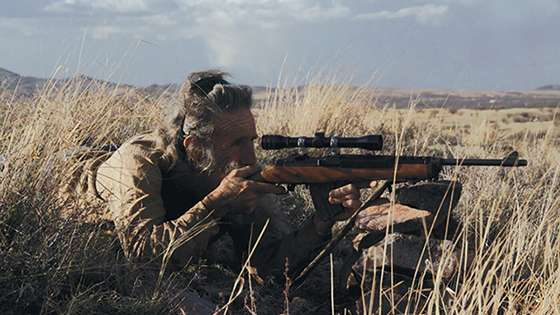
Before us is an immersive, masterfully removed and intensely built portrait of a person who significantly succeeded in social distance, but is still in dependent relations with civilization: uses a mobile phone and car - and despises the border security service, especially their observation tower, hung with all kinds of sensors and night vision cameras (personnel removed from such a device, is opened movie). The context remains behind the scenes, we can judge the biography of the hero only by indirect evidence, but clever work with sound and installation, expected to actively engage the audience organs of senses, creates a feeling of gradually increasing stress. And although there is no need to talk about classical dramaturgy (the closest cinematic relatives are dedaramatized films about her losers: “Two years at sea” by Ben Rivers and “Stemple Pass” by James Benning, which is the basis of the real story of Unabober), the film still has its own moments of climax. You experience special satisfaction when Sandog with a sniper rifle goes to the desert and (successfully) shoots the observation tower. There is a scene of a buffer-trip , surprisingly similar to the dream of a banana from Asssa.
But in comparison with the El Mar La Mar, the form of the new film of the Wizardka is much more conventional, close to classical observation documentary documentaries - however, work can also be found here with thin social matters. The “outlines of the future” is not only a documentary western, a leading strange dialogue with the Hollywood tradition, but also a metaphor for a potential future. The name, unambiguously referring to the novel by Herbert Wells, makes you look at the angry hippies as a person living in the shadow of the apocalypse. In Wells, in the future, the Totalitarian Anglo -Saxon state, which was tormented by wars and diseases by wars and diseases, which enlightened citizens transform into peaceful utopia. In the film, Vyskaki, we see how a person builds up his autonomy from civilization and protects with weapons in his hands.