
Translated material
Symphony of Malera. In Germany, the founder of RAF, convicted of denial of the Holocaust, was released in Germany
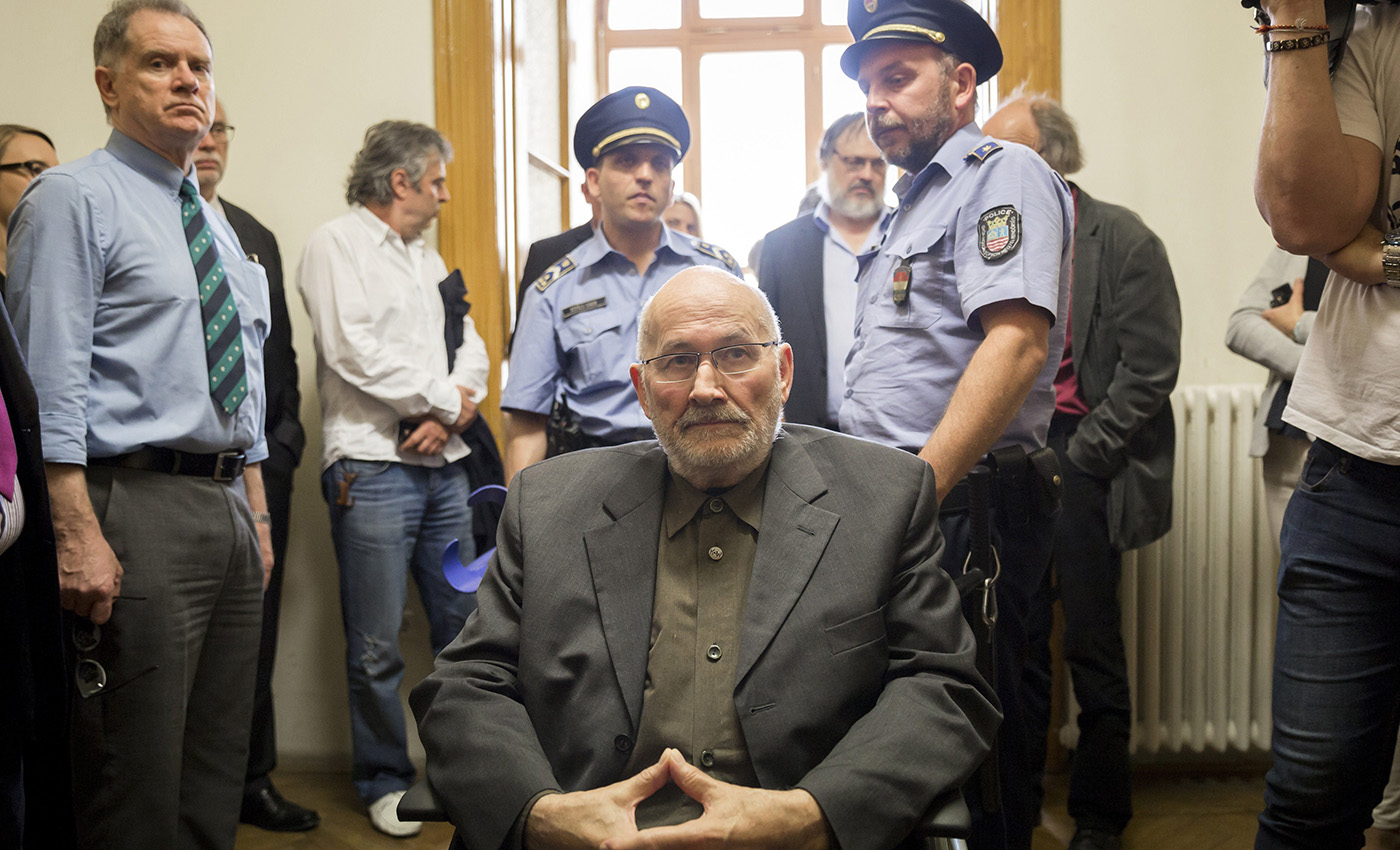
Horst Mahler, 2017. Photo: Balazs Mohai / Ap
On October 27, after ten years in prison, the 84-year-old German politician Horst Mahler was released in prison, whose path from levoradicals to the ultra-right makes him one of the most striking and paradoxical figures of the post-war generation.
1978. Early a bald bearded man sits in a single chamber furnished with book regiments and talks with a journalist, putting a finger to his temple. The finger seems to help him pull out thoughts out of his head.
2017. The same characteristic gesture of a finger at the temple makes a peppy old man in a wheelchair, talking with another journalist in the corridor of the court. Soon this court will return him to prison for another three years.
In addition to forty years of the heroes of these two videos, the ideological abyss shares. The first is a well -known lawyer who, from the protection of left -wing radicals in the courts, moved to direct action and became one of the founders of the Red Army faction (RAF) . The second is a neo-Nazi revisionist, representing in court the ultra-right National Democratic Party of Germany (NPD) and convicted of the denial of the Holocaust.
This is one and the same person, his name is Horst Mahler.
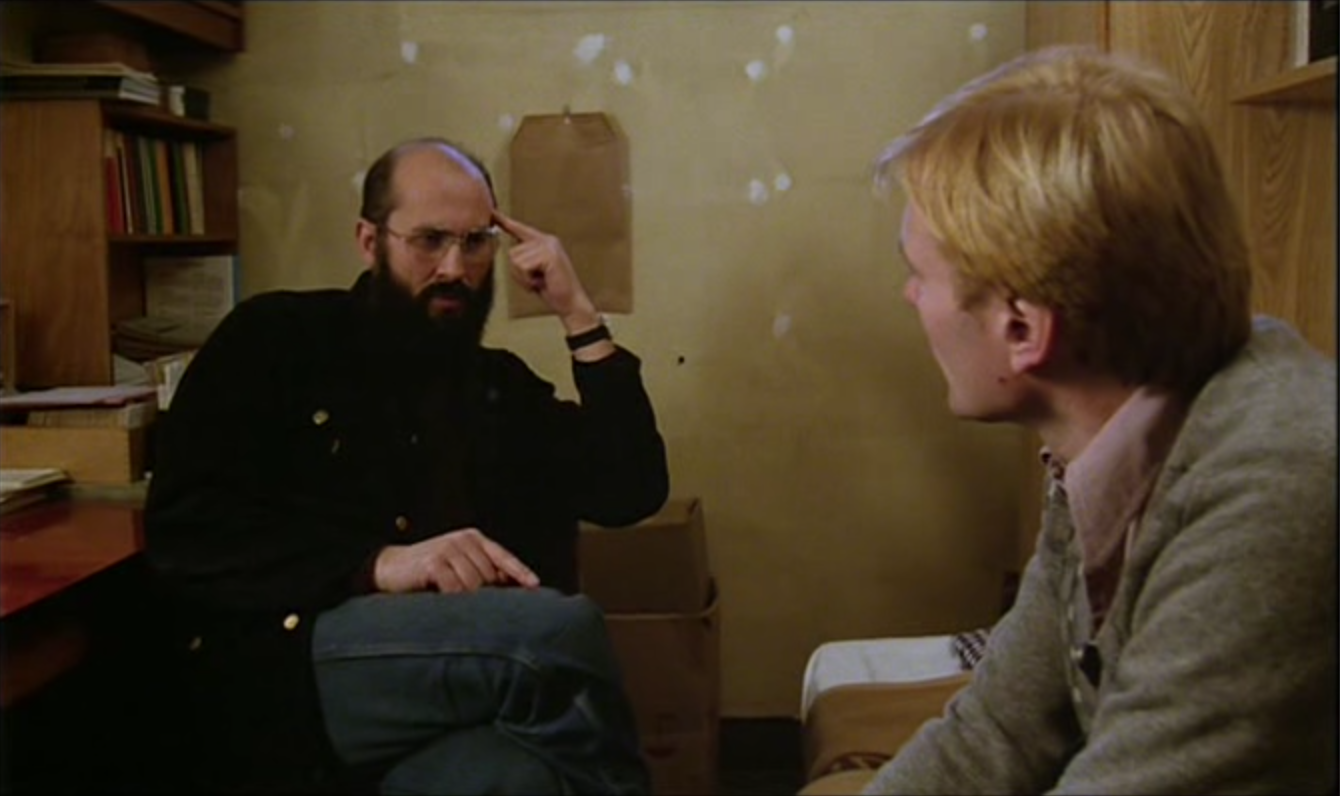
Horst Mahler in a prison cell, 1978. Frame from the film "Germany in the fall"
Left
“In 1945, only the political power of German fascism was defeated, the ideological power was only partly. But the anti -fascist revolution in Germany never happened. In a sense, this was a realized only during the student riots of 1968, when it finally reached us what fascism was, and that his social prerequisites remained with us. They continued to exist both in Germany and in other countries, especially in the USA. In 1967, it all started with protests against the war in Vietnam, ”Mahler reasoned in a prison interview, which was included in the classic documentary of Rainer Werner Fassbinder“ Germany in the fall ”.
The first German lawyer, who managed to achieve a complaint in, the founder of the “socialist team of lawyers”, a defender of protesters and activists, and then the ideologist and practitioner of left -wing terror, behind bars by the time of this interview, he had been spent eight years old. Malera was sentenced to 14 years in prison as the founders of the “Red Army faction” - a group of young people who were disappointed in the system policy who adopted the tactics of the city partisan war from the South American left -handed movements and unleashed terror against civil servants and representatives of the establishment. The group committed dozens of resonant murders, expropriations and explosions, against it, the entire power apparatus of the West German state was mobilized - to which, however, for another three decades it was not possible to cope with the new generations of the followers of Maler and his comrades.
One of the first convicted members of the Red Army faction , Mahler was one of the first to have publicly broke with the organization.
“The people did not understand us, and could not understand us. We ourselves were to blame. It’s not a campaign against us, not the stupidity of the masses, as they usually say, but the fact that our consciousness did not correspond to reality, ”he says in“ Germany in the fall ”. “We need to think about why this society, which we criticize, the decomposition of which we have so clearly seen for decades, is still able to provide us with such an insurmountable, rigid resistance?”
When in February 1975 the chairman of the city branch of the Christian Democratic Union Peter Lorenz was abducted in Berlin, Mahler refused to participate in exchange, although terrorists achieved his liberation.
In 1980, Mahler ahead of schedule was released by the efforts of his new lawyer Gerhard Schroeder , the future federal chancellor, who later managed to even achieve his client in advocacy.
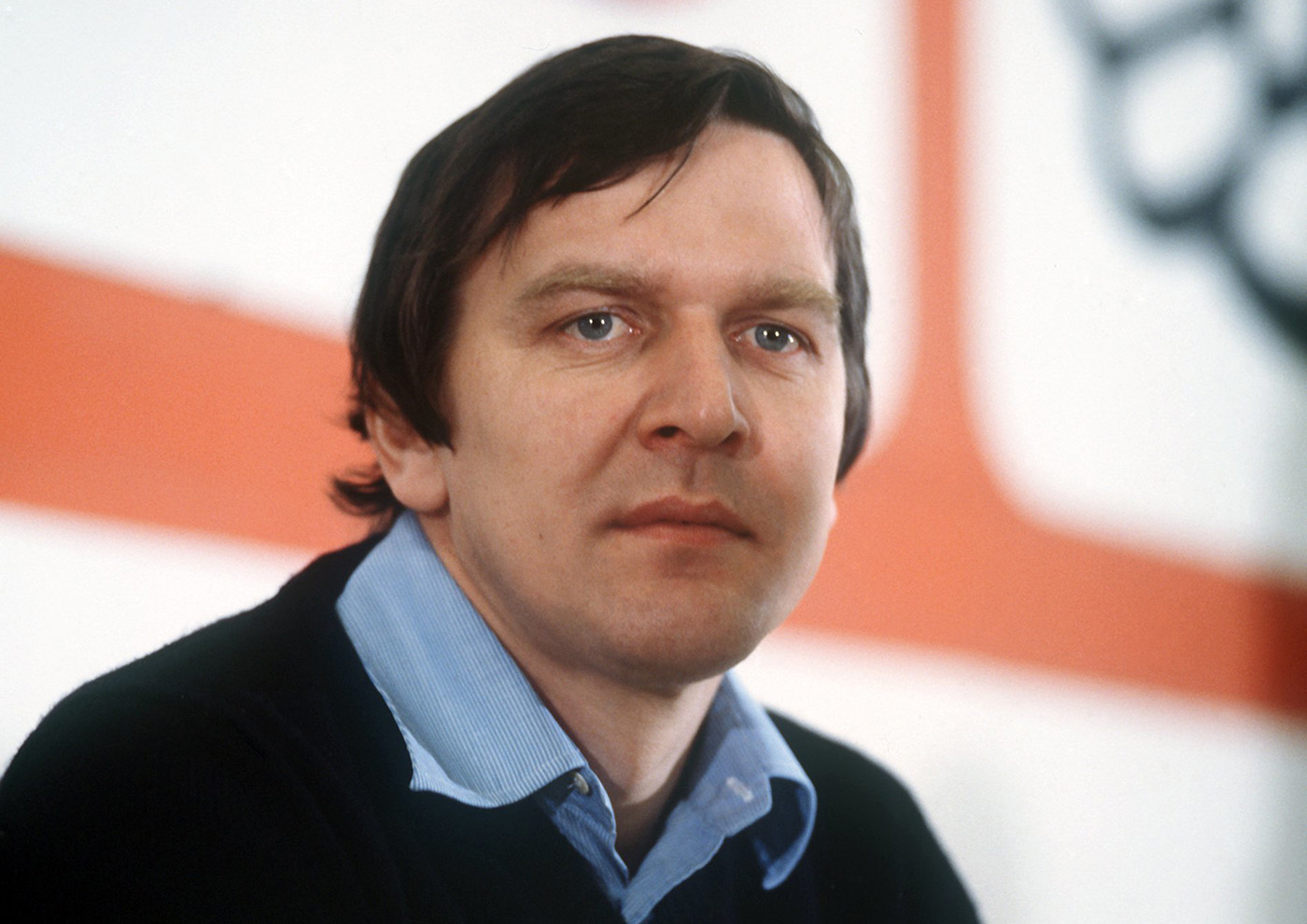
Gerhard Schreder, 1979. Photo: Manfred Rehm / DPA / AP
Right
RAF officially ceased to exist only in 1998, when representatives of the fourth generation of combatants announced self -dissolution. By that time, all the founders of the group were dead - except for Mahler, who torn all ties with former comrades. Disappointed in left -wing ideas, now he attacked the German state and society on the right.
His “appeal to the Germans, who still want to know about the position of their people” of the same 1998 draws a frightening scenario of “capture” by Germany by migrants “from the Islamic world”. According to Mahler, such an inglorious finale became possible due to the post-war “re-education”, which turned the Germans into a “forever loan” people “without will to the nation” with the “cult of memory of the victims of the Holocaust”.
At the same time, Mahler himself does not find the evolution of his views of the inconsistent and sees a certain logic in it - in an article for the right edition of Junge Freiheit, he wrote: “The generation of 1968 destroyed traditions and religion as worldview concepts ... and our people brought a step closer to mature vacuum, in need of some thought, some mental effort. “The state of absolute denial, which threatens the destruction of us as people and us as a people, must be recognized as a positive, in a sense, the historical merit of the 1968 generation.”
Such a sharp change in political views coincided in time with the advent of Gerhard Schroeder to the post of Chancellor Germany; At the end of his first term, in 2004, Mahler repeatedly lost his lawyer status.
In the early 2000s, the RAF veteran joined NPD, announcing that he considers the Federal Republic of Germany “a temporary decision for the transition period before the restoration of the German Reich”. Then the German authorities decided to achieve the ban on the party through the court: Maler himself defended the ultra-right, and the Minister of Internal Affairs of Otto was represented by the state of the state-a lawyer who defended Mahler, who defended Mahler after the detention in the case of terrorism in the 1970s. As a result, an attempt to ban the right -winging organization failed - it turned out that its leadership included many implemented special services, and the court could not establish the extent to which the party’s decisions were independent; After that, Mahler left the NPD .
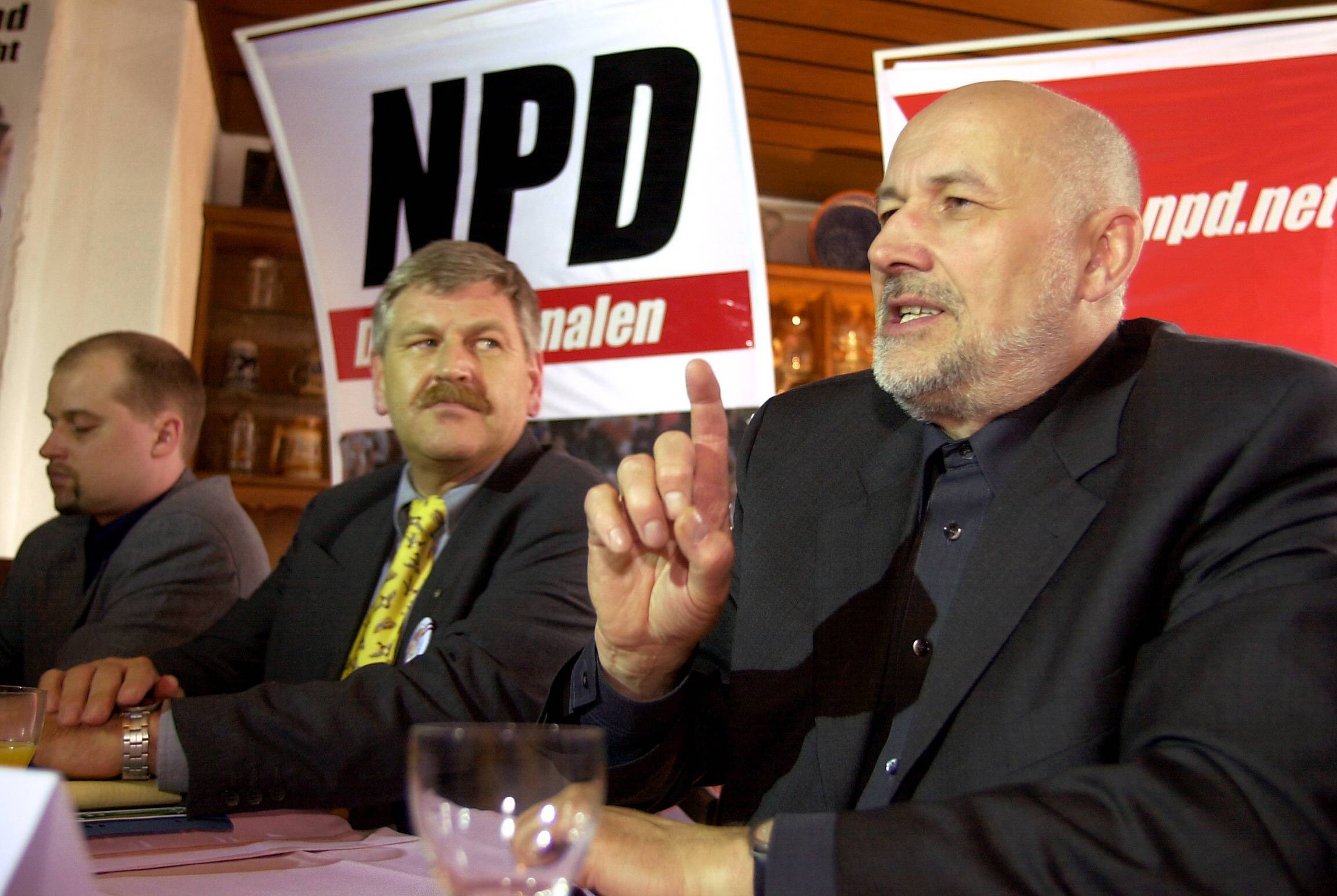
The leader of the NPD Udo Foygt (in the center) and Horst Maler (right), 2002. Photo: Imago / TASS
Further - more: annulation of the passport after an attempt to go to Iran at the conference on the “rethinking of the Holocaust”, the final deprivation of the lawyer status and courts for anti -Semitic statements and “Heil Hitler” during an interview with the Council of Jews of Germany. In 2009, Mahler received a new 12-year term-for denying the Holocaust and inciting enmity.
But he disappeared from the news for a short while - in the summer of 2015 he was placed in a civil hospital on his leg amputation, and then for a long time they could not decide whether the elderly prisoner’s illness served as a sufficient basis for liberation. In 2017, Mahler took advantage of the indecision of the authorities and announced that he had left Germany; He gave a petition for refuge in Hungary, the leader of which Viktor Orban maintains close relations with foreign politicians of the ultra -right. Nevertheless, Malera was deported to Germany by court decision, and there they returned to prison.
In 2018, he was amputated the second leg, but refused to release, since the convict "needed a palliative care at the final stage of his life." When the deadline has come to an end, the SueDdeutsche Zeitung newspaper had to edit the heading of the material about its release, because the idiom “Auf Freim Fuß” in this case sounded mockingly - literally “on a free leg”.
Free
On October 27, 2020, 84-year-old Horst Malera was released from prison in Brandenburg, although “with an asterisk”: the Munich prosecutor's office has already filed an application for supervision after liberation, and the Kotubus prosecutor’s office was preparing to pursue Malera for new accusations of hatred.
The German Criminal Code gives judges the right to assign prohibitions on certain actions for convicts and after serving the deadline - for example, street racers can prohibit owning sports cars. In the case of Mahler - in addition to five -year supervision - the prosecutor's office asks for prohibiting the publication of any texts and speeches on the Internet without prior notice to the police.
The position of the Mahler himself is given on the site created by his supporters: "The Federal Constitutional Court ruled that the criminal convicted by law, as well as a" free "citizen, cannot be prohibited from developing and spreading" law-facility or national socialist ideas. "
It is not a prohibition of publication, but only about the mandatory notice, they assure the prosecutor’s office, noting that “sentences have not influenced the convicted person,” and he can continue the spread of anti -Semitic ideas.
"But still think: is it censorship?" - Comments Seweddeutsche Zeitung proposed by the prosecutor's office. The figure of Horst Malera generally raises a lot of questions from the newspaper - the heading of the article about his release reads: “What to do with an incorrigible person?”
Editor: Dmitry Tkachev