
Translated material
Doomed to loneliness
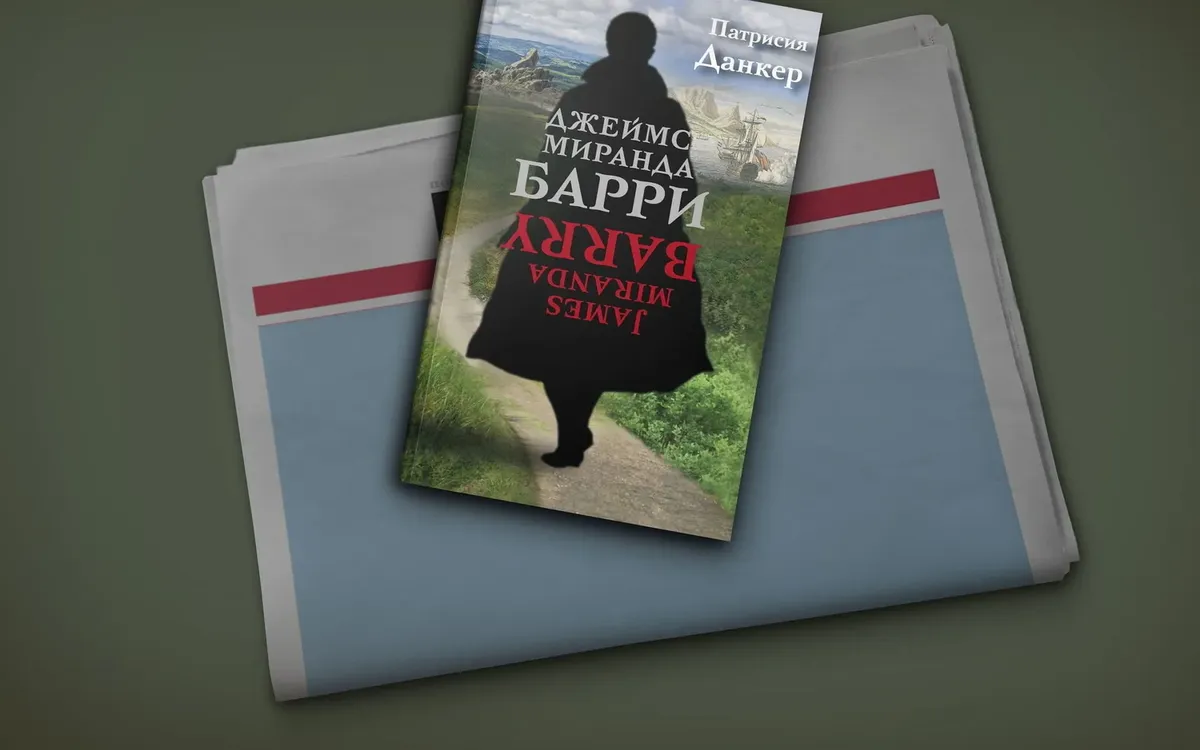
"James Miranda Barry" Patricia Danker: A book for the weekend from Ekaterina Pisareva
From the editorial office
Once a week on Fridays, Ekaterina Pisareva, the chief editor of the MyBook book service, including 260 thousand publications and 50 thousand audiobooks, will know with knowledge not only about the most interesting new products in 2020, but also choose those that can be read quickly and with pleasure.
The British writer Patricia Danker is known to the Russian reader in the collection "Seven Tales of Sex and Death." Her new novel “James Miranda Barry” is dedicated to the real person - a well -known surgeon, reformer of the medical case, who was actually a woman and hid it skillfully all his life. Twenty years passed before the book was published in Russia. The novel was published by the Sinbad Publishing House in the translation of Alexandra Borisenko and Viktor Sonkin-and more recently, experts of the Yasnaya Polyana-2020 award recognized him as the best foreign text in Russian.
The story of a famous woman pretending to be a man is not unique - at least one can recall the novel “John - a woman on the papal throne” Donna Wolfolk Cross, filmed by the director Zenke Vortmann. But if the cross was based on a beautiful legend, then the existence of the character of Roman Danker is documented.
James Miranda Barry really served as an army doctor from 1813 until 1859, and his gender caused many disputes during his lifetime.
Danker carefully studied the materials and wrote its version that does not claim to be historical reliability. As the author admits, this is "a fantasy on the topic of individuals of a very strange life." It was important for Danker to show how he felt a hero who sacrificed everyone in the name of freedom and a better life. But did this freedom bring him happiness and how did she turn around?
We all understand that the role of a woman in the world of men in the Victorian era is marriage as personal Calvary and the complete lack of realization. The beautiful Mary-Enn Balklley, who had been living as a mistress of a very influential person, had not such a future for her daughter, not such a future. She, like no one else, understood how humiliating to be objectified, how defenseless and unfortunate women and how are the short -lived of their century. It was she who gave the idea to her roommate, General Francisco de Miranda, and her brother, artist James Barry, to make a man out of her daughter - to give her a new name and send her to study in Edinburgh. So appeared James Miranda Barry, a student of a medical university. He is fastened with all the buttons, as if dressed in armor, restrained and attentive. Ahead of him is waiting for a large, but lonely life full of adventures - he will visit different corners of the world, will witness amazing events, save countless lives and become a legend.
In total, the book has six parts, each of which is dedicated to a separate period of the hero’s life. Danker skillfully changes the perspective, then telling the story in the first person, then looks at James Barry from the side.
The most fascinating part is the first - the hero dedicated to childhood. She is very tender, lyrical and fabulous -
This is the child’s view of the world that surrounds him. In the center of his universe, his beloved (he does not call her mother), which he loves and is frantically jealous when he sees how his mother’s attention is spent on someone except him. Danker very accurately draws a psychological portrait: he describes the painful, edipic love of his mother and the vague fears of a child who is confused in who he is. The fact is that no one calls a hero by name and does not identify as a girl - the cohabitant of the mother addresses him only as a “soldier”, and his mother is emphasized neutral “joy” or “baby”.
“They never dress me as it should be dressed in my daughter, and I swim in the uncertainty between two safe worlds - the world of bows and the world of Bridge,” says future James Miranda Barry. This gender neutrality, ambivalence, then it will help him very much - the final reincarnation into a man will pass organically. This will especially be affected by his acquaintance with the woman of his whole life - Alice Jones.
Alice is a key figure in the history of Barry and, of course, invented by the writer. The hero meets her at the age of nine and falls in love for life. Alice is not at all like Barry - she dreams of personal freedom, about a better life, that she can climb the social ladder, even being a woman. She uses all possible manipulations to achieve the desired - fame and position in society. She wants to live richly and good. And while Barry will be engaged in philanthropy, saving people around the world, Alice will “improve her life through his own efforts” and fight for the right to happiness. Thirty years later, they will reunite - as in classic love novels.
By that time, a tiny red -haired doctor with Arctic cold hands will already make a dizzying career and conquer the military garrisons with its determination and fundamental. Together with the hero, we will find ourselves in the colonies and tropics, we will witness duels and uprisings. He will break female hearts, fight with epidemics and get out of any situation by the winner.
An important fragment of the novel is the part in which Danker describes the Negro riot for his freedom and independence in detail, against slavery and arbitrariness (according to the writer, she was very helped by Mary Turner’s book “Slaves and Missionaries: the breakdown of the Society of Yamaika slaves”, which describes the uprising of 1831). Barry will sympathize with those who have been depressed for centuries - he will perceive the bloody riot as an inevitable consequence of slavery and an attempt to achieve justice.
Roman Danker is as many as her hero. It can be read as a story about the strength of the spirit and the mystery of the human soul, but you can like a novel about freedom and what it sometimes turns around. It is curious that the book about the beginning of the 19th century, written by the author in 1997 (date of the first version), suddenly turns out to be a mirror of 2020. Patricia Danker manages to create an relevant story, as if having absorbed all hot topics: from the female question and Black Lives Matter to the emergence of deadly epidemics. It is amazing how sometimes literature and life rhyme - surprisingly and bewitching.