
Translated material
Not only about abortion
In Poland, mass performances against the policy of right -wing conservatives do not stop in Poland
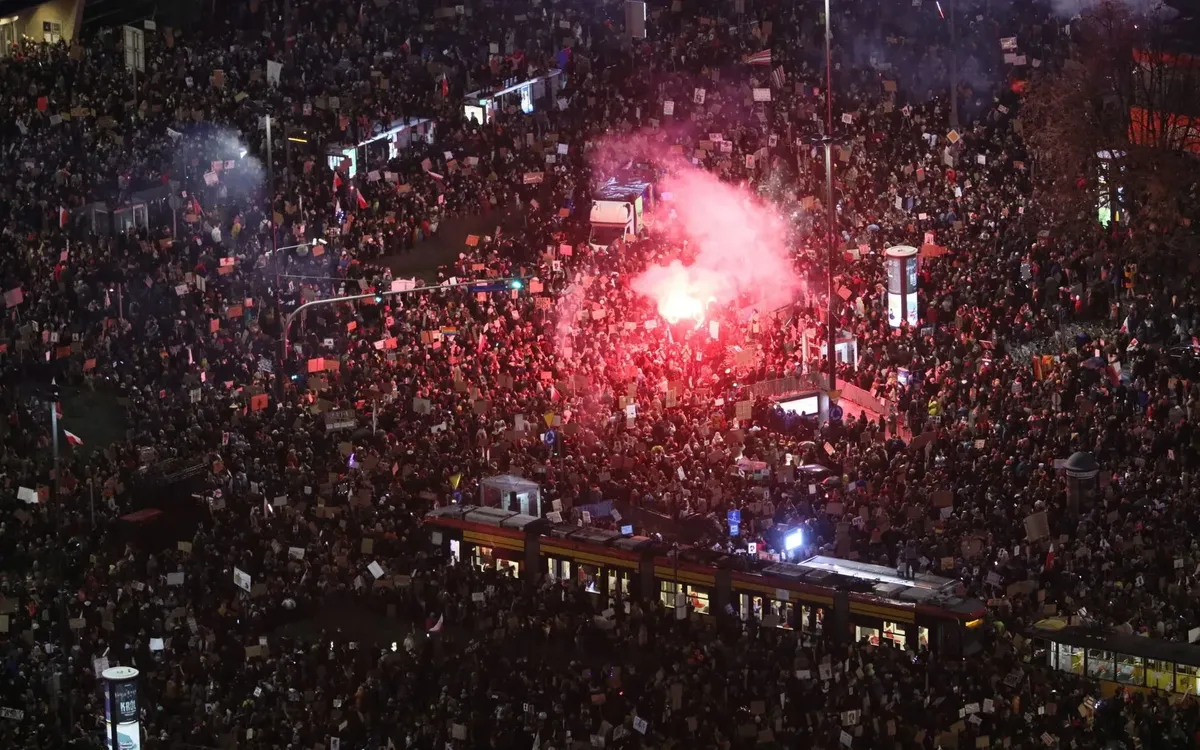
Poland has been shaken by protests for a day. In the evening of October 30, the “march on Warsaw” by opponents of the ban on abortion gathered thousands of participants from all over the country. It is known about the clashes of its participants with nationalists. The reason for the protest was an unexpected violation by the constitutional tribunal of public consensus in relation to the legislation regulating abortion. However, the reasons for dissatisfaction with the policies of the authorities in Poles and Poles are much greater.
Since 1993, Polish law has been quite rigidly regulating the situation permissible for abortion. Having inherited the opportunity to have abortion from the socialist system in the event of a “difficult life situation” of women, Polish society and the authorities, through difficult dialogues, agreed to limit abortion to three situations.
REFERENCE
When you can do an abortion legally
- The onset of pregnancy as a result of a probable criminal act (incest, rape, etc.),
- The threat of mother’s life,
- The presence of a severe and irreversible defect or an incurable disease that threatens his life has the presence.
It was the last, third case that the Constitutional Tribunal recognized the contradictory basic law of the country. After the official announcement of this decision, the authorities will be obliged to stop applying this norm of the law. As a result, Poland for almost a week - especially its large cities - turned into a place of mass protest marches, which collect primarily women and adherents of levoliberal views.
Supporters of toughening the ban on abortion cite arguments in favor of the rights of the child, which they consider the fetus from the moment of conception. They also argue that now, as a result of genetic screening under “heavy” cases, for example, the syndrome of Down, Shereshevsky-Terner and other deviations, the interpretation of which, as “heavy” over the past 20-30 years, has changed.
Opponents are divided into several camps and represent various political views. The most prepared for the marches were representatives of left -wing parties and movements. However, not only supporters of the radical expansion of the right to abortion come to the marches, but also convinced anticlericals, as well as believers who believe that the Catholic Church (namely, her hand is seen in such initiatives) should not force children, but to persuade parents to give birth to children whose chances of survival are sometimes close to zero. Many publicly expressing discontent remind that the Polish state cannot cope with the function of social assistance to children with disabilities and that most expensive operations have to be done at the expense of private donations.
A similar wave of protests took place in 2016, when the legislative initiative of the group of deputies to tighten abortion caused such public indignation that the ruling party refused to consideration. Then the Polish in Poland and around the world reached the so -called "Black Saturdays."
A symbol of protests this fall, like four years ago, was red lightning. A new slogan was added to it: the Polish word WypierDalaj, which in an extremely softened version can be translated as “Leave!”. This slogan has repeatedly repeated the protesters at the house in Zholibozh, the Warsaw area, where the leader of the right-conserving party “Law and Justice” (PIS) lives, and recently, Deputy Prime Minister of Poland, Yaroslav Kachinsky. In response, the police used tear gas.
In some cities, men in masks attacked the protests, in one case a car intentionally drove into the crowd.
They do not support the decision of the tribunal and polls of public opinion. In the poll conducted by the IBRIS Institute, by order of the Virtual Poland portal, 51% of the respondents spoke out to maintain legal status established in 1993, 32.4% for the liberalization of abortion legislation, and only 12.2% for strengthening the prohibition.
The rhetoric of the Polish authorities by decision of the tribunal is ambiguous. Yaroslav Kachinsky, in circulation of associates on the party on October 27, published in the pro -government media, chose the language of enmity: “Protect Poland, protect patriotism and express decisiveness and courage. Then you can win the war unleashed by our opponents. ” According to Kachinsky, the protests on the issue of abortion are just an occasion to impose an ideology alien to her and “finish the history of the Polish people that we knew”.
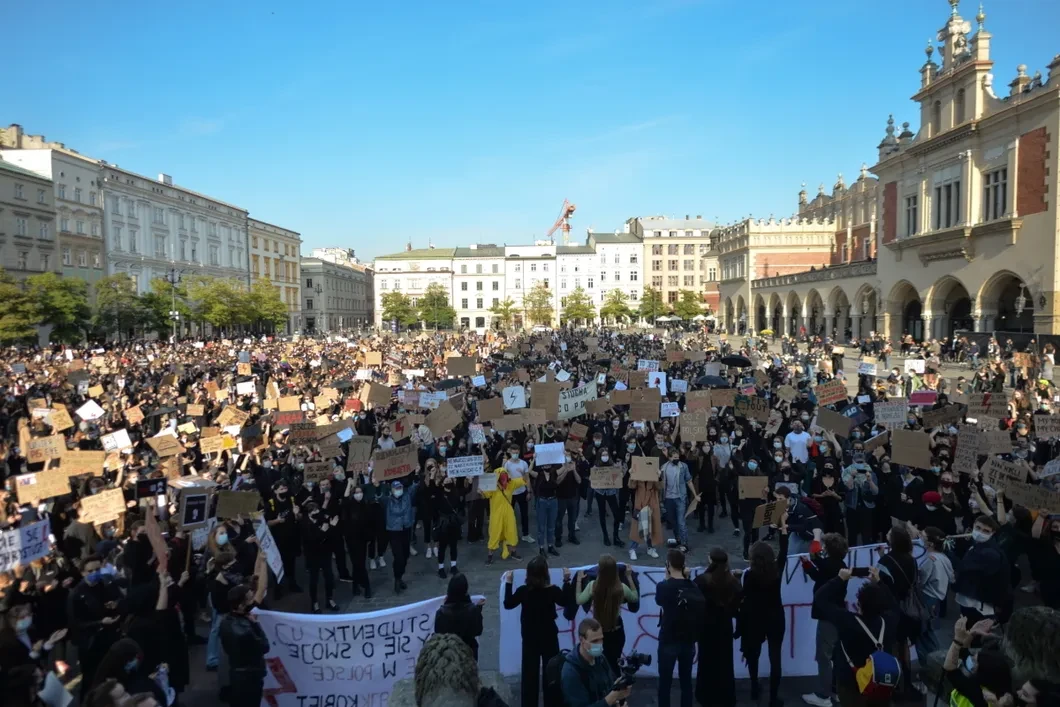
Polish President Andrzej Duda, after a long silence, rather did not support the decision of the tribunal. The president proposes to adopt a law that will leave the opportunity for women whose children would die shortly after birth or whose life would be accompanied by unbearable pain, to decide on abortion.
However, he did not dare to declare that this problem exposes several problems of modern Poland at once: the growth of right -conserving sentiments, increased church intervention in private life and the inability of the social and medical sectors to cope with the load, especially intensified during the pandemic time.
In 2014, the mothers of the disabled occupied the Polish parliament and did not leave it for several weeks, seeking to increase the benefits and provide greater assistance. Guarantees were given, but the protesters returned to the Sejm and after the change of power in 2016 and 2018. Many children born with severe disabilities require custody and expensive rehabilitation and after adulthood, and the average monthly pension for an adult disabled person is a little more than 1200 zlotys per month (260 euros). As a rule, both the disabled person and his unemployed or little earning mother should live from this income and benefits for the guardian, since in families with such cases are frequent stains in which the child remains with his mother.
Do not underestimate the effect of COVID-19. During the pandemic, all clinics serving the population on state insurance have passed into the mode of telephone or Internet consultations. The queues for recipes lengthened, it is impossible to get to the hospital with planned operations. This also applies to families where children suffer from severe forms of disability and genetic diseases. It's no secret that
Many people who wanted to have an abortion of the Polish had previously traveled to neighboring Slovakia or the Czech Republic.
However, the closure of borders due to pandemia or the need to pass tests or quarantine, coupled with overloading medical institutions in those countries, make this almost impossible.
A possible way out of the situation, lawyers call the adoption of a new law identical to the previous one. This law can again appeal in the constitutional tribunal, but the procedure for considering a new complaint will be long. After the adoption of the new law, the ruling coalition will begin the discussion that it can be changed in the right now.
“We believe that it is necessary to store the lives of children with Down syndrome. But at the same time, it was impossible to allow cruelty to women or coercion to heroism, and this would have happened if mothers were forced to give birth to children who would die during the birth or immediately after them, ” -
Vice Prime Minister Yaroslav Govin, representing the Pisa-ruling coalition partner, the Consent party (Porozumienie).
Despite the attempts of the authorities to calm the situation, the protests have already put forward a number of broader demands. One of the leaders of the protests of Marta Lampart said that since the appointment of judges by the ruling party was in violation of democratic norms, court decisions should also not be interpreted as legal. Other protests are also of the same opinion. And this means that, trying to extinguish the flame in which a compromise on abortion is on, the authorities may not cope with the fire of discontent with steps that “law and justice” has been taking from the moment he came to power in 2015. In the postulates of the female movement - ensuring the secular nature of the state, an honest procedure for the appointment of judges of the Constitutional Tribunal and the Supreme Court, increasing the costs of healthcare in the budget and the resignation of the government.
Maria Sadovskaya, especially for "New",
Warsaw