
Translated material
Died Alexander Vedernikov - conductor, who reformed the Bolshoi Theater
Critic Dmitry Renansky recalls how the entire Russian musical culture has changed as a result
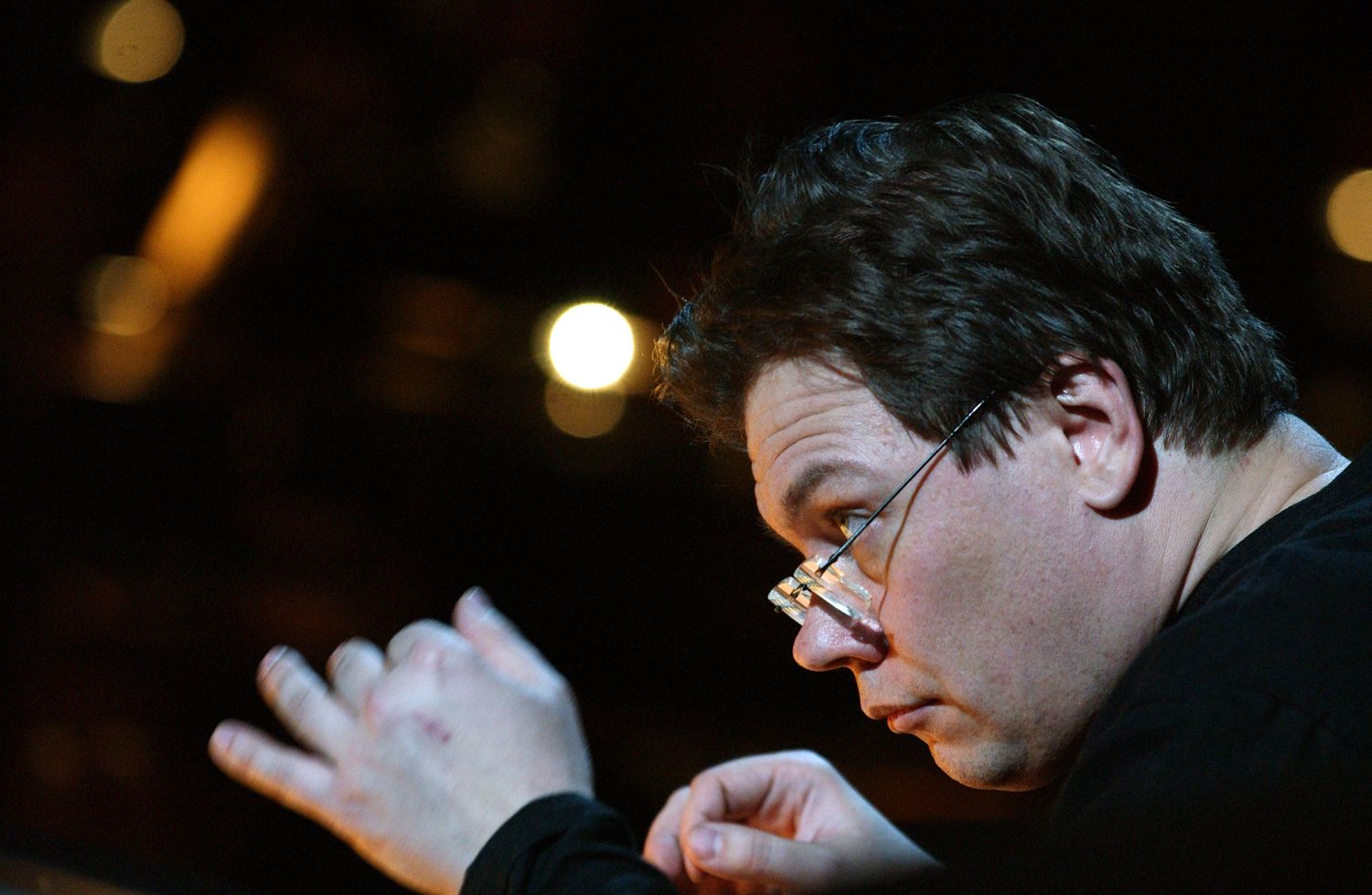
On October 29, in Moscow, at 57 years of life, conductor Alexander Vedernikov died from coronavirus. From 2001 to 2009, he was the musical director of the Bolshoi Theater, and after the resignation made a brilliant international career. For the past ten years, he almost did not perform in Russia - even after in 2019 he became the chief conductor of the Mikhailovsky Theater. At the request of Medusa, music critic Dmitry Renansky tells why, in the latest history of Russian culture, Alexander Vedernikov will enter one of its most important and most paradoxical figures.
Alexander Vedernikov sequentially and, it seems, was quite consciously breaking out of all the traditional social frames, desperately not wanting to fit into the behavioral comme il faut. The heir to the venerable musical dynasty, the son of the famous bass Alexander Vedernikov Sr., the keeper of the traditions of the Bolshoi Theater of the Union of Soviet Socialist Republics, in the 2000s Vedernikov, Jr., carried out the most daring reform in its history. When in 2009 he felt that he had done everything he could, he resigned-having made a gesture that was unprecedented for the domestic cultural scene, for which the problem of irremovability of power in recent years is as acute as in politics. Having left a large and almost completely switching to the foreign music market, Vedernikov again deceived expectations-instead of resting on the laurels of a patented specialist in the Russian repertoire, he easily mastered in the European artistic context: all his key successes in the 2010s are associated with the Western music of the twentieth century, which remains for the absolute majority of Russian distresses Terra Incognita.
At each moment of his rapid and sometimes dramatic career of buckets, he acted and looked completely different from how to expect his background and his status from the artist. The stage image and human habits, he did not at all resemble the inhabitant of the musical Olympus: was a defiantly non -public figure, extremely rarely gave interviews, was not seen in near political games or in secular activity, without which it is impossible to imagine the life of the head of any major cultural corporation - in Russia, in the West. Vedernikov preferred all this to the indigenous Muscovite, a secluded leisure in the forests of Finland, where he had a small house not far from Savonlinna. The intellectual, phlegmatic, ironic, the owner of emphasized a quiet voice, in a quarter century of his career, Alexander Vedernikov managed to refute the common axiom that conducting is the profession of the second half of his life.
To the Bolshoi Theater: Musical Perestroika
Vedernikov was lucky to enter the stage during the years of tectonic shifts of the cultural process, the generational road of the late 1980s and early 1990s. The crisis of the “large style”, which determined the appearance of the late Soviet musical and opera industry, outlined the unenviable fate of its key institutions - from the Tchaikovsky contest to large symphony orchestras and large philharmonic halls, gradually orphansion with the departure of their many years of owners, dictators and tyrants, one after another, who were doped or gone from the other after another, who were dumbfounded or sent from distances in the last years of the twentieth century. It needed time new cultural heroes who could steal the ash inherited by him and renew the structure of the post -Soviet art market. In this sense, Alexander Vedernikov looks like the direct heir to his senior colleagues Valery Gergiev and Mikhail Pletnev: while one in the early 1990s was engaged in a reflective and clumsy Opera and Ballet Theater named after Kirov in the dynamic Mariinka, the other founded the first private orchestra in the country-Russian national.
In 1995, Vedernikov acutely felt this request for institutional perestroika, to create new flexible cultural platforms, which would not be connected with the Soviet past. The 31-year-old conductor becomes the musical director of the “Russian Philharmonic”-a symphonic orchestra founded by TV-6. Yes, the Russian National Orchestra Mikhail Pletnev at that time quite successfully existed for five years. Yes, independent musical groups in Russia of the 1990s grew like mushrooms after rain-but an orchestra that did not have a constant residence permit on the metropolitan stage, independently defining repertoire policy and did not subordinate to any of the cultural corporations that still looked out of the ordinary, quoting the emerging order of things for decades. In 1998, the “Russian Philharmonic” broke up after the default, but in the spring of 2001 Vedernikov will be able to revive his first orchestra. This time, in full agreement with the state course to strengthen the power vertical, the Moscow government will take it on balance.
In the summary of 37-year-old Alexander Vedernikov, he will from now on not only purely creative achievements, but also the experience of anti-crisis management-he will be useful to him in the summer of the same 2001, when the Minister of Culture Mikhail Schwydka will invite the conductor to lead a large one. The spectacity of the appointment of the youngest in the history of the theater of the musical director was repeatedly strengthened by political acoustics, in which this decision was made: shortly before that, Gennady Rozhdestvensky, a conductor-patriarch, who first stood behind the remote control in 1951, left the scandal.
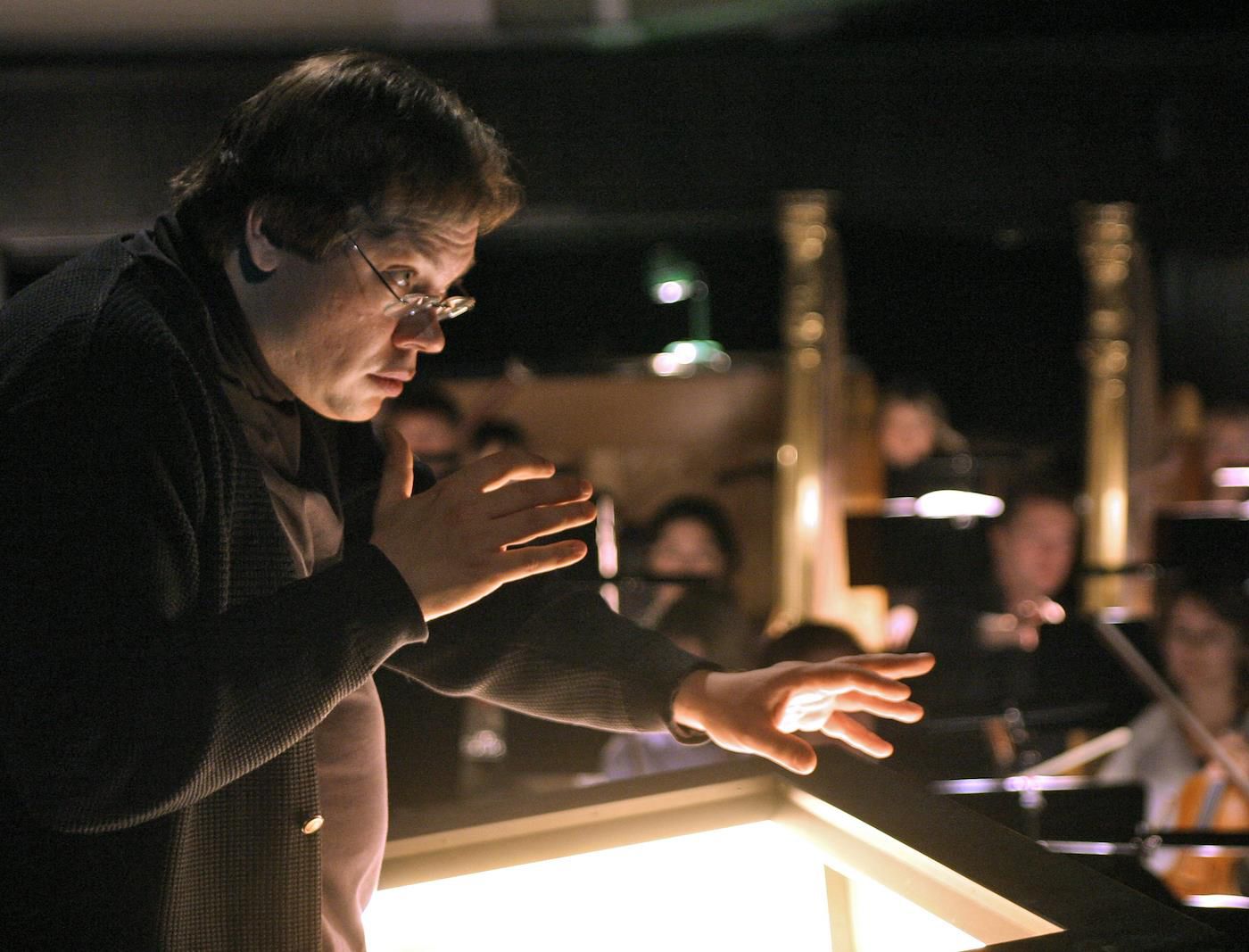
Bolshoi Theater: Reloading
In 2001, the parish of Alexander Vedernikov meant, for the offensive of the real, not calendar new century, which was exhausted by the personnel Czech of the Bolshoi Theater.
Together with the General Director Anatoly Iksanov and the head of the promising planning department, Vadim Zhuravlev Vedernikov, was to find the artistic content that could fill the ideological voids formed on the theater square after the fall of the USSR and the deprivation of the large status of the theater facade of the empire. The convinced Westerner, Vedernikov played an almost key role in this process: without the creative will of the chief conductor, all the progressive intentions of his associates could remain air castles. In the 2000s, in the large one, they created that familiar matrix in which the Russian opera scene existed until the beginning of the pandemic-with integration into the global musical and theatal market, with corps products created in partnership with foreign theaters, with rental productions and exchange tour. And most importantly-with a consistent assimilation on the Russian basis of the artistic experience of the European opera: the Bucket era in Bolshoi is a parade-alla of the Grandes of Western directing from the Peter of the Enterprise (2004) and Robert Wilson (2005) to Graham Vika (2005) and David Pauntney (2008).
The update is a keyword that determined the policy of Vedernikov in the Big.
It is he who is properiating the world premiere of the new opera, for the first time in almost three decades written by the theater by the composer-commend-these will be the sensational “children of Rosental” by Leonid Termnitnikov, Vladimir Sorokin and Aimuntas Nyakroshus (2005). It is he who will release the first high -profile premieres on the new scene of the large - the search space and experiment, over which the burden of history and ideology did not overtake. The Vedernikov knew about how toxic it could be firsthand: all the time he spent in the big one, he was doomed to a subconscious comparison with the “large conductors of the Bolshoi Theater” - with Evgeny Svetlanov, Alexander Lazarev and other adherents of performing aesthetics, which he did not want to engage in restoration. Criticism often blamed Vedernikov by the imperfection of the decoration of his interpretations, but the conductor’s ideas were in many ways ahead of his time - and will be appreciated only many years later. It is he who, long before the experiments of Theodore Cuentsis, will be the first to begin to instill in the domestic opera stage the idea of Historicallly Informed Performance . It is necessary to evaluate the courage of Vedernikov, who played in 2004 on the historical stage of the Great Ruslan and Lyudmila, trying to close as possible as the score of Glinka could sound on the world The premiere of 1842.
This radical, equally musician and political gesture of buckets, not only proposed to abandon the entire performing experience of the twentieth century - whether a joke, he seemed to cancel the previous hundred years of a large life, knew his Soviet biography.
Vedernikov did not at all take courage-you need to be a very daring person, in order in the early 2000s, for example, to decide to openly compete with Valery Gergiev, who produced operas Richard Wagner in those years. The vague object of the desire of the Russian theater and the sign of the transition to the Higher Opera League, the Wagnerian repertoire remained the Mariinka monopoly until 2004 - until the buckets are properitating in a large “flying Dutchman”, having built his dry, intellectual, corresponding to the canons of the HIP interpretation in an absentee dispute with the hyperromanetic interpretation of Valery Gergieva. The performance, staged by the living classic of the German theater Peter of the Concavor, revealed another most important property of Vedernikov’s nature - he, like few of the conductors, was ready for dialogue with directing, for collective work for the theatrical whole performance. Vedernikov was an amazing team player who spoke out of the most daring decisions that the scene offered to music.
This gift of Vedernikov will appear most fully in Evgenia Onegin (2006) - a performance that became not just a staging milestone in the theater biography of Tchaikovsky’s opera, but perhaps the central event in the recent history of the Russian theater. The decisions of the production were prompted by Dmitry Chernyakov by the scorestrack by the playwright - and he found the ideal co -author in Vedernikov. The beginning of the performance, in which the first sounds of Tchaikovsky’s music grow from tinkling dishes, the creak of chairs and other table noise coming from the stage, has already entered the encyclopedia of modern opera as an exemplary example of a dialogue of music and theater. After the premiere of 2006, Onegin Chernyakov-Vedernikova opened the season of the Paris Opéra, toured in the Milan SCALA and the Madrid Teatro Reala managed to become a perfect classic. These days, the premiere of the new version of the performance of Chernyakov takes place in the Vienna Opera - revising Onegin today, many will correlate it with the interpretation of Alexander Vedernikov in Bolshoi.
After the big
At eight years, spent by Alexander Vedernikov in the Bolshoi Theater, a whole era fit. Over the years, a new conducting generation has grown on the Russian scene, led by Theodor Krentzis and Vladimir Yurovsky. Having made a large transfer from the post -Soviet trouble in the 21st century, in the summer of 2009 Vedernikov resigned, inferior to the orchestral pit young. He left the theater square, already accepting the post of chief conductor of the orchestra in Odens. For any other ex-muzruk of a large, accustomed for many years to be located at the very top of the cultural hierarchy, this would mean leaving to nowhere-but not for Vedernikov. It was by no means without ambitions, he knew that in the not -so -status team of the world symphonic piles about ranks, he could achieve a lot. In Odens, the third most important city in Denmark, he will immediately begin to forge his first “Ring of the Nibelungs” - and in the year of the premiere of Wagneri Tetralogy (2018) will receive an invitation to move to Copenhagen and become the artistic director of the Danish royal opera.
He had foreign engagements, when he was the Museum of the Bolshoi, but Vedernikov really began an international career in the 2010s-just approaching the 50th anniversary, being still very young by the standards of the conductor's profession. In 2013, he made his debut in the legendary New York Metropolitan Opera with the Talisman Evgeny Onegin, in order to very quickly and very radically change the repertoire from Russian romanticism to the Western music of the twentieth century. In the Berlin Komische Oper, he conducted the “Salome” by Richard Strauss and “The Adventures of the Fox-Appliances” by Leosha Yanachek, in Copenhagen-“Nixon in China” by the American Minimalist John Adams: from the Russian conductor, who is mastered on the world stage, musical cosmotalite and polygot Vedernikov became part of the European opera context as soon as possible.
In his homeland in the 2010s, Vedernikov spoke only occasionally-and rather on a concert stage than in an orchestral pit. In 2011, he returned to the Bolshoi Theater to conduct the world premiere of the ballet “Lost Illusions” by Leonid Testnikov - but what then, in the later years, seemed to avoid the Russian scene. Director General Mamt Anton Getman wanted the Danish Nixon in China to be registered in Moscow, the production was planned as joint-but something did not grow together. In February 2019, Vedernikov became the chief conductor of the St. Petersburg Mikhailovsky Theater, where he managed to release only one performance, “Aida” - and he passed without much resonance.
In January 2021, Alexander Vedernikov was supposed to conduct in Copenhagen a new staging of the Wagnerovsky Parsifal.
It was quite obvious that there was so much the semantic center of life and career for him, which made so much for the modern Russian opera landscape - where he probably felt much free in a creative sense than in Russia. There, at least, he did not need to correspond to anyone's expectations.
Dmitry Renansky