
Translated material
"Peresia or Passion": Halloween in behavioral research of economists
Researchers specializing in the behavioral economy use Halloween to study the mechanisms of decisions making, conducting a variety of field experiments with the participation of children who go from home to home, begging sweets and their parents. Our friends from Econs.online talk about the results of these studies.
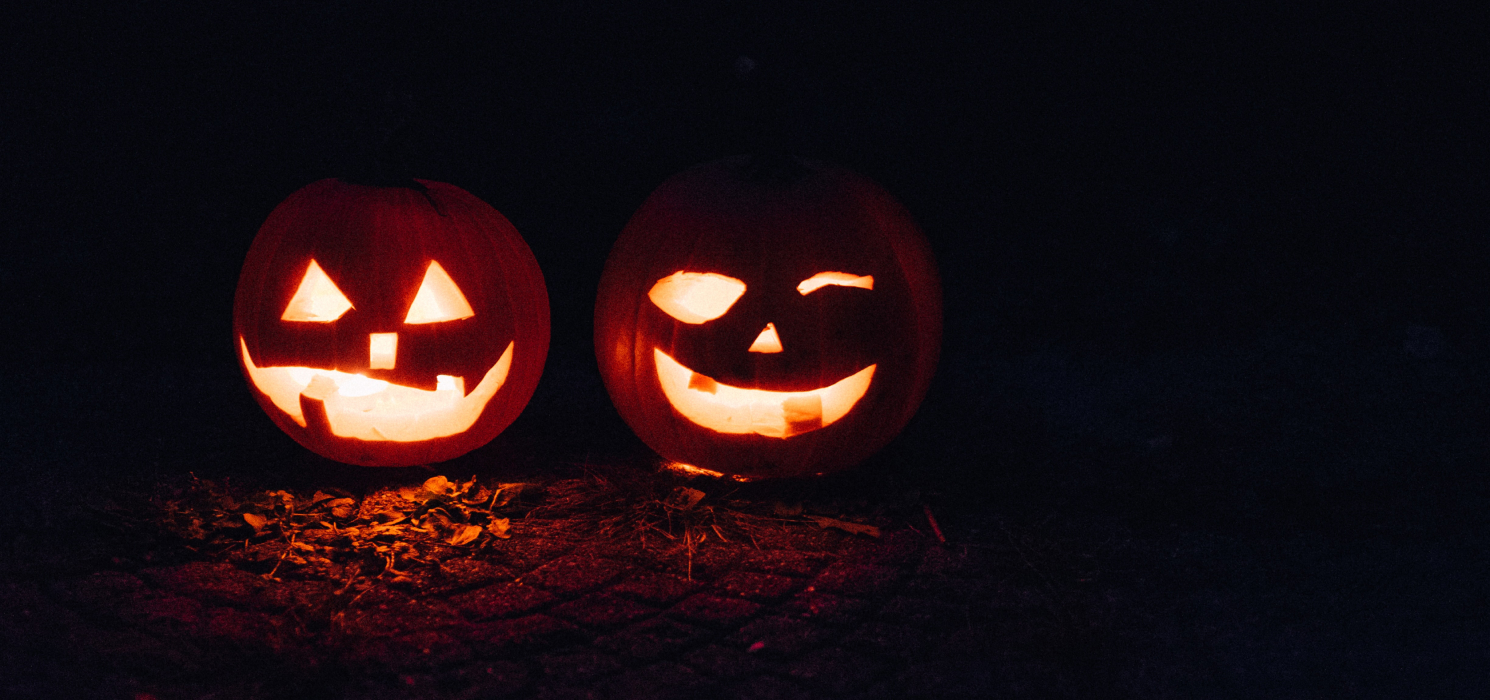
The eve of all saints is a special time not only for manufacturers of masquerade costumes and sweets and not only for the children themselves, who on this day are allowed to demand treats, knocking on the door of the neighbors, but also for scientists specializing in behavioral research. Psychologists and experts in the behavioral economy use Halloween to study decision-making mechanisms, observing how participants in the traditional Hallowean fun Trick-Treat (“treat or regret”, “sweet or passion”, “sweetness or muck”) make a choice between different treats and are adjusted for the circumstances proposed by researchers. “In ordinary life, my colleagues and my colleagues are limited by the sterile conditions of university laboratories, where people need to make a choice, sitting in front of the monitor and clicking on the button. And Halloween is the time when, how people make a choice, can be observed in natural conditions, ” explained Dilip Soman, director of the Center for the Vedium Economics of the Management School of Management.
In addition, children, unlike adult participants in laboratory research, do not attach importance during Halloween, and sometimes they do not even know that they are involved in the experiment - they behave absolutely naturally, and they are quite happy with a candy or a chocolate bar. The data obtained during such field experiments made it possible to draw many conclusions: for example, deeper to study the mechanism of irrational choice and the phenomenon of the attractiveness of the free, to determine in what situation consumers are more likely to try an alternative product and under what conditions they can change their preferences, including political ones.
"Naive diversification"
A quarter of a century ago, with the help of an experiment with children in Halloween Daniel Reid and George Levenstein, the University of Carnegie Mellon clearly demonstrated how the so-called “diversification bias error” works: when people need to purchase a large amount of goods at a time, they seek to diversify, choosing different options for this goods, including those that they like less, thereby reducing the usefulness of the purchase.
The owners of several houses, at the request of Reed and Levenstein, offered the children who came to them for sweets, choose two sweets, while the choice was limited by two types of chocolate bars - Milky Way and 3 Musketeers. In one group, you could take two sweets at once, and in the second group the children had to first choose one of two sweets in the same house, and then go to the house in the neighborhood and only there choose the second.
When the children took one candy in each house, most of them both once chose the same bars - those that they like more. However, absolutely all participants in the experiment, who had to take two sweets at a time at a time, diversified the choice and preferred different ones, that is, behaved as the majority of buyers in supermarkets do is “naive diversification”, which was described for the first time in 1992, Itamar Simonson (Stanford) and Russell Wiener (New York University) described . Their work showed that the more products the buyer puts in the basket for one visit, the more diverse the goods he chosen and the more likely he will buy something in reality. If a person went to the store for food for lunch, he will most likely take what he likes more, for example, strawberry yogurt and a sandwich with a turkey. But, if the purchase is designed for a week, in most cases, yogurt with a different taste and another variety of meat will be added to strawberry yogurt and turkey - even if they like less.
Subsequently, the conclusions of the Halloween experiment with sweets were used to study financial behavior. The children put both sweets in the package to eat later - that is, the “composition of the portfolio” is actually important, and not diversification at the time of the decision, the classic of the behavioral economy Richard Thaler and its co -author Shlomo Benarzi in the work dedicated to “naive diversification” in the decisions of private investors pointed out . As a result of the same cognitive distortion, investors when buying several types of shares for one day tend to buy them in equal quantities, randomly using available options. Subsequently, very few of them retain the same equal distribution of papers in their portfolios, rethinking the choice made and rationally redistributing the structure of the portfolio: the effect of “naive diversification” affects only the purchase day itself.
Particular value is free
What value do people give what they got for free? To study this, professor of psychology and behavioral economy of the University of Duke Dan Arieli, author of the bestseller “predictable irrationality. Hidden forces that determine our decisions ” and “ positive irrationality. How to benefit from his illogical acts, ” conducted a series of experiments. Classical economic theory assumes that people, making a choice of several options, strive for options, the benefits of which are most exceeding costs - for example, they will choose a cheaper product from all their preferences. But, when it comes to free, people do not just subtract the costs from the benefits, writes Arieli: what gets free, people a priori attribute higher value in it and, as a result, often make irrational decisions.
One of the experiments by Aryel spent without leaving the house: his participants were children who came to the professor for refreshments on Halloween. Arieli gave all the children three tiny candies Hershey's Kisses (weighing less than 5 grams each), but then immediately offered a more profitable exchange. One group of children could get a small Snickers bar (it weighs about six times more than Hershey's Kisses) in exchange for one candy, and a large Snickers weighing 12 times more than one candy - in exchange for two of them. 93% of children in this group chose a large Snickers in exchange for two sweets and acted rationally, because this deal is more profitable.
In the second group, the exchange conditions were even more attractive: it was possible either to get a small Snickers just like that, that is, for free, in addition to three sweets, or take a large Snickers in return for just one small candy. "And that would be an amazing deal!" - Commented subsequently Arieli. But 70% of children preferred a small “free” Snickers, irrationally abandoning a much more profitable option. Similar experiments with adults who chose between different exchange options showed the same results: when the price of both options is more than zero, people are prone to rational choice, but if one of the options is free, then people immediately overestimate its benefits. Free causes such deep emotions in people and is so tempting that it makes you overpay or abandon something better in pursuit of these sensations, says Arieli.
Anonymity and honesty
A masquerade costume allows you to “hide” your personality, which can lead to behavior, which is condemned in ordinary conditions. In the 1970s, American psychologists conducted a large-scale experiment in Halloween with the participation of more than 1300 children. The researchers who depict the owners asked the names of some of the children who came to them for the sweets and all the visitors were offered to take one candy from the table, where coins also lay. Then the adults left, watching the children from the shelter. Thinking that they are not seen, children who did not ask names were inclined to take more than one sweets more often, as well as more often to steal coins. If the child came alone, anonymity increased the likelihood of violation of conditions by 14%, and anonymity in groups - by 36%. Children accompanied by adults expectedly practically did not violate the conditions of the hosts, even remaining incognito.
The resistance of political preferences
Like Arieli, a professor at the North-Western University Din Carlan , specializing in the study of poverty problems and the behavioral economy, has more than once used his own house for experiments during Halloween. One of these experiments was conducted in two stages with a gap of four years - in 2008 and 2012 at the height of the presidential racing in the United States. The children who came for sweets could take sweets from one of the two tables standing in front of them - “republican” or “democratic”: near each, cardboard growth figures of the candidate from the party were installed. In 2008, it was possible to take a treat from the table, next to which the figure of Barack Obama was located, or from the table, which stood the figure of John McCain, in 2012 - from tables with Obama or Mitt Romny.
In his experiment, Carlan and his colleague in Yle Julian Jamison wanted to check how stable political preferences are and whether a “bribe” in the form of unnecessary sweets can make children change their eyes, which are usually predetermined by parents. Most of the inhabitants of the town of New Hive, in which Carlan then lived, traditionally vote for the Democrats. All children who came to Karlan for sweets said that from the republican table you can take twice as many sweets than from the Obama table. Political preferences turned out to be very persistent, although the choice was absolutely symbolic, the authors write: in the control group where the choice of the republican table was not offered additional rewards, in 2008 78% of children preferred to take candy from Obama, and in a group where the republican table could be taken twice as much, 68% of children still chose a table of democrats; In 2012 - 83% and 78%, respectively.
But it is noteworthy that the reward “for changing views” attracted only older children. The vast majority of children aged 8 years and younger, despite the proposal to get more sweets, took sweets from the table from which they planned. However, children who were 9 years old or more behaved differently: before they learned about the award, in 2008, 10% of those who arrived to approach the McCain table, and after the promise of the “bribe” 31% came up, in 2012 this ratio was 16% against 31%. Perhaps the younger children follow the parental choice, the authors reason, moreover, younger children, unlike the elders, were with their parents who, as a rule, tried to influence the choice of a child and were ready to deprive children of additional sweets due to political preferences even in such a symbolic vote.
Carlan conducted many similar experiments for many years: for example, he tested , as a campaign of Michelle Obama, who promoted a healthy lifestyle when his first lady was, affects the choice between sweets and fruits (before the image of Michelle Obama, children were 19% more likely to choose fruits instead of sweets, than before the image of other female politicians and at the table without any photographs), and under what conditions children are more prone to more prone to Risk and more tolerant of uncertainty - that is, they are ready to pull sweets from an opaque package. But this year, the conduct of Halloween experiments may be difficult: 41% of Americans plan to abandon campaigns at neighboring Halloween houses due to pandemia, showed a survey conducted by researchers from Delaware University, 47% are thinking of refusing candy distribution.