
Translated material
In the spirit of the NKVD mission

"... and the mechanically rusty shovel is freezing the ground"
Nikolai Nekrasov. Railway
On October 26, the President of Russia signed a decree "On the Development Strategy of the Arctic Zone of the Russian Federation and ensuring national security for the period until 2035 ".
The entire document on the "development of the zone" is written in the spirit of the NKVD mission of the heyday - the same NKVD, which ensured the development of new territories and their protection from encroachments. According to the document, (on) the value of the huge region is due to the fact that
a) the Arctic zone provides the production of more than 80 percent of combustible natural gas and 17 percent of oil;
b) the continental shelf of the Russian Federation in the Arctic contains more than 85.1 trillion. cube. meters of combustible natural gas, 17.3 billion tons of oil and is a strategic reserve for the development of the mineral and raw base of the Russian Federation;
c) the value of the Northern Sea Route as a transport corridor of world significance used to transport national and international goods will increase as a result of climatic changes;
d) 19 small peoples live in the Arctic zone, objects of their historical and cultural heritage are located, which have global significance (it is obvious from the context that these elements alien to national tasks fell into a binding);
e) In the Arctic zone, the objects of strategic forces of deterrence are located in order to prevent aggression against the Russian Federation and its allies ...
At the same time, the features of the Arctic "zone" are, including in the " growth of conflict potential in the Arctic."
Since in this autocratic symphony the item "G" about the history and culture of the CMNS looks, at first glance, completely alien, I decided to find out the opinion of the expert. Here is what the director of the Center for Assistance of the CMNS, a member of the UN expert mechanism for the rights of indigenous peoples, Rodion Sulandzig: “ The document is more like a program for the development of the Northern Sea Route (SMP) with an emphasis on promoting business projects and creating the infrastructure of the SMP, especially if you look at the indicators at the end of the document. Everything else is similar to covering the picture, including sports and folklore KMNS " .
From the point of view of ensuring the cultural development of the indigenous peoples, the industrial development of the Arctic, the creation of inseparable territories of traditional nature management (TTP) for the radical and local old -timer population with a special regime of nature management should be preceded. This approach, according to the existing (but almost non -valid) laws of the Russian Federation, can protect their communities and cultural values from destruction. Now in Yakutia TTP are already the legal basis for protecting the rights of the indigenous population. The initiatives of the creation of new TTP were and are in the Murmansk region, the Yamalo-Nenets Autonomous Okrug, Taimyr and Chukotka, but for some reason in the Arctic strategy, this most important instrument for the development of the KMNS communities is absent.
However, having a list of the Arctic strategy again, I realized that the point about the CMNS culture did not get there because of its self-worth, but as an important resource for the development of "ethno-ecological tourist clusters"-the only not raw material industry mentioned in the text of the document.
What is present in the Arctic strategy in abundance is comprehensive support by the state of Dyuzhin new and old coal, oil and gas projects, as well as other mineral and raw undertaking. In the development of mineral pantries and the use of the Northern Sea Route, certain "investors" should take an active part. In terms of meaning written, these are mainly Chinese investors acting with the full support of the state structures of the PRC and the Russian Federation. Two years earlier, China has already published its official “Arctic policy” and is now actively promoting the creation of the so -called “Ice Silk Road” (in the girlishness of the “northern sea path”).
Chinese state -owned companies already have a share or control the most important elements of Arctic development: from LNG production plants on the Yamal and Gydan Peninsula to the creation of high -tech Arctic equipment and shipbuilding power. Although the partnership of Russia and China is not always cloudless, the new Arctic strategy of Russia is full of hopes for Chinese investments, technologies and sales markets.
In addition, there are confirmed by precedents that a number of European transnational companies will also not restrain the lawsuit and try to attach its coal, oil and gas technologies in the Arctic expanses, which are no longer in demand in their Europe.
A whole section in the development strategies of a low -level Arctic is dedicated to different measures to ensure public security from improving the structure and full -time support of the internal affairs bodies and the Russian Guard to ... "expanding (creating) a network of rehabilitation and adaptation of persons freed from places of imprisonment." In the context of the "Zone Development Strategies" it looks like euphemism for the revival of Soviet special settlements and labor re -education camps!
Well, of course, in the Arctic strategy there are many tasks in the field of ensuring military security, protecting and protecting the state border, as well as maintaining double -purpose objects. Here, for example, is the island of Wrangel - you look at the map - the UNESCO natural heritage object, and you will pretend to be the shore - a new military base in the form of a star ....
However, when the strategy descends to Earth to local specifics, the quality of planning and the flight of the fantasy of the authors is not impressive. Each subject of the Arctic zone of the Russian Federation prescribes its own raw material portfolio:
-The Republic of Komi will become a place for the development of coal mineral and rawies on the basis of the Pechora coal basin and the Timan-Pechora oil and gas province;
-The Arkhangelsk region is gifted with the creation of a lead-chip mineral-raw center on the New Earth Archipelago;
-the Murmansk region prescribes the formation of new ones and the development of existing mineral-raw centers specializing in the extraction and enrichment of minerals;
-In the Arctic municipalities of the Republic of Karelia, a modernization of the White Sea-Baltic Canal will be held (previous attempts, by the way, just demanded the participation of "persons from places of imprisonment"), as well as the creation and development of the mineral resource centers of the East Karelsk Medno-gold-molibdenovoroda zone.
But finally, something potentially dubbed: " The creation of cascades in Karelia of small hydroelectric power stations, provided that the prospective demand for electricity and their economic efficiency is confirmed" (?!)
Double subjunctive mood when discussing small hydroelectric power stations is not accidentally here. On the example of the "small" Beloporozhsky hydroelectric power plants, the soap opera on the construction of which can not end in Northern Karelia, it is clearly visible how economically and socially unjustifiably their creation. The complex of Beloporozhsky hydroelectric power station worth more than $ 160 million is created by the Russian-Chinese team for loans of the new BRICS development bank. That is, the "small" hydroelectric power plants under construction in Karelia cost more than the rest of the program of socio-economic development of the republic. Their contribution to the (surplus) energy system of the North-West of the Russian Federation does not reach even half of one percent-and, accordingly, is completely disproportionate to the fanfares about the "flagship of the development of Karelia." Moreover, in terms of kilowatts of installed capacity, new hydroelectric power stations are more expensive than any other alternative. The construction began without an environmental examination, without full -time public hearings and is conducted by a company owned by one of the local leaders of United Russia.
When in March the dam of the Beloporozhskaya hydroelectric power station for the first time broke out, we politely warned the leadership of Karelia that in the case of crossing repair and construction work, they risk bringing into the Covid region. Naturally, the “flagship” did not listen to us, and by July the construction became the largest nursery of Koronavirus in Karelia, giving a flash with a hundred sick people. The solemn launch of hydroelectric power stations was again postponed, but the lessons were not learned.
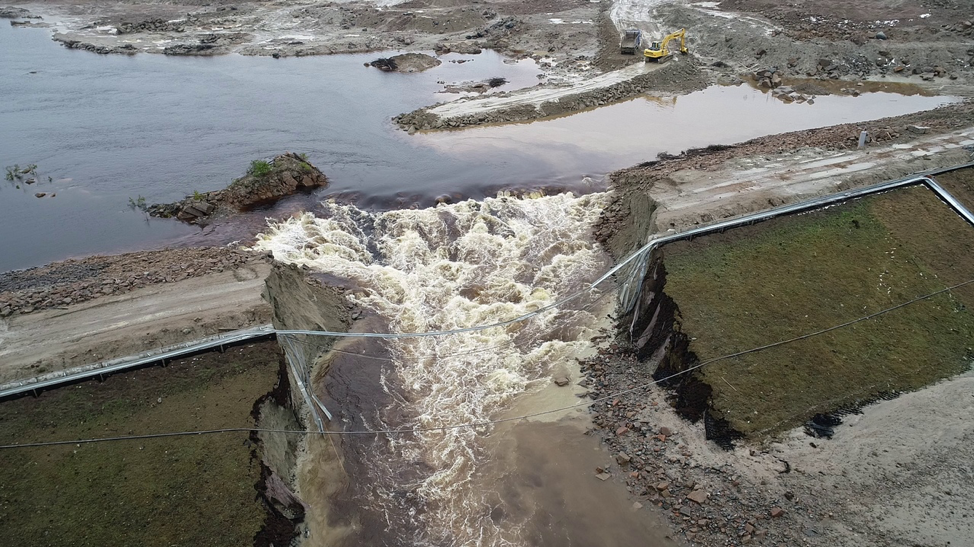
In exactly the days of signing the Arctic strategy, the dam at the Beloporozhsky hydroelectric power station was blurred again, in approximately the same place, but with damage to valuable equipment and pollution of the river oil products. And, of course, until the local men posted pictures with rainbow spots on the water on the Internet, all the ranks claimed that nothing spilled. Now they argue that "all the pollution completely eliminated in record time" (fraternal greetings to them from Norilsk Nickel!). At the same time, no one can give a clear explanation of how the second breakthrough of the dam in the year and when should we expect the third?
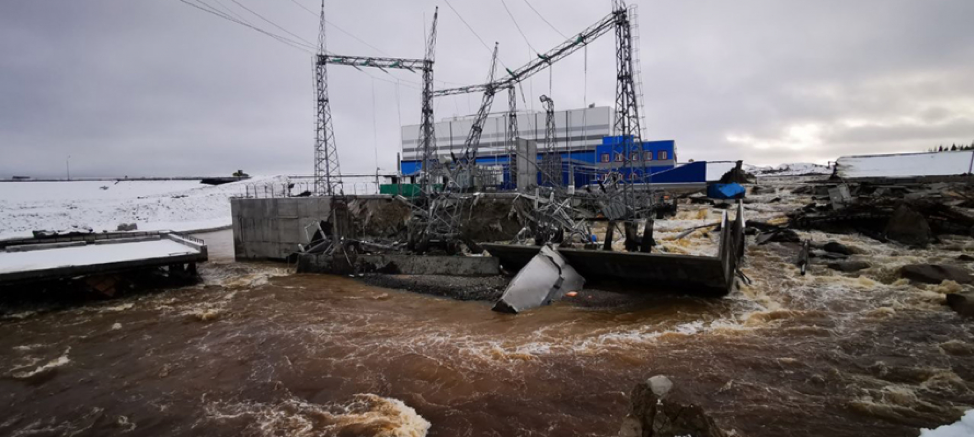
All other new industrial projects, mentioned in the strategy of the Arctic zone, are just as justified and harmonious as the unfortunate Beloporozhsky hydroelectric power plants, which simply did not have to be built. But, unfortunately, they are much more dangerous in environmental and social terms.
The irony of fate melting from global warming by the Arctic is assigned to become the last bastion of the development of coal and hydrocarbon wealth, the demand for which falls. This approach will inevitably lead to the “growth of conflicts” strategy with the communities of indigenous peoples, with the ecological public, with the countries-neighboring countries, with pure-up investors (including the Chinese), and with the world community seeking to curb the greenhouse effect. As soon as the demand for raw materials ends, the Arctic “zone” will simply be left as unnecessary - and they will be left in the same pledged and ruined form, in which the outgoing Vertukhas left dozens of the zones of the Gulag.
So is it worth it to start?
Evgeny Simonov - coordinator of the coalition "River without borders"
The "Opinion" expressed in the heading of the point of view may not coincide with the position of the editors