
Translated material
Unity is temporarily inaccessible
By the end of 2020, the meaning of the "holiday of November 4" was lost by the people and the authorities
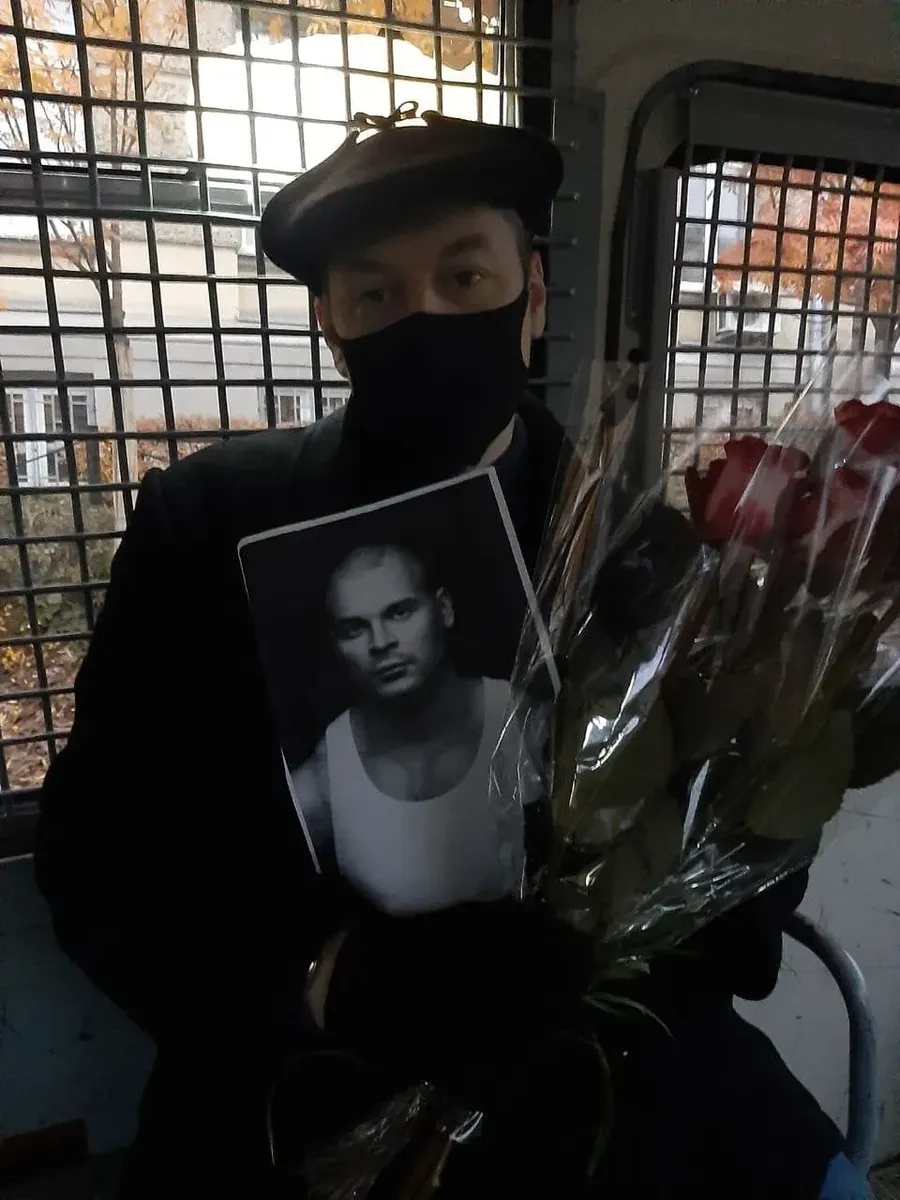
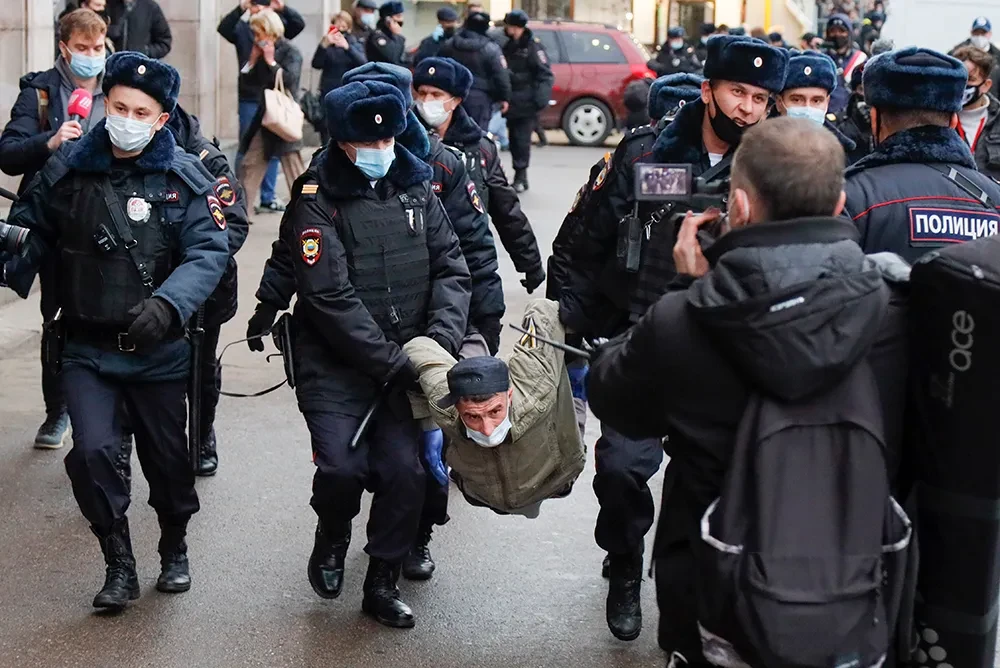
“Russian march”-the main way to celebrate the Day of National Unity on November 4, invented over the past ten years-this year was banned, formally, of course: due to epidemiological restrictions. Nationalists nevertheless tried to reach promotions in Moscow in their traditional link - in Lublino, as well as in the city center on Tsvetnoy Boulevard. Big police forces were pulled on the boulevard, more than 30 participants in the action were detained. One of the activists touchingly posed in a car zak with a bouquet of scarlet roses and a portrait of the late Maxim Martsinkevich. That's the whole holiday.
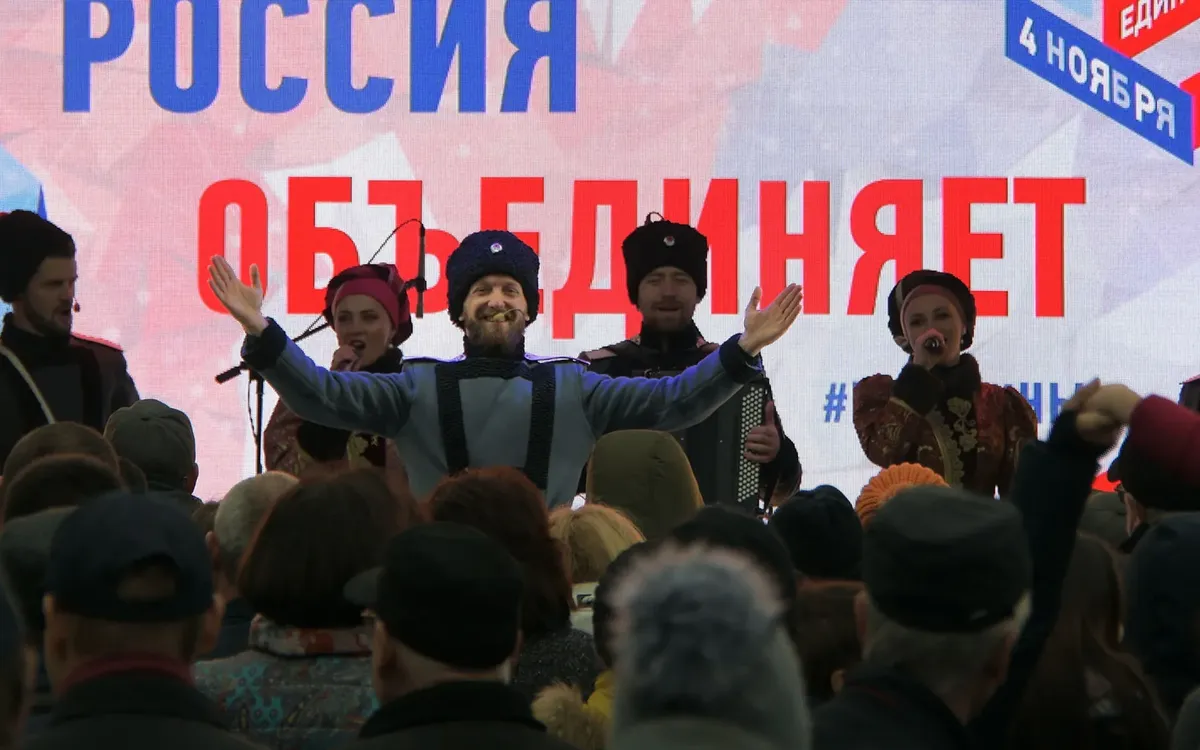
The “Day of National Unity” invented in the Surkov era was once called to weaken the influence of the Communist Party, to deprive the communists of a nationwide weekend and a reason for their own performances. By the middle of the zero, Zyuganov’s party still posed a threat to the ruling majority, and 1996 was close. From the point of view of political technologies, the inventors of “popular unity” then did everything right. Having replaced the 4th day on November 7, they left the citizens a day off, and they adjusted the rhetoric of popular revolutionary anger towards military-historical greatness: they say, external invaders were expelled-and we can repeat. The Poles of the 17th century suddenly turned out to be in the role of formidable enemies - not that this topic was heard in the last centuries of Russian life. But in our ideal calendar, all holidays go from May 9 to November 4 and are dedicated to the armed triumph of the state.
What the inventors of our new unity have not thought out is detailed glee methods. Given the official legend of the holiday, it would be nice to fit, probably, another military parade with the symbolic exile of usurpators from the Kremlin. But the parades are reserved for more important dates, including an outstanding postmodern moment: the day of memory of the military parade on Red Square on November 7, 1941 is a parade of memory of the parade named after the deceased holiday of the revolution. The idea with the expulsion of usurpators, in turn, can be understood by vice versa.
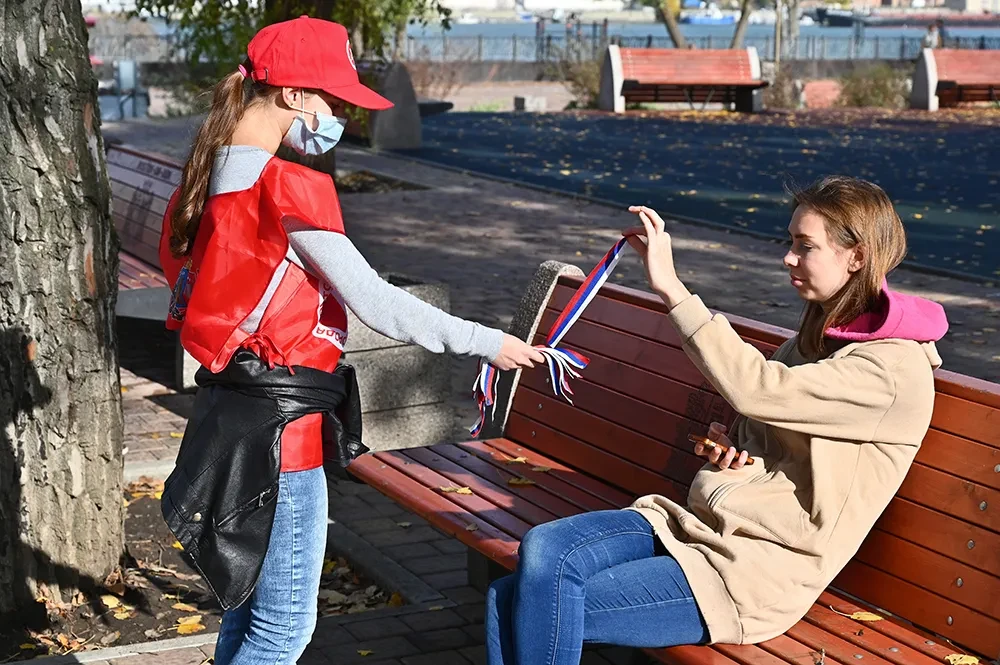
As a result, only officials and Russian nationalists celebrate on November 4.
The first - because this holiday is officially one of those designs that supports their power, so they “need to speak out for unity”, the second - because they saw in political technology “November 4” their chance for revenge.
Most of the Russian citizens do not associate itself either with the Russian authorities, or with professional Russians, and therefore it is indifferent to the current memorialization of the events of the Time of Troubles. There were no jubilant citizens on the streets before, but it is more important that today - against the backdrop of nationwide covid depression, in which even the euro does not cause panic for 95 rubles - there was no hint of the country's political unity. In other words, by 2020, the problem of “November 4” is not that this holiday is alien to the country, but that there are no us who are ready to unite for the sake of a large nationwide goal.
The unity defined through the victory over the external enemy will not unite the country that did not receive help from the state during the epidemic. People are worried about the future of their families, they are left to themselves and their fears. Even if we defeat all real or imaginary enemies again, this will not give Russian citizens any hope for a better future. The official ideology of unity was stuck in the distant past and for some reason assumes that people need only more frequent and loud cries of “Hurray!” Under the military aircraft flying over the cities - this visible demonstration of our power.
But whoever our propaganda - Ukrainians, Western Europe or the USA - this will not improve people's lives in our country - this time. For many years, we have gone to the awareness of this fact.
Moreover, the number of new conflicts is growing in society. In those historical moments when fear and uncertainty rule, a chance appears in numerous prophets and in teachers of wisdom. The politicization of Russian religions initially had to strengthen the Kremlin’s position: the rate was made on the doctrine of the Russian Orthodox Church as a platform for irremovable power and its correlation - popular unity in the spirit of the archaic triad of Count Uvarov. In reality, the politicization of religion with a leading pace unfolds in the Russian North Caucasus (see “Caucasian Sensitivity”).
It is no coincidence that Vladimir Putin has to make a special statement by November 4: about “... preserving the inter -religious world as the basis” of Russian society.