
Translated material
There was Deutschland

How in Kaliningrad businessmen fight the prosecutor's office for German
In the Kaliningrad region, the prosecutor's office has been fighting with signs and tablets in foreign languages for more than a year. The authorities press both businessmen and ordinary people who, out of love for the pre -war history of the region, hang signs with German names on their homes - they are accused of violating the law on the state language. "Cold" tells where this campaign came from and what results it leads to.
In order not to miss the main materials of the "cold", subscribe to our Instagram and telegram .
Man with Wißmannstraße
At the end of the summer of 2019, a resident of Kaliningrad Valery Demenok met an irritated stranger at his house - he pointed to the sign with the address and demanded to remove it. On a blue background, in white letters, “st. Shchorsa ”, and under this - Wißmannstraße 11: So the street was called until 1946, when Kaliningrad was still Koenigsberg. Demenok did not take a sketch, deciding, it was some kind of misunderstanding. An unknown man no longer made himself felt - but soon the prosecutor's office became interested in Demenk.
The 48-year-old businessman Demenok bought a three-story German mansion on Shchorsa Street several years ago. The building has not been repaired since 1936, when it was built - when the workers removed the window frames, old German newspapers found them; In the basement, there was water every now and then, the plaster was moldy and collapsed. “You go to the first floor, and there the rat sits with half a meter and meets you,” Demenok recalls with a laugh. He carried out drainage work, repaired the foundation and began to live in the mansion.
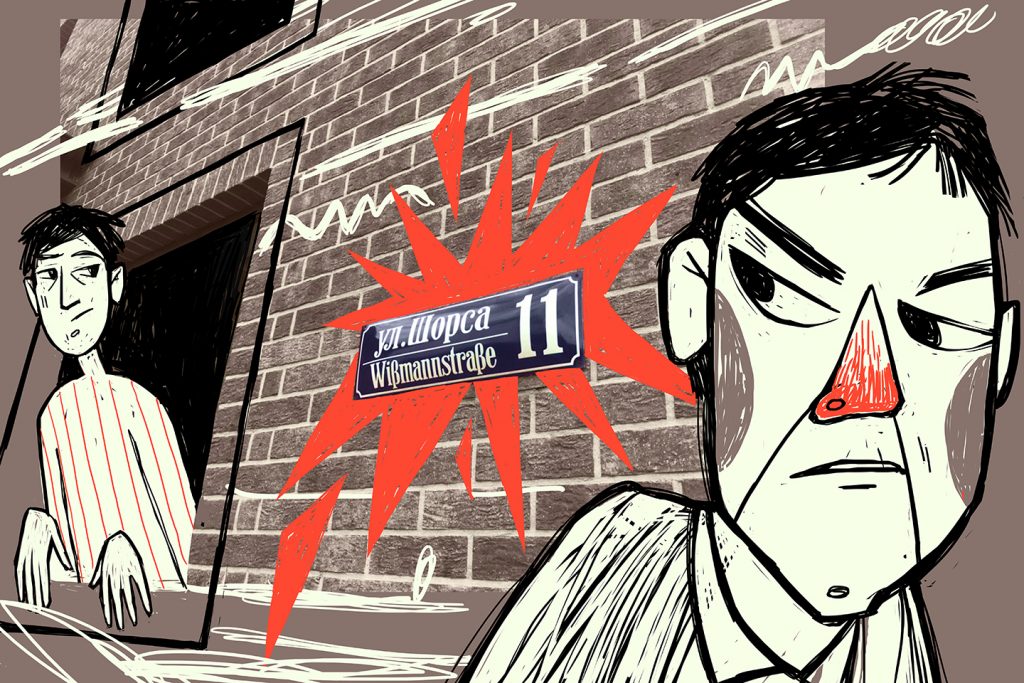
The sign with addresses - Russian and German - Demenka was presented by friends for a housewarming line. Wißmannstraße was called in honor of the German researcher and African colonialist Herman von Wisman , who lived in the second half of the 19th century and died in 1905 on the hunt, - the demon compares him with the Ermak, who colonized Siberia.
The businessman also found out that earlier in this house there was a director of a shelter for deaf -mute Ostpreuu thanßschen Taubstummenheim Herbert Matysik. In the former shelter building, there is now a sleeping building of the boarding school for gifted children, one of the best schools in Kaliningrad.
In January 2020, five months after the case with a stranger, Demenka was called to the prosecutor's office. From the representative of the department, the businessman learned that the plate allegedly touches the feelings of veterans - and that the prosecutor's office filed a lawsuit against him. And a little later, this plot was even mentioned by the regional prosecutor Sergei Khlopushin. “We appealed to the court demanding to remove this sign with the name of the streets in German. Because we are not Germany here, ”he explained the actions of his subordinates. “The streets have the names that are established by local authorities.”
"Toponymic revenge"
Before the Kaliningrad prosecutor’s office became interested in German signs, local pro -government journalists spoke about the threat of “germanization” for several years. Thus, it was actively operated by the former military correspondent of Vesti in the Donbass Nikolai Dolgachev, appointed by the director of the Kaliningrad State Committee for Economics. Back in 2016, the TV channel released a plot about the Adalbertstraße plate on one of the houses; A veteran of the Great Patriotic War appeared in it, which stormed Koenigsberg. However, after a couple of years, Dolgachev left the channel and moved to work in the Crimea, after which the conversations about Germanization ceased - especially since the new governor of the region Anton Alikhanov called this problem far -fetched.
In the spring of 2019, journalist and publicist Andrei Zamzov began to pay attention to German -speaking signs on houses, who devoted his career for the struggle with the “Kaliningrad separatism” and the “Germanization” of the region. People who live in homes with German tablets, he reproached for “toponymic germanization” - and in a conversation with the “cold” stated that such inscriptions “are really prerequisites for non -recognition of the results of the Second World War”. “The logic is simple here,” explains Custom. “Restoring the lost German inscriptions and inventing new ones, their authors, firstly, honor the German people and Germany, and secondly, they are promoting the memory of the pre-war time when Russia (Soviet Union) was not here.”
By the fall, the prosecutor’s office connected to the production campaign. According to the department, the appeals of public and veteran organizations were the reason for the fight against signs and advertising signs in Latin and German. The text of one of these letters on September 8 was published by the conservative eadaily edition, which generally often writes about the “toponymic revenge” and the “Moisming” of the Kaliningrad region.
The letter said that “in the consciousness of the population, especially the youth” through the Latin and “toponymic restoration”, the idea is introduced, “that Kaliningrad is not Kaliningrad, but Koenigsberg ( just like that, with a small letter. - Note“ Cold ” ).” One of the local veteran organizations, the Union of Participants in the Great Patriotic War and veterans of the Navy filed an appeal. The union includes 2500 people; Only three dozen, including four veterans of the Great Patriotic War, signed an appeal addressed to the prosecutor.
A few months later, Roman Balashov, the head of the president in the North-Western Federal District, spoke about the signs (the editor-in-chief of the Kaliningrad business portal Rugrad.eu Nikita Kuzmin says that Balashov directly oversees the regional security forces and calls him a “ostentatious patriot”). “We, residents of the Kaliningrad region - both living here and working - must understand that there are no depersonalized cities and depersonalized streets. As soon as a leaning number of foreign signs appears on the streets, a reasonable question arises: in which country do we live in? - said Balashov. - Personally, I am a categorical opponent that the latinization of signs goes in general. You go along Kaliningrad - it cuts the eye. ” Then, with criticism of signs and signs in German, the adviser to the Governor of the Kaliningrad Region Vyacheslav Genne also made .
Having received a letter from veterans, the Khlopushin prosecutor and his department began a campaign against signs and signs on the Latin. Entrepreneurs were forced to either set new signs, or supplement the names of the institutions with a translation into Russian. In March 2020, Khlopushin gave a press conference at which he mentioned a lawsuit against Demenk-and a month later he resigned and left his post. However, this did not affect the course of the businessman’s business from Shchors Street.
Bäcker or baker
The Kaliningrad business, especially when it comes to the areas of catering and tourism, often tries to lure customers and expand the audience due to the history and culture of the region - Prussian and German. One of the marketing strategies is the German names of cafes and restaurants. “From the point of view of marketing, this is normal-to use foreign names, there is nothing so offensive to the Russian language in this,” the former regional business ombudsman Georgy Dynov tells the cold. And he adds: tourists go to the region, including touching traditions, history and a cultural landscape - from German architecture and ending with lunch with bugops. In addition, according to the interlocutors of the "cold", consumers instinctively more trust foreign names.
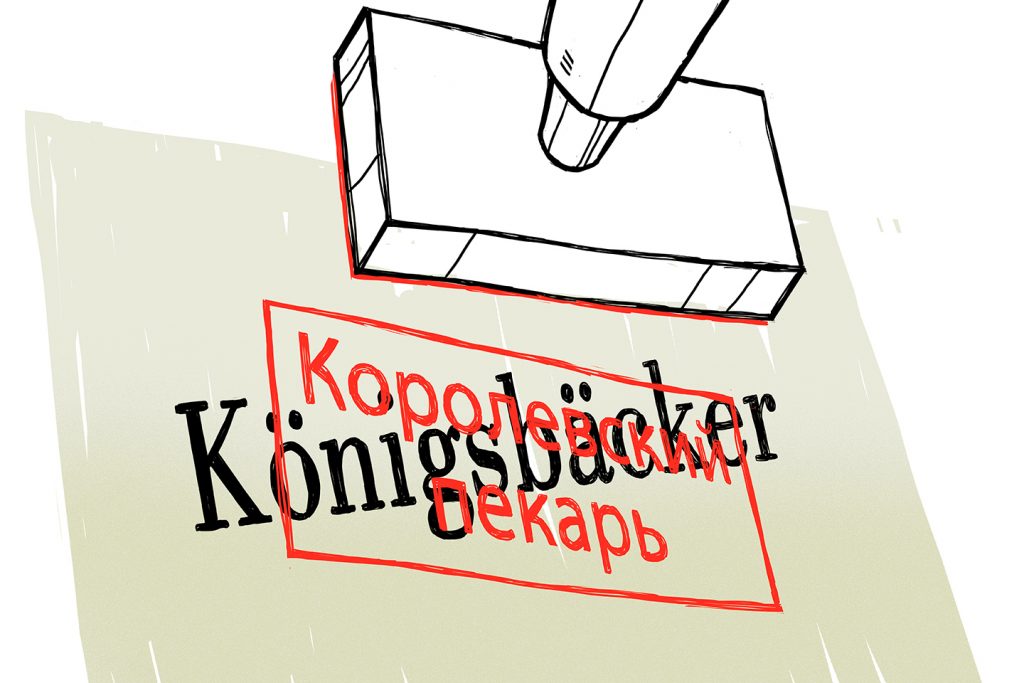
“The specifics of the city is such that the business is trying to use the names from the pre -war history of the city,” says Vadim Khlebnikov, deputy chief editor of the New Kaliningrad publication. - When they are written in Russian letters, it is extremely difficult to get to the bottom. The use of Latin allows the security forces to use the Russian Law. ” Khlebnikov cites the example of the popular local bakery Königsbäcker - even though it is a network brand, which also has establishments in Moscow, in Kaliningrad the owners dismantled the German -speaking sign, and the new point of the bakery appeared under the Russian -speaking name “The Royal Badkar”. Moreover, right on the ground floor of the city administration building. In another case, the owner of the pre -war building on Nevsky Street decided to paint over German letters, also fearing problems with the law. In Sovetsk, the border city in the northeast of the Kaliningrad region, local authorities were forced to submit to the prosecutor's office and close the Tilsit inscription (as the city was called until 1946) in the city hall building. At the end of October, the pre -war name of the city returned to the stand, but it was already written by Cyrillic - Tilsit.
After the letter of veterans, the Kaliningrad prosecutor's office began to interest all commercial signs with foreign letters. In September 2019, several Kaliningrad entrepreneurs at once received instructions demanding to duplicate signs into Russian. Among them was the owner of the DSGNCLUB design studio Konstantin Kiryanov; The sign was replaced by the Zötler restaurant located in the center of Kaliningrad - at first it was renamed the Cetler, and now it is generally called the Bavarian Restaurant; The Kirillic London was also added to the name of the London pub.
To combat the signs of the authorities, he uses the Federal Law “On the State Language of the Russian Federation”, according to which in cases where the business uses a foreign language, it is also necessary to cite the Russian text identical in content and design. By January 2020, the prosecutor's office found violations of this kind in six institutions; In four of them, the signs eventually were duplicated into Russian (which the other two did, it was not possible to find out the “cold”). The prosecutor himself Khlopushin said that almost two dozen different shops and cafes fell under checks.
According to Ilya Kuninets, the lawyer for intellectual rights of the Law Firm “Solntsev and Partners”, the law on the state language is interpreted by the prosecutor’s office too one -sidedly. “Clearly in the law, this restriction [on the need to duplicate the names] is not spelled out, this is a free interpretation. Although most entrepreneurs try not to go into conflict with the prosecutor's office. The law should not work in this way, ”the lawyer explains. In his opinion, the Constitutional Court could put an end to this issue-but so far any businessman does not go there, the prosecutor’s office will continue to “fill the sticks”.
Businessman Valery Demenok calls himself a Putinist and statesman and says that a sign for him is a way to show a love of the history of the place where he lives, but he never heard about any “problem of Germanization”. At the end of September 2020, the prosecutor's office said that a tablet with the pre -war name of the street can be hung on a house, but it should look like an information sign with historical information. However, the lawsuit against Demenk was considered at the beginning of summer - and on June 3, the court ordered a businessman to bring a sign on his mansion in accordance with the rules of city improvement, removing the inscription Wißmannstraße from the name (the entrepreneur’s name was written with a mistake in the court’s decision, naming him Demen Yu Com).
Sergei Demenok did not do this out of principle. As well as appeal the court decision. The paper that came to him by mail, he simply threw it into garbage.
The inscription that "reanimates the city"
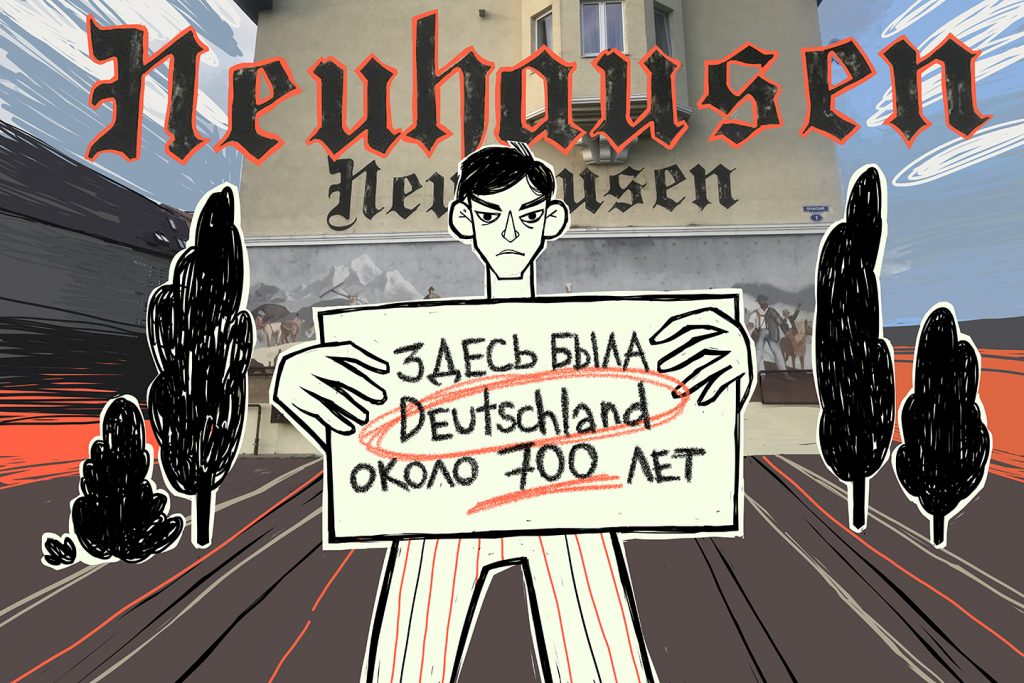
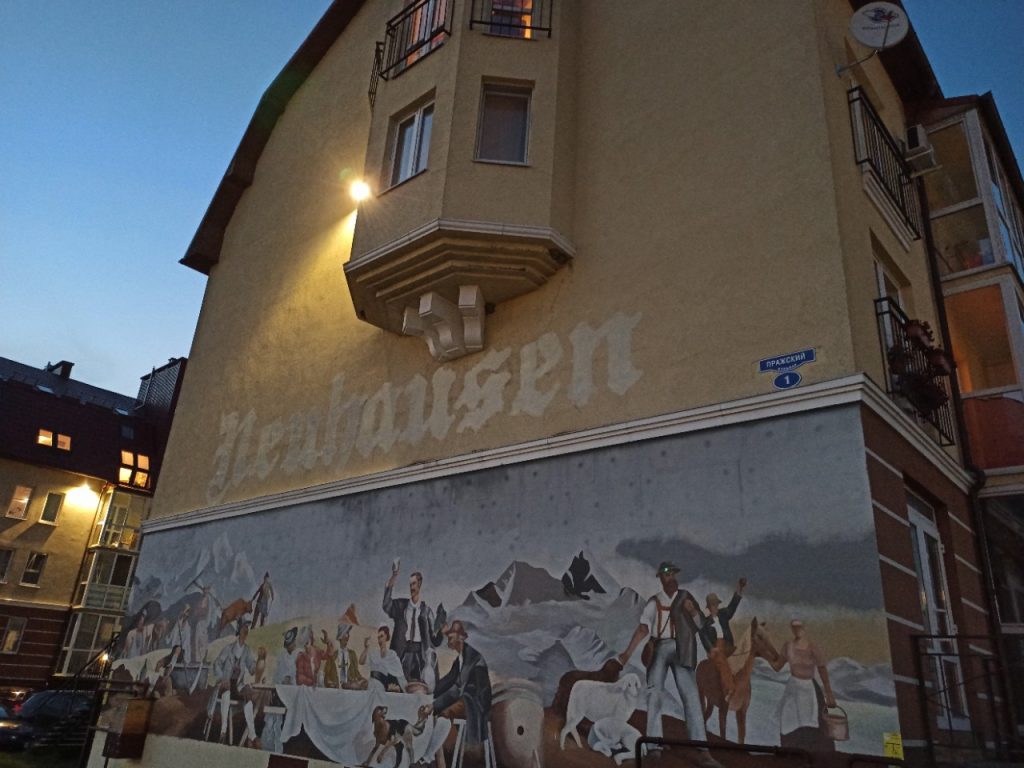
On September 4, 2020, activist Sergei Rumyantsev entered the building of the Kaliningrad Region prosecutor's office - in his hands he held the poster “here was Deutschland for about 700 years”. The picket became a reaction to the prosecutor's demand to erase the inscription Neuhausen from the facade of the house in Guryevsk - the pre -war name of the city. “I went to the picket not just in defense of the inscription with the old name of Guryevsk,” Rumyantsev explains to the “cold”. “Civil activity is wonderful, but when it is aimed at consolidating the general current course of victory and widespread prohibitions, here I can’t help but answer with my own activity.”
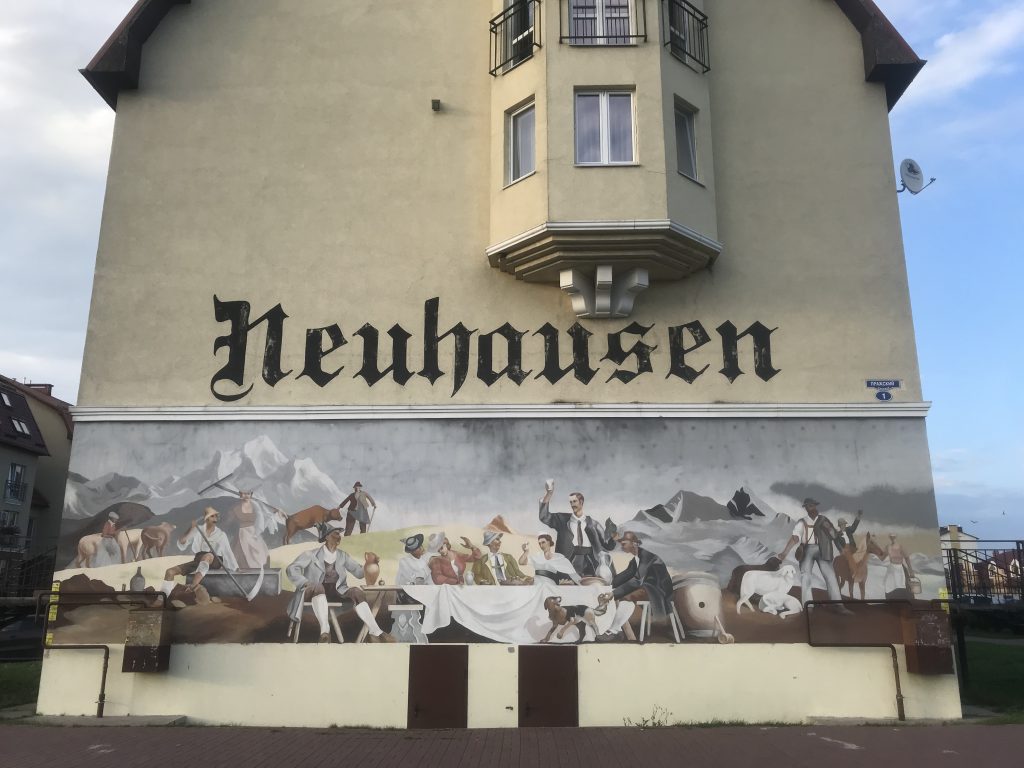
Guryevsk is a small town with a population of 20 thousand people, in fact, a suburb of Kaliningrad. In the last decade, the city was actively built up, and the inscription in black letters Neuhausen appeared at the first erected house of the New Residence residential complex about six years ago. The idea to write on the facade the pre-war name of Guryevsk belonged to the contractor who laid the floors and was engaged in the decoration of the facades, the 40-year-old businessman Sergei Danilyuk. The customer partially calculated with him the premises, and on the basement Danilyuk planned to open a “restaurant under the old days” in the future, calling it Neuhausen.
Neither the developer nor the locals against the inscription objected, and she hung peacefully for six years. And then Yuri Ivanov drew attention to the black letters, who calls himself a blogger and “inspector” of the “Rospatriotnitzor” (such an organization does not exist). If you look through its facebook , you can see many calls for the Russification of foreign inscriptions - and the man offers to replace the names even at the cultural heritage sites that are protected by the state (for example, at the Wrangel tower ), as well as install flags with a Russian tricolor at the Cathedral and the Royal Gate. The inscription Neuhausen, as Ivanov explained to the “cold”, he did not like the fact that “negatively in the information-propaganda” sense affects children, as well as “as it were reanimated by the city that was destroyed through Germany itself”.
Ivanov set out his dissatisfaction with Neuhausen in the form of a complaint to the prosecutor’s office in May, and in mid -August he received an answer, which said that the agency obliged the management company the letter to erase or translate the word into Russian. The deputy prosecutor of the Guryevsky district, Alexei Bedrizov, came to the conclusion that the inscription Neuhausen, without a corresponding translation into Russian, “has an informational and ideological influence and forms the denial of the results of World War II in the population of the Kaliningrad region, gradually developing a sense of tolerance to the events related to fascist Germany.”
The order of the prosecutor's office was outraged by Sergey Danilyuk, and he said that he would not voluntarily destroy (however, the management company should technically do this) and that he was ready to sue with the prosecutor's office. Several residents of the New Residence informed the "cold" that they consider the claims of Ivanov and the prosecutor's office "full nonsense"; Many were indignant at the situation in the "VK" group of the residential complex.
As a result, Sergey Danilyuk and the director of the management company personally met with the Guryevsky prosecutor and came to an agreement. “The prosecutor explained that this is not his personal whim. He was lowered from above, from the regional prosecutor's office, he must fulfill it in any way, ”the businessman retells the content of that conversation.
On September 29, construction forests appeared at the house with a panel and inscription Neuhausen. Danilyuk himself painted the letters-however, the paint fell so that symbols appeared through it, and the inscription was still visible. “Such is the irony,” says the businessman and adds that now he has a more ambitious plan: to register a trademark, which will allow us to legally write Neuhausen Latin, and make the inscription much more prominent. “So she was just dull, painted on the wall, and six months later it will arise in the form of a light casseton ( that is, a box from the Hall. - Approx.“ Cold ” ) and will burn,” Danilyuk dreams. “Now it is visible for three hundred meters, and it will be three kilometers.”