
Translated material
Vakhtangov was returned to his homeland
In Vladikavkaz, a museum of the founder of the famous theater is created
The legend (but pure truth) reads: in the final of the 1986 Vladikavkaz tour, the thunder of the apparatus, Julia Borisova, the star of the Vakhtangov Theater, which the hall applauded standing, directly from the stage, turned to the authorities of the Republic of North Ossetia. The authorities, at all, were sitting in the hall.
- Do not destroy Vakhtangov’s house! Save it! We ask you very much!
And the authorities, a rare case, obeyed.
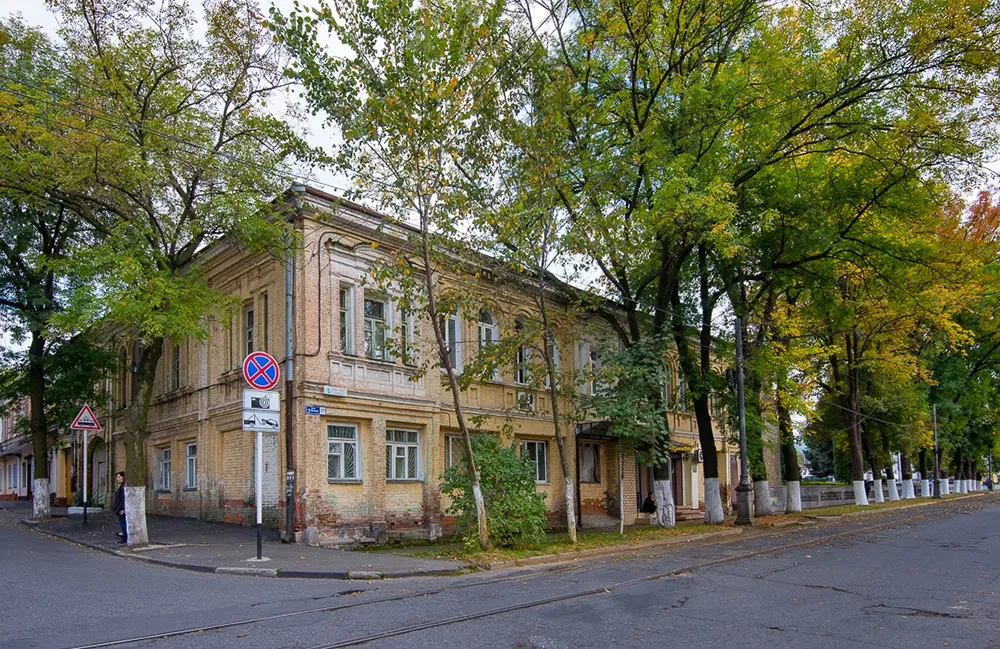
The two -story mansion, on the ground floor of which the Bagration of the Vakhtangs in the eighties of the year before last, placed his tobacco store, and on the second - the family, stood. Bleaned for communal housing, for apartments, which, eyewitnesses say, were a real branch of Voronya Slobodka, the house lived for decades for decades. Until the moment when Vakhtangovites decided to look for money for reconstruction after the next triumphal Ossetian tour.
- This is madness! You will never settle such a house, and even in the Caucasus! - The well -wishers kept repeating while the idea was discussed. They discouraged, scared the expenses and circumstances of insurmountable strength.
But the stars have already stood over this project.
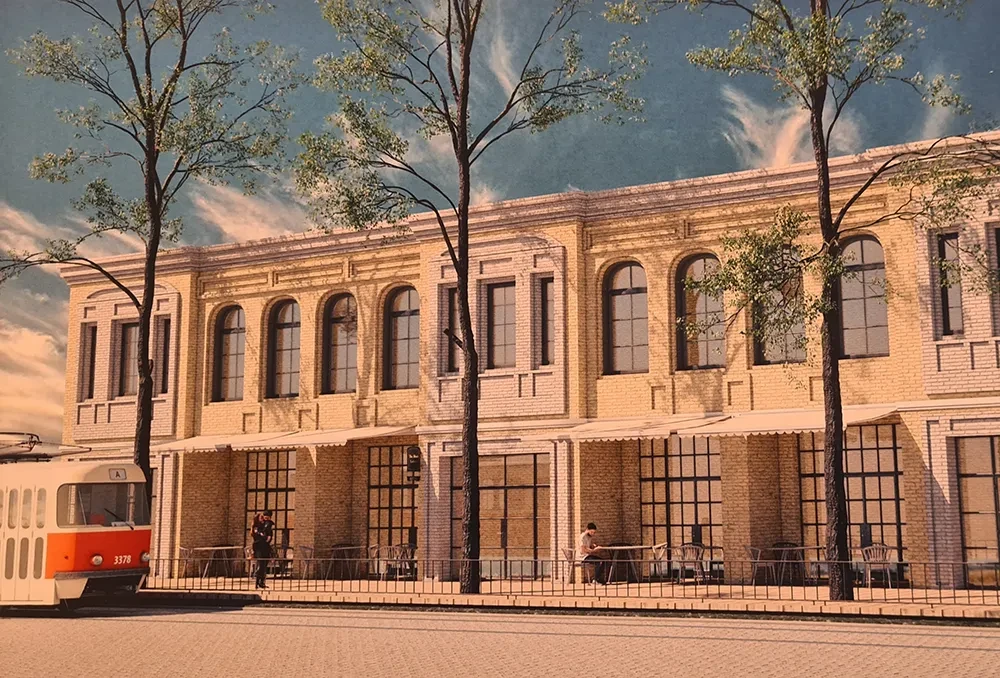
The house is on the embankment. The Terek in this place shallow, with a visible bottom. On Armenian Street is a beautiful Armenian church. And nearby - house 2, in which Evgeny Vakhtangov was born. Seventeen years in these walls, the time of searching for yourself, the first lessons of life, but also the first creative experiments. Judging by the later evidence, childhood and youth were both happy and complex: the head of the family saw the heir to a trading enterprise in his son, and his son turned out to be a very different nature. Alien and incomprehensible; Therefore, he left his parental house as early as he could. The generic nest is two -story, slightly gloomy: a century swept over the roof without much care, leaving soot on the walls, rosoring the windows. In the middle there is a small “Turandot” coffee shop, around the corner of the city wall. Here, perhaps in the future, the art quarter will be deployed. Such an idea is logically leaded by the Vakhtangov House project. Its uniqueness is that not cultural officials, not a “public”, but a theater grateful to its founder becomes the creator of the museum. In this movement, gratitude and confidence in their abilities are combined. Including - get the necessary funds.
The power of North Ossetia-Alania admitted honestly and immediately: we will not be able to give money, but we will help in every way.
And this was more than useful when the resettlement of the house began. Fourteen owners, thirteen apartments, a dozen confusing stories. Someone from the inhabitants of the house noble and without delay lost their square at a real price, someone “twisted his hands” and scored to the last. Some were happy with an unexpected turn of events, others treated everything with suspicion. To agree with everyone, everyone find a personal option, carry out all the transactions, draw up all the documents - a saga that will enter the backstage history of the creation of the museum.
Bushing the house, restoring it, turning it into a cultural center, the theater creates jobs for those who will carry out reconstruction, but even more significant - lays ties and a program of co -creation for many years. And most importantly: he moves against the gloomy logic of everyday life, in which everything is habitually destroyed, plundered, goes into a spray, and creative activity looks like nonsense.
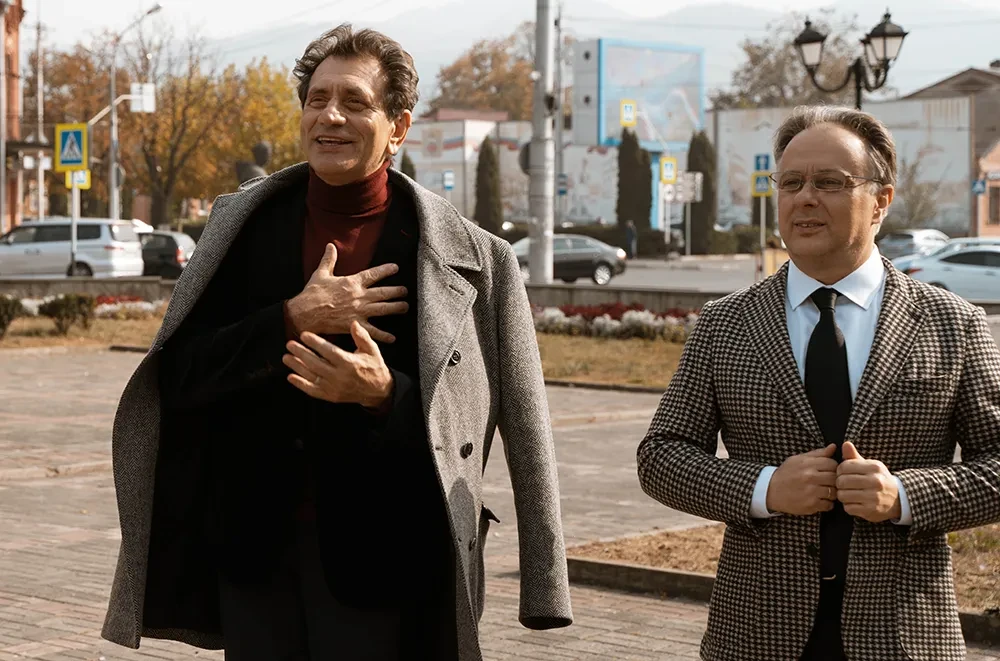
The main breakdown of this template is the director of the theater Kirill Krok.
- Where did all this energy of error come from, turning up architectural and economic mountains? What is the point of personal story to consider the reference point?
We are sitting with a crocus at a feast table, on which, according to the Ossetian tradition, three cakes are carried out: with greens, cheese and meat - a symbol of the unity and perfection of the trinity.
He is silent, it seems that he is leafing through his past ten years in the current role. And only when Tamada picks up a bowl with wine, pronounces the words of gratitude to the creator and calls the younger at the table to drink first, the director finds the answer.
- Yes, perhaps, as I saw dirty water in the pit in the place of the future new scene, so ...
Well, the surname Krok in Ukrainian means a step. He walks without stopping, and most importantly - in a direction useful for the theater.
“We called him,” Evgeny Knyazev allegedly secretly tells me, one of the “cores” of the Vakhtangov stage and the rector of Schuki, “when the former team of section Theater is before the goal, and then also dumped it without exception.”
They thought: well, even if at least some, at least hold out a little. You can’t completely without a director!
And then no one assumed that a new era would begin from this appointment for Vakhtangovsky. “Varangian” Tuminas, met by the troupe with a great degree of suspicion, began to win one artistic victory after another. And Krok unexpectedly found an object of devotion and scope for himself. A new scene was built, Simonovskaya was reconstructed and completely updated, everything was improved radically on the main one - from grates and curtains and from the auditorium to make -ups and showers. Ticket service, five stage sites, capeldiners, a museum, salaries - until quarantine struck, the Vakhtangov Theater was an exemplary established mechanism.
We are in the mountains. We see the gorge over which the eagles soar, and on the stones below there is a silver huge cat: “A snow leopard lived over the river for a long time. When he died, the guys decided to make a monument to him, ”one of the accompanyers explains an unexpected sculpture. We see a monastery built twelve years ago through medieval canons - from stone. We see mountains and clean water of rivers. These places were inspired by Vakhtangov, even today they raise people capable of flight. The proof is a new, “with a needle”, the exposition of the National Museum, according to which its director Batrase Tsogoev leads us and inside which the plot of the fate of Alania continuously flows - from the bronze age to the Great Patriotic War, from the ancient ceramics to weapons. An amazing museum with unique exhibits (which is worth at least the head of an idol of the late XI millennium BC, a random find near the village of Nar; as if relying on a form, which in the twentieth century created both Brankuzi and Modigli).
Warm and reliable people entered this project and became its “guides”: Madina Ataeva, the chief of cultural projects of the Agency of National Development of the Republic, whose obvious dignity is “soft power”, Oleg Gulueev, managing the Vladikavkaz branch of the Otkritie Bank, lawyer Ekaterina Maslikhova. All together helped to build relations with local branches of the authorities. By the way, one of the key people of the “discovery” is the chairman of the board Mikhail Zadornov - that rare metropolitan banker who can be found in the theater hall or on the vernisage; Perhaps that is why the banking choice of cultural support programs is impeccable.
The event takes place in the government of the government: all documents are signed, the house was transferred to the balance of the theater, the project was opened by Green Street at all levels. Already in November, builders, architects, contractors and chief Vakhtango udozhoz Maxim Pravkov come to the house.
- With the artist, sit down! - says Lyudmila Maksakova, taking a place at the table. And right. Pravkov is modestly rested, but gifted without stinginess: not one of the latest discoveries was done without his participation - from the monument to the founder to new walls.
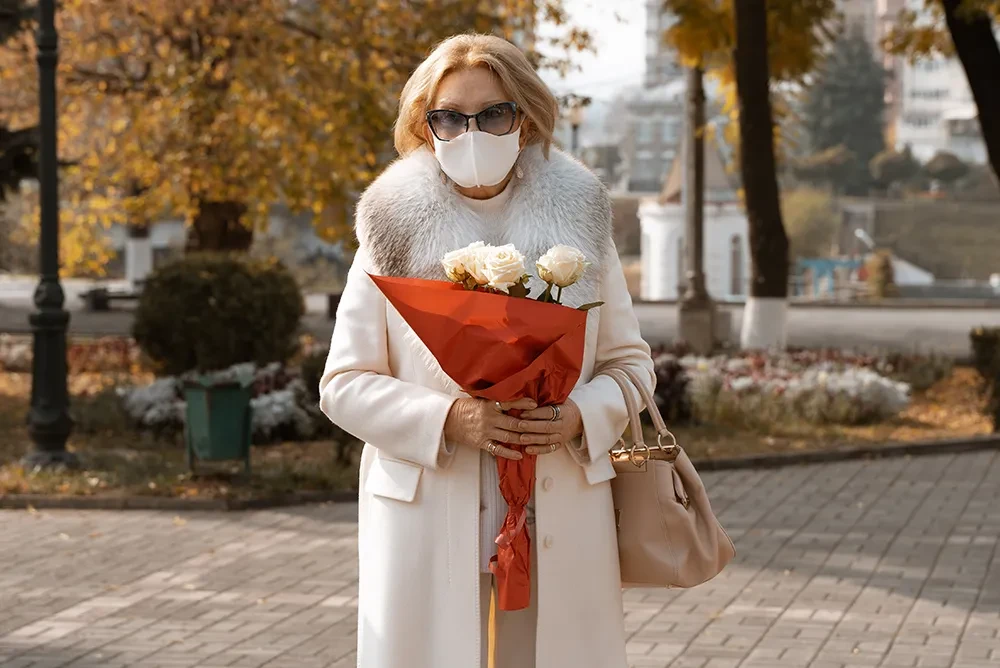
- We have Sumbatashvili was the main artist, understand? We have to stretch! - drops Maksakova, brilliant without effort. And the new job anticipating - the role of a jester in the "Lear" Yuri Butusov.
However, scraps must first “feel the space”, and only then organize it. While one is clear so far: on the second floor there will be a museum zone, an attempt to reconstruct that former, family life, and on the first - a place for performances, evenings, poetry, and referees. Time: Autumn 2021, and even more precisely - November 13, the day of the century of the theater.
“And I would have worked with pleasure here too - the young director Ekaterina Simonova, a daughter, granddaughter and great -granddaughter of a family, significant in the history of the Vakhtangov scene, mutters to himself. It turns out along the way: the Simonyansk house, from where the Simonovs dynasty came from, stood not far from the Vakhtangovs' House, the ancestors were engaged in wine, the heads of families were friends.
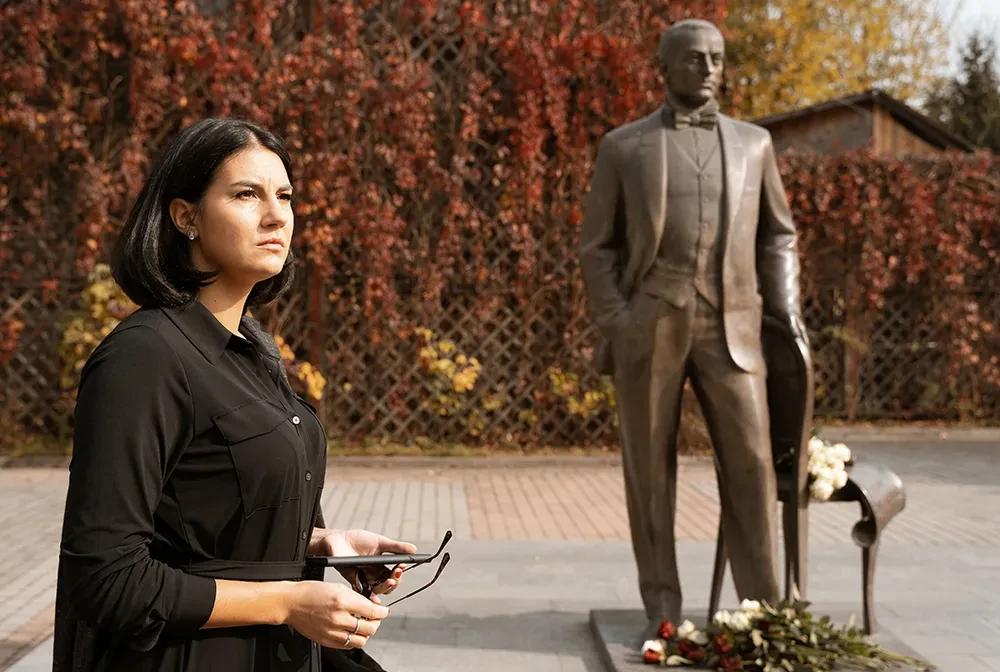
Ossetian feasts are a merciless thing. After you need to run around the city in circles and kilometers. On Mira Avenue near the Aleksandrovsky Hotel, a monument to Bulgakov (he worked here), the Her House of the Gergiev family, a privatized and restored maestro. And very close - a monument to Pushkin Vladimir Soskiev. It stands right on the ground. My companions illuminate the monument with a telephone: from the darkness the poet’s face, an arba with a frozen driver, a pair of stubborn oxen protrudes the tragic force. They say that the monument caused a lot of disputes, but the power of plastic solution is undeniable. Vladikavkaz is bloody to be associated with Russian culture (the Russian theater is headed by the man of the Vakhtang school, People's Artist Vladimir Uvarov), and he deserves a gift that will receive.
There is the highest justice that Yevgeny Vakhtangov posthumously comes to his hometown in a theatrical way.
The city from where he fled, rejecting the fate imposed by his father. He fled, not yet understanding himself, only vaguely guessing about what he had come into the light. Everything was ahead: Stanislavsky’s apprenticeship, and great performances, and tragic disease. And the special, inherent connection of the holiday and drama, courage and humility, experiment and classics. And now it is the theater, in which he became one of the legends of the twentieth century, returns it to his homeland.