
Translated material
Your disgrace
In Russia, pardon is now announced a thousand times less often than under Yeltsin. How does this work? And in other countries? We explore the topic
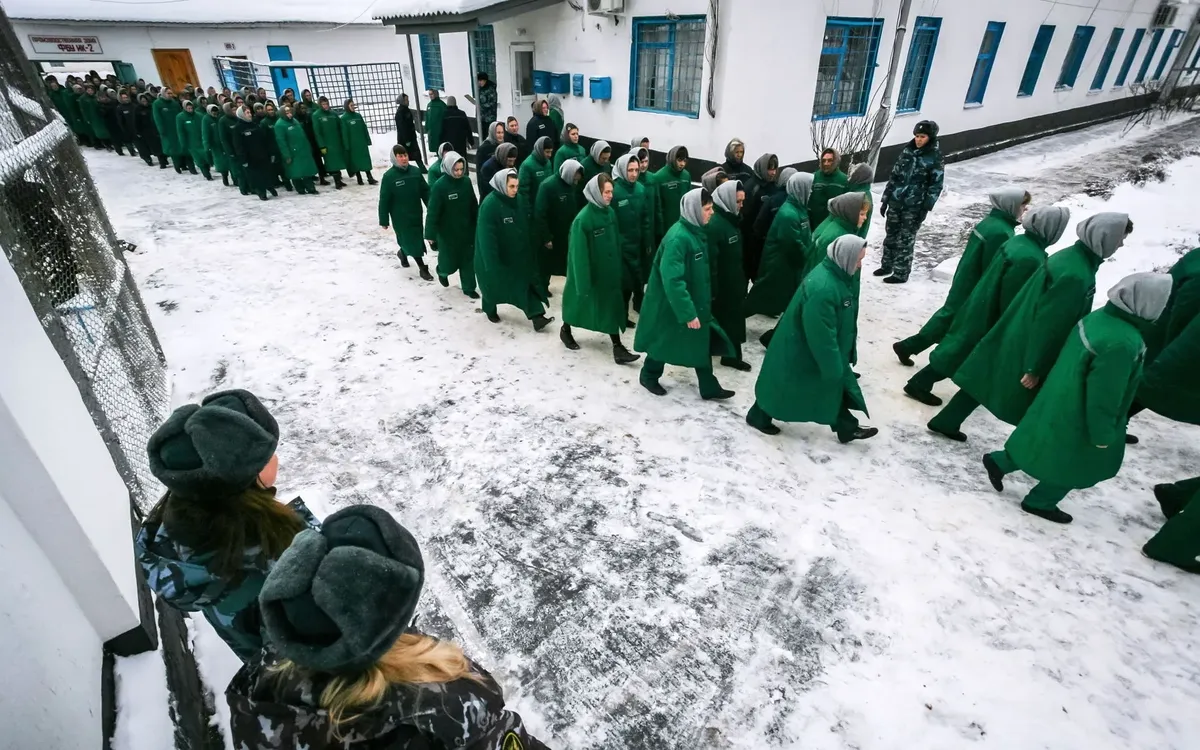
Over the past two terms, President Vladimir Putin has mercy on average five people a year. This is 13 times less than under Medvedev, and a thousand more than a thousand than with Yeltsin. Most of the pardoned by the President were convicted of particularly grave articles: murder, causing serious harm to health and drugs.
Leonid Nikitinsky
Member of the Human Rights Council, observer of "New"
Grace is going on secretly.
According to the Russian media flying around, the Queen of Great Britain petitioned the pardon of Stephen Galland, who was convicted in 2005 to 17 years in prison for murder. The exemplary prisoner Galland on November 29, 2019 was released from prison to the Fisheries Guild in London, where a meeting of graduates and teachers of the rehabilitation program for prisoners was held.
Usman Khan also came to this meeting, who had already served his intention to blow up the London Exchange. He attacked the other participants with a knife, managed to slaughter two graduates of Cambridge and rushed to flee the bridge over the Thames. Grabbing the tusk of Narval from the guild, the gallow helped to detain the khan with the mulyage of the Shahid belt before the police intervention.
Everything is fine in this message: both the English prisoner with a bosmus above the Thames, and, of course, the queen, who only intercedes the pardon in front of the court and
The main thing is complete clarity in what OS was for the wives (so it is pronounced in Russian prisons) earned the mercy of Her Majesty.
Encouraged by this message, the Date of the Department of Novaya decided to investigate what is happening with the pardon in the Russian Federation-the results are presented below in the text of Daria Talanova.
To him, I would add that under President Boris Yeltsin to the pardon commission, which was headed by writer Anatoly Poselkin, entered not only lawyers, but at different times also: also:
- Bulat Okudzhava,
- Robert Rozhdestvensky,
- Marietta Chudakova,
- Priest Fr. Alexander Borisov,
- human rights activist Valery Borschevand other famous faces.
Since 2001, when this commission was dissolved, we only know that Viktor Ivanov oversaw the issue in the presidential administration, and who entered the commission created according to his plan in the regions, the general public was never known.
With the exception of some high -profile precedents who have a clear political component, the pardon of Mikhail Khodorkovsky , the Ukrainian pilot Nadezhda Savchenko and a number of others - about the rest of pardoned by President Vladimir Putin (with a total of about 900 people) the general public is also unknown. From the official data, the Data-Department was able to understand that mercy extends mainly to serious violent crimes. From this we can conclude that the main reason for forgiveness is some personal qualities of pardoned, but what these criteria are, the general public is again completely incomprehensible.
The Commission of Zlekvkina proceeded from the fact that mercy ultimately turns out to be the most effective way to combat crime. Of course, this is very controversial, but from what criminological doctrines those who deal with this issue today come from their decisions, only they know themselves. Maybe this is even a state secret that God forbid to disclose.
Date-study. Russia: Over the past two years, only 16 people have pardoned
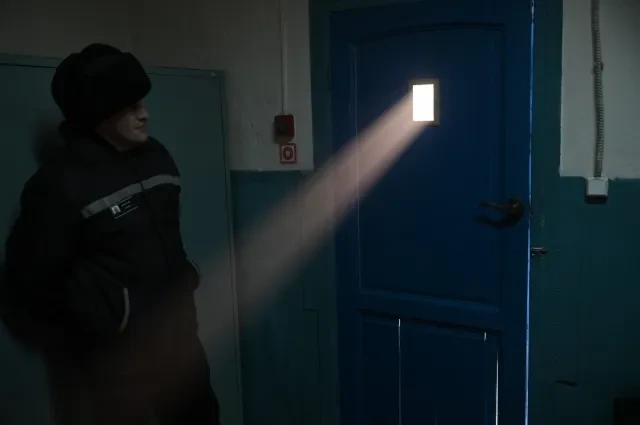
The number of pardon was reduced at one moment - after the abolition of Putin in 2001 of the pardon commission. It consisted of 13 people, seven of whom were lawyers. Throughout the history of the commission - from 1992 to 2001 - 69,856 people were pardoned. After accusing her of excessive mercy, Putin replaced the federal commission by regional. The composition of each is at least 11 people. As a result, not 13, but at least 935 employees are now dealing with a matter of pardon. However, regional commissions show their inefficiency: human rights activists turned to the president three times with a request to reform the system. The maximum amount of pardon for the entire time of work of the new commissions, as noted in a large and detailed investigation of the project, is 283. This is an indicator of 2003.
The decrease in the number of pardoned led, as noted by the “project”, to a decrease in the number of petitions. If in 2012 there were 8382, then in 2015-4611, and in 2018-3117. In 2019, regional commissions noted that the trend did not change.
In February 2019, the president instructed to come up with how to improve the procedure for the formation of regional commissions. However, the released from places of imprisonment became only less.
We studied the presidential decrees on pardon for 2018–2020. In total, 16 people were pardoned. Half of them are women. Three convicted of exceeding the limits of necessary self -defense during family quarrels, the president reduced the term of to 5-6 years in prison. Three convicts of drugs, one of whom is an Israeli citizen, the president released. Two women convicted of murders were also released, one of whom Putin removed the criminal record.
Six out of eight pardoned men were convicted of crimes that led to death. Another - a citizen of Ukraine - was convicted of theft. There is no more information about one pardoned in 2018 in open sources, only his name and surname are known. The president freed all the pardoned from places of imprisonment, removed the criminal record alone.
Most of Putin pardoned for 2018–2020 were convicted of heavy and especially grave articles: out of 16 people, eight were sitting for crimes leading to death, and for causing serious harm to health.
In 2019, regional commissions recommended a pardon of less than 5% of the petitions received. At least at least three commissions were rejected by all petitions: in Smolensk - 37, in Khabarovsk - 17, in Lipetsk - 11.
In Rostov, the commission approved four out of 150 petitions, in the Altai Territory it was recommended to satisfy two of the 129, in the Chuvash Republic approved one of 133, four out of 83 in Mordovia, two out of 39 in Chelyabinsk, four out of 30 in the Amur Region.
The most loyal to the convicts in 2019 were the commissions of the Kurgan region, where out of 59 petitions were recommended for satisfaction 9, and the Republic of Buryatia, where three petitions out of 15 were supported. Unfortunately, only a few of the regional pardon commissions publish information about their activities on the Internet.
- Daria Talanova, Date Department of Novaya Gazeta
From numbers - to reality
Not a single pardon in 15 years.
Since 2002, a mercy commission has been working in the Sverdlovsk region. And if in the early years her activities were discussed with interest, today the commission members are trying not to speak on this topic.
In the first three years of the work of the commission, 199 convicts were recommended for pardon, of which the Russian president agreed with 24 candidates for free life. An attack of humanism occurred in the period from 2002 to 2005. More in the Sverdlovsk region, not a single prisoner was pardoned.
“Today, fewer people are contacting the commission than usual,” Tatyana Merzlyakova, Ombudsman of the Sverdlovsk Region and the chairman of the regional commission for pardon told Novaya. - Since the beginning of the year there were 39 appeals, we examined everything. I don’t know what decision will be made in Moscow.
“Usually we have about 100 appeals per year, but Coronavirus prevented this: everyone is concerned about their health, not before collecting certificates.”
- (extends) one thing I can say that the approach to issues of imprisonment in our country has become much more humane. We did not have accidental convicts. In addition, not so long ago, we ourselves found four people whose affairs should be studied for pardon, we will invite them to collect documents.
The Ombudsman emphasized that for her personally is of secondary importance, according to which article of the Criminal Code, a person was convicted, she is more worried about whether he embarked on the path of correction. At the same time
She perfectly understands that the governor, signing the recommendations of the commission, categorically disagree with three categories of convicts: terrorists, rapists, drug dealers.
Since the founding of the commission, Nikolai Timofeev, an adviser to the governor, has been included in the commission.
“Over the years of existence, the work of the commission has changed for the better,” he said to “New”. - The commission consists of the best and honorary citizens of the region. We even have a former secretary of the regional committee Valery Romanov, also an authoritative person.
Unfortunately, our interlocutor could not remember how many of the recommended pardon were pardoned.
“We gather once a month, but if there are no appeals, then less often,” said Timofeev. -Because of the pandemic, there was a break, now the meetings have been resumed. More often recidivists turn. They, apparently, use all possible loopholes to be released. Among us, we have those who have 10 convictions. The work of the commission is very painstaking.
“About 20 appeals were considered last week. No one was recommended for pardon. ”
As for the rest of the members of the commission, it turned out to be quite difficult to chat with them. Those who we managed to get through as soon as we found out what was being discussed, immediately lost interest in continuing the conversation. In the best case, promising to call back, they hastily finished the conversation, so as not to respond to calls later. And the honorary artist Valery Romanov (in the past, the secretary of the Svolovsky regional committee of the CPSU ) even said that he had no opinion on this issue and was ready to subscribe to any words of the leader.
“Many do not even know about the existence of a pardon commission,” says Daria Belyaeva, a member of the public observation commission in the Sverdlovsk region.
Personal experience
- For convicts, a more real way to freedom is parole or amnesty. There are few pardon in recent years, because the very system of justice has changed. From the moment of detention until the sentence in our system, everything works in order to plant a person rather than pardon.Isolde of the crumb, "New newspaper in the Urals",
YekaterinburgThree refusal to pardon.
A former employee of Yukos Aleksey Pichugin, who was sentenced in 2007 to a life imprisonment on charges of organizing a series of murders and attacks, allegedly in the interests of his company, addressed the president in 2016, 2018 and in 2020, with a request for pardoning. And always without a plead of your guilt, which, according to Russian law, is not required for pardon. All three times they refused to Pichugin. True, the president refused not personally, but the authorities of the Orenburg region, where he is serving a term.
Technically, it looked like this: Pichugin wrote a petition, the Black Dolphin colony administration (in the city of Sol-Iletka) sent paper to the territorial body of the penal system within 20 days. Toowis, in turn, sent a petition to the regional pardon commission.
Such commissions are almost always formal, they create only the appearance of a working institution of pardon.
The commission includes people by regional standards respected. For example, the last commission that banned Pichugin's petition included the Commissioner for Human Rights in the Orenburg Region Anatoly Chadov, director of the MGUA Orenburg branch Alexander Kolotov and even the director of the regional museum of local lore Natalya Eremina. Well, people are easier than a rank - editor of the regional newspaper, leaders of various associations of pensioners and veterans (and veterans of the internal affairs bodies, internal troops, local wars and military conflicts), and all these people always came to the conclusion: the “cup of guilt” of Pichugin outweighs everything else.
Here is what Yuri Meshshkaninov, a member of the commission and editor -in -chief of the Orenburg region newspaper, told reporters in June 2020: “The commission accepted the gravity of pardon, taking into account the severity of crimes. The court was charged with [Pichugin] several murders, attempted murder. Very brutal murders, when they threw grenades into the car and grenades, made shelling out of three machines. The commission decided that there is still no reason to mitigate his punishment. ”
About the European Court of Human Rights, which twice demanded to revise Pichugin's sentences due to their exceptional bias, these respected people did not say anything. Yes, and they are unlikely to know the decisions of Strasbourg, who established that there were no fair, open and impartial court at all, and serial killers and rapists who themselves later admitted in the reservation of the Yukos employee in exchange for promises to mitigate the punishment (promises turned out to be empty).
But the regional commission in this chain, created for failures and props, does not act alone.
The baton is intercepted by the "senior official of the subject of the Russian Federation." In the case of Pichugin, the governor of the Orenburg region.
Governors (first Yuri Berg, then Denis Pasler) all three times refused pardon. Refusals as a copy.
At the same time, the governors for some reason refer to the fact that this is not their decision, but the president. After all, the officially registered procedure on the procedure for consideration of petitions for pardon in this: the conclusion of regional commissions and governors is “recommendatory in nature”. The governor only makes an idea of the appropriateness or inappropriateness of the president, behind which is a “final decision”.
So in the law. In practice, Pichugin’s lawyers say, everything is different:
The fate of a particular person depends on the will of only one person - the president. After all, he merged, bypassing all sorts of commissions, and the governors, and Khodorkovsky, Savchenko, Sentsov ... without any confession of guilt.
Conclusion: Pichugina, who has been in prison for the 18th year, will not be blessed. Although it is still incomprehensible whether the president of Pichugin’s petitions addressed to him personally had ever seen.
Recently, an 81-year-old mother asked him for Pichugina. She, however, asked not the president, but Patriarch Kirill, noting that this is her last hope. The Patriarch did not answer. Four years ago, Alla Nikolaevna Pichugina wrote unrequitedly the president.
As for the European Court, just on the day when the commission and the Orenburg governor for the third time wrapped the request of Pichugin, on June 4, 2020, the Committee of Ministers of the Council of Europe after a long study of the case issued a special resolution calling for the Russian authorities to execute the decision of the ECHR in his case. Installed deadline - until November 30, 2020.
The term when Alexei Pichugin receives the right to file a petition for parole will occur in 2028. However, UDO for lifelongs, too, probably depends on the will of one person.
Vera Chelyishcheva, "New Gazeta"
As in other countries
Ukraine. What does society require - stiffness or mercy?
After the Maidan, a discussion revived about whether it was possible to give a chance to “lifelongs” to go free
So far, there is one prospect for such citizens: after 20 years spent behind bars, the verdict can be replaced by 25 years by pardon. During the state independence of the country, only 8 cases are known when people who have received a life sentence were released. Lawyers clarify that national legislation does not ensh the release mechanism in this case, and judges do not have sufficient courage to take into account the priority of international law, that is, Article 3 of the Convention on the prohibition of torture in the interpretation of the European Court.
Ukrainian human rights defenders, in particular Evgeny Zakharov, chairman of the board of the Ukrainian Helsinki Union for Human Rights, the head of the Kharkov human rights group and a Soviet -time dissident, speaks of several judicial mistakes known to him regarding the “lifelongs”. How many people, among about 1,500, sentenced to “new death penalty” in Ukraine, should not pay such a high price for their sins, now no one will say with confidence.
The last one who called the numbers was 30% of the innocent among the "lifelongs" (!) - was Dmitry Groysman, coordinator of the Vinnitsa human rights group.
Two day
At one time, he also acted as a campaign coordinator for the abolition of the death penalty in Ukraine. Dima died of a heart attack in August 2013, on the eve of a court session in his criminal case. Groysman was accused of abuse of state symbols of Ukraine and the distribution of works of a pornographic nature - for placing a photo of a man with an erected phallus at the Constitution of the country in a blog. Not a single “publication with words” about the lawlessness of Yanukovych’s authority reached a similar effect.According to Zakharov ( *At one time, the candidacy of Yevgeny Efimovich was considered to the position of Ombudsman. - *O. M. ), the authorized person of the Rada of Human Rights should take the function of filing a supreme court for consideration of the case if significant violations of human rights are found in the case.
It is written in the Criminal Code of Ukraine that the replacement of a lifetime imprisonment for a certain period is in the power of the president, but this is not a duty, but the right. In practice, the head of state rarely risks taking such steps. The beginning of the war in general for almost a year has stalled the work of the commission on pardon. There were more than enough reasons for this, including the main thing: society required not mercy, but stiffness.
Но в декабре 2015-го года Украина удивила постсоветское и не только пространство так называемым законом Савченко, хотя самая известная политзаключенная Кремля, первый номер парламентского списка партии «Батьківщина», Герой Украины Надежда Савченко причастна к инициативе скорее символически. На момент внесения законопроекта в Раду и голосования за него Надя еще держала голодовку в российской тюрьме. С документом же работали шесть авторов, в том числе адвокат Савченко Илья Новиков. Он же, как рассказывали в прессе депутаты от «Батьківщини», возил законопроект своей подзащитной — на подпись.
Идея состояла в зачислении судом срока предварительного заключения из расчета «один день в СИЗО за два дня лишения свободы». За закон проголосовало 255 парламентариев. Принятие документа приветствовали европейские партнеры Украины, назвав этот шаг проявлением подлинного гуманизма.
По итогам «освободительной кампании» Trancparency Internatinal Ukraine и журналисты опубликовали исследование: пенитенциарные учреждения покинули в том числе 900 человек, осужденных за умышленные убийства, и 100 — за изнасилования. Закон скостил каждому из них примерно два года.
Экс-«беркутовцы», принимавшие участие в подавлении Майдана, корректировщик огня по микрорайону «Восточный» в Мариуполе, педофил-сутенер тоже вернулись домой…
В Нацполиции назвали «закон Савченко» стимулятором к ухудшению криминогенной обстановки — мол, каждое десятое преступление совершалось теми, кто не досидел.
Примечательно, что по «закону Савченко» в апреле 2016-го получил свободу и экс-депутат «Батьківщини» бизнесмен-аграрий Виктор Лозинский — на четыре года раньше срока. Лозинский с особой жестокостью забил селянина, заподозрив его в браконьерстве на территории частного охотхозяйства. На днях этот господин, снявший судимость, выиграл в том же районе местные выборы.
Закон действовал полтора года, затем был отменен. А в июне 2018-го Общественная палата Верховного суда Украины предоставила правовое заключение относительно применения нормы «день за два». И… возобновила ретроспективное действие документа. What does it mean? Те, кто совершили преступления и кого посадили до 21 июня 2017 года, могут просить о перерасчете дней заключения.
Надежда Савченко продолжает считать закон имени себя идеальным.
В заключении в Украине сейчас находится примерно 53 000 человек. Кабмин, как сообщил журналистам министр юстиции Денис Малюська, пытается убедить Раду сделать законодательство по отношению к ним либеральнее.
В мае, когда пандемия коронавируса стала реальностью, Минюст и премьер-министр Шмыгаль инициировали амнистию примерно для 3000 лиц, чьи преступления не представляют опасности для общества. Профильный комитет парламента идею поддержал. Впрочем, позже соответствующий законопроект вернули на доработку и вовсе сняли с рассмотрения. Депутаты не без оснований боялись, что имеют дело с новым «законом Савченко».
Olga Musafirova, sob. Corr. "New",
KyivЛатвия: 204 из 979. Как работает институт помилования?
В Латвии право помиловать осужденного принадлежит президенту республики: такой порядок был закреплен в Конституции в 1993 году, а также в специальном законе.
Ходатайствовать о помиловании может сам осужденный, а также его ближайшие родственники и адвокат. Ходатайство о помиловании может быть подано после вступления приговора в законную силу, в случае совершения тяжкого преступления — после отбытия половины срока наказания, особо тяжкого — после не менее двух третей. Если суд назначил наказание в виде пожизненного лишения свободы, ходатайствовать о помиловании можно через 20 лет.
При этом президент имеет право заменить заключение на более мягкую форму наказания либо полностью освободить человека, а также снять судимость.
Все ходатайства о помиловании направляются в специальную Службу помилований — ведомство, созданное при президентской канцелярии. Служба сразу отсеивает те ходатайства, которые не соответствуют критериям (например, направлены еще на стадии судебного рассмотрения), и готовит остальные для передачи президенту. В частности, Служба помилования может запросить дополнительную информацию у прокуратуры, суда, полиции, а также в месте заключения, где содержится осужденный.
В среднем с момента подачи ходатайства до принятия решения проходит около года.
После утверждения президентом решение в течение пяти дней направляется в исправительное учреждение и в суд, вынесший приговор.
Если ходатайство о помиловании было отклонено, осужденный имеет право подать повторное прошение, но не раньше чем через шесть месяцев, совершивший тяжкое или особо тяжкое преступление — не ранее чем через год. В особых случаях (например, при наличии серьезных заболеваний) ходатайство может быть подано раньше.
Информация о таких ходатайствах и принятых по ним решениям регулярно обновляется на сайте президента. Так, в октябре президент Латвии рассмотрел 18 прошений и удовлетворил два из них: одному человеку, осужденному за преступление против свободы, чести и достоинства другого лица, был сокращен срок; еще одному осужденному за преступление против общественной безопасности наказание было отменено.
Критерии, по которым президент одобряет ходатайство, в законе не прописаны — по сути, это исключительно решение главы государства.
В процентном соотношении больше всего помилований на счету у Вайры Вике-Фрейберги, которая занимала пост главы государства два срока подряд, с 1999 по 2007 год: она удовлетворила 204 из 979 поданных ходатайств. Нынешний президент Латвии Эгил Левитс, который возглавляет республику с 2019 года, удовлетворил за это время 6 из 238 поданных ходатайств.
Мария Епифанова, собкор «Новой» по странам Балтии