
Translated material
Blockchain for the dictator
Why do the votes of voters in the United States consider, as in the 19th century, and what does democracy have to do with it?
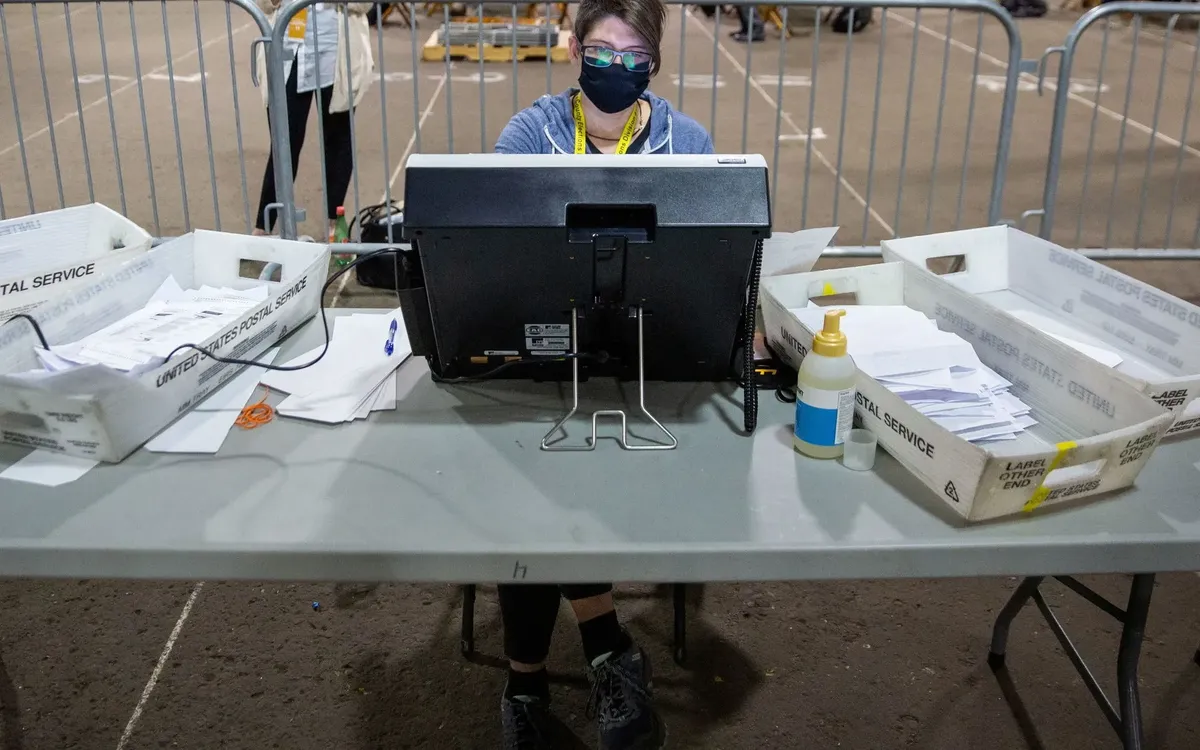
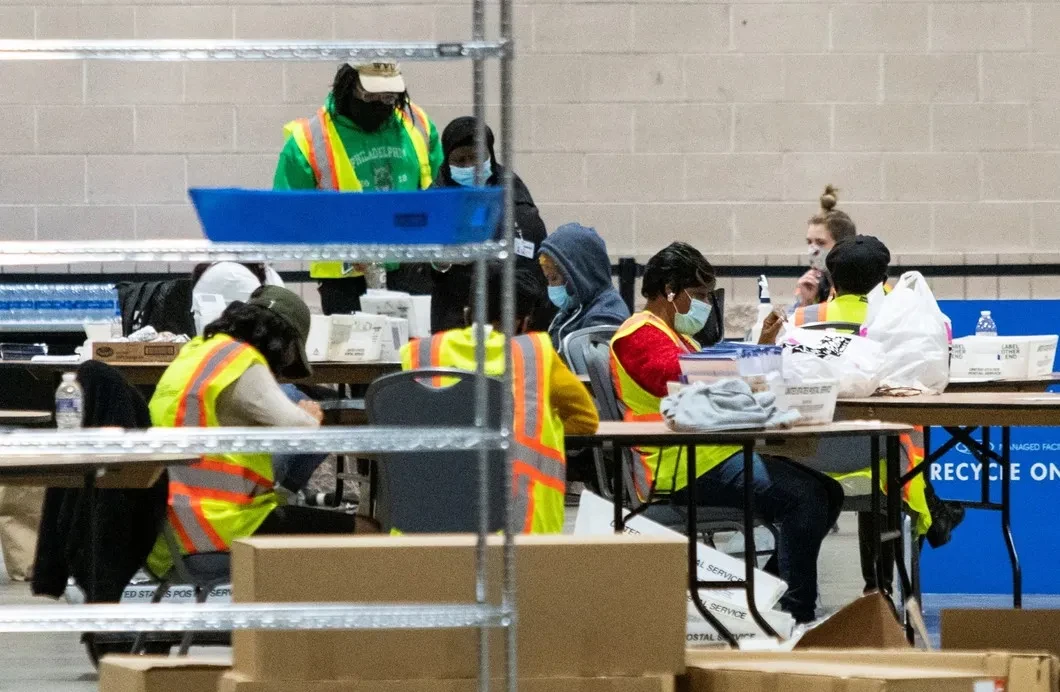
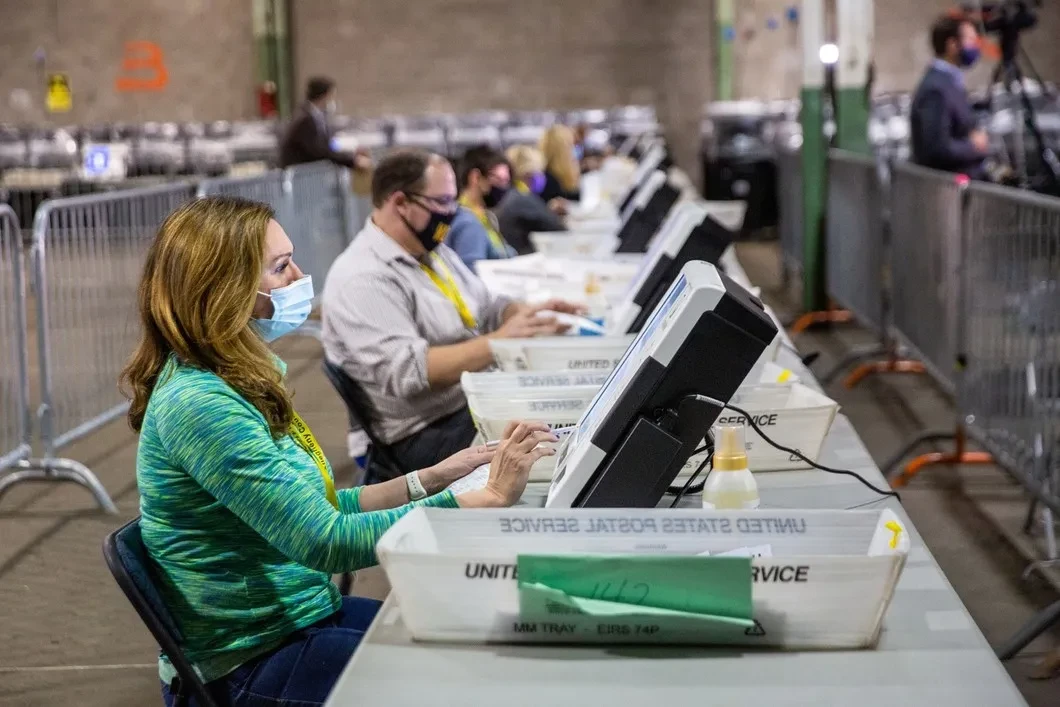
The event that has been covered in excess, the event called “The choice of the American people between Trump and Netramp” forced the idle interested public on the other side of the ocean to be outraged by the “archaicism of the elected process in the United States”.
Where is it visible so that the country that gave the world iPhone and Tesla as a week to consider the ballots manually and fiddled with postal items?
Where, let the immodest question, technology? Where are the lines with masks looking?
In fact, Pіdozra , as our neighbors say, who knew a special tsimes in democracy, did not go to the cashier: the American elections of the president are stuffed with technology to lawlessness! I will say more: if not for these very technologies, the ballots were considered many times faster.
You need to understand that talking about technology in an abstract way is deprived of meaning. There are a lot of these technologies, they are completely different, moreover, some of them are involved in the stages of voting, the existence of which the layman is not even guessed.
In vain, I must say, is not guessed, because this information concerns him in the first place.
About these elected technologies in all their diversity and today I propose to speculate readers today.
There is a common misconception that the main thing in the voting procedure is the stage of voting. Flat paremias like “who considers the voice, he wins” in modern Russian (he wins ”(apparently, by analogy with“ who dinner, he dancing her ”). Unfortunately, folk wisdom in this situation does not add new meanings, but only confuses.
The point is not even that the shyleric fraud of votes is the destiny of deeply native communities, so applying your own stereotypes to the American electoral system is like walking on the fifth Avenue in a skirt from bamboo tubes.
The main thing in the election procedure is solutions in the heads of voters with whom they come to the site.
It is precisely to the formation of these decisions, on which the lion's part of the efforts of election campaigns is directed to the power of a political force. And it is at this stage that most of the most advanced technologies are involved.
Colleague Genis complains: how can one vote for a person whose back is “impeachment, 279 days of golf, a quarter of a million dead from the virus and 20,000 false, false and incorrect statements”?
And in fact: how? It turns out that something happened before 50% of the US voters came to the site with a ready-made decision in their heads, and at the exit from the site they showed the muzzle in the pocket of the exitpols, concealing the truth about their choice.
It is with this that I want to start - with technologies that really predetermine the outcome of the American elections.
Regularly, “targeted letters” arrive in my mailbox personally from Sergei Semenovich Sobyanin. They always begin on an intimate note: "Dear Sergey Mikhailovich!" On this, however, the intimacy ends and then such a condo chancellery is coming that the mayor's epistle instantly goes into a box with spam. Chancellery is devoted to the fact that Sergei Semenovich offers me to do (visit, do, choose, take part) with what I will not do under any circumstances.
For genuine intimacy, I would like the mayor of Moscow to know about these circumstances and did not show so clearly the falsehood of appeals by the name of patronymic.
The newsletter of the Moscow Mayoria of Spamarian letters to the carbon copy, where the name of the addressee is inserted into the letter automatically, and the data is taken from the public services database is a striking example of how to engage in politics, propagate and work with the voter. This, excuse me, is a stone age.
American electoral technologies begin with what is called MicrotarGeting, extremely narrow targeting, which has long reached the level of jewelry work with the voter at an individual level.
When representatives of Bayden or Trump (wider - the republican or democratic party) come into contact with the voter, they know absolutely everything about this particular voter: the name, surname, date and place of birth, the names of relatives and friends, habits, fears, objects of love and hatred, preferences in music, films, books, the preferred time of the day to visit the polling station, readiness or non -reliable. To communicate with the compilers of ecunitations, acceptability of remote voting, etc. to infinity!
Accordingly, all subsequent interaction with the voter is built on these exact a priori knowledge.
Until the fact that if it is known that I am an ardent supporter of the opponent’s party, they will not spend a second of valuable time on me at all.
If I am already deeply engaged (for example, I always voted in the past for a certain batch), they will try to attract me to active participation in the election headquarters, support groups, propaganda shares, etc.
If I hesitate and have not yet made a decision, a complete set of well -developed technologies for attracting, lushing, hobbies, etc. will fall upon me with maximum force.
In the foundation of such point work with voters are giant databases that gather for years and decades. For each American voter in these databases (which the Republicans and the Democrats have) is stored - do you believe - from 500 to 2500 so -called Data Points, information entries.
Information entry is understood any valuable information: mobile phone number, e -mail, clicks made on a particular advertising banner, and, conversely, banners and advertising, past which I passed by. And so on.
The Information Leviathan of the Republican Party is called Data Trust, in which the Big Data is stored in centralized, and then distributed between all interested structures conducting republican and conservative election campaigns.
The batch of elephants will actively use Data Trust information for point processing of voters since 2013. I would venture to assume that it is Data Trust, and not the idiotic tweet of the still current president, that is the main weapon of the Republicans, providing them with a serious information advantage over the Democrats. The advantage that is in the election in the same incredible number of votes cast for the President-SCRUATION.
The reason for the information handicap: Democrats, instead of catching up the lost time and reducing the technological lag, had been engaged in the fact that they tried to ban Data Trust in court. The Party of Donflies saw in the concentration and mutual distribution of information by the Republicans a violation of the rules of the federal election commission prohibiting cooperation between political organizations, non -profit structures and directly electoral campaigns.
The case ended in that the legal fund of American democracy (American Democracy Legal Fund) with a bang lost a lawsuit filed against Data Trust. Only after that the democrats rushed to catch up: in 2019, the structure of the Democratic Data Exchange Inc. was incorporated in 2019 (DDX), which set tasks similar to Data Trust. In full power, the DDX information conveyor earned only in June 2020, so there is no need to talk about a democratic machine for flushing the brains of voters comparable to the Republican.
Democrats, however, recouped on social networks. All the power of the transnational monsters Facebook, Twitter, Google was launched to support the paintings of the world preached by the party of donkeys. The most fiercely fights for the democratic idea of Facebook.
Zuckerberg’s bins are breaking from invaluable intimate knowledge of almost all US citizens (they are no less of citizens of other knowledge countries, but they are not relevant in the context of the American elections). Facebook knows everything about everyone, especially about political preferences that are detailed to the limit due to statistical accounting and analysis of likes, which we carefully scatter right and left.
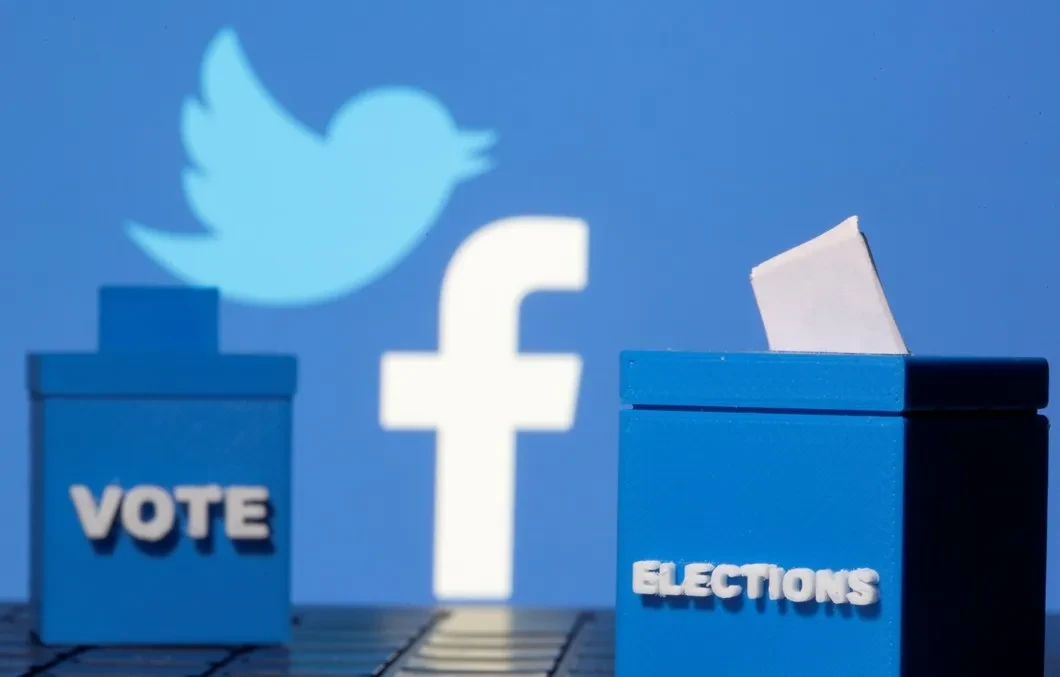
All this treasury was handed over to the democrats, who managed to organize a very effective MicrotarGeting. Its effectiveness is explained by the fact that the analytical achievements of Facebook allow not to waste time on the individual processing of each potential voter, but to rinse the brains with small clusters territorially, that is, taking into account party needs in a particular selective section.
Of course, Facebook does not conduct any party discrimination. Pecunia, as you know, is non olet, so not only democrats, but also Republicans can buy information. Republicans, however, constantly have difficulties in terms of practical application of “knowledge” bought from Facebook: the social network and personally Comrade Tsuckerberg demonstrate the pronounced political Bias, which is manifested in the fact that the eyes are closed by the misinformation, and the republicans are hung with a bashful nameplate, which warn of inaccuracy.
Google with Twitter also work similarly. Google has not allowed MicrotarGeting since the beginning of the year, and Twitter has banned political advertising placed by structures that are directly involved in the electoral campaigns.
In practice, however, it turns out that “correct” myths are distributed through Google and Twitter, and “wrong” myths cannot be.
Since President Trump and supporters of the Republican Party as a whole suffer from conspiracy nonsense in incompetitionly more severe form than fans of political correct terror, to mock the emotional expression of conservatives for Google and Twitter, a much easier task.
After American voters pass through the merciless millstone of high information technologies at the stage of preliminary brainwashing, they fall into polling stations or pour out their civil will by mail.
In both cases, at the stage of collecting, processing and calculating votes, technologies are used more traditional and even old -fashioned - a scanner and a printer.
Bulletins lowered into the urn and received by mail are scanned, and then digitized. What came through mobile applications (Electronic Votes), on the contrary, is printed, then again scanned and passed through OCR (automatic recognition of signs).
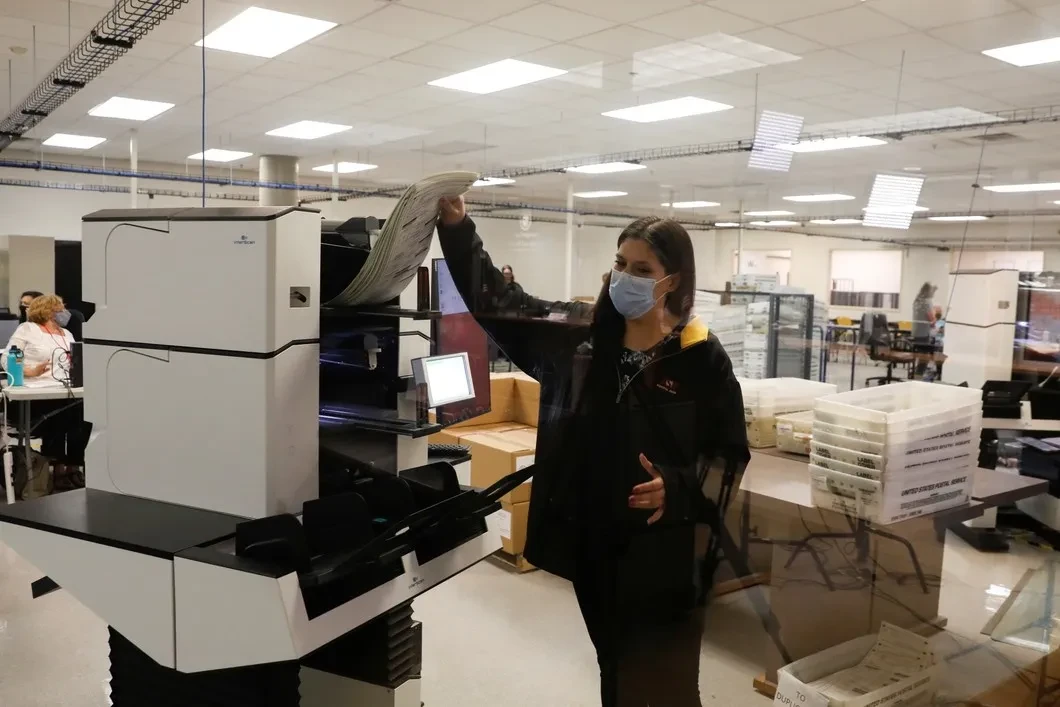
The situation is aggravated by the fact that double paperwork - in the number and on paper - is carried out in every corner of the country in its own way. In the USA, there is no single voting standard, therefore, not only at the federal level, but also at the level of state, counties and even individual sections, hundreds of technological solutions are involved. Scanners of different manufacturers and models, uncountable number of databases and software for voting, their calculation, etc.
The electoral process, which, as we have already noticed, develops from high technologies (at the stage of processing consciousness) to low (at the stage of processing of ballots), naturally ends with a complete lack of technology. In the sense that the final calculation is carried out manually. Of course, there are machines that automate this process, but the final word always remains behind manual calculation. And it is no coincidence.
Here I approach the semantic climax of my replica. All talk about the advantages (and, therefore, desirability) of the progressive introduction of modern technologies in the election process does not take into account the most important thing in the political election procedure, namely: the ritual importance of this action!
The main social and psychological task of all elections is, without exception: not so much to ensure technological impeccability, impartiality and even the accuracy of votes, how to achieve the confidence of the masses to the procedure itself!
The paradox of our time is that the more perfect the elected technology, the more difficult it is for ordinary citizens.
Take, for example, the most advanced achievements in this direction are voting on the blockchain , or such a replacement of undemocratic forms of counting (such as the principle of “one person - one vote” or, to an even greater extent, indirect voting through the electoral system) as a square vote (Quadratic Voting - is ready to argue that most readers did not even hear about this remote).
Both of these technologies are so complicated for the perception of the average inhabitant of the planet that their imposition without taking into account local specifics and preliminary preparation is a much greater evil than the preservation of traditional primitive votes counting techniques.
All technologies, however, have one wonderful property: if they provide objectively better results, sooner or later they will be involved, regardless of whether we like them or not.
Given the realities that have developed today in the world, it is reasonable to assume that in the foreseeable future, the mainstream will be determined by three different voting procedures. The choice and adaptation of these procedures will depend on the degree of development of the technological literacy of the population of a country, as well as a measure of secularization of society.
In archaic societies with persistent traditions of democracy (first of all, this, of course, the United States, Great Britain, as well as the southern countries of the European Union), the highest voting technologies associated with a full -fledged blockchain will not be established in the coming years.
The reason is the low level of technological literacy of the population and, as a result, the lack of trust in incomprehensible technologies. A relatively high level of religiosity in these countries plays an even more important role. The latter circumstance automatically strengthens the role of tradition and forms trust only to those procedures that are tested by time, consecrated by historical experience and are endowed with important ritual symbolism.
Accordingly, in these countries they both preferred and continue to prefer to count the votes manually, and, if necessary, to recount them again and again, at least until the blue. Because only such a blue provides a measure of trust, the only convincing for representatives of these crops.
The second probable trend is the adaptation of a surrogate of high technology, which will happen in archaic societies without democratic traditions. The tone here will be set by Russia, Brazil and India. In one form or another, this trend will also support the majority of Asia and Africa.
Under the “surrogate of high technologies”, I mean electronic voting on the pseudo -castle, similar to the fact that we observed last year in the elections to the Moscow City Duma, and soon we will observe in the Russian Federation already everywhere (because, as far as I know, the adaptation of this trend has already been taken by power elites).
Details of how to profane the full -fledged blockchain in the elections can be spent on the readers in the fall of 2019 in the “muddy technology”, so I will not repeat and emphasize only the key thought.
A full -fledged blockchain has nine basic qualities, but the first is decentralization - the key, because in its absence, most of the other advantages disappear. If the blockchain is not decentralized, that is, if it has a head server endowed with special powers, and there is a hierarchy, then resistance to censorship, neutrality, hopelessness, inclusiveness, etc. immediately disappears.
The blockchain, which was experimentally used in voting in a number of countries (including the Russian Federation), is deliberately not decentralized, therefore it is a variation of a corporate distributed network . It cannot be otherwise, because otherwise the state completely loses control of the voting results, which, as you understand, for the authorities governing the archaic society without democratic traditions, is absolutely unacceptable.
But that's not all. As soon as the blockchain is deprived of the quality of decentralization, it turns into the most convenient tool for manipulating the elections.
A centralized blockchain is a “black box” in which you can uselessly twist, change and reconfigure any parameters.
What is the outcome of the elections, such a centralized blockchain will provide. But what about the trust of the masses? Trust will ensure the aura of high technologies: “You are, that ... Come on, quit him to alternate! What fraud?! Well this is the blockchain itself - you are not huhra for you Mukhra. "
It will be easier to affirm profanity with “voting at the very advanced line of science” in the countries of Asia and Africa, where the level of understanding of high technologies is generally ahovy. It is not about licensed production and the patented know-how-borrowed production in the West and not about smartphones where interaction with subject technologies occurs at the level of a finger in infographics on the screen. When I am talking about understanding technologies, I mean what is happening in the heads of ordinary farmers and workers living in these countries.
Внедрить голосование на псевдоблокчейне в странах Азии и Африки поможет традиционная палочка-выручалочка: местные представления о том, что всякая власть послана богом, а потому священна. Поэтому, когда гипотетический Нарендра Моди или Си Цзиньпин объявит в приказном порядке гражданской пастве, что впредь выборы будут проводиться на чудо-блокчейне, паства с радостью примет эту «передовую технологию». И будет верить результатам гораздо больше, чем ручному подсчету голосов.
Наконец, третий тренд, который (очень хочется верить!) утвердится в обозримом будущем в мире, будет связан именно с полноценным — реально децентрализованным — блокчейном, обеспечивающим абсолютную прозрачность процесса на всех этапах: от регистрации избирателя и фиксации его голоса при сохранении полноценной псевдонимности до подсчета и оглашения результатов.
Чтобы общество приняло подобное голосование, необходимо доверие, которое строится не на социальной мифологии, а на рациональном осмыслении технологии и процесса. Полагаю, сегодня такое возможно в странах, где устойчивые традиции демократии сочетаются с доминированием светского мировоззрения.
В первую очередь, таковыми являются Франция, Чехия, Швеция, Голландия, Эстония, Норвегия, Германия, Бельгия и Швейцария. Думаю, здесь самые совершенные в технологическом отношении способы голосования будут адаптированы без помп и торжественных реляций уже в скором будущем.
Остается дело за малым: довести технологию децентрализованного блокчейна до уровня практической функциональности. Пока, к сожалению, сложностей хватает даже в теории, особенно в плане выбора оптимальной модели блокчейна, его архитектуры и алгоритма консенсуса.
Работа, однако, идет полным ходом, дело движется, и надеюсь, в ближайшие два-три года мы станем свидетелями ситуации, когда театр абсурда, наблюдаемый сегодня за океаном, перестанет ассоциироваться с совершенной формой демократического волеизъявления.