
Translated material
Washington Facebook
The American elections in Russia are watched only by a privileged minority
In 1983, Dmitry Prigov wrote a poem, which, it seems, at all times reflected the experiences of compatriots about American democracy. “Here is the new president of the United States ... But what-well, the president, well, lifted states. And all are interesting ... ” In the country where the next leader was declared at a closed party meeting and then was presented to the country with an inevitable popular approval, the idea of the American republic looked fantastic. Imagine: everyone votes, and at the same time it is not known to the last who will be the next boss. And even the current most important boss does not know this - the people decide.
For Russia 2020, such a structure of political reality is just as inconceivable as for the USSR almost 40 years ago.
Alexander Lukashenko, a self -proclaimed president of Belarus, in a sense is absolutely right when he calls the American elections a shame for democracy (as it is understood here). See for yourself: Americans cannot count the votes of their voters for a week, dig, check every piece of paper. And in the post -Soviet space, most often before any elections, it is known who will be the president - this is how far our technologies have stepped.
On the network, the talented caricature of Sergei Elkin diverged, on which two village residents of the middle lane at a meeting are worried that “they have not counted in Michigan yet” (by the way, will one of us survive before the situation with the sinking of our hearts will observe the votes of votes somewhere in the Kursk region?). It is pleasant that the Russian Facebook and Twitter show this time the level of self -irony this time: these two villages are clearly depicted on the caricature.
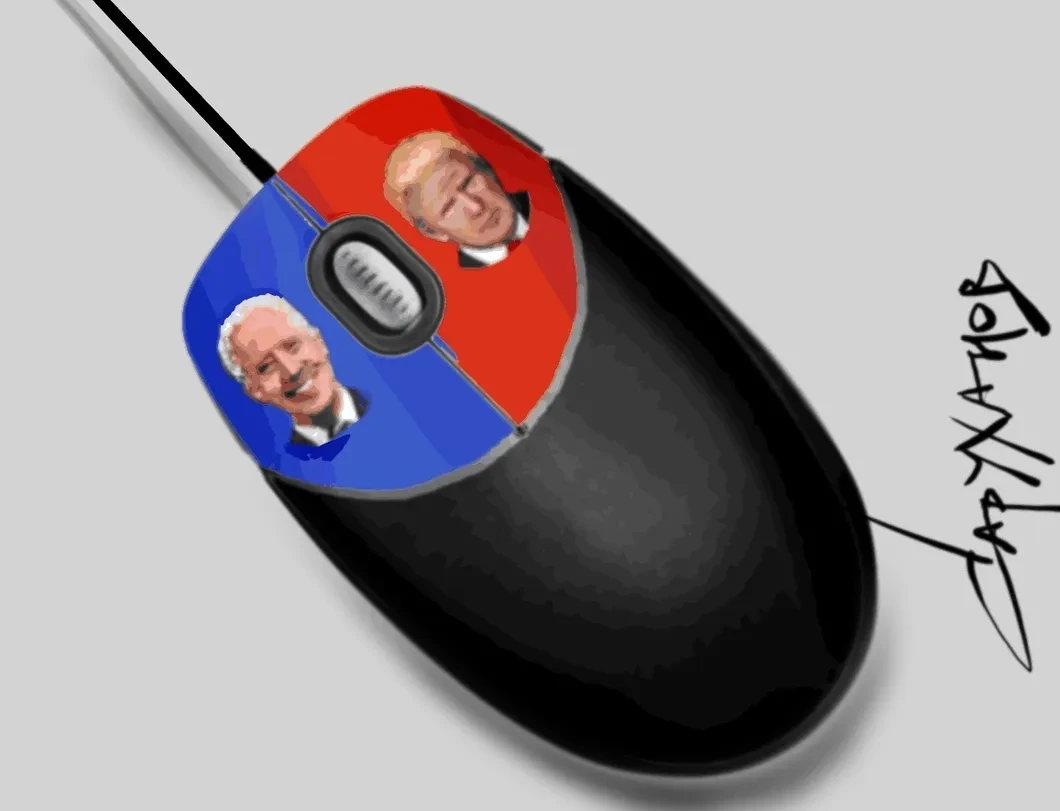
Despite the entire exotic of overseas democracy and the fact that the appearance of the US plots updated the records for 120 years, the collision of Biden and Trump in Russia is now watching, it seems, only the regulars of American social networks.
But the mass interest of our people in the American elections strives for zero. Materials about the intricacies of the struggle of donkeys with elephants read less than, for example, the latest Russian criminal chronicle.
And this despite the fact that usually attention to external conflicts in Russia, accustomed to think “geopolitically”, is enough in abundance.
Of course, after Trump it is clear: nothing more scandalous with American democracy will happen in the coming years. Although the team of Joe Bayden and Kamaly Harris can ultimately lead to power to the first Presidential President in the history of the country, which is still a terrible scandal for many. But a more important reason lies in another plane: Russians are now simply not up to democracy in America.
When Prigov wrote about the elections in the United States (“I got used to the Carter, although he is our enemy ... Then Reagan came from somewhere yesterday”), compatriots watched America from sleepy stagnation, in which 1984 did not stand out against the background of his predecessor. Today, due to the epidemic and the economic crisis, millions of Russian families are simply trying to survive and are not without reason to worry about our general formidable future.
Neither Trump nor Biden will help us in 2021. Perhaps it is through this bitter lesson, we will finally pause in the discussion about “geopolitics” and will engage in the national level by something more urgent-like local self-government.
If you were seriously worried about the American elections in today's Russia, it means that you belong to a privileged minority and you can afford it. Congratulations on successful internal emigration!