
Translated material
Will there be ❤️ in a relationship 🇷🇺 and 🇺🇸
Many thought that under Trump the United States would come closer to Russia. How was it really? And what to expect from Biden, who does not like Putin?
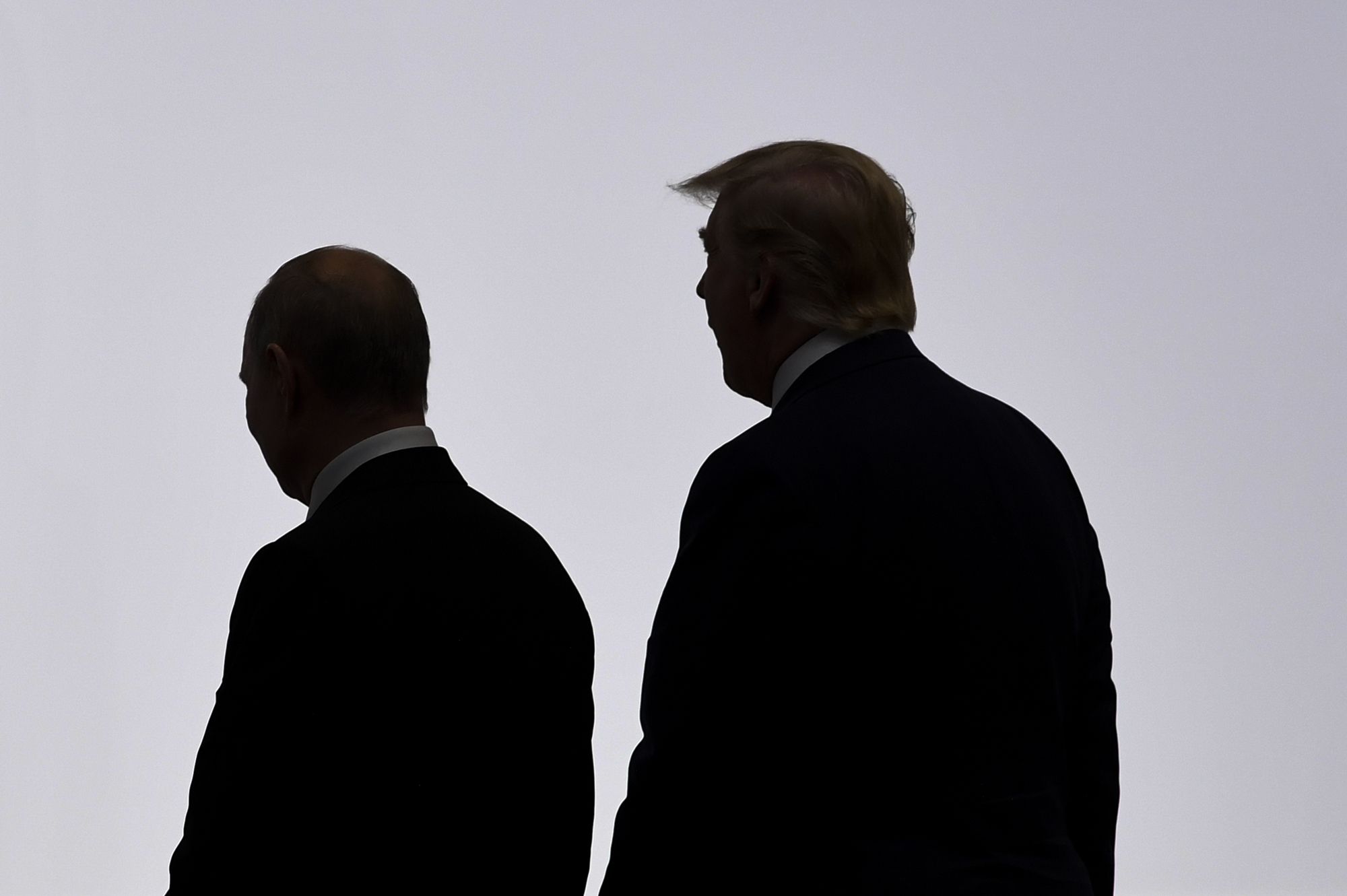
It seemed to many that under Donald Trump, the United States would begin to get closer to Russia. However, despite the constant accusations that Trump is an agent of the Kremlin , the American-Russian relations over the past four years have reached the next bottom. And now Joe Biden, who is considered a supporter of a tough course towards Vladimir Putin, will come to the White House. Medusa asked experts to explain what happened in the relations of the two countries under Trump - and what to expect from the near future.
Andrey Kortunov, General Director of the Russian Council for International Affairs

The hopes, which in Russia were relative to the United States four years ago, did not materialize. During this time, there was a deterioration in our relations with the United States in quantitative and qualitative terms. Under Trump, the Institute of Russian-American summits actually stopped working. Previously, when the president changed in the United States, the countries managed to quickly organize a meeting at the highest level. It was needed to ensure that the gears of the clumsy state cars began to spin. In the case of Trump there was only one meeting in Helsinki in 2018. She only worsened the relationship. Immediately after it, sanctions began, criticism of Trump for supposedly surrendered to Putin.
Second: the main core of relations of the United States and Russia was control over weapons. The parties could argue on various issues, relations could deteriorate, but the United States and Russia always believed that control over strategic weapons was what makes their relations so unique in the world and this must be maintained. With Trump, everything was destroyed. The US administration has left the RSMD agreement, in fact refused to attempts to extend the START-3 agreement. That is, the rod of our relationship was destroyed.
Third: under Trump, they minimized the diplomatic component of our relationship. Even before Trump there were sanctions, reduced employees in embassies, embassies turned into besieged fortresses. Although it was possible to maintain trade that grew against the background of sanctions. Cooperation in the Arctic through the Arctic Council was preserved, there was no interaction in Syria, there was not a single clash of Russian and American military. But the overall result is still negative.
Bayden becomes president, and this will significantly change the rhetoric against Russia. It will be stiff and critical, Biden will not compliment Putin, as Trump did. In some areas, Biden will be a more difficult partner than Trump. He will focus on human rights in Russia, it is possible to expand the “Magnitsky List” or the adoption of new decisions such as the “Navalny List”. The support of Ukraine, Georgia, and states that confront Russia will be expanded. Biden will show the willingness to support the opposition in Belarus, to increase the financing of opposition human rights movements in the post -Soviet space. Biden’s policy will be aimed at restoring the transatlantic alliance and narrowing of the space for Russian maneuvers. He will try to restore the undermined relationship with European partners.
But there will be new opportunities. Biden will show more interest on arms control, as he did not support Trump's decision to leave the INFMD . An important question: how much is Biden is ready to bring anti -Russian sanctions to a qualitatively different level? He criticized Trump that he was not gesture in the pressure on Moscow. Biden by age, health and style of leadership will delegate many functions to its apparatus. Therefore, much will depend on the one who will be appointed by the Secretary of State, the assistant to the president of national security, the pentagon chief. Biden is a more team player than Trump. US policy will become less impulsive, more predictable and professional.
The last few weeks we have heard a number of proposals from Russia to the USA on the placement of medium-range missiles in Europe, the extension of agreements on START-3 without any conditions, and the creation of a joint working group on cybersecurity issues. If they are made on the eve of the election, they are addressed not only to the outgoing administration, but also to the one that comes. There is no mood to strengthen the escalation in Moscow. But there is no desire to go to unilateral concessions as victims of goodwill.
Most likely, Russia will take a careful position. It is all the more unknown when Bayden reaches Russia. First they will form a team, then it will take up an internal agenda, and only then will reach foreign policy. In the beginning, Biden will be forced to deal with relations with allies and China. Therefore, I would not expect decisive actions in relation to Russia before the end of the spring of 2021. We can count with Biden on the meetings of the United States and Russia at the highest level, but only on the fields of a larger multilateral meeting - for example, the “big twenty” or the leaders of the UN Security Council.
Ivan Kurill, American historian, professor of the European University in St. Petersburg

During Trump's reign, disappointment appeared, since the Russian side was counting on other results. It was expected that a warm relationship between the United States and Russia could be established - and if not warm, then [will occur] at least an improvement compared to the last years of Obama’s presidency. This did not happen, many new sanctions have accumulated. But one expectation came true. From the presidency, Clinton expected the worst. There were conversations almost about the war with America. For Trump times, everyone moved away from the idea that we are on the verge of war. But we hoped that the Americans would at least return the diplomats who were recalled under Obama. This is a symbolic step, since a decrease in the number of diplomats does not punish one one, but generally worsens the relationship.
Better did not become for two reasons. Inside Russia, nothing has changed for the better during this time, everything remains still. And in the USA, the “Russian theme” during Trump's presidency was the hottest. The first two years he was accused that he was a Russian agent. It became impossible to make movements against Russia for him. But in the end, this was not punished by Russia itself, but by Trump.
Sanctions against Russia were held through Congress. This is much worse than through an administration that can quickly introduce them and cancel. In order for the Congress to take at least the issue of the abolition of sanctions, a lot of pressure is needed, and this is an unlikely story. For example, the amendment of the Jackson-Vanik acted many years after the end of the USSR-precisely because it was carried out through the Congress. Such sanctions are a blow to the prospects. Also, the US pressure on Europe has become great pressure on Russia. When the North Stream-2 was closed due to the threat of American sanctions against companies that participate in this, this was an even greater blow than direct sanctions. Such an indirect influence through Europeans inflicted an economic blow to the Russian economy.
Future relations of the United States and Russia will depend on the advisers who will choose the new president. Biden, unlike Trump, will resort to collective solutions on important issues. It will definitely be more than Trump, an active foreign policy. Trump, on the contrary, deduced America from different regions of the world, emerged from international agreements. Democrats will return. The change of president is a narrow window of new opportunities. Perhaps Russia will cease to be used as a scarecrow inside America. The dead ends into which our relations have entered can be destroyed. But I would not have laid big hopes, because nothing has changed from the Russian side, and any US president rests on this.
Dmitry train, political scientist, director of the Moscow Center of Carnegie

Under Trump, the relations of the United States and Russia reached a new anti -record. The level of relations is worse than ever from the first half of the 1980s. But this is not the limit, not the bottom, and we continue to move in this direction. President Putin calls trade as a plus, but it takes place on both sides in minimal volumes. In addition, American sanctions undermined Russian trade with its key partners.
But we did not encounter directly with the American armed forces, although there was a probability. Airplanes fly close to each other, there are conflicts that could get out of control. Deconflication is successfully working in Syria, but there is also the possibility of a collision. We had military incidents with the Turks, with the participation of the Israelis, where our military died and shot down our planes. This did not happen with the American military - this is a plus that outweighs all the disadvantages.
The biggest nuisance for Russia was that the last four years, Russia has become the object of intra -American policy. Communication with Russia turned into a club, which mainly democrats enveloped the Republicans. But the Republicans, in order not to lag behind colleagues, acted harshly against Russia.
Under Bayden, the confrontation will continue and deepen. Bayden will expand the front of Russian-American contradictions that sounded dull under Trump. These are issues of democracy and human rights. There will be more US involvement in the rhetorical and, possibly, at the geopolitical level around the situation with Belarus and Ukraine. The United States will help strengthen the military capabilities of Ukraine. Biden will be tough, but not as rudely as Trump, to insist that Europe reduces energy dependence on Russia. The pressure on the North Stream-2 will remain and, perhaps, will increase, as the congress is determined to continue this matter.
The biggest nuisance for Russia, which can occur under Bayden: the United States, having left the RSMD agreement, can create and place giant missiles in Europe, which will be aimed at destroying strategic centers and objects of Russia. Then the main points and the Russian missile nuclear potential itself will turn out to be at a distance of three to five minutes of the flying time from Poland, and it will be almost impossible to react to American missiles from there. This can be dangerous and will lead to the transition of Russia to the concept of a preventive blow. In the event of a crisis, Russia will not wait for the rocket to fly, but will beat the first, which strongly strains the entire world situation. This is the main military danger.
Rhetoric in relation to Russian intervention may be positive. It will not disappear completely, but will not be perceived so acutely.
Alexandra Sivtsova