
Translated material
Elections in American
How Russian experience distorts the perception of democracy in the United States
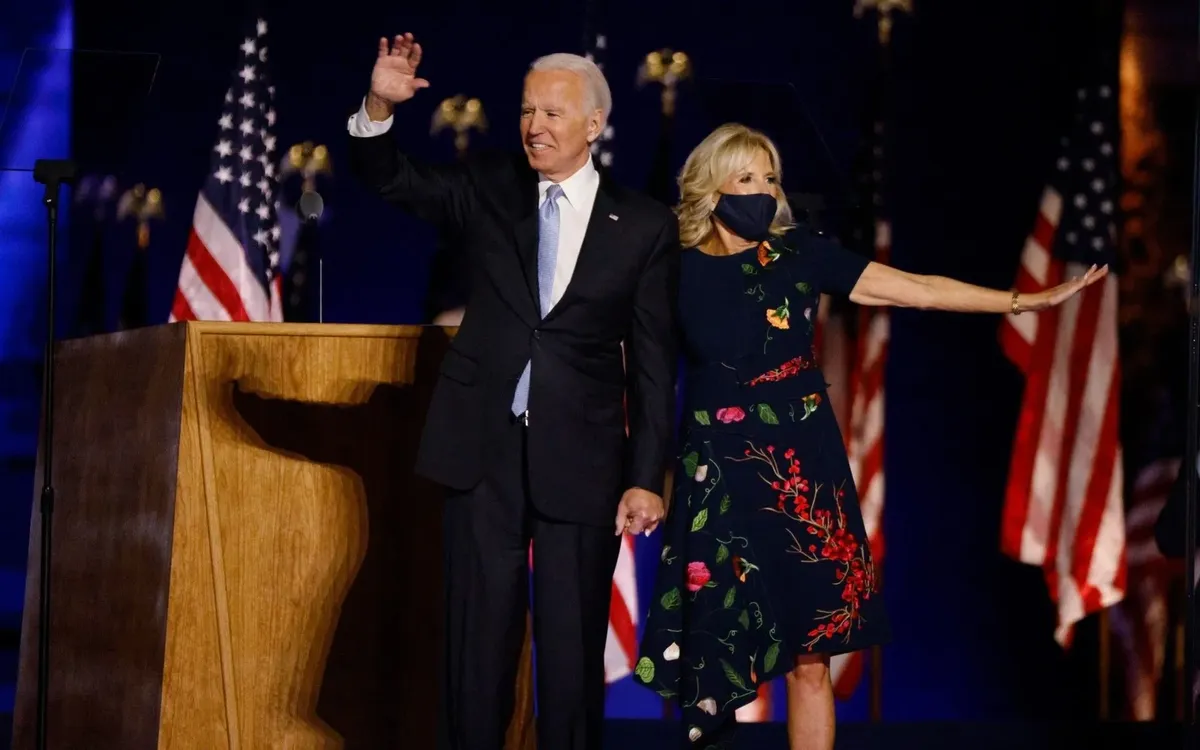
Joe Biden announced his victory in the presidential election. According to him, he gained 74 million votes. Most Russians know that there are no direct presidential elections in the USA, since the founding fathers were suspicious of direct democracy. In ballots, voters vote for presidential candidates, but as a result, we are talking about electors from each state. The number of electors from the state is equal to the number of members of the House of Representatives and Senators in this state. The less known aspects of the American elections are decentralization, preliminary voting, the role of population surveys, the supply of voters, the role of money.
Decentralization is a key difference between elections in the USA and the Russian Federation. In Russia, there is a federal detailed, often repressive in relation to the opposition, election legislation. In the United States, federal legislation is limited by issues of financing elections, limits on donations from individuals and legal entities, etc. All, without exception, the procedure of elections - registration of candidates, counting votes, voter rights, etc. - regulated by the States. For example, in Florida, the republican authorities decided that the voices sent by mail would be counted as they arrived, so on November 3 we knew that the votes of the Variants of Florida were leaving Trump. In Pennsylvania, the Legislative Assembly controlled by the Republicans decided to annoy the Governor-Democrat and did not allow the “postal votes” to be considered as it arrived. Therefore, the calculation began only on November 3, and now the whole world has been waiting for the results for several days in a row.
Preliminary voting is the second obvious difference. In July, in Russia, the “stump three -day voting” on amendments to the Constitution of the Russian Federation became a symbol of falsifications. Photos with voting on stumps, in the trunk of cars were filled with the Internet. In the United States, preliminary voting is practiced in all states without excesses that would be marked with the media. For example, the inhabitants of Louisiana could vote on October 16–27, and the inhabitants of Illinois - September 24 - November 2.
Interpretation of public opinion polls is the third difference between elections in the USA and the Russian Federation. In Russia, the gap between Vladimir Putin and other politicians is so great that polls - from VTsIOM to Levada - can serve as a reliable guideline in determining the preferences of citizens in the next presidential election. In the United States, the difference between Donald Trump and Joseph Biden, especially in the hesitating states, does not exceed statistical error. Many heard that the error in polls is usually about 4%. What is unknown to the general public: this error applies to each figure in the survey. For example, according to Real Clear Politics, a site that gives average for polls, on November 2, in the oscillating states, Bayden’s separation from Trump was only 2.3%. In none of the states, the difference did not exceed 8% (the amount of errors in two digits), respectively, according to the methodology of polls, it was impossible to judge who was the leader and who was behind.
Dilution of voters is the fourth difference. In Russia, the “carousel” is a situation in which local authorities organize the “carousel” of voters who are carried by buses - is one of the symbols of falsifications. In the United States, for example, churches with African American parishioners are famous for helping their members get to the polling station, hiring buses that deliver voters. The situation may seem like a strange Russian public. The fact is that the polling stations in the United States are mostly not in walking distance, as in Russia. Accordingly, older people - representatives of ethnic minorities have difficulties with access to sites.
The role of money: in Russia there is an idea that money is a decisive factor in politics. In the USA, everything is much more complicated. Indeed, in 2020, Biden raised $ 937 million to his election fund, and Trump - 595 million, according to the Center for a responsible policy. But in 2016, Hillary Clinton accumulated 563 million, while Trump is only 333 million. Obviously, you can’t just “buy” the result in the American elections, spending more money than a competitor.
The presentation of Russians about the Russian State Media distorted by the propaganda of the Russian State Media does not correspond to the practices adopted in American democracy. The elections are extremely decentralized in relation to the rules, preliminary voting and the supply of voters on buses are not a sign of falsifications, polls of public opinion requires an attentive attitude, and money is not a decisive factor in victory.