
Translated material
"Rebellious captain." 45 years old Zapolita Sablin
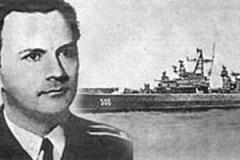
On November 8, 1975, Valery Sablin, the Zablin, Polishpot of the Gorodozheva Bolshoi Anti -Speed ship. According to Sablin, it was supposed to become the fourth Russian revolution. The rebellion failed, Sablin was shot, and then they did everything to wipe even the memory of his performance.
Valery Sablin was born in Leningrad in 1939, in 1956 he graduated from a school in Gorky (Nizhny Novgorod) and entered the Leningrad combat Service School School named after Frunze, the oldest in Russia, before the revolution he was called the Marine Corps. In 1959, Sablin joined the CPSU. He received a specialty of a military artilleryman, went on ships of the Northern and Black Sea Fleet for nine years, in 1968, as an assistant to the guard ship, Captain Lieutenant Sablin entered the Military-Political Academy. October Bar-Biryukov, the author of the documentary, “ The Shot Bureurenik ”, published in the Banner magazine in 1998, considers Sablin’s admission to the Academy the result of “Perennial thoughts about the situation in the country”, an attempt to understand why “good words pronounced by leaders at congresses and meetings were not supported by the same matters.”
He was against the incompetence and irresponsibility of persons who make state decisions
"Sablin did not oppose the Soviet regime, but against the baking party-state elite ... He was against the incompetence and irresponsibility of persons who make state decisions, and the gross miscalculations of the government, against corruption in the echelons of power. Against the undeserved awards of Brezhnev and other leaders of the country who received the titles of heroes of the Soviet Union ... which caused a corrugated and irritation of the majority of the people, especially the people, especially At the same time, the military and front-line soldiers were for a multi-party, freedom of speech and discussions, a change in the order of elections in the party and the country, for other democratic transformations in society, he was disturbed by the loss of such a thing as officer honor, as well as exorbitant reverence ... ”wrote Bar-Biryukov then.
Excellence, in circulation is simple
The name of the 3rd rank captain Valery Sablin was knocked out by gold letters on the marble board among the names of the best graduates of the Military-Political Academy, which he graduated with honors in 1973. Sablin was appointed as a political officer for a new BPK (large anti -submarine ship) "Watchtower". Actually, the political officers in the Navy did not like: usually they compensated for the lack of special knowledge by party crusts. But Sablin, Zablin, knew the sea business well, he was simple in handling, he talked with people warmly, took care of them, and his crew quickly fell in love with his crew. He even managed to carry out political formations not to be carried out dryly, but somehow humanly, for example, he hung a poster with a quote from the “reasoning of the political justice” in the Lenin Kayta, William Godwin: “... everyone should feel their independence in order for him to confirm justice and freedom, not being forced to betray them to the circumstances of his situation and to the misconceptions of other people ...” it is clear why it is clear. Sablin chose this particular quote - apparently, he had long decided that he would not “treacherously adapt” his beliefs to circumstances.
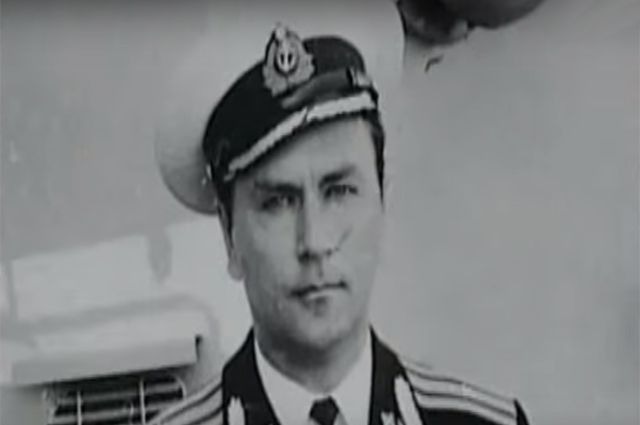
Sablin decided to convey his beliefs to be conveyed to everyone else. To do this, he wanted to use the latest communications that were on the "guard." In the fall of 1975, the ship was supposed to participate in the naval parade in Riga dedicated to the 58th anniversary of the October Revolution, and then go for planned repairs to the city of Liepai. On November 8, Valery Sablin locked the captain Anatoly Potulny on the lower deck, gathered officers and midshipmen and told them that, in his opinion, the country's leadership departed from Lenin’s principles, acts in personal interests, and the country is amazed at the bureaucracy and lies.
A special folder
In the book of The Secrets of the Passed Century, the historian of Nikolai Zenkovich is the chapter about Valeria Sablin “ rebellious captain ”, where excerpts from once secret documents dedicated to the rebellion at the “guard” are published.
A document printed in one copy on the form “Minister of Defense of the SSR”, directed to the Central Committee of the CPSU and stored under the heading of “Special folder. Secret”, is called “The disobedience of part of the personnel of the“ Watchtower of the Baltic Fleet ”. There are priceless details of what happened on the ship on November 8, 1975 - for example, about how exactly the ship’s commander was isolated: it turns out that Sablin simply called him to a hydroacoustic post, slammed the hatch and closed him to the castle. The closest accomplice of Sablin Sailor Schein was assigned to protect the premises.
He demagogically used the well -known drawbacks reported in the Soviet press
"... Sablin gathered 13 officers and 13 midshipmen in the Michmann Catfall, outlined the thoughts of law and justice in Soviet society, which were reported in 1963. At the same time, he used the well-known shortcomings that were reported in the Soviet press (certain facts of abuse, the lack of some goods, violation of the reception rules for universities, violations of the rules Cases of fraud, bureaucracy and the use of official position for personal purposes, etc.). In the secret document.
The requirements of the political officer
Sablin suggested going to Kronstadt, declare it with a free territory and demand from the country's leadership to give him the opportunity to state his views on central television.
Officers and midshipmen who did not support Sablin were locked
The document records that part of Sablin’s speech, where he explained to the crew that his proposals "are not a violation of the military oath, betrayal and do not reduce the combat readiness of the ship." Sablin emphasized that he does not give out weapons to personnel, does not remove security from the arsenal. During the voting that he held, part of the sailors and foremen supported him, but the document specifically noted that many did not understand the "anti -Soviet essence of the performance", and part of the crew did not vote at all. Several sailors, foremen and officers immediately tried to free the ship commander and capture Sablin, but supporters of the rebellious political officer stopped this attempt. 10 officers and 5 midshipmen who did not support Sabin were locked in different rooms.
Since the ship was supposed to be repaired, at first its movements should not have aroused suspicions, but at night the commander of the electrical group, Senior Lieutenant Firsov, managed to escape from the ship to the nearest submarine and report to the riot on the "guard." Having discovered Firsov’s disappearance, Sablin decided to act immediately and brought the “guard” to the Gulf of Riga.
Declare the ship with a free and independent territory, grant the right to speak on television
"The Cablin handed over a telegram to the Commander -in -Chief of the Navy, in which, on behalf of the Revolutionary Committee of the ship (the presence of which was not revealed), outlined the requirements for the CPSU Central Committee to declare the ship with a free and independent territory, grant the right to speak on television, provide the ship with all types of allowations, mail, and allow the production of anchor and a mooring in any base, and guarantee the inviolability of the crew And the non -use of violence measures to family and friends of the crew, ”the secret document says.
"Acted alone"
“Storozheva”, going to the Gulf of Riga, received telegrams from the Minister of Defense, Commander -in -Chief of the Navy and commander of the Baltic Fleet with orders to return to the raid and “warning about the use of weapons in case of disobedience”. The content of telegrams was reinforced by the ships of the Baltic Fleet, border boats and aircraft accompanying the "guard", which probably made a great impression on its crew. The pilots had an order to sink the ship in case of refusal to change the course, they began to bomb it and damaged the “guard” nose, after which some sailors released the captain, who shot at Sablin and wounded him in the leg. After that, the ship was stormed, Sablin and its supporters were arrested.
The commission led by the admiral of the fleet of the Soviet Union Gorshkov, who studied the incident on the "guard", in every possible way emphasizes that Sablin acted alone, without accomplices and like -minded people, that part of the crew was on his side simply because he was used to believing him as an officer and a communist. The commission did not find the "presence of a" guard "enemy anti -Soviet group and the so -called Revolutionary Committee on the BPK, appearing in a telegram in the name of the Commander -in -Chief of the Navy."
According to the commission, the cause of the emergency was “great omissions in political and educational work with the officers to educate a sense of high duty to the homeland, honor and dignity, determination and courage, vigilance and principledness, which led to the passivity and confusion of officers who failed to recognize the anti-Soviet meaning of demagogical performances and intentions of the traitor. Sablin and resolutely stop his criminal activity. "
14 people were under court. On February 18, 1976, the chairman of the KGB Andropov, the Minister of Defense of Grechko, the Prosecutor General of Rudenko and the chairman of the Supreme Court of the USSR Smirnov informed the CPSU Central Committee to complete the investigation of the criminal case. The investigation found that Sablin had a set of ideas and “slanderous statements” borrowed from the “bourgeois propaganda”: about the “outdated” of Marxism-Leninism, about the “bureaucratic degeneration” of the state and party apparatus in the USSR, as well as that Sablin urged the CPSU from the leadership and create a new, “more progressive” party. Valery Sablin was accused of treason of the Motherland, the sailor of Alexander Shein - in aiding treason.
On July 13, 1976, the Military Collegium of the Supreme Court of the USSR sentenced Valery Sabin to the execution of “without confiscation of property in the absence of one”, the sailor of Alexander Shein-to 8 years in prison, of which “to keep the first two years in prison, and the rest of the term in the correctional and labor colony of strict regime, without confiscation of property behind the absence of such.”
Sablin filed a petition for pardon, it was considered and rejected, the verdict was carried out on August 3, 1976.
Under the ban
It is interesting that the commission, which had previously studied the emergency at Storzhev, found that "there were no reasons for the approval of the intention of Sablin to take the ship to Sweden during the investigation." But already on July 15, 1976, in the memorandum “On the trial in the case of Sablin and Shein”, the KGB chairman Yuri Andropov writes about “the traitor Sablin, who arbitrarily stole the large anti -submarine ship“ Watchtower ”and his active accomplice Shein” from the Riga port on November 9, 1975. That is, in the future, they tried to present the case precisely as the hijacking of the ship to Sweden, although Sablin explained at the trial that if he wanted to transport the ship to the west, it would be more logical to do this before the weapons were removed before the upcoming repair.
A system of elections should be thrown into a landfill, turning the people into a faceless mass
In the Soviet press, the theme of the uprising on the “guard” was prohibited, and this can be understood-if you turn to the performance of Sablin himself in front of the “Watchtower” crew: “... only a narrow circle of specialists knows how much harm has brought and brings voluntarist interventions of the state and party bodies to the development of the armed forces and the economy of the country, to resolve national issues and the education of youth ... it is supposed, firstly, that, firstly, that, which is supposed to be, which are supposed, which is supposed to The current state apparatus will be thoroughly cleaned, and by some nodes-it is divided and thrown into a landfill, as it is deeply infected with family life, bribery, careerism, arrogance in relation to the people. And the innocence of the state and party apparatus from the people's masses ... "
Everyone! Everyone! Everyone!
In a letter to parents, written by Valery Sablin on November 8, 1975, on the day of the failed performance of the "Storozhevi", Sablin admits that he decided about this performance at the 3rd year of the Academy. What did the captain of the 3rd rank Sablin want to say to his compatriots? Here is his failed appeal to fellow citizens on central television:
The extreme need to openly raised a number of questions about the political, social and economic development of our country
“Everyone! Everyone! Says a big anti -submarine ship“ Watchtower ”. We are not traitors of the Motherland and not adventurers who are looking for fame by any means. The extreme need has opened openly to pose a number of questions about the political, social and economic development of our country, about the future of our people, requiring collective, namely, a popular discussion without pressure from state and party bodies. We decided to do this performance with clear. Understanding the fate of the Motherland, with a sense of hot desire to achieve a communist relationship in our society. One of the representatives of our ship, please do not go out to work the next day and continue this television strike until the government refuses to coarse freedom of speech and until our meeting is held with you.
Did Valery Sablin understand the naivety of his aspirations? Nothing is known about this. But in the last letter from prison in Lefortovo to his wife and little son, he put drawings with the image of Don Quixote, fighting with windmills.
Battleship "Potemkin" of the 70s
The “watchtower” was renamed and withdrawn from the Baltic Fleet so that there was not even a name of the rebellious ship left, the participants in the events were silent - they took a receipt of non -disclosure from the crew. Was Sablin’s speech at least in the dissident circles of the USSR responded, did anyone even know about him? Former political prisoner, member of the editorial board of the magazine "Sowing" , publisher of the "Information Bulletin" of the Free Inter-Professional Association of Workers (SPU), a member of the NTS (People's Labor Union of Russian solidarists) Vyacheslav Dolinin assures that Sablin was known about the speech.

- From the Swedish coast it was possible to observe what was happening in the Baltic Sea, the information in our magazine "Sowing" was held about this, on the cover of one of the numbers there was a photograph of the Watchtower ship. The Soviet press, of course, had neither a word nor said about this, and the Western "voices" spoke. That is, who wanted to know, he knew. Sablin was first kept in the Leningrad investigative insulator of the KGB. I remember when I got to the prison interview hospital, there was a orderly from criminals, and he told me about him, said that he was sitting here a naval officer who knew that he would be shot. Or maybe it was just a provocation of the KGB, an attempt to find out whether I knew about Sablin or not - I knew, of course. This news was interesting to everyone, of course, it seemed that it was the battleship "Potemkin" of the 70s.
There are forces that are able to break the totalitarian system from the inside
It was clear that there was mass dissatisfaction with the Brezhnev regime in the country, but for the military to rebel against the authorities - this was the first such case that I learned about, nothing of the kind happened before. And this pleased - it means that the authorities cannot rely on the military ... From the very beginning we learned that the riot was suppressed. I do not think that a riot on a single ship could lead to some kind of chain reaction-both in the armed forces and in Soviet society as a whole. But this riot was a symptom that there are forces that are able to break the totalitarian system from the inside. Of course, it was very sorry for the executed captain and everyone who suffered, but in general the incident inspired optimism.
In those years, discontent flashed in the USSR from time to time - both camp riots and the performances of workers, but Demarsh Sablin, says Dolinin, was a completely exceptional phenomenon.
People knew nothing but Marxism, and it was within its framework that they wanted to improve the situation in the country
- After all, the Sablin was a Marxist, and there were a lot of such Marxists: the non -vulgarity of the official ideology of the CPSU was obvious, but many communists remained illusions, they believed that Marxism could be cleansed, revived, even with me sat that Stalin, Brezhnev, Andropov betrayed Lenin's teaching, we had to return to Lenin, and then we will have real socialism. This is understandable - in the conditions of a totalitarian state, it is very difficult for an iron curtain to get ideas about various philosophical, political science systems - people knew nothing but Marxism, and it was within its framework that they wanted to improve the situation in the country. Such moods were characteristic of the early dissidentiality of the 1950s and 60s, and then the situation changed-in the 80s, when I was in the zone, there were very few Marxists. And the performances of the workers were different, and not only for economic reasons, but also, for example, against police arbitrariness, as in the cities of Alexandrov or in Vyborg. But, unlike these natural riots, Sablin had a prepared performance - to bring Marxism closer to reality.
"Step of despair"
The precedent of the open speech, according to Vyacheslav Dolinin, is very important, since he broke the stereotype of hopelessness, the consciousness that nothing can be changed. This is also evidenced by Ekaterina Molotnia , the daughter of the famous Russian human rights activist, dissident, politics, publicist Mikhail Molotnia .

- When I was 14 years old, I began to read the book of Yuri Davydov about the Narodnoyes and about the naval officer of Nikolai Sukhanov , my dad told me about Valeria Sablin. Both the people's volumes and his performance - all this was a story for me. Parents, of course, knew about Sablin, treated him with great pity and sympathy, his performance was considered a naive noble impulse, compared Sablin with Lieutenant Schmidt, although he still spoke in revolutionary times, and Captain Sablin-during a dull stagnation, without any hope of support. It was naive, but life consists of naive impulses, and the ability to speak, something to do from this also consists.
- Your father and Sablin - they were both Marxists ...
At some point, it was necessary to scream that you were lying, so he did it
- Dad said that Marxism is a method that the USSR was not a system of socialism, but a system of state capitalism, very tough. Dad, being a Marxist, also believed that there should be private property, but not oligarchic, and legality. And now in the West there are many economists with attention with attention, although it is largely outdated, since the formations have changed. Unfortunately, the heirs of pseudo -marksism for a very long time prevented the introduction of private property to the land, missed such an opportunity, and the peasantry died. And Sablin’s performance - I think this is a step of despair: did he not understand that no one would support him? But at some point it was necessary to scream that you were lying, so he did it.
Free person
The riot of Sablin was not meaningless - as the historian Yakov Gordin believes.
- His idea, of course, was even more crazy than the idea of Lieutenant Schmidt, who in 1905 tried to head the Black Sea Fleet. But there was a meaning in his idea - he wanted to go to Kronstadt and there to declare some slogans to people there. He did not want to capture Kronstadt, but to indicate another position - the position of a free person. In this story, it is very interesting that there were people who put their heads in a loop on the ship and supported it-these are Soviet Red North-Fliters! It is also interesting that he was a Marxist - namely, the Marxists in the Soviet Union began the anti -Soviet movement. They wanted the purity of teaching, and Sablin was also clearly an honest communist, and this partly explains his madness. At one time there was a hard-stone Bolshevik Ryukhin, which is why in the early 1930s he opposed Stalin suicidally-and he was killed. He also rebelled from the standpoint of an honest Bolshevik. Sometimes the sablin is compared with the Decembrists, but this is incorrect - they did not think that they were going to certain death, they went to take power, and they had sufficient chances for this, they were not suicides, and in the case of Sablin it is not clear what he was expecting him to support Kronstadt? It is unlikely. In 1905, the Black Sea Fleet rebelled, and Lieutenant Schmidt was called by sailors, there were powerful ships Potemkin and Ochakov, they could fire anyone, but here - one Stevele ship? There was only hope on moral impact.
Valery Sablin was rehabilitated only on the third attempt: in 1994, the Military Collegium of the Supreme Court of the Russian Federation revised his case and retrained him from “treason” to military crimes, but still in the court ruling, it was noted that Valery Sablin and his assistant Alexander Shein were not subject to complete rehabilitation.