
Translated material
Satan's Library 5: Return to Satan's Library
Three more books that are scary to even pick up
Ruslan Erofeev. Chthon. A man with someone else's face. M.: Yauza, 2018
The word “chthon” in relation to modern Russian literature most often evokes associations with the prose of Yuri Mamleev and the work of his colleagues in the Yuzhinsky circle. Ruslan Erofeev develops these glorious traditions, turning them into cinematic trash.
The first part of the novel is literally a novelization of memes about the fool and the orderlies. Investigator Artem Kazarin wakes up in the ward from the passionate kisses of Leonid Ilyich Brezhnev. Having come to his senses, he realizes that, in addition to the late General Secretary, he is surrounded by a significant number of violently insane people, and remembers that he is hunting a dangerous sexual maniac.
The quiet town of Svetloputinsk in the early 80s is shaken by the terrible atrocities of an anonymous killer. With sophisticated cruelty, he mocks his victims, dismembers them alive, performs lobotomies and turns them into weak-willed cadavers. Having been released from a psychiatric hospital, investigator Kazarin rushes in search of the maniac with redoubled zeal. Having covered himself with volumes of occult literature, he comes to the conclusion that everything that happens has a mystical background. An ancient Egyptian ring, unknown how it ended up in the local history museum of a provincial town, and Jews are involved in the case.
The Jewish theme is fully revealed in an unexpected flashback to the times of Alexander I. From it we learn how Count Arakcheev mocked the peasants for the glory of the Antichrist, and the peasants fought against zombie rats. The same chapter describes in detail the funeral traditions of the common people and some dark rituals common among Judaizers in Rus'.
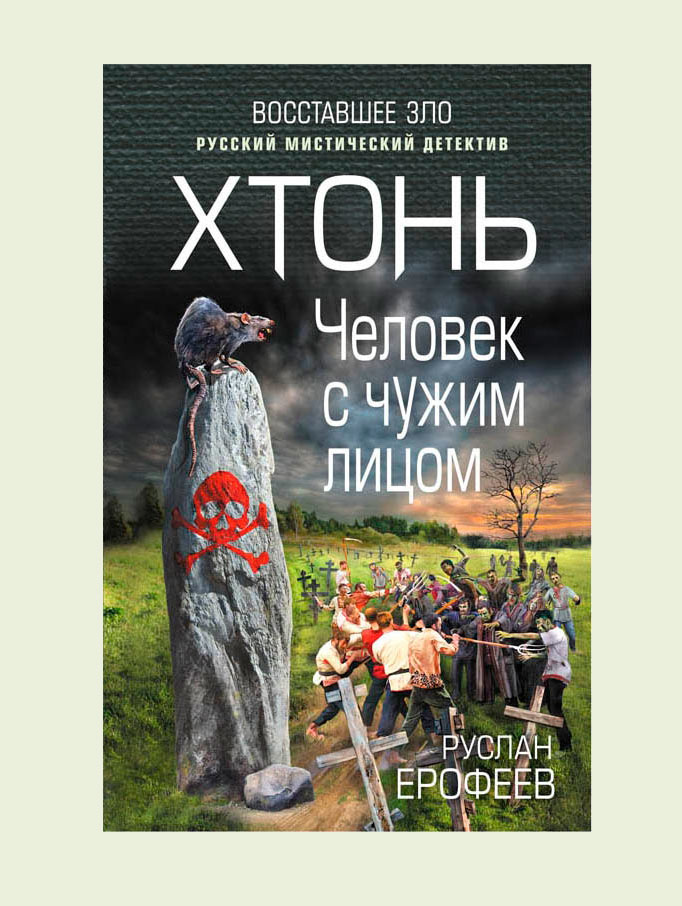
After a brief historical excursion, the plot abruptly returns to Artem Kazarin, who reincarnated as Andropov, and here the fun begins. But we won’t tell you about this, since a dry retelling is not capable of conveying the greatness of the author’s intention.
Erofeev's conceptual scope is truly impressive. With emphasized carelessness, he describes the metaphysical underside of late Soviet everyday life, inhabited by infernal prisoners, incarnations of Gilles de Rais, dwarf shamans and onanistic aliens. Comrade Andropov talks about Marcus Aurelius, and the Soviet cops discuss Bataille and Nabokov with the “lessons” during interrogations, which adds even more color to the epic.
Erofeev was especially good at describing scenes of necrophilia and other sexual excesses. Remarkable, for example, is the ending of a peculiar ritual of spiritualism: “The bloody midget meanwhile saddled the mutilated corpse of a policeman and tore out his larynx with his fingers with the monstrous strength that dwarves sometimes possess. Then he pulled it over his huge organ, like a donkey’s, like a condom, and began to copulate with the dead body.”
The author's sweeping handwriting is clearly manifested in speech patterns. Some of them will someday be included in the golden fund of Russian literature. For example, “in order to inhale the lovely bouquet of aromas” of a station homeless man nicknamed Nashatyr, “Kazarin had to sweat quite a bit,” and a hundred pages before that, “Zanyukhin’s muzzle was rapidly changing colors, like the butt of a chameleon on a hot frying pan.” Such pearls are scattered in abundance throughout the novel.
As was already said at the very beginning, “Chthon” is excellent for film adaptation. We sincerely hope that talented directors of the horror genre will pay attention to it. In fact, the book is a ready-made script with thoroughly written mise-en-scenes and rich dialogues.
The work of Ruslan Erofeev explores in great detail the metamorphoses of domestic life, coupled with rich folklore and occult material.
This book should be on the shelf of every self-respecting connoisseur of the “Russian beyond”, next to the works of Mikhail Elizarov and Senior Lieutenant V.P. Pidorenko.
Sveta Savetina. Mouse woman. AST, 2010
Creative directors of advertising agencies sometimes discover their talent for writing. The worst thing is when the results of such insights are published in 7,000 copies by the AST publishing house. Svetlana Savetina, the author of the work “Mouse Woman,” directly states on her website that her task was “to create beach reading for selfmade women 35+.”
“Beach Fiction” from the first lines turns into a stream of consciousness monstrous in its splendor. The narrator talks at crazy speed about her lovers, the parrot and celebrities, captivated by their incredible charm. It’s hard to imagine who would be interested in watching Svetlana Savetina’s unbridled narcissism, except for her immediate circle, depicted in the book under pseudonyms. Even when choosing a title for the book, the newly minted writer modestly hints at spiritual closeness with Bruce Wayne. Those who want to know the formula for such dizzying success will be sorely disappointed. Svetlana prefers not to reveal the secrets of her victories, probably for fear of competition.
Turning the page with the epigraph from John Climacus, we meet Marina, a top manager in a successful Moscow company. By the will of fate and her superiors, she is sent to Perm for an indefinite period of time. As you might guess, this appointment does not cause her great delight. Reluctantly, Marina leaves her proven team for years and goes to raise the advertising industry in the province.
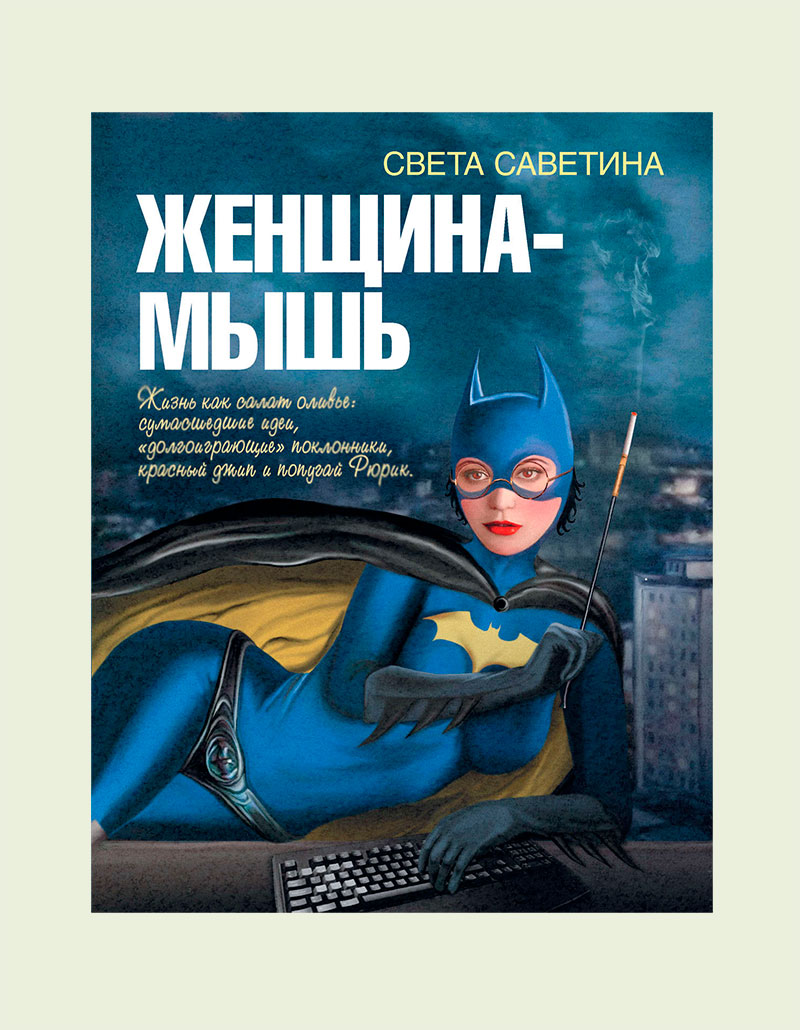
In order to dispel possible doubts in the reader, the girl immediately stipulates that behind a shell of arrogance and sarcasm she hides a subtle and vulnerable nature, waiting for great and pure love. What she is looking for overtakes her almost immediately upon arrival in the person of Bob, a two-meter tall owner of “a face of complex architecture and eyes that exclude feeblemindedness.” Such outstanding qualities are complemented by a huge black car. On the very first evening of their acquaintance, the Muscovite realizes that she has found her happiness.
The further narrative boils down to a sad list of Marina’s unprecedented achievements in her new place. First of all, the number of tenders won, as well as the idyllic life together with Bob. Oddly enough, the book ends not with a happy ending, but with a tragic ending in the spirit of Remarque.
The degree of absurdity is heating up thanks to the regular use of Anglicisms. Describing her hangover, Marina claims that she is not available now, while the state of average lousy is nothing less than medium well.
By all indications, “The Mouse Woman” can safely be called an encyclopedia of the life of the capital’s Creak in the era of the late 2000s. The main character quotes Pelevin, loves the paintings of Lautrec, demonstrates her involvement in the bohemian get-together and does not hesitate to occasionally throw in some coke. In addition to spiritual life, she does not forget about material culture. The red Jeep Wrangler is a source of special pride for Svetlana, as is her collection of elite perfume, numbering 87 bottles. These simple descriptions of modest petty-bourgeois joys today would serve as excellent fuel for the flaring up of class hatred.
Elena Logunova. Rousseau is a tourist, the face of morality. M.: Eksmo, 2011
Russian tourists abroad have long become a separate genre of jokes. It is difficult to imagine how many humorous novels have been written on this topic, but one book will be enough to get acquainted with their main features.
Two frivolous friends India and Alla come to Vienna to relax and have “resort romances”. The holiday doesn't go well from the start. First, Allochka is poisoned by stale apfelstrudel in a pastry shop, and after a while her weak-minded comrade falls from the bell tower, which she climbed in order to find the way back to the hotel. Unhappy India completely loses her memory after such an unexpected incident and goes homeless on the streets of the Austrian capital.
Numerous relatives of unfortunate travelers in the person of quick-witted grandmothers and police brothers take part in further events. All of them cope with the task of finding a spree tourist much better than the Viennese police.
The Austrians in the novel give the impression of rare bunglers, capable, however, of instantly resolving any national contradictions, even between hot Caucasian diasporas. In order for groups of Chechens and Georgians to stop conflicting over a stolen bicycle, an emotional monologue from a law enforcement officer was enough.
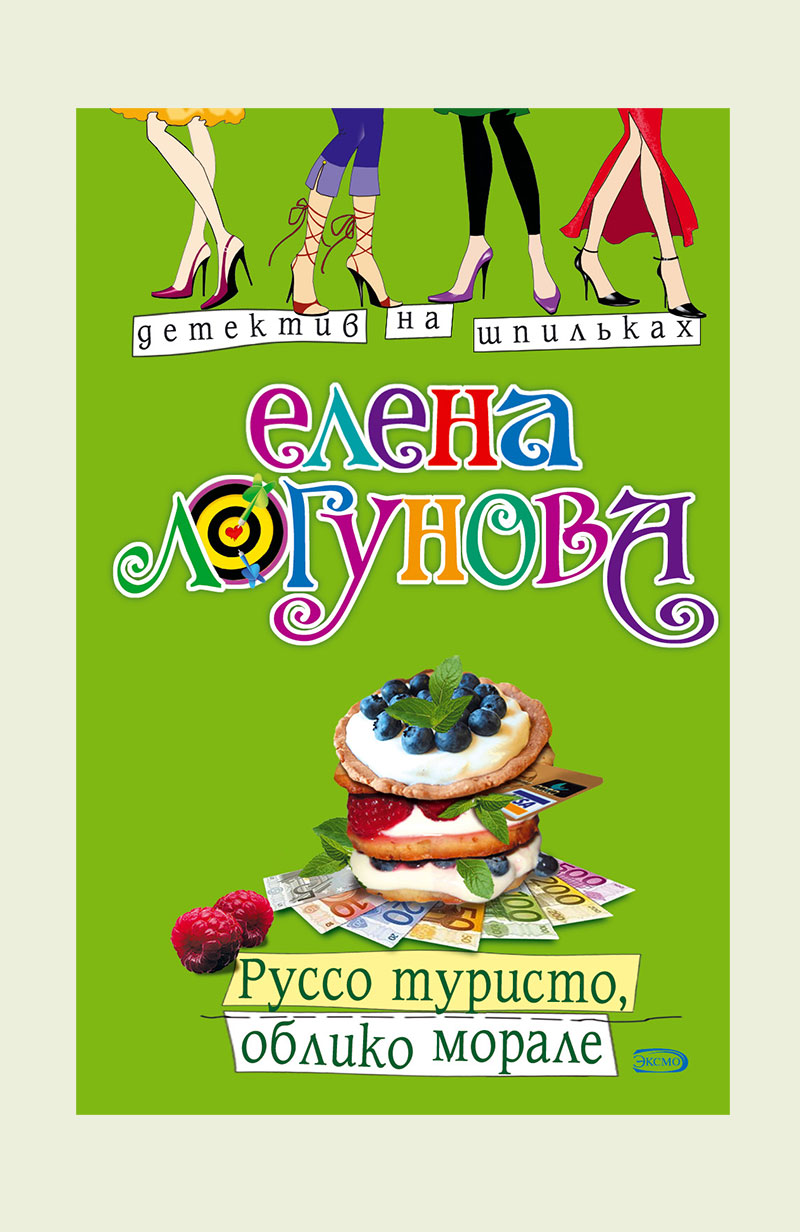
Elena Logunova's novel leads to sad reflections. It is depressing to realize that dear compatriots can get out of troubles abroad only thanks to the presence of high-ranking relatives. This plot is not new at all and has been played out countless times in other works by more famous authors.
Unfortunately, in Russo Touristo there are no bloodthirsty dwarfs or grandiose orgies, but there are a lot of eccentric Austrians. This book is unlikely to serve as a good guide to the city of Mozart and Freud, but there is no great need for this, since the Russian tourist will get out of any trouble.
“Russo Turisto” will be useful for those who know Germans or Austrians who speak Russian. They will make many interesting discoveries about the life of their native countries.