
Translated material
Courier production method
Food suppliers have united to improve working conditions. And they began to win

On October 30, several dozen couriers of the Delivery Club food delivery service announced a strike. Protesters went to the office of Mail.ru Group (Delivery Club - the joint venture of Mail.ru Group and Sberbank), demanding the conclusion of permanent labor contracts and the abolition of fines.
The protests of Moscow couriers against working conditions have become a noticeable sign of the pandemic - the abolition of daily fines, sometimes exceeding daily income, the couriers have already sought strikes in June and July, but the Mail.ru management stated that the system of fines was needed to maintain a high quality service. This time, Delivery Club still made concessions-some types of fines were reduced three times. But the aggregator does not plan to take couriers to the state of couriers.
The correspondent of Novaya and the Novaya "was versed in what the surge of protest activity among the couriers, what working conditions, they achieve and why they began to listen to them.
During the quarantine in Moscow, the demand for food delivered at times: the increase in users in the Yandex.eda and Yandex.Lavka services amounted to 121%, Delivery Club said that in May it completed more than 5.5 million orders - 3 times more than in May 2019, the Igoods delivery service spoke about spaceship growth. demand by 20 times. Due to the increased demand, revenue increased-at Delivery Club, for example, according to the results of the second quarter of 2020, it amounted to a record 2.5 billion rubles, this is almost three times more than revenue for the second quarter of last year.
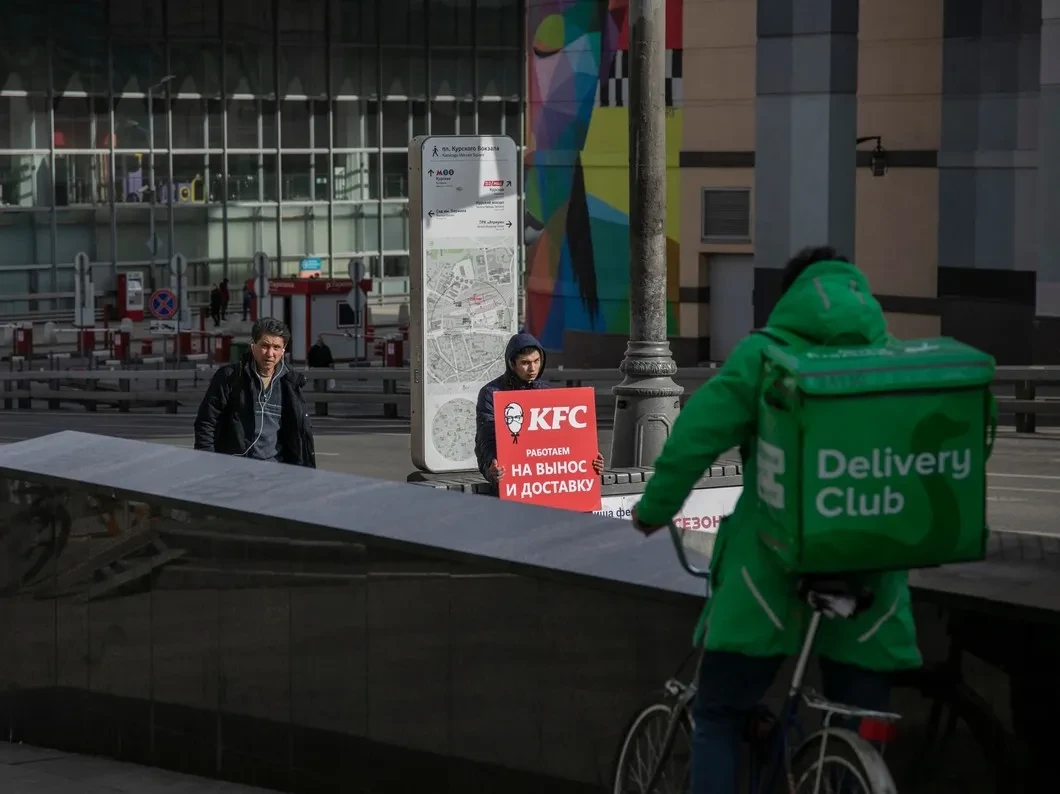
Behind these records are the hard work of thousands of couriers - their number increased sharply during the pandemic. The same company Delivery Club reported that in March the number of applicants for the courier vacancy increased by 40% compared to February 2019. Many went to delivery, having lost their previous work: yesterday's actors, migrant builders, clerks saved the townspeople while at the front line. The media wrote about couriers with gratitude, and in July not far from the Tula metro station, a monument to the courier was even erected.
Nobody was particularly interested in the working conditions of couriers.
Meanwhile, complaints of couriers about food delivery aggregators appeared on social networks long before the pandemic.
Couriers talked about daily fines that sometimes force them to work in a minus, about orders at a distance of four kilometers, which must be overcome in 14 minutes, about the lack of breaks and forced processing. Couriers are processed to earn at least some money-for example, in Delivery Club they pay 120 rubles for the order, plus 20 rubles per kilometer to the client, and fines start from 300 rubles (they are fine, for example, for refusing to execute the order). And if you cancel one four -kilometer order and be late for the other, then by the end of the day you can be in the red.
In April 2019, “New” wrote about the 21-year-old “Yandex.Dar” 21-year-old Artyk Orozaliev, who died in St. Petersburg after a ten-hour continuous delivery of orders. As follows from the conclusion of the forensic examination, the cause of death was a heart attack, which the overload could provoke. According to his brother Artyk Timur, he was constantly fined the aggregator, this “very worried” by Artyk, and he wanted to “make amends for the authorities”.
“Yandex.Dez” after the death of Orozaliev promised to take more carefully to the load on the couriers “even if they themselves take on long shifts and increased obligations”.
And somehow everything was forgotten. Until during the quarantine, the conflict of the couriers of the Delivery Club with the aggregator has not aggravated. It all started with protests against the penalty system. The service suddenly decided to expand the delivery zones and began to issue orders at a distance of six kilometers on foot couriers, and ten kilometers to auto couriers. Many couriers began to cancel such orders (it is more profitable to deliver two “short” orders than one “long”) - and the aggregator began to fine them for this. They were fined those who accepted the order, but was late for the client. By the end of the work shift, some couriers were discharged 2-3 fines of 300 rubles each, someone was fined immediately by 3 thousand (as for a change for a shift, although the courier was replaced).
Despite the fact that, according to the couriers of the service, “for the maximum of 14-16 hours of shift” on quarantine could earn two thousand rubles.
"New" told the story of the courier Said Shamkhalov, who sometimes had to work 19 hours a day during quarantine, at two shifts to somehow recapture fines. Said said that “the fines of the [aggregator] cannot be challenged”: “It is necessary not only to work on the change, you need to parallel to keep your accounting, keep video and photo reports, and even if you collect evidence that you are not to blame, they refuse, it happens that they are generally ignoring. You go to the office to directly solve the issue with the coordinator, and there the guard stands at the door and does not let in it. ”
And in early June, the first riot occurred. At first, the telegram channels began to spread video features of indignant couriers who accused Delivery Club that the service uses the fact that "people have no [other] work, that people cannot earn money."
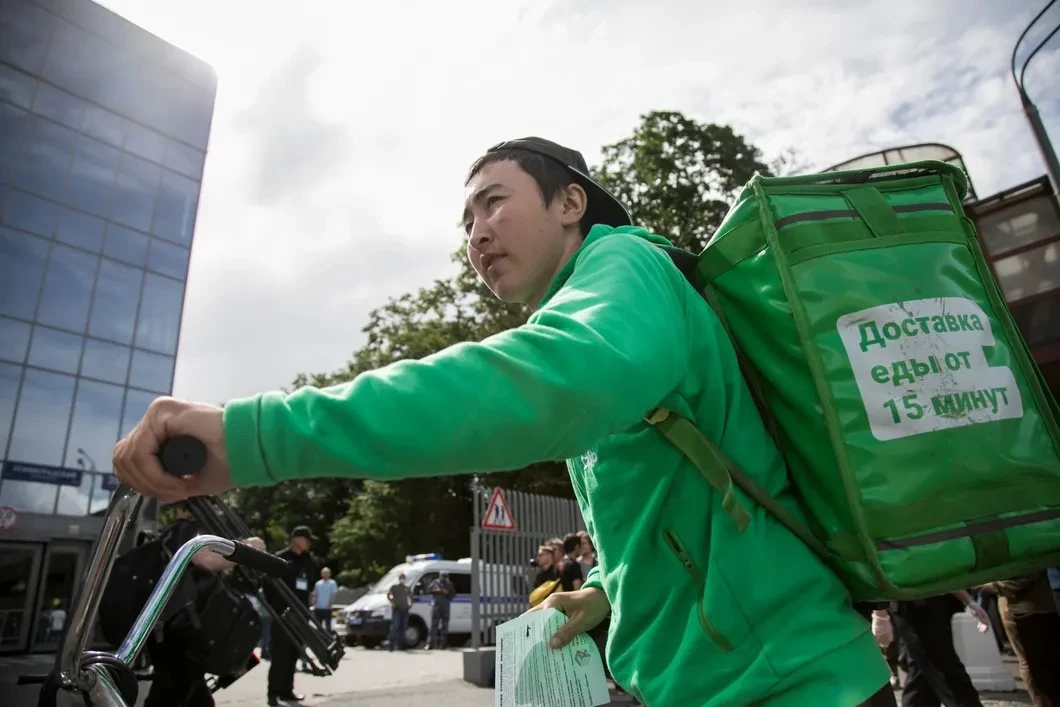
“I have a corn on my whole leg,” says the courier on one of these videos. - Why should I go to Putilkovo to attribute your order? This is not normal. If you are sitting there in the office, and you are warm, good, and you can use the position, then this is wrong, believe me, God sees everything, and then he will punish you for it.
Couriers on these videos promised to "turn to law enforcement agencies", as well as "to come and punish Delivery Club for such an appeal to people." The Internet tube quickly grew into a riot real: on June 5, about forty couriers went to the Delivery Club office in the Khoroshevo-Mnevniki area. They in the rain, they demanded that someone from the company's management talk to them. But no one came to them.
The company only made an official statement that the increase in the delivery zone was an experiment that was completed “even before complaints”, and all the money for unfair fines would be returned. And Delivery Club said that at the end of April and May the aggregator at his own expense doubled the tips, which were left by customers through the mobile application, without specifying, however, that tips, in principle, are rare.
After the June rebellion, according to the courier Said Shamkhalov, the aggregator did not return “even 1.5% of the fines”, the same ones to whom some fines were compensated, “a couple of days later they received them.” In addition, some of the couriers who came out on June 5 to the Delivery Club office stopped giving shifts, someone blocked accounts in the application.
And in July there was a second rebellion. A new wave of protests was caused by non -payment of salaries - one of the logistics partners of the aggregator, LLC Amaroli, did not pay the salary of 326 couriers of the service from May 1 to June 30.
The fact is that according to the documents couriers are not Delivery Club workers.
Different logistics companies - the partners of the aggregator are engaged in their employment. The service is only an intermediary between the client and numerous firms that hire employees, and in fact is not responsible either to the users of the service for delivery, or to the couriers for their salary. These logistics partners do not employ couriers under an employment contract. They sign a service for the provision of services: couriers are sure that this is done to save on a social package and be able to dismiss an employee for one day.
The protesters were taken under the wing of the left-wing activists-the journalist of the left-wing online publication "Bulletin of the Bury" Kirill Ukrainians contacted the couriers, quickly organized the Courier trade union, created the telegram channel and public in VKontakte. Couriers began to perform under the auspices of this trade union - Said Shamkhalov was listed as its co -founder.
A new video message followed-it was published on the YouTube channel of the trade union on July 4. It has about 70 couriers, standing at the Amaroli office, told how several months live in Moscow without money due to non-payment of salaries. “I don’t eat anything for two weeks - only bread and water,” said one of the couriers. -Regarding the apartment-I have already been living in the forests, parks and other places a long time ago. I ask the leadership to solve it as quickly as possible. ”
In the telegram channel of the courier trade union, Delivery Club stated their requirements expanding after the leftists: to pay salaries, conclude permanent labor contracts instead of services for the provision of services, start providing leave, pay for sick leave and overtime, cancel the fines of the illegally fired couriers, and stop the Curiarians to begin to become couriers self -employed.
Representatives of the Delivery Club in response accused their logistics partner of “delay in payments against several dozen couriers” (why “several dozen”, and not “several hundred” is unknown) and promised to completely pay the salary in the coming days. And indeed they began to pay the debts of Amaroli. But this did not stop the protest. On July 7, couriers announced a strike. Together with left-wing activists, they launched #couriers and #Deliveryhlam in social networks, pasted leaflets with calls to join the protest (and already in the center of Moscow with the green posters “I support the strikes of Couriers Delivery Club” are young guys and girls who are unlikely to work couriers).
And on July 9, couriers in green branded raincoats and sweatshirts went to the Mail.ru Group office on Leningradsky Prospekt. There are 30 people in total, there were much more journalists. Apparently, this is why the company's management decided to talk with journalists, and not with protesters. Vladimir Gabrielyan, Deputy General Director of Mail.ru Group, told reporters that Delivery Club’s logistics partner was to blame for everything - the service was transferred to him for work in time, but Amaroli did not calculate the couriers.
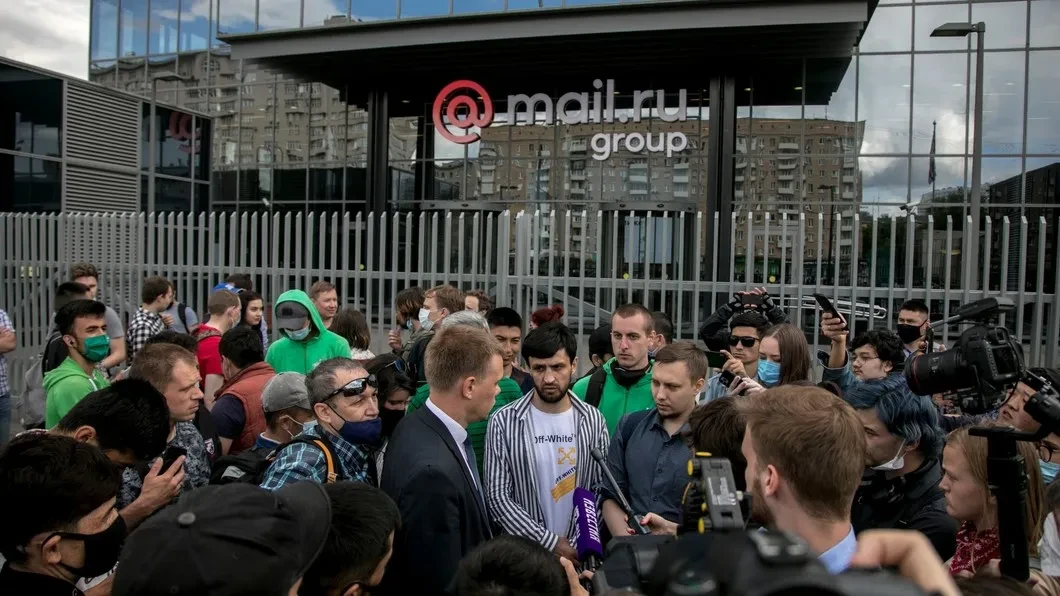
To repay the salary debts, Delivery Club, according to Gabrielyan, re -(!) Transferred Amaroli money (the deliveryers soon received payments). The contract with Amaroli was ultimately terminated, the selection criteria for partners were tightened, but no one began to review labor contracts. Gabrielyan at a meeting with reporters said that “not a single courier does not work in Delivery Club,” so their claims regarding employment contracts should be addressed to “their employer”.
The fines also did not cancel - representatives of the aggregator persistently repeated the media that the penalty system was needed to ensure “high quality service and customer safety”, and if the courier works in good faith, it is impossible to imagine that the amount of fines overlap its salary. In general, "the vast majority of couriers work without fines."
The posts in the telegram channel of the Courier trade union talked about the opposite. After the July strike, the couriers continued to send screenshots from the Delivery Club mobile application to the channel administrators with their fines. One of the Moscow couriers for three working days in August was discharged six fines of 300 rubles each. And all with the same wording: "Refusal to execute the order / does not accept the order in the appendix for no significant reasons." Another courier, already from Kazan, for two weeks of work, nine fines were written out with the same formulation - according to representatives of the trade union, the courier refused orders, because in all cases more than ten kilometers had to go to customers.
Couriers received especially many fines in October-at least in the telegram channel of the trade union, screenshots of couriers with fines from 300 to 3600 rubles per day were regularly published. And the couriers decided to fight a tested way, organizing a strike at the Mail.ru office on October 30. This time, the management of the service nevertheless held a meeting with them (although representatives of the aggregator said before that all the fined couriers are to blame themselves: supposedly in October, the FAKE GPS used and ignored orders, conscientious deliveryers who “fulfill the sanitary and epidemiological requirements, have no complaints of moral and ethical character Customers or restaurant employees comply with the technical standards of the service ”do not face fines.
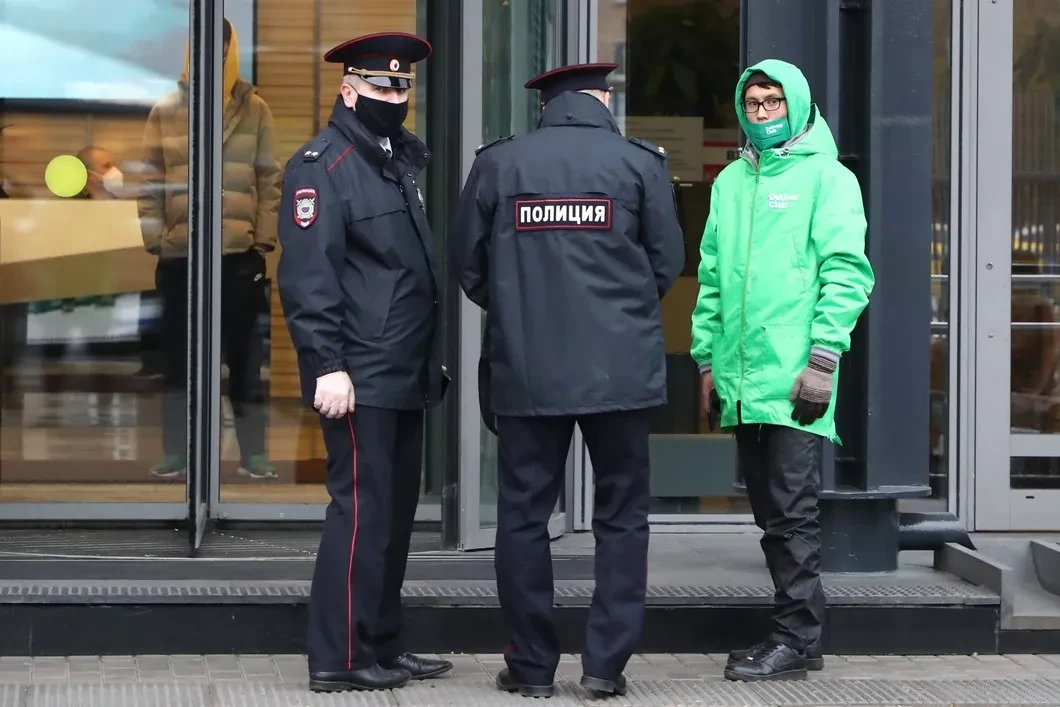
Despite this statement, Delivery Club has made concessions. The aggregator reduced many times the amount of some fines. For example, to 900 rubles, the amount of a fine for a change of courier per shift was reduced - earlier in Moscow for this was fined by 3,000 rubles, in St. Petersburg - by 2000, and in the regions - by 1000. The aggregator announced that the fine for a change will become more flexible - the couriers will be fine by the dynamic warranty (150 rubles) by the number of hours in the amount of hours in the amount of hours in the number of hours in the number of hours in the number of hours The change that the courier did not come to.
The fine for unacceptable orders was also reduced - from 300 rubles to 120 rubles.
Some fines will be canceled at all - for example, now the aggregator will not be fined for the courier’s exit not to replace his starting point (they used to be fined for 1,500 rubles), a fine will also be canceled for incorrect affixing in the appendix and the absence of geopolition (but if the courier does not transfer the geo for more than 30 minutes, it may be deprived Cuttled). Moreover, representatives of the service even promised to “conduct communication with partners”, as many couriers complained about the poor attitude of restaurant employees towards them.
At the last meeting of couriers with representatives of the aggregator, held on November 12, couriers came with a whole range of proposals to improve working conditions. For example, for orders weighing more than five kilograms, the courier receives a surcharge. And so that the courier had one hour during the shift for lunch. And so that the courier could not be expelled from the restaurant, when he does not receive an order for a long time, and he simply waits inside, so as not to get wet on the street. And so that the couriers do not receive an order ten minutes before the end of the work-because of such orders they have to work even after the end of the shift. Why do you need to ask for a company about all this in 2020?
The leadership of Mail.ru promised to think about offers.