
Translated material
"Long fingers in your plan"
The film by Alexei Teacher "Tsoi" was released, despite the complaints of the son of Tsoi to the president
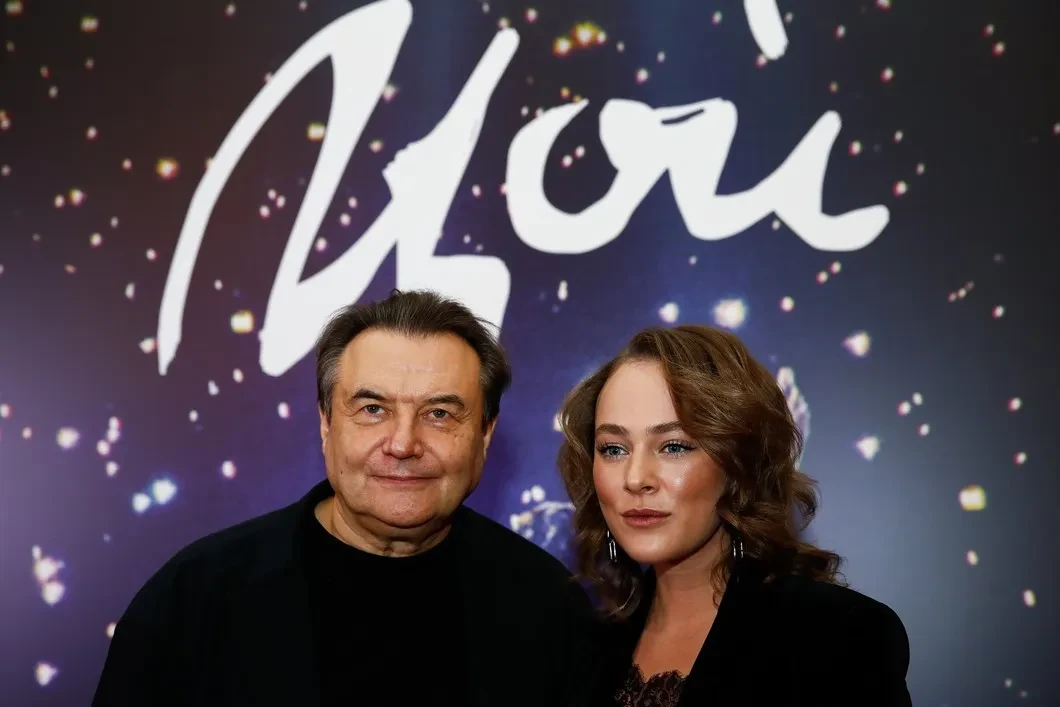
Alexei Teacher has a tradition - to run into scandals. The question is whether it is his fault, or a society excited to indecent fact of working on a film about Victor Tsoi. In any case, when clouds began to thicken around the still not released picture, and the son of musician Alexander Tsoi asked Putin to ban the film, many remembered Matilda.
I hope that it will not reach Bacchanalia with arson, although Tsoi fans are already raging. I would very much like to talk about the picture outside the noise. However, only the name “Tsoi” is already a provocation of the discussion (the working name of the film is “47”), and above all, among those who will not go to watch. We have such a rake stainlessness without wear: I have not read, but I condemn.
Near circle
The first scene of the film "New Gazeta" showed back in August, it can be seen now. Thirty years ago, in August 1990, Viktor Tsoi returned from fishing near Tallinn, his Moskvich flew to the oncoming at high speed and ran into an old Ikarus. The singer died. The bus driver after the investigation was declared innocent.
This driver (in reality, he served on a submarine, lives near Riga) Alexey Teacher and makes the hero of the film. The cinema source "Tsoi" is a reverse prospect, a look on the other side of the disaster.
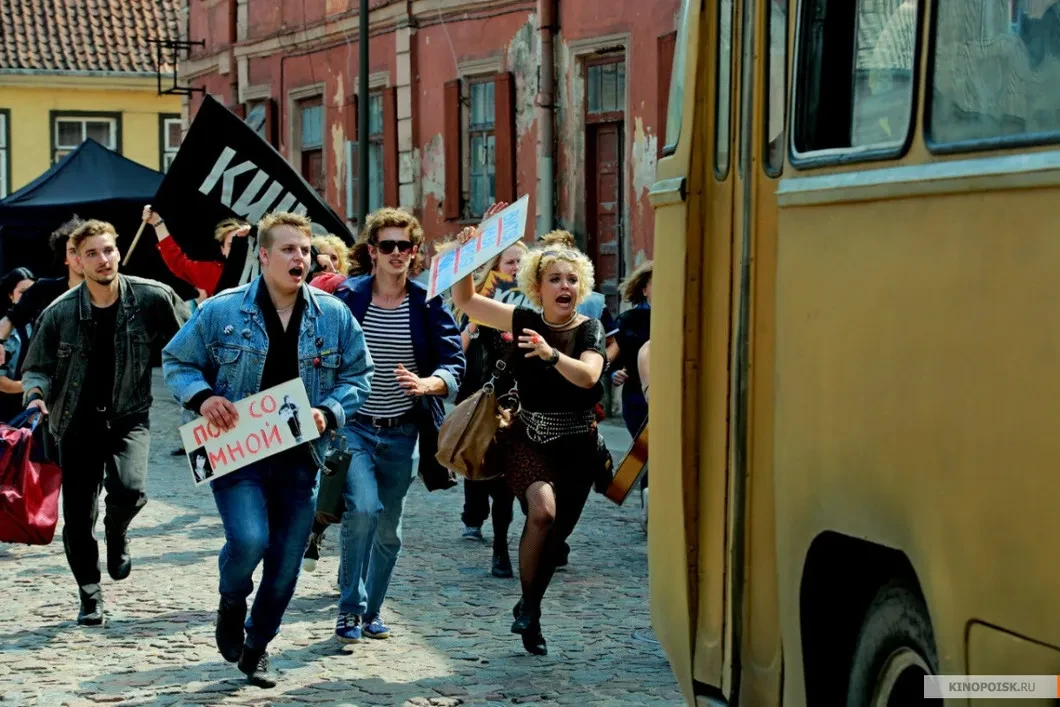
The film is about the last path of the last hero: from Tukums, from scattered fishing rods that reveals the mouth of a fish, which was overwhelmed in the tape recorder of the cassethe - to Leningrad. The yellow “Ikarus” with the inscription “Office” steers the dusk driver Pavel (Evgeny Tsyganov), whose life changed seconds. The ex-wife of the musician (Maryana Spivak) with his son (in this role Masha Peresild), the last love (Paulina Andreeva), the photographer of the group (Nadezhda Paleganova) and producer (Igor Vernik) on his “Merce” are traveling with him.
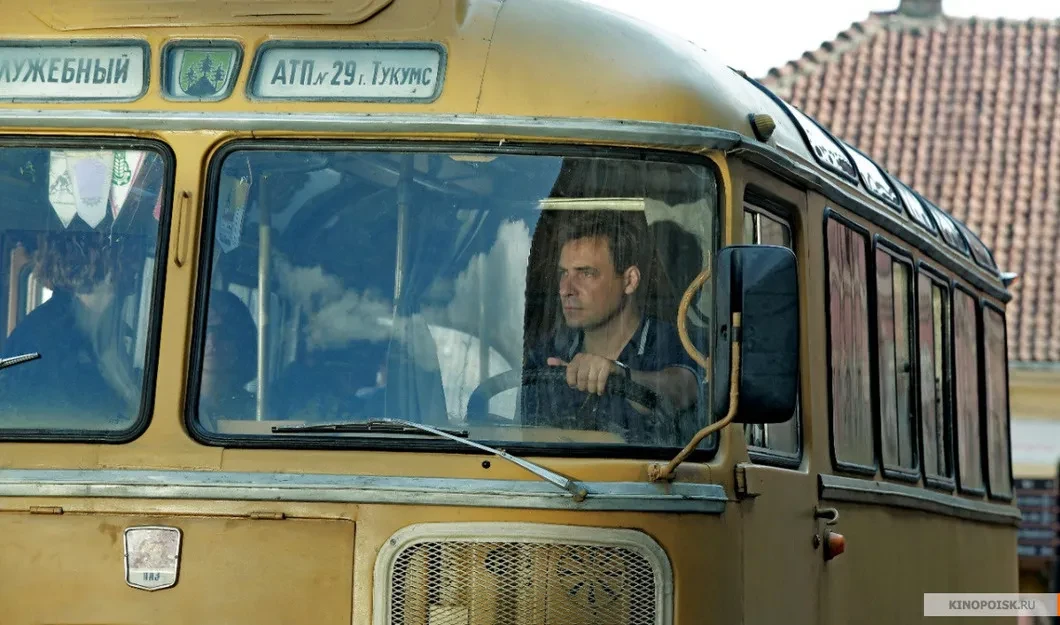
“All coincidences with real events and real people are random,” the authors of the film, which they themselves called “Tsoi” write to us in the credits. Such a contradiction.
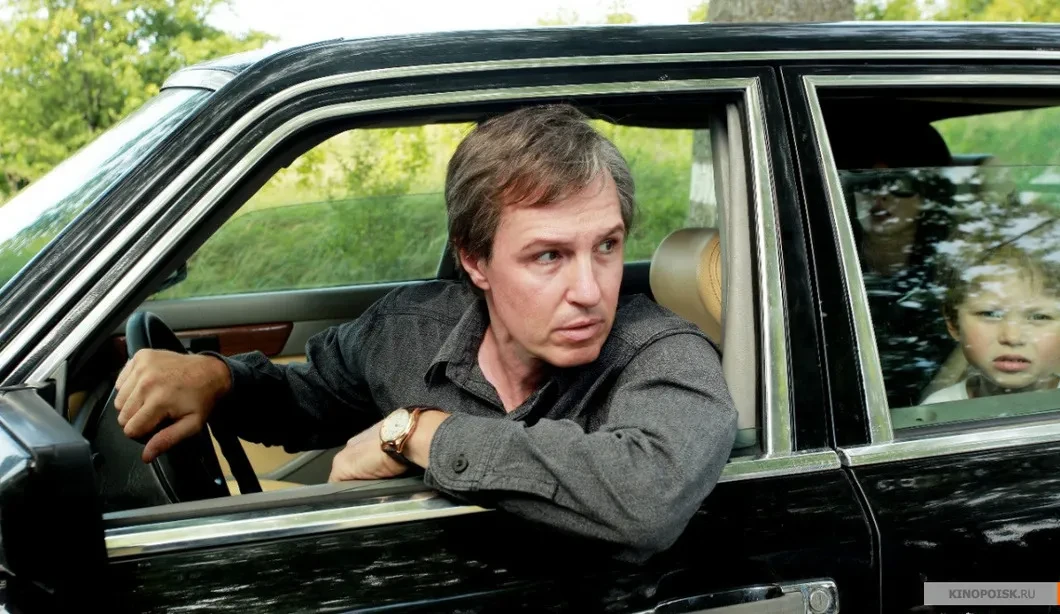
Yes, the heroes have other names in the picture, but in each the features of real prototypes are visible. The producer Yuri Aisenshpis, who is manic looking for a missing cassette with an unbearable “black album” - “47”. Paulina Andreeva reincarnated into a silent, tended, like a string, Natalia Drogov, sometimes waves his arms in a ballet in a ballet in order to get out of a daze. The heroine of Maryana Spivak breaks into a hysteria, tries to establish a new problematic “personal happiness” and says a key phrase: “It was he who left me, I did not throw him.”
In the chamber drama "Tsoi" Pavel Haron is taking Orpheus into the afterlife. In one of the scenes, the bus enters the night fog, the light of the headlights crumbles in the dark, reality falls into midnight. Road-Muy turns into a parable, farewell-into an attempt to gain himself, strangers, irritated, crisher crushed by grief, they connect them, and the years "lived under the light of the stars." Idol or living person: "Who lives according to the laws of others and to whom to die young."
Behind a simple plot, the theme of auto -to -the -one is loomed by Gumilev, when a person is not able to evaluate the phenomena, scale of the figure.
In this “Near Circle” is a stranger, a person who is unfamiliar either with songs, or with the name of the one who has bewitched millions, including crowds, awaiting and attacking the bus. And the “close circle” knows nothing about this driver and his participation in the accident. Along with this neophytus, we wonder why Tsoi’s songs are still in the heads of the young. Where is the current, in which magic, which has not been disappointed for more than three decades.
There is no Viktor Tsoi himself in the playing film, there are only documentary personnel shot by Alexei as a teacher for his cult film “Rock” and used in his dock “The Last Hero”. I must admit that these personnel are the most bewitching. Groundy after a concert in the dressing room of Tsoi, sweat floods the eyes of black eyes, smoke of cigarettes releases into just donated flowers. In the finale, the camera pushes away from the stage and flies over the crowd for an infinitely long time, it seems that from the past today.
In the film, the Camera Yuri Klimenko shakes out household details. The yellow bus breaks off the road and rides a flowering field after the departing Maryana - a kind of train from Romashkov. An ordinary barn with a holey roof under the streams of light breaks up into dreaming of a dream. A huge dance floor breathes in unison with the “white roses” of the “affectionate May”, and the only tearful fan of Tsoi is trying to shout out the crowd. I will not say that the film “Tsoi” is flawless, but this is an author’s interesting job.
The relations of the heroes and their portraits are given sketched, fragmented, so sympathy does not arise to them. But this dry style is set by the authors of the film. And individual, as if at randomly grabbed the details in addition, gain allegorical meanings as a slow movement of the camera along a powerful warship, behind which a fragile Tsoevsky “Muscovite” is found. Or when the blue coffin flies in pitch blackness and only then it becomes obvious that these are a funeral.
Assessments of the film can be polar, but its critics do not have aesthetic claims, but "do not touch Tsoi!"
Similar reproaches and noise surrounded the release of the film "Summer" by Kirill Serebrennikov.
The Law of the Russian Federation says that it is possible to use the image of any person only with his resolution. Consent is also required for the collection, storage or dissemination of information about the private life of the person. However, the law provides for exceptions. Consent to the use of information or image of a person is not required if a person has public interest. Victor Tsoi is a significant figure for Russian culture, therefore, the consent of the heirs to the use of his image is not required.
What the lawyers say
Maria Borodyanskaya, lawyer of the Development Fund for Modern Cinema "Kinopraim"
- It is difficult to confirm or refute violations of the law by the authors of the film in relation to the personality of Viktor Tsoi, to which his heirs refer to, without a detailed study of biographical information. The Constitution guarantees each citizen the right to inviolability of his private life. Civil law clarifies these provisions, but does not establish a complete list of information or information that should be attributed to the sphere of private life.
According to the ECHR, the concept of private life includes elements related to personal data, an image of a person (which has a separate security regime), as well as the physical and psychological inviolability of the person, the substantial part of which is quite difficult, it extends to that part of life that is behind closed doors for society.
In other words, the legislation, including international ones, refers to the biographical data and personality information in this case, which allow you to check and confirm their reliability in this case.
The compliance of the reality of the information given in the film is not disputed by the heirs. Everything else in the film, which its authors have repeatedly focused on, is the thought, assumption and opinion of the authors of the film, which is literary techniques that are not subject to verification for their compliance with reality. The existing judicial practice adheres to the same position.
“Everyone has their own Tsoi,” the teacher repeats. He speaks of a specific trend in time when relatives try to create their sacred image of a loved one on the screen, and he must be canonical: “How can any person be forbidden to express their opinion? Any negative opinion of the son of Viktor Tsoi is normal, and the fact that he is against the film is also normal.
He does not have only one right: to prohibit speaking on this topic. By the hands of the president of the country to prohibit the picture.
We tried to meet him, talk, even offered compromises on the film that he did not see and which he received all permits. Alas. But put the picture on the shelf? Forget about her? We cannot allow it. ”
The son of Viktor Tsoi, Alexander, in 2019, on the anniversary of the death of his father, proposed to recreate the Kino group for several large concerts. It was assumed that the vocals of Tsoi would sound on the record, the remaining parties will play musicians of the original composition: Tikhomirov, Titov and Kasparyan, who passed away of the drummer Georgy Guryanov was supposed to replace Oleg Shuntsov. There were even rumors that the image of Tsoi would be recreated on stage with the help of holography. Then they postponed the concerts, but the project with concert reincarnation managed to raise many questions.
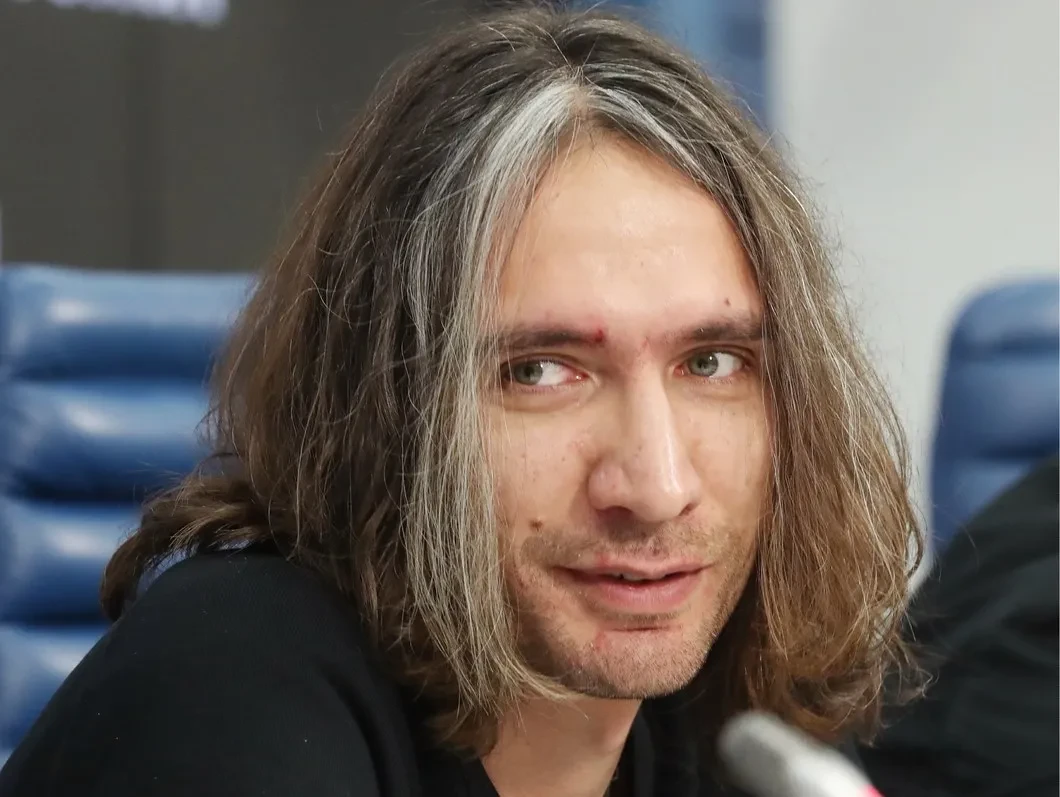
And therefore, here's another thing to say. Today, everyone has not only their own Tsoi, but also their own ideas about ethics. For example, after the press order, the director got from some journalists for the moral appearance of the heroes. Like, the producer behaved badly, hiring bad people to knock out the cherished cassette. And the main character is unpleasant - changed his woman. Here and the views of the teacher, the eyes on his forehead climbed. Well, do not explain to professional journalists that they watched the art tape. Picture. That Tsyganov played the driver, Wernik - Aizenshpis. And all the characters in the film are collective.
As soon as the screen wants to talk about a famous figure, heavenly thunders burst out: Michael Jackson's relatives outraged the harmless film “Leaving the Nonerland”; The heirs of Tolkien by the United Front opposed the Kinoistory "Tolkien"; Relatives of Belov and Kondrashin fought with the painting "Movement Up."
But with the current programming of Russian cinema, which is designed to sing domestic heroes and heroines of sports, art, military acts - oh, we will find many battles in public space. Many idols after the death of relatives are more discovered than Yuri Detochkin.
The question of being or not to be a film (book, picture) is firmly connected with another question: for what? You can, of course, hip on the name. And without investing, without wasting, to attack the series about Gurchenko, Serov, Zykin, Orlov, Piehu. Get on the name. The people will come down, even if they repeat after D'Artagnan: "And what is left to me now - only a name."
But the criterion of the choice between “can” and “one cannot” be not a state order, not a hype, not the order of the heirs, but the author’s responsibility, his ability to look at the event, at his hero is not learned, not slave, but with love and sympathy. Only then he has the right to say after David Lynch: “Do not let anyone get your long fingers into your plan.”