
Translated material
Andrey Nechaev: "The government from fear of sanctions decided to flee gold"
Andrey Nechaev 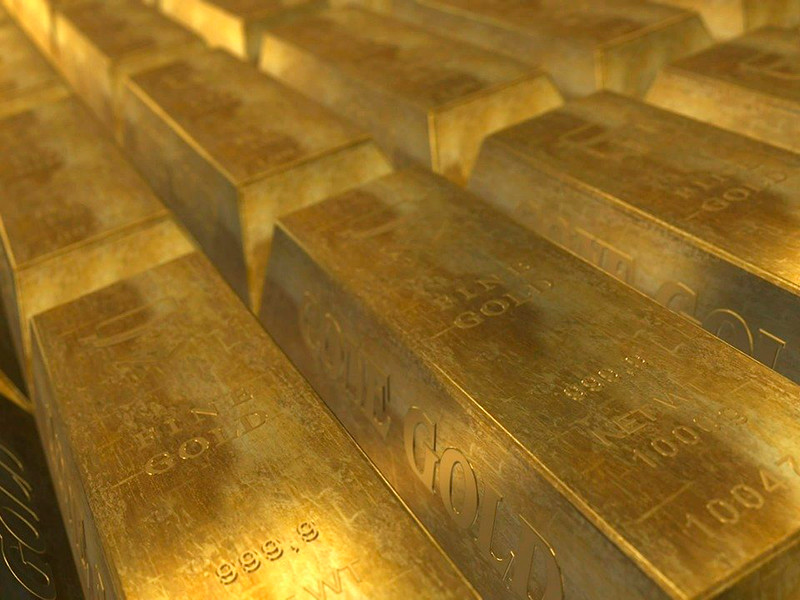
“It seems that the Russian government read my articles about the likely threat of tightening sanctions under Bayden and came up with extraordinary protection measures. On Friday, the Ministry of Finance made a proposal to change the structure of the funds of the National Welfare Fund,” the former Minister of Economy writes on hisFacebook page.
"Now, $ 117 billion from" Cubes "is kept in dollars, the euro and British pounds (from April 2020, Yuan has been added to the main currencies). As follows from the draft amendments to the Budget Code published on the portal of legal information, some of them can be transferred to gold parts. The document states that these changes are aimed at" ensuring the preservation of the funds of the fund. Designed for infrastructure projects and coating of budget deficits, although it was originally created as a pillow for the pension system.
True, until recently, the Minister of Finance Siluanov stated that "assets provided by precious metals are less quickly liquid." Apparently, now it is no longer up to liquidity, when there was a risk of direct arrest of assets as part of possible sanctions.
The Central Bank of the Russian Federation began to actively purchase gold back in 2014 after the annexation of Crimea and the first sanctions measures of the United States and the EU. Then he, apparently in a panic, for a short time withdrew $ 115 billion from the New York Federal Bank. Over 13 years, the gold reserve of Russia has grown 6 times (now about 2300 tons) and became the fifth largest in the world. However, the government kept its reserves only in currency. Gold is a “100 % protection against legal and political risks,” the first deputy chairman of the Central Bank of the Russian Federation D. Tulin explained back in August 2018. It is clear that, unlike currency and securities on accounts in foreign banks, it is impossible to arrest gold bars in Russian storage facilities.
To date, the Central Bank almost to zero reduced investments in the American public debt, and the remaining dollars in reserves is holding deposits in private banks, mainly outside the United States. Nevertheless, the reasonable fear of arresting assets does not allow public financiers to sleep calmly. The undertaking to translate for safety reserves in gold is not bad, if not for a few but.
The Minister of Finance himself spoke about the low liquidity of gold, and the budget deficit should be financed promptly. There are still a couple of nuances. In large volumes for rubles, you cannot sell gold promptly, unless, of course, all the money from state banks is pumped out. It is still necessary to sell for currency, but here theoretically and may stue the arrest of foreign exchange earnings. You will also have to purchase gold in foreign markets, because To pay for it to domestic manufacturers means to cross out the very idea of the fund as a reserve that does not issue a means to the domestic market.
To buy gold in large volumes in a very delicate market, where the rumor of massive purchases leads to an increase in price, it is to drive the prices for metal up. Sooner or later, to finance projects and cover the budget deficit, gold will have to be actively and promptly selling, which will inevitably drop prices. Of course, a priori to evaluate possible losses, not knowing the volume and speed of purchases and sales, but their presence, taking into account these factors, is inevitable. "