
Translated material
Polit -bies
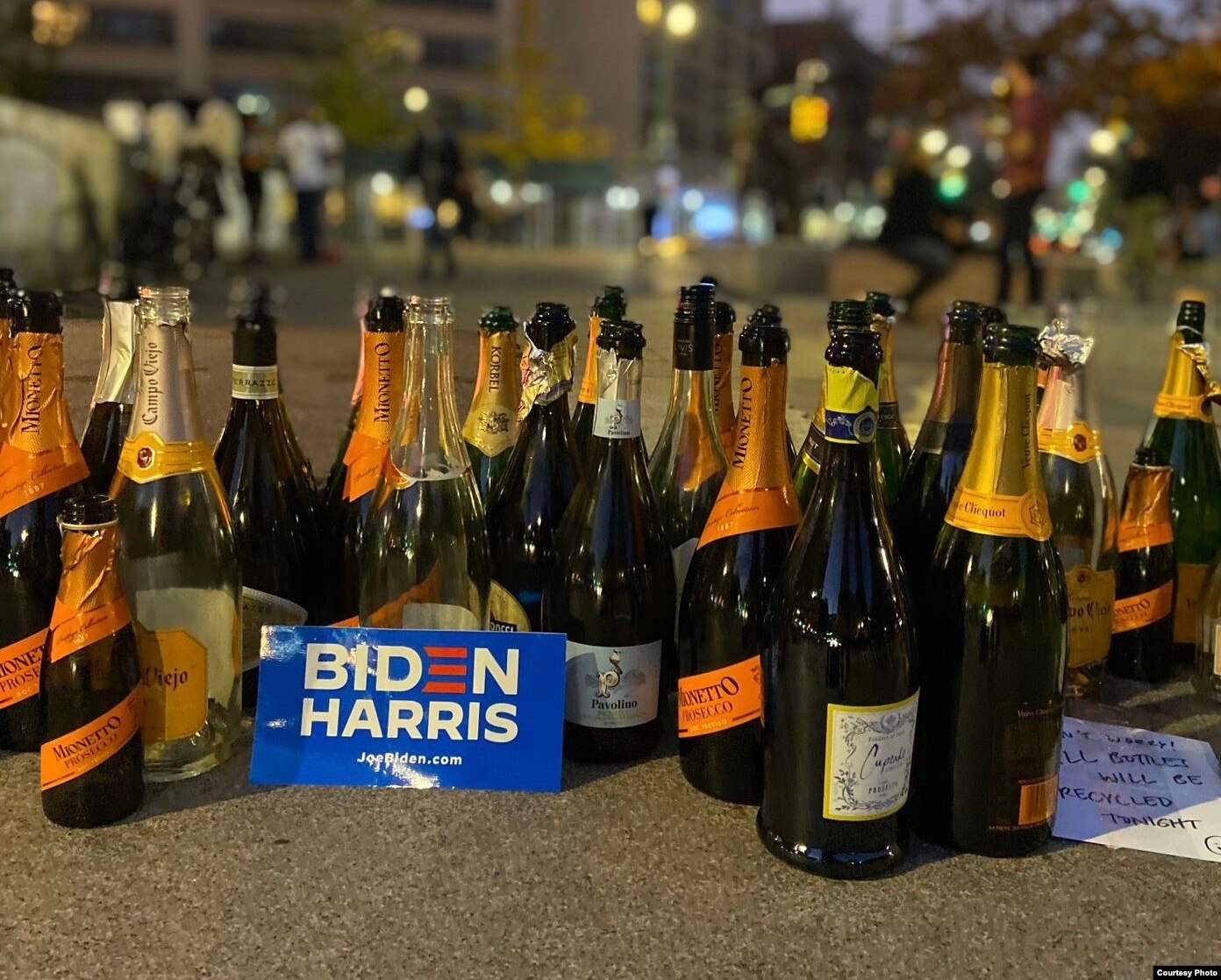
Conversation with Solomon Volkov about the American political landscape after the election
Alexander Genis: Today, when all of America is still shaking after the nervous elections, I want to talk with Solomon Volkov about how we feel in the new political landscape.
Moreover, this time I, Solomon, intends to introduce you not in the usual role of a culturologist and musicologist, but in another hypostasis: an experienced voter. You and I can safely say that we ate the dog in the election. In this November Tuesday you and I have already chosen the eighth president. Just imagine that our American life began even under Jimmy Carter, which is now 96 years old.
Naturally, over these many years, we, like each voter with such experience, have accumulated in connection with the most fundamental democratic procedure of thought, complexes and imagination. Here we will discuss them today: elections from the point of view of old -timers of democracy, we will talk about how the winners, the losers and unsatisfied, whom I called "political studies" met their results.
Note, Solomon, that I do not ask you about who you have voted. This is an indecent question in America. We will replace it with another: that, living on Broadway, in the very center of Manheeten, you saw and felt on the historical day of the election?

Solomon Volkov: My emotions about past elections fit into one word: relief. This is the feeling that, I think, the majority of Americans, including those who were in opposite camps, experienced. Those fellow citizens with whom I currently exchanged some careful considerations about this, everyone also repeats this word: finally it all ended, finally it all passed. Although, of course, there are still a lot of unresolved questions, they are afraid to bother America for months, years, and maybe even longer.
As for my personal impressions of how all this is here in New York and, in particular, in the center of Manhattan, where I live, it happened, I heard and realized that Bayden gained the majority of the votes of the electorals when I heard car beeps, it all started with this. I immediately went outside, the atmosphere was a festive, the area where I live-this is the liberal bastion of the liberal New York. Naturally, here people rejoiced that Biden received the required number of votes to become president. A real fun reigned on the street, people opened champagne, there were car sounds of the crasons, it seems that it is called, I never owned a car, and did not master automobile jargon. Then for me there was a personally unpleasant moment - motorcycles passing with a roar, I can’t stand them on ordinary days and on these. It acts very much on the nerves when a roaring car rushes past you. I also don’t know, by the way, as it is called when they turn it on.
Alexander Genis: Without a muffler. I would take motorcycles from them, let them go on bicycles.
Solomon Volkov: with the exception of these cavalcades with motorcycles without silencers, everything was extremely joyful and festive. Which is also very important. After all, everyone was afraid that there would be riots, plywood shields on the windows of stores again appeared. But everything worked out.
How did you go through the election day?
Alexander Genis: I heard about Biden’s victory at 12.08. I sat in a car, but, unlike you, not in New York, but in a deaf province, in South New Jersey. I go there because there is a bazaar Amisha, this is a famous and beloved Protestant sect in America, which does not recognize progress. That is why they sell the most delicious food. And next to a sred forest, as in our Baltic. A wonderful place, but how much to go there. And so I stand at the Parking of Molla, the place, of course, is characteristic: next to the tattoo cabin and a huge weapon store. In New York, I don’t know where to buy weapons if it is sold here at all, but here there is a department store of weapons. And everywhere - signs calling to vote for Trump, American flags, aggressive slogans on cars. But when I heard this news on the radio, I walked around how they all do it. It would seem that I was the only one in this Trick Country, when suddenly an elderly bald man jumped out and shouted: "273!" That is, how many votes of the electors at that moment Biden scored. So I realized that I am still not alone.
A characteristic detail. She says that in America we do not really imagine who votes for whom, because not everyone is talking about this. Well, Solomon, we realized that in the end the election holiday took place. And this is actually the most important, because in the midst of the pandemic, when it became even worse than it was when the second wave covered America, a record number of people - most over the past 120 years. This itself is the victory of democracy, which turned out to be more important than the pandemic. In my opinion, this is a wonderful feature of America, which relates to the elections extremely seriously. How do you like the outcome of the elections, what, from your point of view, the pros and cons of the new situation?
Solomon Volkov: You know no worse than me that in America it is indecent to discuss two things: income and politics.
Alexander Genis: Another one is a religion. They rarely talk about religion for an obvious reason. As they say in America: "I have a church, and you have a sect." Therefore, it is better not to speak on this topic at all. Nevertheless, the elections took place, you need to think about what awaits us.
Solomon Volkov: It is impossible to predict, as it turned out in recent years, and especially in connection with the current elections. Nothing is impossible to predict in an extremely nervous, tense atmosphere and an atmosphere that existed in the United States. Once again, sociologists who conduct public opinion polls got into a significant puddle. We all know that this happened in 2016, when most observers and surveys predicted Hillary Clinton’s victory, and Trump won. This time, again, at first they predicted the easy, fast and crushing victory of Biden and Democrats. While Biden won with a minimal advantage, the democrats as a whole, according to their own estimates, remained extremely unhappy, since their optimistic expectations were not largely fulfilled.
Alexander Genis: Well, I would not say that such a minimum advantage of Biden is about five million votes, the difference is significant. For example, Kennedy won with a much smaller advantage. But I agree with you in another. A very interesting story took place in this election: Trump lost, and the Republicans won. It turns out that the same people voted against Trump, but for the republican candidates for Congress and the Senate. It is still unknown how the story of the Senate will end, but in the Congress Republicans gained new voices. In general, the republican party was distinguished in the elections. And this means - I have such a mystical sensation - that in America there is an underlying sense of balance, American democracy gravitates almost subconsciously. If the president is a democrat, then the power must be divided. This is what is most likely to happen now.
2020 //America votes
The Americans consciously or unconsciously usually want power to be divided between parties. This is coming from the very beginning. When the founding fathers discussed what America would be, they read their republic from Polybius, and Polybius, the Greek, which lived in Rome, explained the reasons for the success of the Romans. Why did the Romans rose? Because they managed to share power - this is what led to the creation of the Roman Republic, to the foundation of Pax Romana, in Rome learned to share power. And this principle is extremely important for America. Such power from the side seems ineffective, it is so rusty, it is slowly moving, it is very difficult to turn the state of the state, but, on the other hand, this prevents him from leaving in the wrong direction. Such a structure of power has led to the stability of the oldest republic in the world, because now American democracy is the oldest and it is: it will soon - in six years - will be 250 years.
Alexander Genis: Another important topic is what these elections are in terms of extremes. For me, for example, there are unacceptable extremes from one side or the other. Now, when the democrats are on a horse, in any case, more or less on a horse, half on a horse, it seems to me that the time has come to cut off the democratic party of extreme radicals. All this began with Sanders, but continues today. The same thing with the Republican Party, which also cut off the extremes: as we know, 8% of the Republicans voted for Democrat Biden. Maybe these 8% led to his victory, because the difference between the candidates is still small. A very unusual situation in which there are many voters who feel strangers in their party - these are the same political officers. How do you feel about this phenomenon?
Solomon Volkov: Here, a lot depends on what you are on the platform and whose views you share. Republicans, recognizing their obvious loss in the case of a presidential race, indicate other figures. They say that in the end, more than 70 million Americans voted for Trump, more than Hillary Clinton in 2016. What else could be more important, Trump added to the voices that he received in 2016, almost 8 million voters. Moreover, which is also important and which is also emphasized by republican observers, the increase did not only occur among those white conservative religious voters who voted for Trump, but among Latinos, and among African Americans, and among Asians, and among Muslims. Even in the group of voters in which Trump predicted a crushing defeat - white women, even there, Trump added. Thus, the Republicans have every reason to say that, yes, Trump will not be the next four years, but Trumpism in the foreseeable future is not going to disappear.
Alexander Genis: What will happen to the center?
Solomon Volkov: This is where the question that all, it seems to me, is sane voters: where is the center that is necessary so that the ship of American democracy would move forward, would not get stuck and sink?
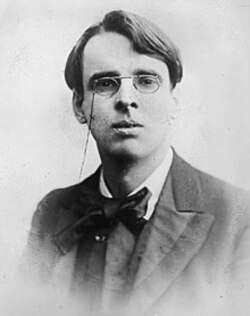
In this regard, I recall the remarkable verses of the Irish poet William Jets, who wrote in English, he was a nationalist, an Irish patriot. Born in 1865 and died in 1939, when he was 73 years old. He was the Nobel laureate of 1923 and is still the largest figure in the English -speaking poetry of the twentieth century, such a titan of modernism along with Eliot. So, in 1919, shortly after the end of the First World War, which, of course, can be compared with the most grandiose catastrophes of world history, wrote a poem called "Second Coming." What is very interesting, this poem was associated with the then Pandemia of the Spanish flu, which went like a hurricane in Europe. It is very reminiscent of today's pandemic. As a result of that pandemic of the 1918-19 years, the pregnant wife of Yates nearly died. Then pregnant women made up almost 70% of the victims. Yates was lucky, his wife carried him. Under this impression, he wrote a wonderful poem “The Second Coming”, which was included in the vocabulary of American political discourse - not just poetic, but political. The initial lines of the poem were very often quoted during the life of Yates, and even more so sociologists have already noticed this - the quotation frequency of these verses has increased sharply today. Here is an excerpt in the translation of the poet and translator Yan Probstein living in our New York.
The center does not hold, the connection has broken up;
Anarchy fell upon the world
And the violations of innocence of the rites,
The best doubt of the soul, the best are embraced
Low souls rebelled from the bottom
And their rage poured a wave.
Right Shakespearean lines by strength, right?
Alexander Genis: They resemble Shakespeare's translations from Pasternak. There are, however, other translations, for example, Grigory Kruzhkov, which published a wonderful and very massive book of translations from Yates. But in this version, poems remind more about politics than about mysticism. Meanwhile, Yates wrote them to illustrate his mystical foreboding of the Apocalypse. But this, in the end, is one and the same.
Solomon Volkov: He was a big occultist.
Alexander Genis: And, as you said, by a patriot, but did not manage to learn the Irish, Gell language, which did not interfere with his strong feelings towards Ireland. Interestingly, the same Yates wrote other verses called "Politics". They began like this:
Ah, this girl is in the distance!
Can I again and again
Spanish or Russian
Policy to discuss?
It turned out at the end of this poem that the girl is smarter than a policy than politics. The poet is easy to understand: the elections are over, it would be nice to return to non -political plots, but it is not so easy to do. Already because voters of Russian America is acutely reacting to the elections. Most of Russian America voted for Trump and is very aggressive to those who did not. But recently, I received a letter from my comrade, an interesting person from California, his name is Alex Rusakovsky, a former Kharkov citizen, now a resident of California - and a passionate mushroom picker, we met him on this basis. In response to the endless discussions that are now being held in every American house, he wrote a letter to me, an excerpt from which I want to share, because I think that he reflects the opinion of many. (By the way, I note: dear friends, write to us, we will be happy to include your opinion in our conversations.) Here is an excerpt from this letter, where he reacts to my column on Radio Liberty, which I called "How to glue America?" Our proposal has how to do it.
"How to glue America? In my opinion, it is quite simple: to organize a centrist party, or even more than one - a sort of utopia. Instead of dividing in half by equator, you get a division by tropics and/or by polar circles, leaving the poles with the right and left extremists. Self -minded people from the current parties would be able to move to a more comfortable zone. The possibility of uniting the country instead of division.
Solomon, would you approve such a party? Is this a way out for political works?
Solomon Volkov: Yes, of course! For me, this idea is in the air, it is psychologically extremely justified. Here is such a difference - psychologically, and not politically, unfortunately. Psychologically, I and you probably, and many others, such an idea at the moment seems close, because one and the other party, and democrats, and the Republicans are currently weighing to the form in which they now exist, they are moving towards polarization. Moreover, Trump did not hide his goal, his movement towards polarization, he put it in the center of his political person. Bayden, on the contrary, makes statements that he will be the centrist who unites all Americans, but, as observers note, a fierce struggle is currently taking place in the direction in which this party will go. The left wing, and even radical, taste of Americans, the wing of the Democratic Party indicate that it was with their voices that Biden won the presidential election. They insist that the democratic party needs a radical shift to the left, and this scares many Americans.
Alexander Genis: It scares me exactly the same. I do not want to vote for the Party of Sanders, just as I do not want to vote for the Trump party. It seems to me that both are the extremes of the political spectrum. Now, when Bayden’s victory becomes an obvious fact when all these courts end, the perch will begin inside the democratic party, which must determine with whom it is. Biden is a figure of a completely different type than Bernie Sanders. Or, as I call them, the quadrig of the Amazons under the guidance of very aggressive Alexandria Okasio-Cortes, who actively advocate for their point of view, ideas like canceling housing fees or presenting income to everyone who cannot or-attention! - It does not want to work, it especially surprised me.
Solomon Volkov: And all this quadriga, the sadly known four, won, they were re -elected, which means that they have their active supporters who want these people to stand at the head of the Democratic Party.
Alexander Genis: You are absolutely right, they won. But they are accused of the fact that their agenda led to the fact that the Democrats lost places in the congress. The same Okasio-Cortes, according to rumors, is even ready to leave politics. Their problem is that most Americans - about three quarters - are quite conservative, they want to live like that as possible and less as possible about politics. And Biden is a choice of stability and balance, because he has been in power for a very long time, we already know what to expect from him. In principle, he serves as a “muzzle” of the Democratic Party, which should keep it closer to the center.
As for the third party, I always recall the experiments that were related to it. Each time, the third party lost. But sometimes it was led by the most brilliant people of the country. Например, Теодор Рузвельт представлял третью партию, проиграл на выборах, мой любимый президент, между прочим. Это говорит о том, что вмешаться в привычную дихотомию очень трудно.
Я думаю, сами партии должны каким-то образом себя реорганизовать, переосмыслить. Такое уже бывало. Партия в Америке – это не жесткая идеология, а шатер, который объединяет очень многих и очень разных людей. Обе партии должны найти общий язык сами с собой. Когда Байден наконец станет президентом, то это произойдет, потому что он-то уж точно умеет договариваться. Он очень опытный политик, который знает всех в Сенате, он же сам сенатор с огромным опытом. И партия должна стать, как он сам сказал, "партией Байдена", а не партией Сандерса. Демократы должны избавиться от радикалов и превратиться в более-менее центристский политический институт.
Соломон, какой музыкой мы завершим нашу беседу?
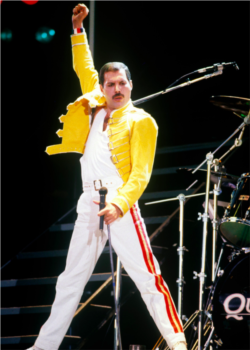
Соломон Волков: Той музыкой, которую я услышал в день объявления победы Байдена, выйдя на Бродвей, на улицы Нью-Йорка, стала песня, которую распевали здесь, в центре Манхеттена, на улицах спонтанно, – она принадлежит Фредди Меркьюри, основателю знаменитой группы "Квин", человеку с очень интересным происхождением, он парс – это народ иранского происхождения, который проживает в Индии. В большинстве это богатые состоятельные люди, они проповедуют зороастризм.
Александр Генис: Парс – это не национальность, а религиозная принадлежность – зороастрийцы. В Америке их больше всего в Калифорнии. Это крайне любопытная секта, потому что они очень странным образом распоряжаются своими покойниками. Они строят "башни молчания", где оставляют трупы, чтобы их растерзали хищные птицы и не осквернили огонь или землю, священные для парсов. Их очень мало, но они весьма успешны и зажиточны, вы совершенно правы. Но, к сожалению, это исчезающая вера, которая очень интересна с точки зрения религии.
Соломон Волков: Я, между прочим, лично знаю одного парса – это Зубин Мета, бывший главный дирижер Нью-Йоркской филармонии, зороастриец, очень колоритная личность. Долгое время он был бессменным дирижером оркестра в Израиле. Чрезвычайно привлекательная, экзотичная, яркая фигура.
Так вот Фредди Меркьюри сочинил песню под названием "Мы чемпионы", которая стала неофициальным гимном болельщиков по всему миру. Каждый раз, когда завершается важное спортивное мероприятие, спонтанно болельщики на стадионе запевают эту песню – повсюду, в том числе, между прочим, и в России. И эту самую песню распевали вовсю на улицах Нью-Йорка.
Александр Генис: Соломон, а как вообще вы относитесь к использованию музыки в политике? Вы же всегда связываете культуру с политикой.
Соломон Волков: Я сейчас сделаю признание в эфире: мне важна в политике не партия, а личность. Личность эту я оцениваю совершенно не с политических позиций, наверное, я не прав, но ничего не могу с собой поделать. Я оцениваю человека в значительной степени по тому, как он относится к классической музыке. Причем должен сказать, что в этом смысле мои надежды потом не реализуются в практической области. Вот пример – Картер.
Александр Генис: Да, Картер, которого мы уже сегодня вспоминали, действительно любит классическую музыку.
Соломон Волков: Очень. Он приглашал Горовица в Белый дом, он постоянно слушал классическую музыку – что может быть симпатичнее. Но ничего более унизительного, чем известие о том, как американцы полетели в Иран освобождать своих заложников и вернулись оттуда ни с чем, ничего более унизительного за все свои годы проживания в Америке я не испытывал. До сих пор вспоминаю с чувством жгучего стыда за такой очевидный американский военно-политический проигрыш. Моя любовь к Картеру испарилась в тот момент, увы.
Александр Генис: Я боюсь, что ваш критерий ошибочен, как ошибочен и критерий Бродского, который сказал, что человек, который читает книги, с гораздо меньшей вероятностью станет диктатором и убийцей. Это из знаменитой нобелевской речи Бродского. Я каждый раз, когда это слышу, вспоминаю Гитлера, у которого была библиотека в десять тысяч томов, многие из них – об античности, которую мы с Гитлером так любили. Это, конечно, не утешает: культура отдельно, а политика отдельно – что бы вы ни говорили.
Соломон Волков: Тем не менее, политические эмоции часто выражают себя через искусство, как произошло в данном случае. Песня Фредди Меркьюри прозвучала громко, выразительно и призывно по всему Манхеттену, она прекрасно передавала дух и настроения горожан, которые собрались в этот момент на улице. И мы именно этой песней завершим нашу передачу о послевыборном политическом пейзаже в Америке: "Мы чемпионы", Фредди Меркьюри.