
Translated material
Roof heating with thermal cable
Winter is a harsh season of the year not only for a person, but also for home. One of the most dangerous situations is an ice dam. Ice dams can form on the roof when temperature fluctuations.
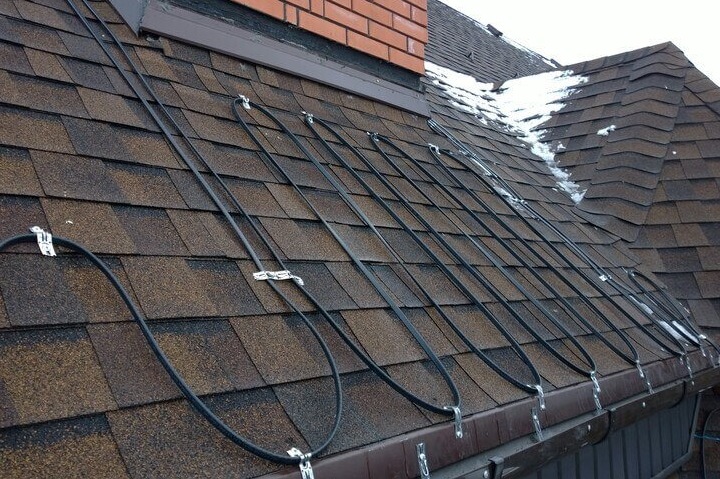
You can reduce the problems associated with ice dam using cable heating. The heat cable prevents the formation of ice, allowing melting snow and ice to drain into the drain pipe. If you have a private house and you live in the northern areas the purchase of a thermal cable can save you expensive repairs in the future.
The company of an electric drill will help to choose a heating cable that is suitable for your home. The choice of a large selection of thermostats and heating cables. Delivery in Ukraine.
Automatic sensors
The thermal cable for drains can have a number of built -in sensors. They measure the temperature and humidity in the room. The thermostats are built into the modern system to control the heating roof .
When the sensors are installed, the heat cable is turned off and turns on if necessary. This saves money because it consumes electricity only when there is ice cover in this area. With automatic sensors, you can leave the cable connected all the time and forget about it.
Less expensive cables do not have automatic inclusion / off sensors. Instead, you connect the cable when you want it to work and turn it off when you want heat to go through it. They work normally, but you are responsible for turning off the cable with an increase in temperature and its re -turning on, when the temperature again becomes below zero.
Cable length
Using cables for heating the roof and gutters, the length should be taken into account. Cables are not designed for pruning in size, so you need to buy a length closest to the one you need. Heating cables can have a length of three to 250 meters. Buy as much cable as you need - do not try to save when buying a shorter cable. Without the correct installation, the cable does not melt ice and snow properly.
Safety of materials
Some heating cables can be unsafe for use with certain materials, so you need to know the materials used for your roof, drainage gutters and drain pipes.
All heating cables selling the Odessa Electric Gap to the Electric Store are waterproof. WT a meter
The amount of watts per meter that generates the heat cable gives information about its heating power. A capacity of five to seven watts per meter is an average indicator that is suitable for most homeowners. For more difficult ice conditions, some cables for protection against icing can withstand 10 or more watts per foot. However, cables with higher power in watts per meter consume more electricity, which leads to higher costs.