
Translated material
Love anyone
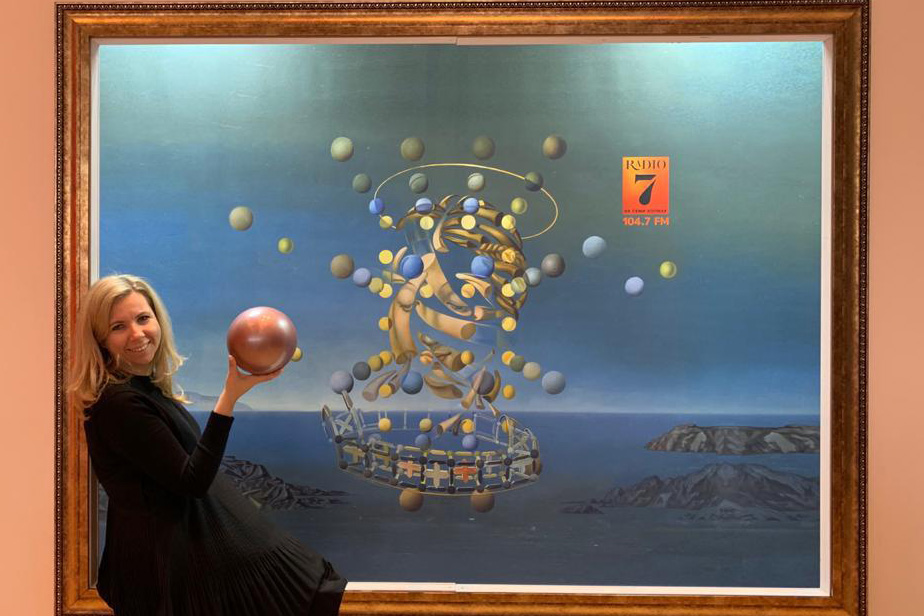
What adults tell children with disabilities about their features, how does this affect who they grow up, and how would they speak with a child with disabilities?
On the eve of the All -Russian campaign “Museum for all” , which will be held from December 1 to 13, 2020 to help museums be available to everyone, the writer Linor Goralik asked nine adults about what they were saying in childhood and what is actually worth (or not) to tell the child with features.
Yana Kuchina, Cerebral Paralysis
- What did they tell you about disability?
- Dad did not say anything, and now he does not say. Unless it can say instead of “you are beautiful” - “You are still beautiful with me.” With questions, I tormented my mother. Mom said that this happened, so you need to do a lot. Follow yourself. Go beautifully. Straighten the knees.
- What did you think?
- I thought about it all the time. Firstly, I was afraid that God was “implicated” in this. From childhood-no one notices that a child has been listening carefully to two or three years-it was heard around me: “For what the Lord punished” and “the Lord will forgive.” I began to think that I really offended him, and from this thought it was unbearably terribly terribly. And I tried to think that everything was not so. I'm just not quite a person, but, for example, a mermaid. Remember, Disney Ariel sang a song: I want to walk on the sand herself, I want to dance, I want to be a prince and even be a man? So I thought: I am just like her, the same problems. To become a real person, I need something, for example, a lot to do. And a miracle.
- How did this affect your life?
-Firstly, for many years I lived with the feeling that I failed myself. I still do not hear when they tell me that I am well done. What a well done, you have not seen how little I did, how I did not succeed in the most important thing. Now, however, it has become easier. I saw how small children are engaged in rehabilitation courses. I realized that I had done almost impossible and my mother was not always painful to look at me, sometimes she was happy and proud.
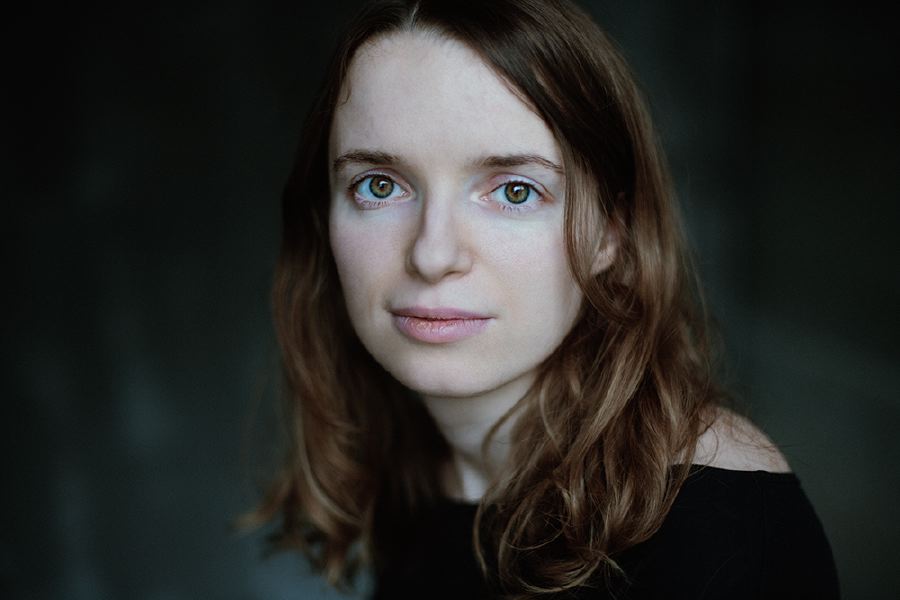 Yana Kuchina Photo: Olga Pav.
Secondly, because of my "mermaid" theory, I keenly felt the difference between myself and other people. I admired them, but for a long time I could not believe that we were on equal terms. And I can not only admire, but also angry, miss, trust. I was a very lonely person, but now, not so. Thirdly, in any situation it is easier for me to stay closer and do something. All the humility released to me went to cerebral palsy, and now - especially now, when, thanks to the rehabilitation, even cerebral palsy managed to “give back” - it seems to me that there are simply no hopeless situations, while it’s alive - you need to look for a way. And this, of course, is not a very realistic view of the world. But it helps in work.
- How should adults say to a child with disabilities?
- Nothing special, in fact. “You are good”, “You are your beloved”, “I see you are trying.” It seems to me that special children should be praised hundreds of times more. Every day they do not come out 90 percent of what they are trying to do. This is a given. There is no chance to praise. And do not hope that the child will begin to somehow divide himself and his diagnosis. This runny nose is easy to separate from yourself - today is, there was no yesterday, and cerebral palsy is just me. I don’t even go normally in a dream. Yes, adults are not angry not at the child, but on the diagnosis. They are sad not because of the child-because of the illness. "This is this cerebral palsy, because of it you do not put the leg evenly." But the children do not understand this. Lovely means because of them. Dot.
Special children over and over again ask me, adult, but the same, the same thing: "Do you think they love us anyway?" Every day answer: "Yes."
Svetlana Pavlikova, cerebral paralysis
- What did adults tell you about your features in childhood?
-I do not remember that there was a specific conversation, that is, so that I was imprisoned and began to explain how everything is arranged. But starting with seven to eight years, I myself asked why everything is so and why I was like that, and not the other, and they told me that well, you were born like that. Somewhere the doctors are to blame (my mother had generic complications-there was not enough oxygen), somewhere else, but generally know that you were lucky-the form of cerebral palsy is light (your legs walk, your hands act). They never made a terrible problem from this and they didn’t take care of me too much: it wasn’t that to keep me like a flower, but even vice versa: go for a walk, help around the house, from the fifth grade - come on, go to school yourself. Here you are - so what? You have to live.
- How what did you say then influenced you with the current one?
- On the one hand, how much my mother supported me, and how often she told me that I could do everything, influenced very well: I know that I can cope with everything. Mom said: you will be an adult - you have to live yourself, you need to be able to, come on, study. Now I understand how scared she was and let me go alone by bus, and something else, but I am very grateful to her.
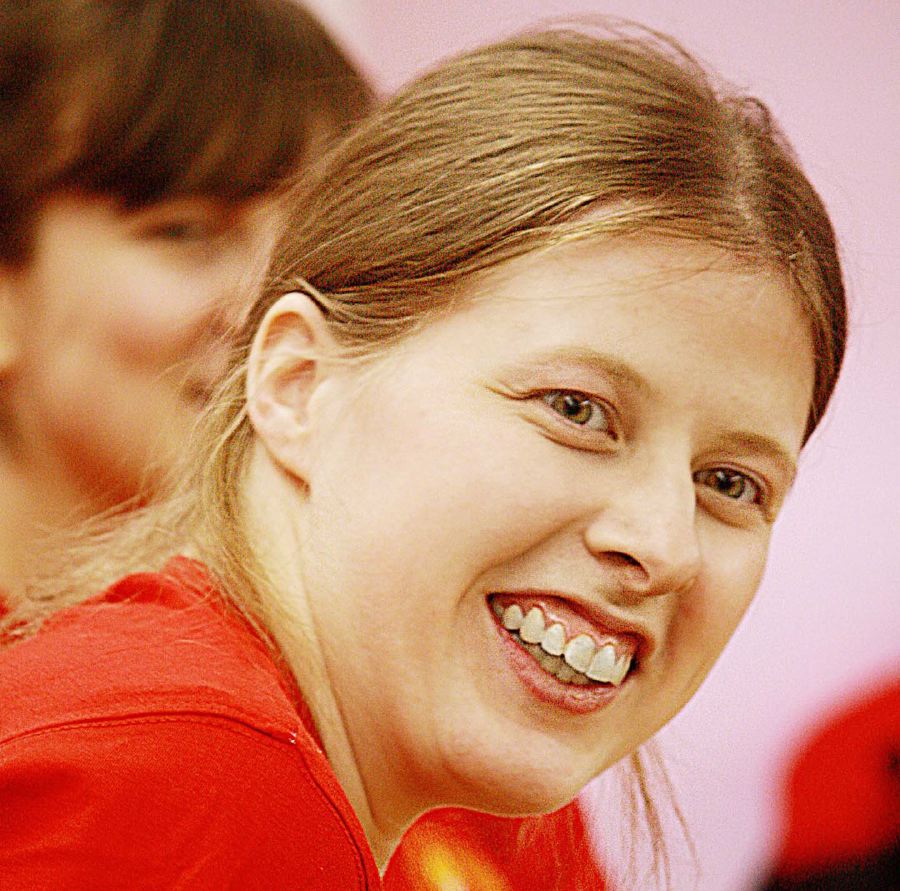 Svetlana Pavlikova Photo: Lyubov Sablina
There was no father in the picture, I can’t say anything here, but some loved ones treated me right away: “What, you will be difficult, you won’t be able to cope, drop, cut yourself, do not take, put it!” And these fears, of course, sometimes live in me and very much interfere, and it’s hard, of course. But I say to myself: here I am, I can do the same as all. It’s just that I, for example, have a different gait: you have a straight line, but I don’t have it. Well, what, think!
- What would you advise to say or not to tell children if you are a parent of a child with disabilities?
- Exactly this: no matter how scary for the child, you do not need to take too much, do not intimidate, no need to be stored like a flower. Everything that is possible, he must be able to himself, and it is very important to tell him what he can do, he will cope. Very important.
Tatyana Zhukova, vision disability, mental characteristics
- What did adults tell you about your features in childhood?
- I do not remember that in childhood my parents talked with me on the topics of health and my features. I eavesdropped in adult conversations (for example, mothers and aunts) that my vision problems are somehow connected with the fact that I was born ahead of time. Personally, they did not talk to me on these topics. Now I believe that it is very vain, but most likely they simply did not know how to talk on such a topic with a child.
- How what did you say then influenced you with the current one?
- Mom called what was happening to me “her cross,” as if she blamed herself in this. And I felt uneasy from this. I wanted to be like everyone else, normal, so that no one would consider me a burden or a cross. I did not want my mother to blame herself. In the teenage period, I became closed. She began to be ashamed of her strabismus, her eyes, her face. It was a difficult time. Sometimes, having come from school, I cried and thought that it would be better if I was completely blind and did not see myself.
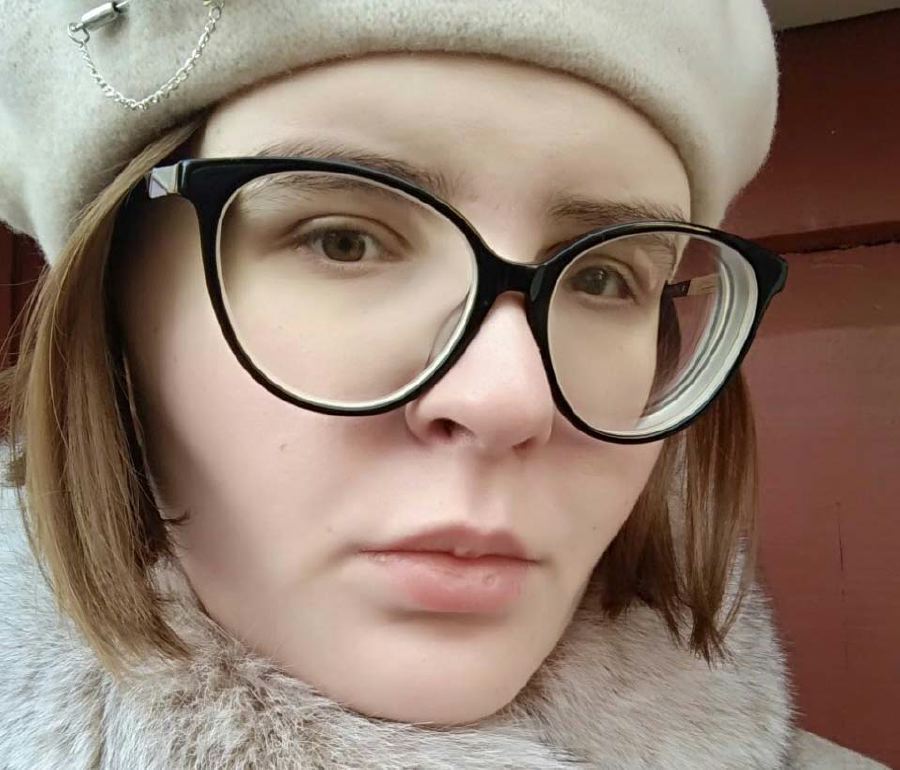 Tatyana Zhukova photo: from personal archive
Sometimes it seemed to me that because of my features, I did not know who I am real. Why do they call me or make any nasty things? I took pictures of pages from my medical card, then to find any information about the disease-so, in fact, I learned more and more in more detail. Now I am much easier to belong to my features. I think the ideas of the body positive helped me in this.
- What would you advise to say or not to tell children if you are a parent of a child with disabilities?
- If you have a child with features, I think that as it develops it is worth telling him about his diseases, about disability (if any). There is nothing terrible in this. The child must understand that he is loved by anyone. It is better not to hide everything in the closet and not think that it will be better. The child will grow up, and he will have many different questions. If you do not know where to start, then perhaps a qualified psychologist could help in such a situation.
Natalia Matsneva, vision loss
- What did you say about your features in childhood, as they were explained?
- When I was small, the concepts of “inclusion”, “affordable environment”, “integration” and so on were not yet developed. Therefore, my parents were far from the concepts of “disabled” and “special child”. For them, it was just an incredible tragedy. They could not calm and support me, as they themselves needed support. I was still born a healthy child, and my vision fell in front of my very school (such is the specifics of the disease), so it was just a blow. It seems to me that at that time they least of all thought about my feelings, but rather spared themselves for the fact that they had an unhealthy child.
- How did this affect you the current one?
-I believe that due to the insufficient study of my feature in childhood, I have formed an inferiority complex. I seem to always apologize to people for not seeing, or, conversely, I turn into a position of aggression in order to protect my psyche from this feeling of guilt.
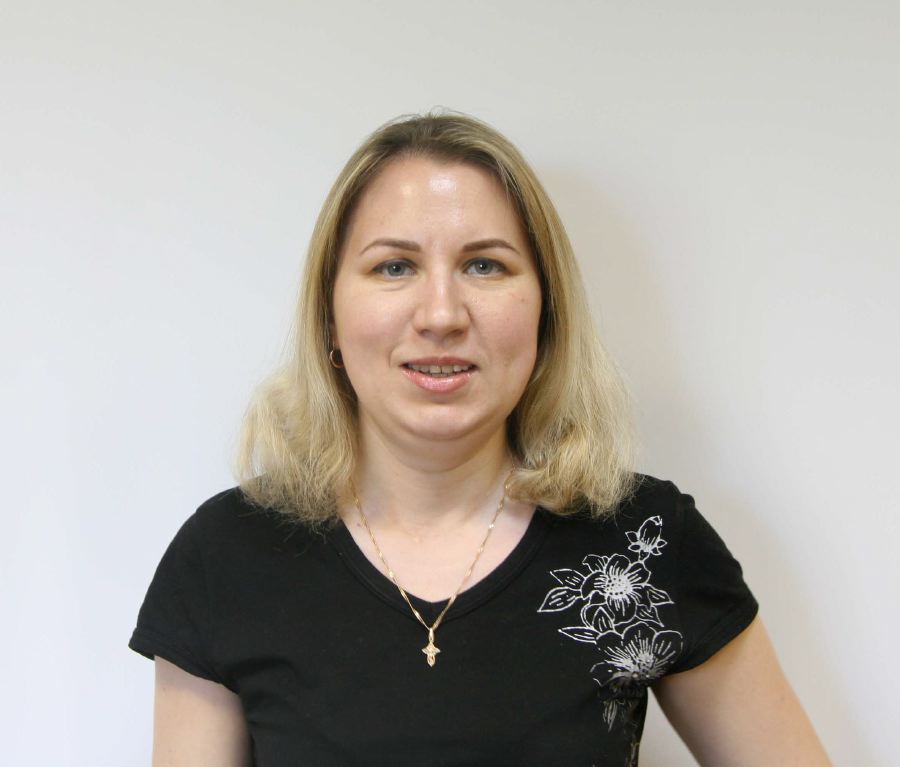 Natalia Matsneva Photo: From Personal Archive
While there was such an opportunity, I always tried to hide or somehow disguise my blindness (I just have a small remainder of vision, which is steadily fading away).
- What would you advise to say or not to tell children if you are a parent of a child with disabilities?
- Try to educate your children as ordinary: in no case do not create greenhouse conditions for them, not to protect from difficulties and obstacles. Let the child begin to face the consequences of his characteristics as soon as possible and learn to overcome obstacles, adapt, where necessary, and not to consider himself inferior. Demand from him fulfilling all the necessary duties. The child, of course, must know that his capabilities are limited, but should not regret himself: let him consider himself a full member of society with all the rights and obligations that are ensuring from this!
Sergey Parakhin, blind
- What did your parents and adults around you tell you about your features when you were little?
- To begin with, I was the only such disabled person in the family, and I had a birth injury, not heredity. For some time they did not tell me that I do not see, and the children are all similar, everyone goes to the hand. I played with my brother, with other children, crawling we found toys, at some point I did not even realize that I did not see. Then they told me that I had a problem, but they inspired that at the same time I am the same as everyone, although I have my own characteristics. Therefore, I went to the cinema with relatives (and they did not scare that I did not see), they read books aloud to me until I learned to use the font of Braille. I was not afraid to give me to the boarding school, because, unfortunately, there were no ordinary schools that could have taught the blind child. For five days, parents gave the children, took away at the weekend. There was no other opportunity. It was difficult for parents, but they did it-it was very important, I went to school at seven years old, this still allowed an education.
- How did the then attitude of adults affect you the current one?
- Probably, thanks to them I do not have a complex in relation to healthy people. It is no secret that adults can be shy of a child with disabilities even before other relatives. We did not have this: I talked with the sighted friends of my cousin, for example. Another thing is that I was a pet and, when I entered the boarding school, of course, in many respects I turned out to be ignorant-in some expressions, in the rules of communication.
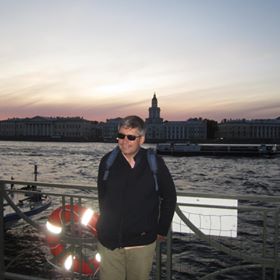 Sergey Parakhin Photo: From Personal Archive
The boarding school had to study all this. I did not immediately get to school, but fell into a certain prototype of kindergarten, a preparatory group, because the school principal said that it was impossible to immediately in the classroom: a boy is developed but home, but here it will be necessary to be in the team around the clock. He acted very correctly, because the preparatory year gave me a lot. Then it was much easier at school.
- What should adults should say and do when they have a child with features?
-Probably, after all, the child must be perceived adequately: on the one hand, perceived as equal, and on the other hand, not to overestimate his capabilities. There are parents who complex: "I have a special child, he needs to be shy." Other parents, on the contrary, have a myth about the superpowers of such a child, which is also not true. We are the same as everyone else. There are more smart, less intelligent, more brave, less bold, children with a quick reaction, with slowed down - like all ordinary children. It is necessary to really evaluate your child, soberly look at what he can, and develop him in the areas to which he has abilities. Pay attention, but provide independence and give decisions.
Alena Levina, progressive muscle dystrophy of Landuzi - Dezherina
- What did your parents and adults around you tell you about your features?
- I felt completely the same as other children basically, - my diagnosis did not manifest in anything, except that I had a spatula from my shoulder. Then, when they already diagnosed me, my father began to carry me to all sorts of shamans, doctors and so on. I was prescribed physiotherapy, massage. I also tried to come up with something, thinking that progressive muscle dystrophy, which is a genetic disease, can only be cured by genetic therapy, you can somehow stop or restrain something, I also tried to do something. There was little information, because neither Facebook nor YouTube were so developed at that time. Then I altogether in general. What did the parents say? When I was little, they didn’t say anything much. Basically, before the motor disturbances began to appear, and this happened in my twenty-two years-no one said anything. When it became clear that something was going wrong, then mostly relatives expressed their pity. I have not heard anything good about my disability in my life, except for any cliches about the vigor of the spirit and even periodic conversations that I am hiding behind my disability and so uphold one or another of my boundaries. But any passerby on the street can tell you about this - we have such a mentality in Russia.
- How did it affect you?
- Rather, overwhelming, because if I were given to develop as individuals, if they gave me more than my healthy brother, then maybe I would be more successful today (by my inner standards). If, given that it was hard for me, my parents supported me ... And instead it was: “Alena can’t be nervous, so we will not scandal and arrange stabbing, otherwise we could”, “Alena needs to help financially because she cannot earn, and not because she needs a certain support and handicap.” There were good periods, for example, when my brother drove me to the institute, before we had deteriorated relations with him.
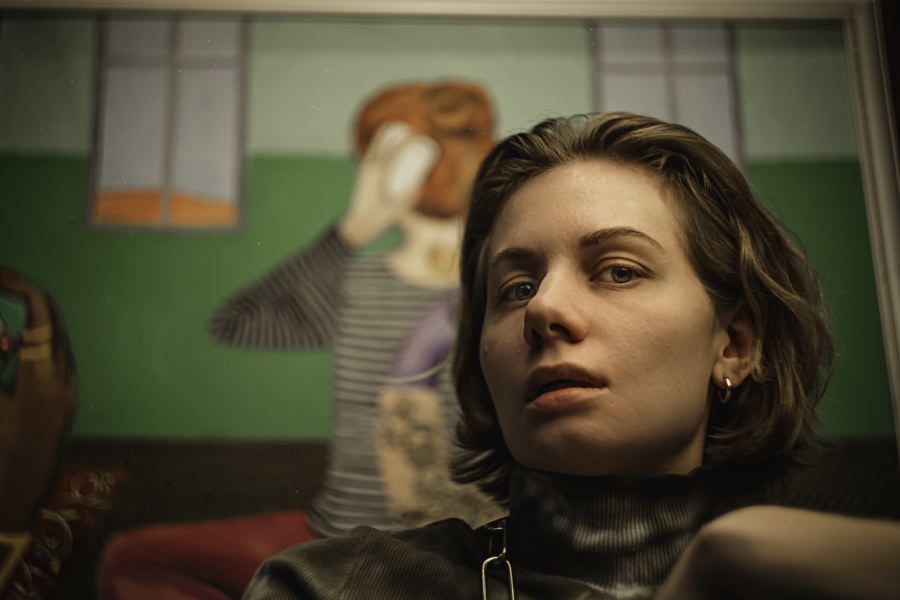 Alena Levina Photo: Julia Barskaya
It’s also hard: you are psychologically serving a healthy uncle, who believes that you are more lucky than he is. Now I am thirty -one years old, my disability begins to progress, relatives begin to realize what is happening. Recently, I found out that, according to my mother, if not for my illness and nerves, then I would go far, ”my brother said. Such unnecessary information, you do not wait for it, but you still tell you. But, in principle, I am an independent person who does not depend on anyone: the words of my parents did not particularly affect me. Of course, it is unpleasant when you are driven by shamans at thirteen, I would not have wished you anyone.
- What would you advise parents of children with disabilities - what can they say and what not to say?
- I would advise them to find support, first of all for myself. To accept the situation, to join the society of progressively thinking parents of children with disabilities (mostly women are in them, but there are men). Look at the foreign experience - not the countries of the third world, but Scandinavia, for example: what they do, how do they relate to children with disabilities, what verbal and physical practices are used when communicating with them. At some point, sympathy can be shown, but in some-no. I have no children with disabilities, but I would do this: I would first learn. Yes, this is hard, but I would try to learn to make sure that my child was not bad from my words. And it is also important to always assume that a child is a person, a person; Disability or not disability - it does not matter. From birth to perceive the child as a person. Not some kind of Susy.
Mikhail Veselov, hearing loss
- What did adults say about your features in childhood? How were they explained?
- When I was two years old and it became clear that I had deafness (the fourth degree of hearing loss), my mother found a wonderful superdologist (I will take the opportunity and say that her name was Lidia Markelovna Plaksina) and, according to her advice, began to put me speech, teach me to understand visually and teach reading. Of course, they made it clear to me that I did not hear. Like, we must train, learn all this, otherwise in any way. It is interesting that the relatives numerous at that time never told me that I was deaf. It is funny that in childhood I perceived my deafness as a granted and did not suffer much, only perplexed when I got into certain situations that I did not hear and did not understand something. But I recalled another moment: I return home from school (I studied in the third grade), my father meets and says: “You walked on the street now, and the guys on the other side of the street shouted:“ Misha, Misha! ” - And you didn't even turn around. The guys were offended! " С тех пор я по улицам военного городка, где мы жили, ходил, неосознанно посматривая во все стороны: вдруг меня позовут? Полезная привычка получилась.
— Как тогдашнее отношение взрослых повлияло на вас нынешнего?
— Я свою глухоту воспринимаю именно как инвалидность. Все эти толерантные благостные сопли по поводу «безграничных возможностей», «особенностей развития», «человек может все, главное — желание» воспринимаю как фальшь и потакание комплексам. I am a disabled person. Я ограничен в некоторых возможностях.
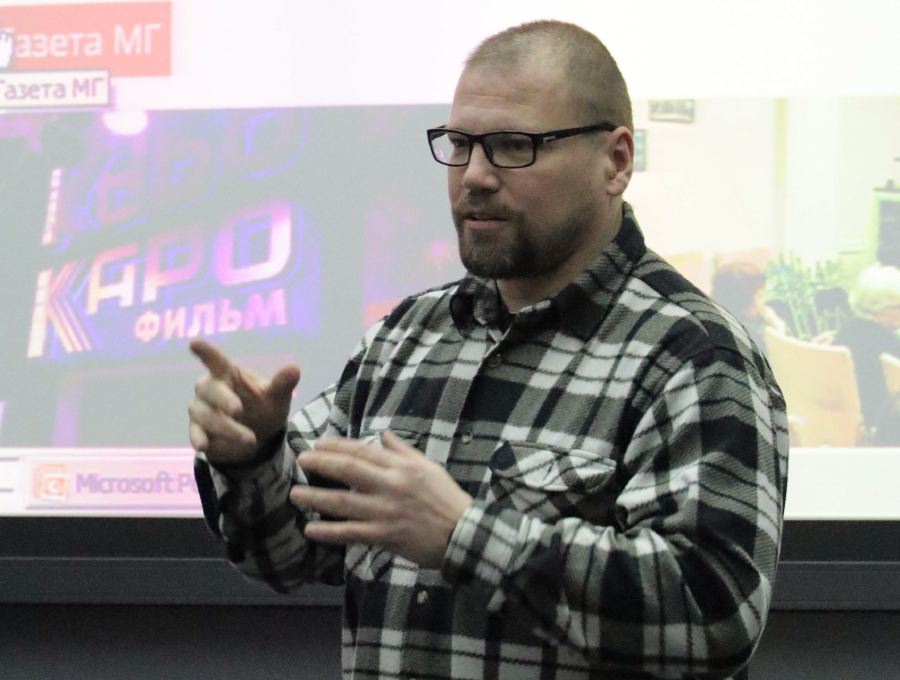 Михаил Веселов Фото: Антон Зеленин
Может быть, если бы не глухота, у меня лучше бы карьера пошла, работа. Но трагедии из этого я особой не делаю. Ну не повезло, глухой. С моим видом инвалидности жизнь могла бы хуже сложиться, так что все норм, по большому счету.
— Что бы вы посоветовали родителям детей с инвалидностью — что стоит (или не стоит) говорить ребенку о его особенностях?
— Надо говорить ребенку об его инвалидности. Главное — верный тон, чтобы не было жалости или пренебрежения. Но надо показать ребенку, что нужно больше тренироваться и учиться для компенсации своего недостатка. Хотя… Когда мне было пять-шесть лет, мне это было трудно объяснить, я заниматься не хотел и получал за это. А сейчас благодарен матери за то, что не жалела меня и не отказывалась от занятий по развитию речи и восприятия. Так или иначе нужно, чтобы ребенка окружали адекватные взрослые, воспринимающие его инвалидность как просто факт, без унижения и пренебрежения. Но в то же время тепличные условия нельзя создавать, ребенок должен сталкиваться с теми или иными досадными случаями, вызванными его особенностью, — в школе, на улице, в работе. Это позволяет вырабатывать те или иные полезные навыки и отбивает ожидание, что весь мир ему должен лишь потому, что он инвалид.
ДЕНИС ДАВЫДОВ, человек, передвигающийся на коляске
— Что вам в детстве взрослые говорили о ваших особенностях? Как их объясняли?
— В детстве я был очень подвижным и общительным ребенком, и, пожалуй, это сыграло решающую роль. Моя мама никогда не выделяла меня и мои особенности, она всегда готова была принять ребят, которые приходили в гости. Когда появилась первая коляска, я сразу же захотел гулять. Сначала мама боялась отпускать меня одного или с друзьями, но я был настойчив. Родители всегда принимали моих гостей, ребят без инвалидности, и я считал себя обыкновенным, таким же, как и они.
— Как это повлияло на вас нынешнего?
— Наверное, позиция родителей помогла мне. В смысле все мое окружение, наверное, и не видит во мне инвалида, я скорее могу пошутить над своей коляской, нежели впасть в грусть и переживания.
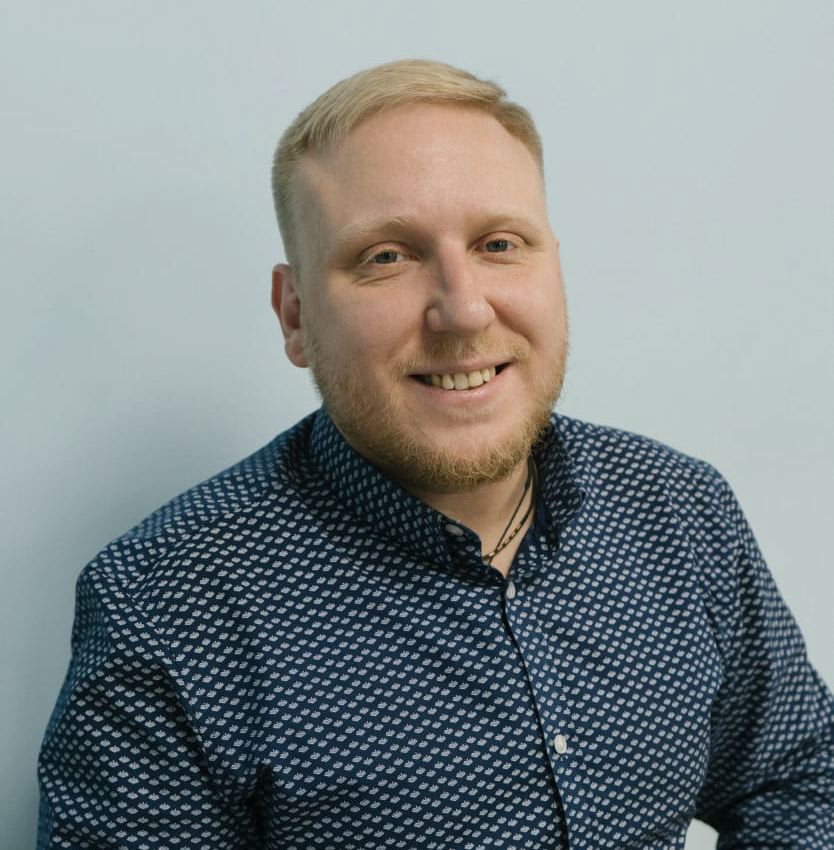 Денис Давыдов Фото: Ксения Новоселова
— Что бы вы посоветовали родителям детей с инвалидностью — что стоит (или не стоит) говорить ребенку о его особенностях?
— Я всем родителям могу посоветовать две вещи: растить в любви и заботе своих любимых детей и не бояться их желания общаться со своими сверстниками: движение — это жизнь.
ЭММА КУМУРЖИ, слабослышащая
— Как вам в детстве взрослые объясняли ваши особенности?
— Такое, наверное, нет смысла спрашивать у тех, кто не слышит с детства и кому сейчас за двадцать пять. Для них это естественное состояние. Почему у слона большие уши и длинный хобот? Да потому что он такой. Тут вероятнее обратная ситуация, когда глухой ребенок из семьи слышащих (без русского жестового языка) впервые попадает в школу слабослышащих, где 90 процентов на жестовом языке. Вот тогда трудно.
— Как ваш детский опыт повлиял на вас нынешнюю?
— Поскольку глухота — мое естественное состояние, это ограничение просто учитывается. Точно так же человек, носящий очки, учитывает это в своей жизни.
 Эмма Кумуржи Фото: из личного архива
— Что бы вы посоветовали родителям детей с инвалидностью — что стоит (или не стоит) объяснять ребенку касательно его особенностей?
— Не надо подчеркивать особенность, носиться с нею. Ну кто-то из детей крепенький, танцором не станет. Кто-то вымахал, и теперь его не возьмут в подводный флот. Важно воспитать личность. Технические и медицинские средства вторичны, они играют лишь вспомогательную роль.
The material uses links to publications of social networks Instagram and Facebook, as well as their names are mentioned. These web resources belong to Meta Platforms Inc. - It is recognized in Russia as an extremist organization and is prohibited.
The material uses links to publications of social networks Instagram and Facebook, as well as their names are mentioned. These web resources belong to Meta Platforms Inc. - It is recognized in Russia as an extremist organization and is prohibited.
акции искусство культура люди с инвалидностью музей