
Translated material
Don Juan left, but promised to return
The Russian entertainment industry today can no longer give spectacles
Since March, the industry has been operating conditionally. First of all, this applies to projects with the participation of foreign artists. Tours were canceled, concert venues are closed or limited, and contracts were canceled. More than half a million people are sitting without work. The direct loss of the industry, according to the most conservative estimates, is 13-15 billion rubles. If nothing changes, the industry predict the collapse.
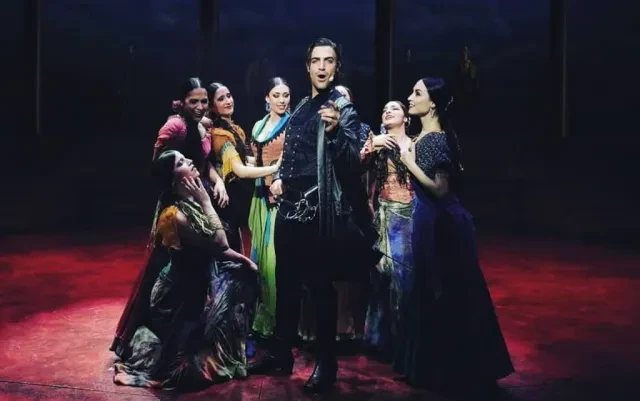
On March 17, 2020, in Moscow they were waiting for the premiere of the Franco-Canadian musical Don Juan. Tickets for all 10 performances were sold almost completely. The day before, on the stage of the State Kremlin Palace, they finished the installation of the scenery, but still rebuilt the sound, drove the costumes - these were the very pleasant troubles that precede the premier. Exactly the day before her, it all ended. On March 16, in the midst of the General Graduation, it became known that the conduct of cultural events of over 50 people in Moscow is prohibited. The previous ban on March 10 was limited to five thousand spectators.
The incident was almost the only case in the Kremlin Palace, when large -scale decorations (unloading and installation took two days) were dismantled before the start of their operation. But before, the artists wrote back to their background to the audience: they say, drove from all over the world, waited for the meeting, do not say goodbye, we will definitely return. And they performed one of the main hits of the musical. And then the nerves could not stand it - tears: on stage and behind the scenes ...
The artists packed the suitcases. The organizers accelerated tickets for the entire troupe. To Russia, the musical participants in Italy, Spain, France, Canada, the USA and Germany. The borders between the countries were closed rapidly, it was necessary to have time.
With the organizers of the Don Juan project (in addition to him, they brought to Moscow the French musical Romeo and Juliet and the Franco-Canadian Notre Dame de Paris) we meet in a cafe. They are not invited to the office, there are now empty and dull. For 8 months without work, my interlocutors seem to have not yet learned how to slow down. On the move, they begin to discuss the last proposal from France. It is about the deadlines - this is now the most relevant topic for the organizers. Dates are shifted, the intention to show the musical in Moscow remains unchanged.
They are reluctant to talk about financial losses. The moral side of the issue is much more noticeable to them. And literally with one phrase, French colleagues designated it, calling the day after the cancellation of the performance: “Guys, in our industry this is the most dramatic abolition of all that they can be.” You can share emotions for a long time, but I still ask about real losses. After all, when the ban comes out, say, a year before the event, this is one story. There are no injections as such, and therefore losses are not so noticeable. A completely different thing if the site is closed on the eve of the premiere, when all the necessary investments are 100%made. In our case, funding began a year and a half before the arrival of the musical to Moscow. The Russian side in this project was a co -producer. On the overseas scene, Don Juan went successfully until 2006, and then was curtailed. They restored the performance on the old notes with the help of invited directors and directors. Money was invested in the development and improvement of scenery, in the arrangement of music, casting of actors, renting rehearsal halls in Paris and Madrid. All rehearsals were paid to artists.
“It’s a shame to hear,” the organizers admit, “when they say: well, what is so terrible, the musical did not take place, you simply did not earn money. Well, yes. Except for millions of investments. ” Only on the Internet there was a year’s advertising for a year, and there were still television, radio, outdoor advertising, hotels paid for a week and a half (the troupe along with technical personnel and management is almost 70 people), flights, transportation of equipment from France and installation, a creative team ... A total of about 150 million rubles. And these were those costs that are impossible to return.

“They went to us when the pandemic has already begun,” says Anna Vashchina, an executive producer of the Franco-Canadian musicals in Russia. - We were traveling from different places, they were afraid (several people refused at the very last moment, they found replacement already in Moscow). And they went, in fact, to quarantine nowhere. Of course, we paid people a fee, if only because they got. We even gave per diem artists. But just their producer of the project returned to us entirely. In the contract, these points are not spelled out in any way. There was simply no force majeure associated with pandemia. ”
It turns out that no one is safe from such circumstances.
Fear, as a rule, in specific positions. For example, in case of artists illness. And so that from pandemia - there is no such thing in world practice.
The artists could not fly out, the hotel does not accept the guests, the concert venues are rolled up, the boundaries between the countries are closed - how to insure the problems of the whole world in so many directions? The equipment was brought to Russia, as a rule, foreign trucks were brought: in Paris they took a load, unloaded in Moscow - and immediately back. Each truck costs about 10,000 euros. We multiply by seven (by the number of cars) and by the currency course - about 7 million rubles are released. After the announced Lockdown, there were no backward options for sending equipment back in principle, so they left in Moscow. And in order to transport it to the storage warehouse, I had to order transport already on the spot and pay for it additionally.
And the payment of storage of equipment fell on Russian organizers. Soon they will have to invent how to send individual components abroad. Korea has already opened, and “Notre Dame de Paris” is going there, who has one owner and general management with Don Juan.
The ability to work at 25-50% for the concert and entertainment industry is not a way out. To reach the payback point, it is necessary to sell at least 80% of tickets.
But let's say, the organizers decided to hold an event at a loss. How to determine who will get into the happy 25%if the whole hall is sold?
True, the concerts got rid of this choice. The rules are today: one can-a little bit, the other is impossible-at all. Large sites, primarily the Kremlin Palace, are closed - 100%. Needless to say, how many people are left without work! From the Russian side, as a rule, 30–35 people are involved in musicals: management, accounting, technical personnel, translators, administrators. The bulk is freelancers, and unemployed since March. In this mode, they will live until June 2021, if they are lucky.
Before the pandemic and the introduction of restrictions, my interlocutors carried out large projects on average once a quarter, and not only musicals. Now there are no projects at all. The industry costs the eighth month. And when they remove the prohibitions, everything will have to be started again: re -issue and pay for visas, buy flights and book hotels, pay for advertising again. The same project will cost one and a half times more. If they go to zero (that is, they return the invested), it is already good. But in this situation they are ready to work. The main thing is that at least some horizons are identified, because touring projects with foreign artists do not turn out in a couple of months. My interlocutors on the fingers explain what the essence and complexity of the process is. For example, a large tour of the musical around the world, which includes, say, Moscow, St. Petersburg, Seoul, Beijing, Shanghai, Hong Kong, Montreal, Istanal and another 30 large cities, can gather at least a year. It is extremely difficult to pick up 7-10 free dates from a large site if this is not done in advance.
“There is a large Chinese market, Canadian, European,” continues Anna Vashchina. - Artists cannot sit and wait for Moscow to “open”. They have only a week here, and they can go to China for three months (in China, Korea and Taiwan the largest number of fans of the French musicals. - O.P. ). Everyone must constantly be in motion, move from one country to another so that people work. After all, everyone is sitting on long contracts. In this sense, it is easier for us. We have cyclic projects, we have cyclic, we are busy for them for 3-4 years in advance. The musicals "Mozart. Rock Opera and Romeo and Juliet. Now it all depends only on the removal of restrictions. ”
And from the audience. There was a global force majeure, my interlocutors say, the rules of the game are constantly changing. We have to transfer the event, and there is no guarantee that the next date will be final. For the same reason, it is impossible to exchange the purchased tickets.
Gayane Shiladzhyan
Head and producer of the Symphony Orchestra of Moscow "Russian Philharmonic"
“What have we achieved? They repelled from people the desire to go to concert halls "
- Since March, we have flew more than 30 projects. It was just a disaster when an artist from Brazil, the star flew with musicians from Rio de Janeiro. Everyone rehearsed, and the next day we were not allowed to go on stage. This happened on March 12, then the order only appeared to minimize international contacts. Then there were restrictions and endless transfers. And my foreign stars participate in all projects. I adapted some with Russian performers. But there are projects that have flown, and I will not do them with anyone else. These are “Golden Hits Rock” and Barcelona & Queen. Show Must Go on, created with the blessing of Montserrat Caballe. Montserrat herself handed us the rights to execution, she participated in the casting.
The colossal problem is that we have already spent most of the funds on advertising, this is an irrevocable part. The money was invested, and the viewer was lost. What to do with people who have already bought tickets? We were told that if you sold more than 25%, return absolutely everything, and let the audience buy again. But people now have no purchasing power. If earlier we sold the six thousandth hall, now we can hardly sell 100 tickets for top concerts. The ABBA Gold Hits project in the Kremlin collected a full house, and now 98 tickets were bought in the house of music.
It is impossible to even do those projects that have been with us for years. What have we achieved? They repelled from people the desire to go to concert halls and buy tickets. There are nowhere to get positive emotions to a person from today, and people are in such deep depression! A trip to the theater or concert hall is, perhaps, the only outlet. But you open the poster - and it becomes terribly: cancellation, transfer.
Thank you very much to the people who support us and do not require the throat of the return of money with the knife. Otherwise, there would be a complete collapse!
Alexander Nachkubia
Organizer of the exhibition "I, Andy Warhol"
"We are working on the conservation of the exhibition"
- The cost of our entire project exceeded $ 2 million. The exhibition was supposed to last until January 10, 2021, which means that we did not stand for about two months. In general, we planned to open back in April, but pandemic prevented. In February and March, when the collection was collected, the news from Italy was just like reports from the front, and we brought most of the works from there. And this, of course, very seriously affected the cost of the project: at that time all logistics services went up by an order of magnitude.
We did not close the project, we suspended it until the moment until the relief begins. There are practically no losses in the collection. For example, work from Bratislava after us should be provided to another Warhol exhibition in Europe. But since that exhibition was also transferred for an indefinite period, this allowed to agree. All, fortunately, understand the current situation. Today, shoot, collect and carry work back is very costly, and there is no sense in this. They will lie in the same way, only in another storage. So now we are working on the conservation of the exhibition.