
Translated material
Pandemia reached the Primate
The death of the Serbian Patriarch: the role of the political factor
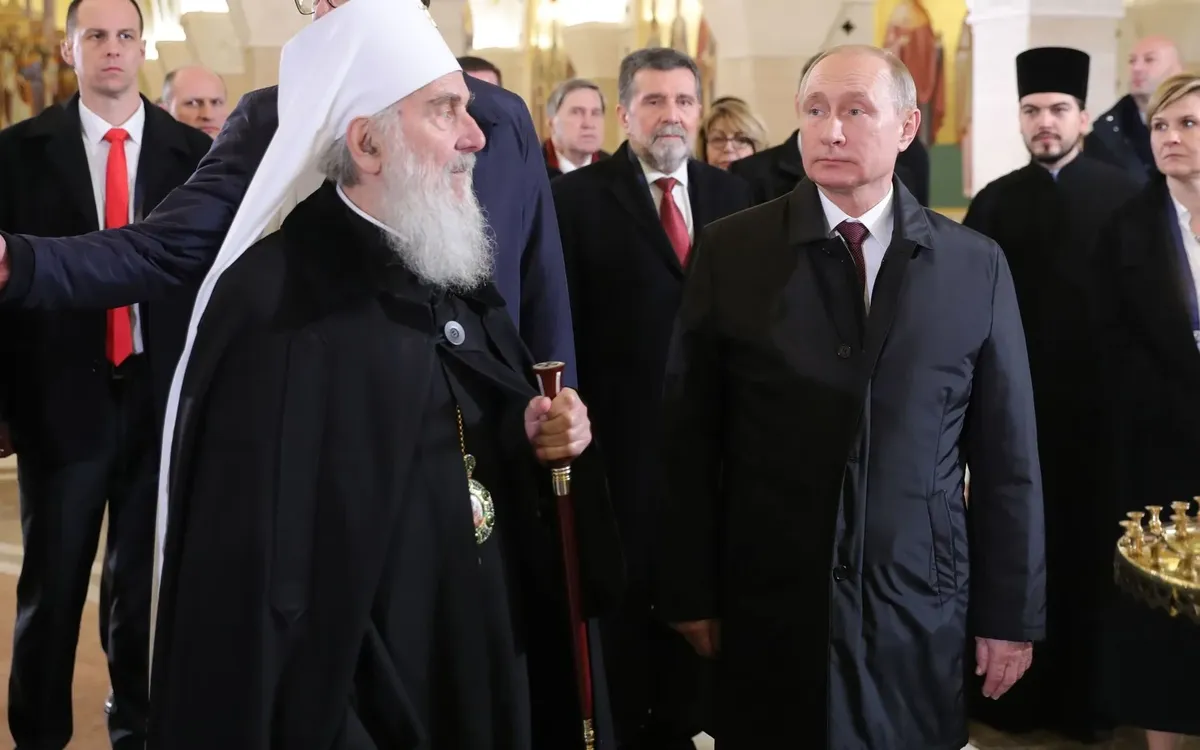
The 90-year-old Serbian Patriarch Irenaeus (Gavrilovich) became the first Primate of the Local Orthodox Church, whose life Koronavirus carried away. The death of the Patriarch followed at 7 a.m. on November 20. On the same day, his Moscow fellow Cyril turned 74 years old.
The Primate of the Russian Orthodox Church is reliably protected by the stiff self -isolation regime at the Skit object, protected by the FSO. The Serbian patriarch from coronavirus did not hide.
According to one version, the infection could occur on November 1–2 in the capital of Montenegro Podgoritsa, where the Primate arrived at the burial of the local Serbian Metropolitan Amphilochium, who died from ... coronavirus. The representative delegation of the Moscow Patriarchate, headed by the Ukrainian unit, was also attended by those services, Metropolitan Anthony.
The shocking feature of these worships, which gathered thousands of people, was the complete and categorical violation of all sanitary norms, which were so carefully planted by the authorities of Montenegro. This little Balkan country, whose budget was mainly replenished due to tourism, and this is not a very positive reputation-it took 5th place in the world in the number of severe cases of Covid in the per capita. During the funeral service, the amphilochia was in an open coffin, people were applied day and night to his body.
Among them was both the Patriarch and the temporarily managing the Montenegrin Metropolitan Bishop Ioanniki, who, of course, a few days later herself went sick with coronavirus.
After the funeral service, which, among other things, was the nature of the political demonstration, an outbreak of incidence began in Montenegro. Already on November 13, the authorities introduced a commandant hour and tightly limited the work of public institutions. And on November 15, the infected Patriarch Irenaeus was transferred to the artificial ventilation of the lungs, and his heart, whose work from that moment was also supported by hardware, refused. Urgently from Moscow to Belgrade landed a group of military doctors with extensive experience in treating severe covid patients. But they could no longer help the 90-year-old old man-his death was only a matter of time. It is no coincidence that the first messages about her in the Serbian press appeared already on the 19th, when the doctors continued to maintain the life of the patriarch's body at the autonomous level.
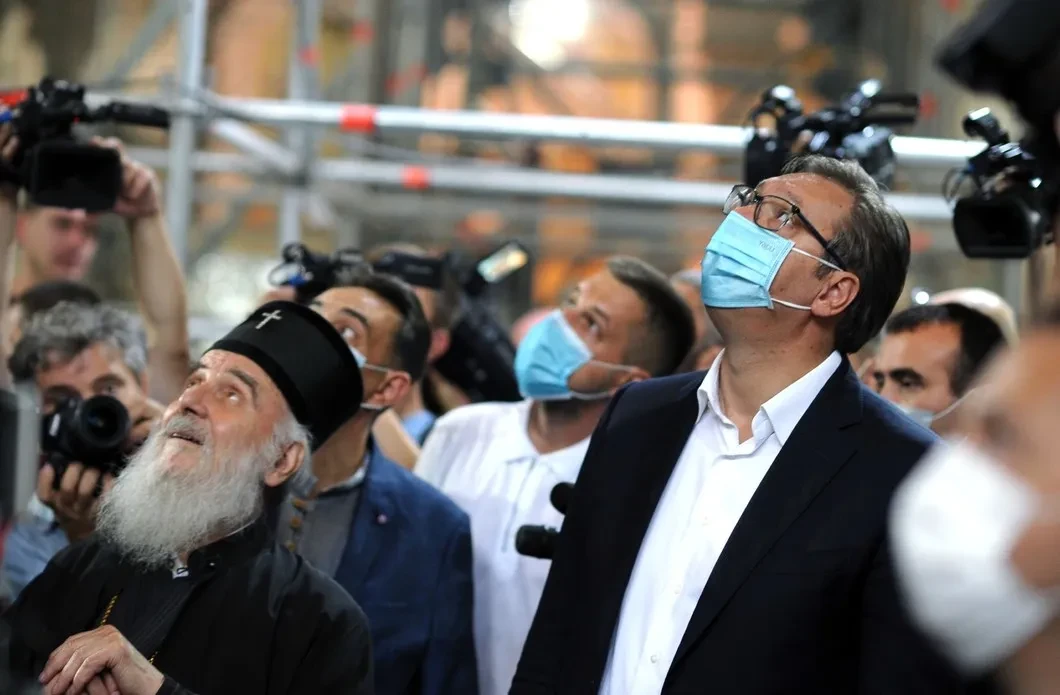
If the version of the infection in Podgoria is true, then a number of sad conclusions will have to be drawn from this. The last year of life was for the 82-year-old Montenegrin Lord Amphilochery a year of dubious political triumph. If earlier he used the reputation of the ascetic and the scientific theologian, then for 8 months of 2020 he plunged into politics with his head. According to his blessing, and often with his direct participation throughout the country, demonstrations (“lithium”) were organized against the new Montenegrin Law on Freedom of religion, which was read by a completely different subtext.
The law has become a plausible pretext for mobilization on the eve of the elections of the Provery forces in Montenegro.
These forces do not accept the European -Atlantic course of the country, by and large they do not recognize its independence, dreaming of the revival of "Great Serbia" under the auspices and funds of Russia. As the Novaya already wrote, a considerable “cache” of unknown origin was invested in the organization of riots in Montenegro, which was also delivered along the mountain paths, which are poorly controlled by the small Montenegrin border service. As the protest moods heated, the Amphilochia directly began to curse President Milo Dzhukanovich and call on his flock to vote for the Prosergian Alliance “for the future of Montenegro”.
As a result, the three Proserg parties took in the parliamentary elections on August 31 a small majority in parliament, which is enough for the actual removal of Dzhukanovich from making key decisions. Amphilochia served the thanksgiving prayers and expected the abolition of the law on the freedom of religion unprofitable for the Serbian church. The new government, however, has not canceled it, although it promises ...
But back to Patriarch Irinea. Traditionally, in the Russian Orthodox environment, it is customary to treat the Serbian patriarchs with special respect. This “brand” strongly strengthened the Patriarch Pavel, who had really led the extremely modest lifestyle in 2010, went to the temple on a trolley, distributed all his money to the poor. Patriarch Irenaeus against his background looked somewhat more “elitist”, although compared to the Patriarchs of the Moscow and he was an unattainable ideal of modesty and asceticism. In his career there was a little experience of foreign ministry (he studied at the University of Athens), and tough church conservatives considered him a liberal. Contrary to the tradition of the Serbian Church, formed by the bloody history of the relationship of the Serbian and Croatian peoples, Irenaeus was quite calm and even friendly to the Catholic Church - albeit rarely, but participated in ecumenical prayers and was even awarded the Catholic Foundation of the Pro Oriente, promoting the Mission in the East. On the most painful issue for the Serbs, Kosovsky, he also held a restrained and balanced position.
The retention of the Serbian Patriarchate in the orbit of its influence is a priority question not only for the Moscow Patriarchate, but also for the Kremlin. It is believed that Serbia remains the last ally of the Russian Federation in Europe, although the Serbian authorities themselves do not show stability in this matter, periodically talking about the associated membership of the country in the EU (this status has, for example, Ukraine). In turn, the Serbian Patriarchate, financially dependent on Moscow, supports the positions of the Russian Orthodox Church in the international arena - does not recognize the autocephaly of the Church of Ukraine and condemns the intentions of the Patriarchate of Constantinople to provide the same autocephaly to the “schismatic” churches of Northern Macedonia and Montenegro. But in the position of the Serbian Patriarchate, too, there is no the level of stability that Moscow needs. For example, he did not support the rupture of canonical communication with the Patriarchate of Constantinople, who proclaimed the Russian Orthodox Church in 2018, thus suspending the global split in world Orthodoxy, which Patriarch Kirill was ready to go.
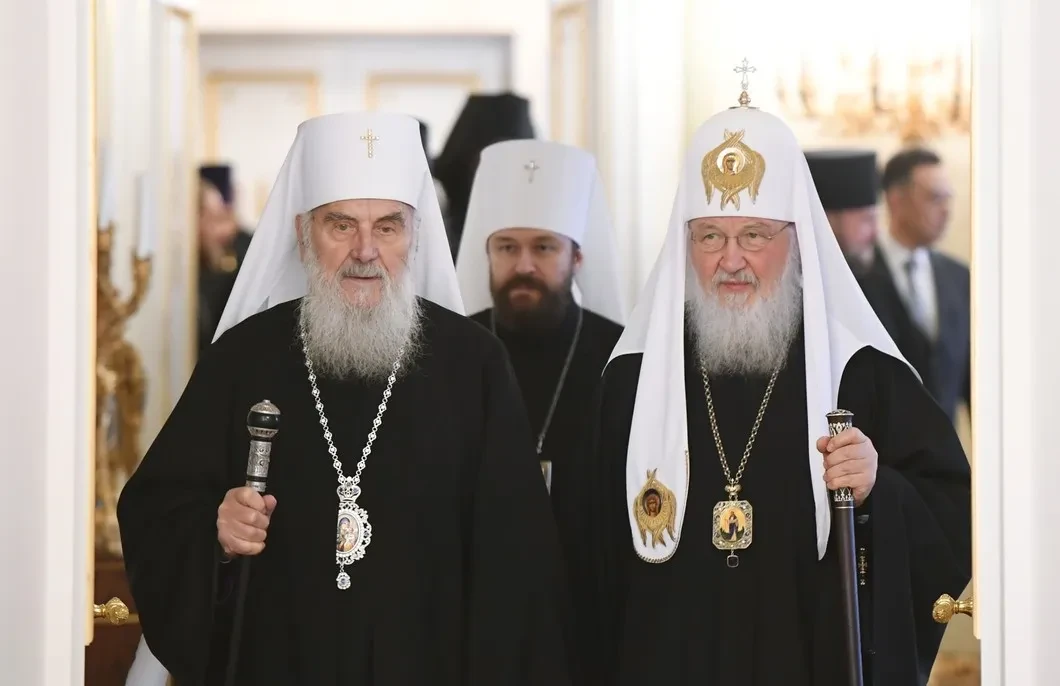
According to preliminary data, the Metropolitan of the Patriarchal Thronage in Belgrade will be the Metropolitan of the Dabro-Bosnian chrysosta (Evich), which has a moderately promise orientation. However, the most likely candidate for the Patriarchal throne is called the Metropolitan of Zagreb and Lyublian Porfiry (Perichi) - much more pro -Western.
Perhaps, according to the tradition of the Serbian church of the Patriarch, the lot will determine (this is how Irenaeus was elected). A similar method of election, suggesting not only the vote of sinful people, but also, as it were, direct divine intervention, established the Local Council of 1917-1918 for Moscow patriarchs. No one canceled this decree, but Patriarch Kirill, still being a locomotive, categorically excluded his use under his election in 2009. By the way, this is another reason for the special respect of the Serbian church from the children of the Russian Orthodox Church ...
So far, the question remains unclear: who can be directed to the burial of Patriarch Irenaeus of the Moscow Patriarchate.
With a rigidly authoritarian model of her leadership, built by Patriarch Kirill, his no less rigid self -isolation leads to the paralysis of church administration.
In addition, the highest hierarchs are frankly afraid to become infected. Just today, on the birthday of Cyril, Koronavirus took the life of one of his closest associates, the former deputy chairman of the department of external church ties, and now the Metropolitan of the Tatarstan Feofan (Ashurkova). It has already become the 7th hierarch of the Russian Orthodox Church, which did not survive the pandemic.
It is reliably known about the infection of two more Primate of the Local Churches (also in very advanced years) - the Archbishop of All Albania Anastasia and the Archbishop of All Heronym. Both are hospitalized in the same hospital Evangelizmos near Athens. Data on infection among the episcopate of the Russian Orthodox Church is strictly classified. According to unofficial information, now about 40 bishops are sick.