
Translated material
How meat became meat
"Special meat" Agustine Busterriki: a book for the weekend from Ekaterina Pisareva
From the editorial office
Once a week on Fridays, Ekaterina Pisareva, the chief editor of the MyBook book service, including 260 thousand publications and 50 thousand audiobooks, will know with knowledge not only about the most interesting new products in 2020, but also choose those that can be read quickly and with pleasure.
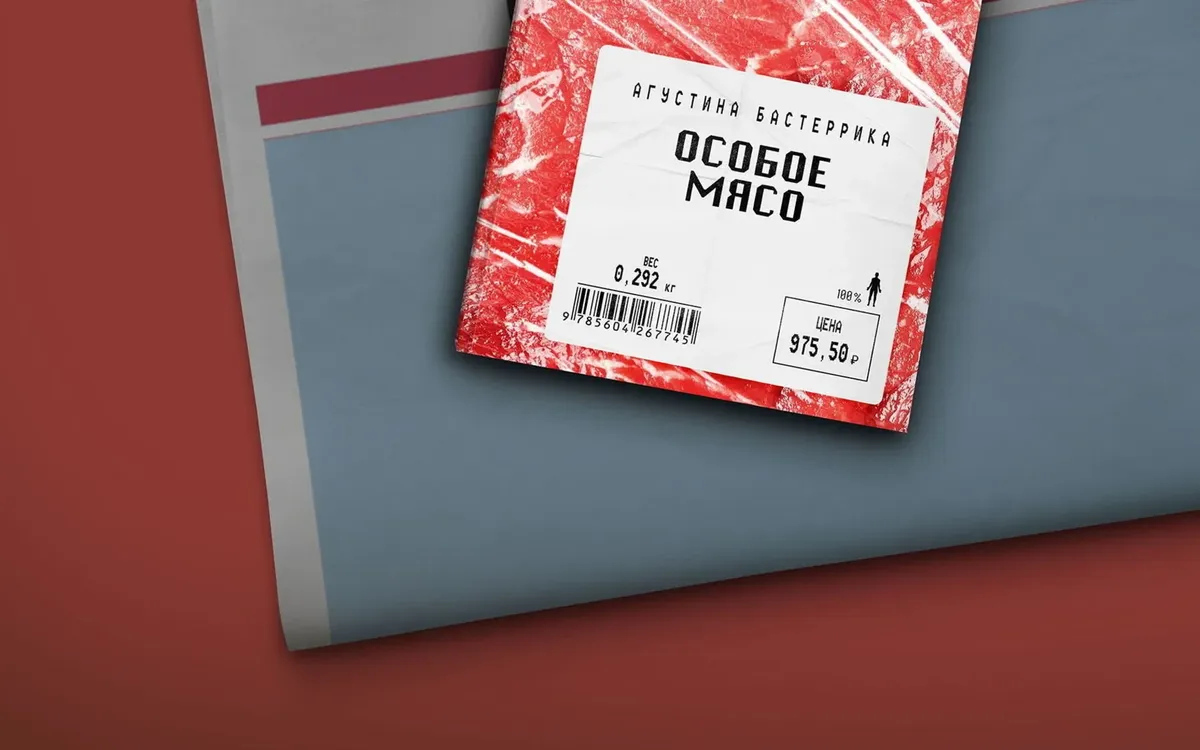
The book “Special Meat” by the Argentine writer Agustine Basterrika (translation from Spanish - Vladimir Owss, NOAGE Publishing House) can rightfully be considered one of the most terrible anti -utopias written recently.
She makes his way to the bones, penetrates under the skin, touches the living. Makes you rethink the picture of the world and look at your place in it -
Perhaps you, too, for someone just meat. And in the literal sense of the word. This is not a slight entertaining reading - Busterrika wrote a book about legalized cannibalism (and received a prestigious literary prize of Clarin Nobel Prize). But you should not perceive it as a manifesto of vegetarianism-this is a novel about the loss of empathy and moral ideals, the story of how people adapt to social changes and what flexible the system of values is.
According to the plot in the world of a near future, the deadly virus GGB, striking animals, is rampant. The world government decides to exterminate them all: from livestock and wild animals to pets, so as not to risk human lives. Mass famine, protests and collapse of the financial system loom on the horizon. In some countries, immigrants and the most unprotected segments of the population - poor and homeless people begin to disappear. Screamers and a black market appear. People cannot bury their relatives - the only chance to protect them from eating is cremation. In order to prevent an emergency, states come to a radical solution - legalize human breeding and processing people into meat. Brothers, meat processing plants and, of course, laws are now adapted to a new reality. From now on, society is divided into those who eat meat, and those who become this meat.
The main character of the novel Marcos Tekho is the deputy general director at the meat processing plant, one of the best specialists in his field. He knows everything about this business and becomes a reader's conductor in all circles of hell:
He tells and shows the stages of processing people into the meat, meticulously explaining how freshening occurs and what should turn out in the end.
Markos is unemotional, what is happening for him is just unbearable everyday life into which his life has turned. If earlier he was engaged in livestock fabric, now he leads people's fabilities - and, I must say, he does not like it all. After the death of a little son, he refuses “special” meat and is tormented by nightmares. By the way, it is forbidden to call meat by law - for all they become “copies”, “meat units”, “heads”, “males and females”. Busterrika skillfully shows how normative speech is formed, how at the level of the language the victims are depersonalized, how violence is hidden behind words that are beneficial to the world government, and becomes part of everyday life. Human cattle are “canceled”, “scored”, “supplied”, “process” and “consume” - the words “murder”, “execution”, “cannibalism” are under censorship. Once Tekho is faced with a choice: to stay like everyone else, or to keep something human in yourself.
With special pleasure, Busterrik draws an absurd new world. In it they have sex right on a cutting table among blood and intestines, hunters from high society chase live prey, and children play strange games and nurture their internal killer. True, there were not without dubious copyright decisions. For example, Urlet, a strange hero without age, preferred to eat people alive, seems absolutely caricatured and as if borrowed from another novel. Basterrika first talks about his hunting addictions and trophies in the form of human heads planted on spears, and then makes it, of course, a Romanian.
But all these little things are drowning in a bloody and bewitching storyline. Particularly impressionable naturals may seem cruel - it is. Busterrika does not spare his reader, meticulously and naturalistically describing all the processes: from slaughter to processing people, removing their skin from them and turning it into raw materials for products. It is curious that the novel was written back in 2017-in 2020, read about all this, frankly, is creepy. The discussions about the overpopulation of the planet, the world conspiracy and the artificial origin of the deadly virus seem painful to the pain.
Wearing umbrellas, without which you cannot go out, rhymes with our reality masks and gloves, and experiments on people with an international search for a vaccine.
It was important for Busterrika to show how humanity adapts to terrible reality and how, according to Deleuz, "what appears before our eyes, never corresponds to what we are told." Therefore, the novel has a completely deafening ending - the author masterfully imprints his reader, leaving him in a state of shock, bewilderment and indignation.
Sending 📨
Want to receive a “weekend” section by e -mail? Leave the address here. We will send letters on Saturday morning.