
Translated material
The simplest "impossible"
A project to regulate educational activities is included in the Duma
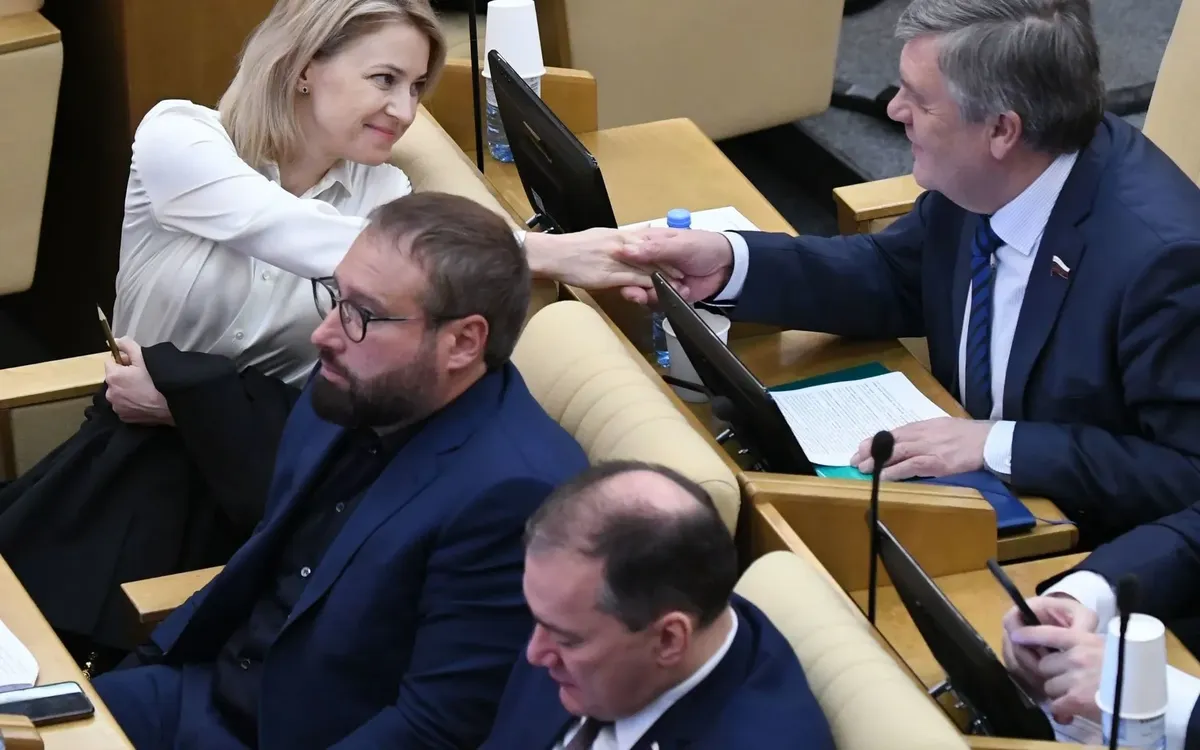
The bill on state regulation of educational activity, officially submitted to the Duma, could be considered the fruit of the sick fantasy or the attempt to initiators to demonstrate zeal and “patriotism” if it had not been linked to other similar initiatives “in the development of amendments to the constitution”. And the consequence of them is still a hunt for witches, including at the legislative level.
Immanuel Kant gave the reference answer to the question of what an enlightenment is: “This is a person out of a state of minority in which he is through his own fault,” and the reason for this “is not a lack of reason, but in a lack of determination and courage to use it without leadership from the outside ...”
The Cathedral in Kaliningrad also retained Kant; More precisely, its grave located nearby. Lenin considered Kant to be one of the “sources and components of Marxism”, and the hand of blowing the cathedral along with the royal castle of the leaders of the Communist Party did not rise then: they were still not quite alien to enlightenment.
Not the “United Russia” and the LDPR: five senators and ten deputies on November 18 introduced the project “On Amending the Federal Law“ On Education ”” to the State Duma, but we are not talking about education (the dismissal of teachers for “promotion to action contrary to the Constitution” is a parallel venture), but about educational activities. By oversight, it is still not limited by us with us.
Meanwhile, as the authors of the project in the explanatory note warn, “the absence of legal regulation creates the prerequisites for the uncontrolled implementation by anti-Russian forces in the school and student environment under the guise of educational activities of a wide range of propaganda events, including those supported from abroad and aimed at discrediting state policy, a revision of history, and undermining the constitutional system.”
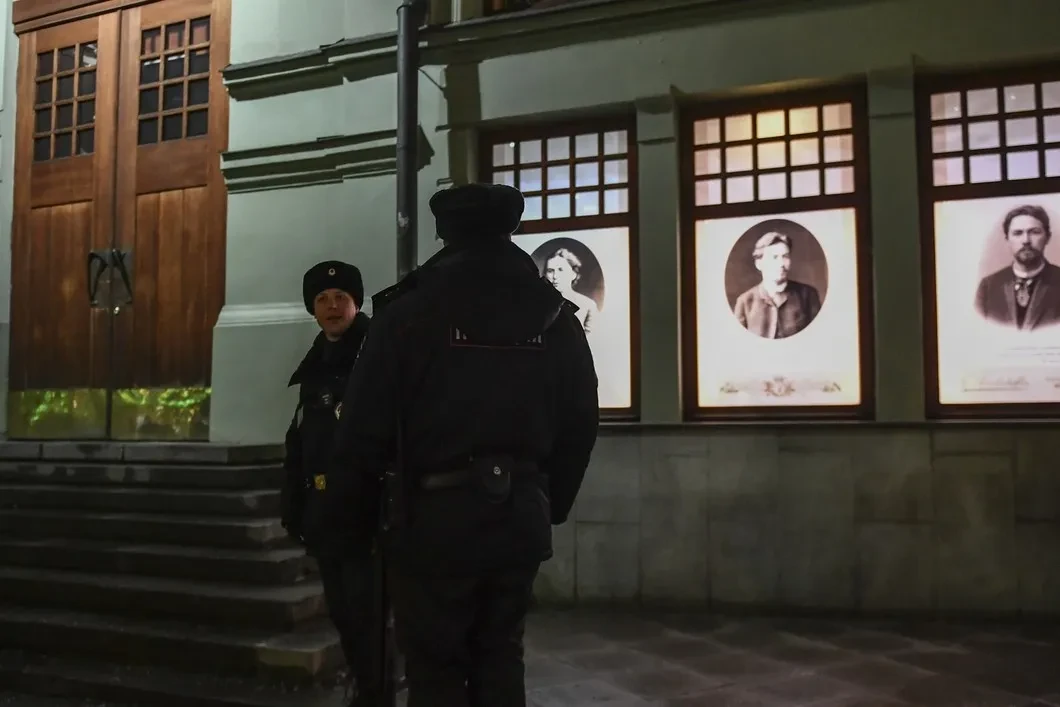
See: just the Higher School of Economics, sensitive to state policy, self -cleaned from dubious professors, how, under the guise of educational activities, to undermine the constitutional system at the “Free University” on the Internet, where a lot of unlicensed “Arzamasov” is already being reviewed and partisan.
It is logical in the framework of the updated constitution to end this, but how, it is a matter of equipment- administrative and criminal law.
Bringing the initiative to the point of absurdity (and the hunters will be found in law enforcement practice), any public statement in the event of the embodiment of the project “On the introduction of unanimity in Russia” (see Kozma Prutkov) can be interpreted as educational and subjected to a brutal square. Only for this, the entire state apparatus will have to retrain to the police, but in this direction the state, contrary to reason, develops before our eyes.
There is nothing to treat “lack of reason” (according to Kant), if the patient not only refuses to live his mind, but also on everyone who is inclined to do this, demands to put on a help. The substantial discussion is impossible here, only the law at the level of the simplest “impossible” can be an argument.
We remind the chambers of the Federal Assembly of Article 13 of the Constitution of the Russian Federation, which, as you know, is prohibited: “In the Russian Federation, ideological diversity is recognized in the Russian Federation; No ideology can be established as mandatory; It is forbidden to create and activities of public associations, the goals and actions of which are aimed at forcibly changing the basics of the constitutional system ... ”(and only such).
In conclusion, we list the initiative for the history of the authors (the list is open, during the consideration of the project, many more will join it): members of the Federation Council A. A. Klimov , E. V. Afanasyev , A. V. Weinberg , L. N. Glebov , O. V. Melnichenko ; Deputies of the State Duma V.I. Piskarev , A. G. Alshevsky , N. I. Ryzhak , A.K. Isaev , R. D. Kurbanov , I.V. (the project is indicated as “ J. V. ”) Belykh , N. V. Poklonskaya , D. I. Savelyev , A. V. Chepa , A. L. Shkhaghev .