
Translated material
Moscow has ceased to experience entertainment
How will Moscow cafes, clubs, museums and cinemas live with new restrictions and whether this industry will wake up after removing the locaun
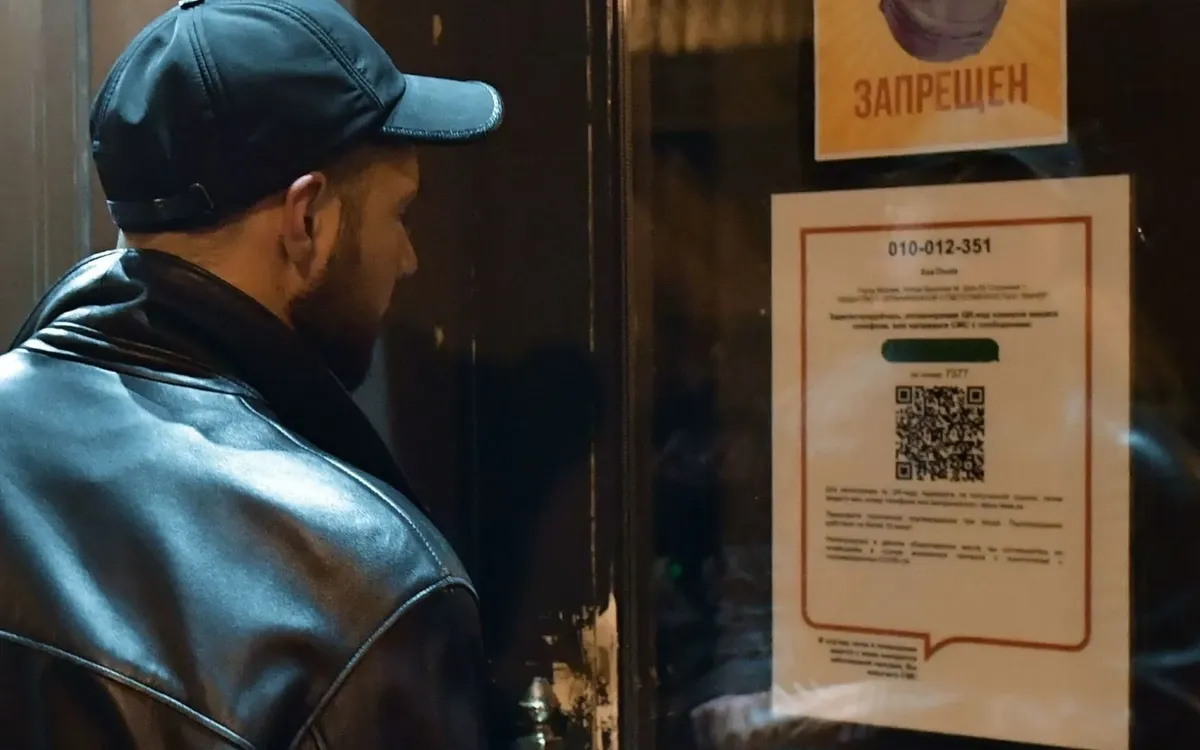
Since mid -September in Moscow, the number of cases of coronavirus infection has been steadily growing, the figures of 6 thousand new identified cases are already perceived daily as everyday life. For two months, the capital's authorities stated that there would be no repetition of hard quarantine in Moscow, and tried to stop growth, introducing restrictions on portions. First, the autumn holidays were extended by schoolchildren (then students of grades 6-11 were transferred to a distance), “recommendations for compliance with the self-isolation regime” for the elderly and chronicles were given. Then the authorities ordered employers to transfer at least 30% of employees to the remotes, made discounts for traveling in the subway outside the peak and introduced a check-in system in capital bars and clubs.
On November 13, when the number of cases identified in the capital reached half a million (about 4% of the city’s population), by decree of Moscow, Sergei Sobyanin, strict restrictions were introduced until January 15: students were sent after schoolchildren to the distance; Entertainment and public catering establishments were banned from serving visitors from 23.00 to 6.00, cinemas, concert venues and theaters ordered to fill the halls no more than a quarter of their capacity. The Association of Concert, Theater and Ticket Organizations has already appealed to the authorities of Moscow and Rospotrebnadzor with a request for urgent support measures: "If nothing changes tomorrow, then our industry is collapsing." New restrictions also affected the work of museums and cultural centers, sports facilities, children's rooms in the shopping center and restaurants.
The correspondents of the Novaya and the Novye were about how to survive the free time industry during new restrictions and how the New Year holidays in the capital will pass.
"Revenue decreased by 60%"
In Moscow, about 13 thousand public catering enterprises, they include completely different in the format of the establishment-from restaurants, cafes and bars to strip clubs. Many of these establishments work at night, some even around the clock. Already now, a week after the ban on serving visitors from 23.00 to 6.00, the establishments that worked at night feel a strong drop in revenue.
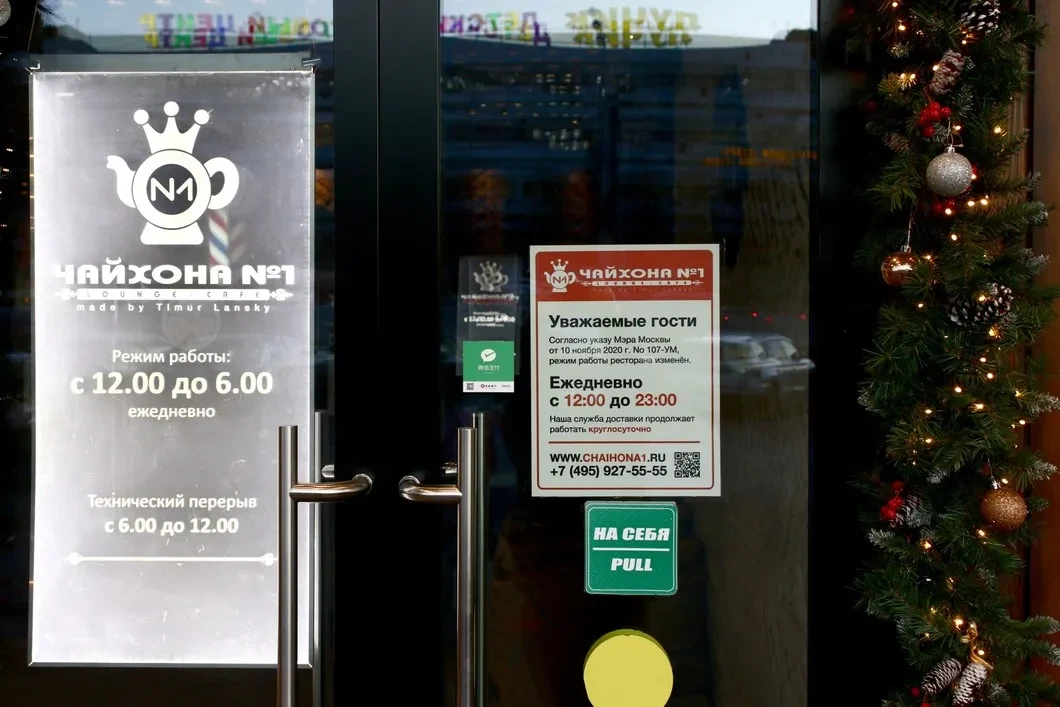
“I think that [revenue has fallen] from 30 to 50% in the institutions that work around the clock,” says Alexey Vasilchuk, co -founder of the restaurant holding Restart Vasilchuk Brothers (“Chaikhona No. 1”, “Depot. Moscow”, Group of Companies “354 Exclusive Height” and other restaurants). - I think it will not decline further. Guests will change the consumption model: they will try to come to the restaurant earlier. I hope this.
According to Vasilchuk, a much greater blow than just restrictions on work after 23 hours, for the institutions was a ban on work on New Year's Eve. The prohibition separately reminded the head of the capital's department of trade and services, Alexei Nemeryuk, even before new restrictions entered into force, saying that the authorities warned business representatives in advance so that they could plan their schedule. “New Year's events - due to which business felt normally in the period of December,” complains Vasilchuk. - Now it has been banned. I think that this [brought] up to 50% of December revenue. ”
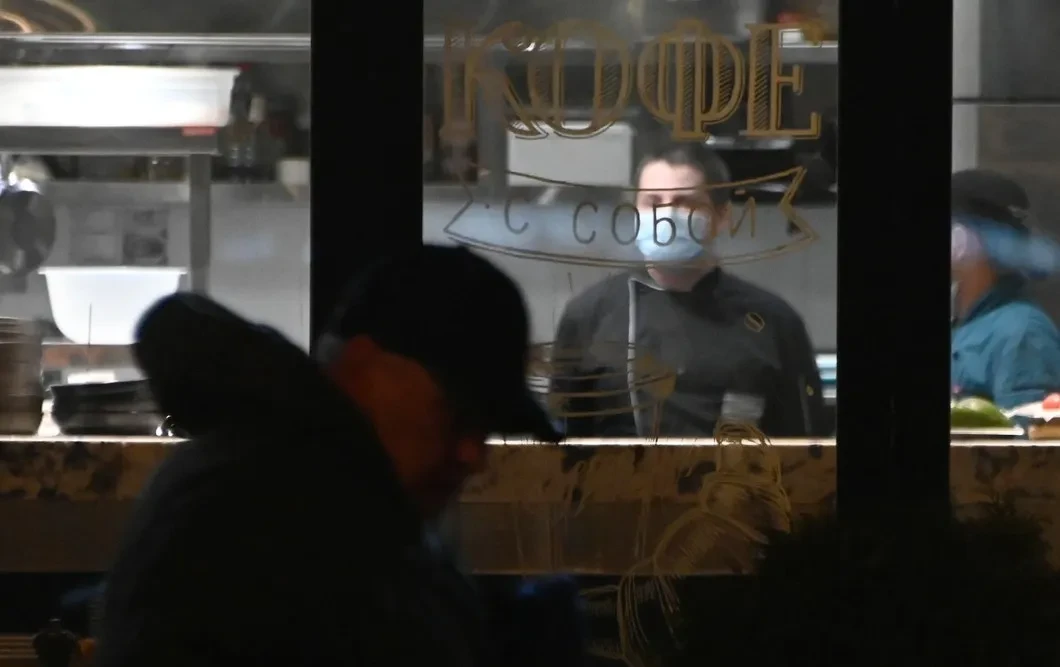
Dmitry Itskovich, the owner of the glass of Zinziver, the “duty glass” and several other establishments, believes that the New Year's Eve “brought not the most fundamental money”, a lot of about the “high winter vacation”.
According to him, over the weekend after the ban on serving visitors after 23.00, the revenue of his institutions decreased by 60%.
At the same time, the restaurateur considers the restrictions “rational”: “I have a lot of acquaintances. The measure of government is reasonable. We understand that this is such an intermediate attempt between Lokdown and half a death. We will try to survive. ”
Maxim Lukyanov, the founder of the Japanese Izakai-bar and karaoke Izumi, is a little more optimistic. “We worked on weekdays until 12 in the morning, on Friday and Saturday - up to 5-6 in the morning,” he shares. -We have the main revenue due to the daily flow, night revenue is 20 percent. After the first weekend, I can’t say that we somehow sagged. We did not change the schedule, just now at a time when it is impossible to serve visitors, we are working for delivery throughout Moscow. We did not deliver in Moscow before at night. This Saturday, this straightened the situation with the revenue. ”
Despite the fact that the restrictions so far slightly influenced the revenue of Izumi, Lukyanov considers the ban on serving visitors after 23 hours unfair. “There is no difference between work day and work at night - the conditions in our work do not change,” the restaurateur says. - All staff work in masks and gloves. Employees process all the tables after each guest, I personally follow this. A restaurant is the safest place, here the risk of infection is reduced to zero. Restaurants opened on June 27, and this did not cause any growth and peak. I hope that what has been done now is the maximum, and then the situation will normalize. Because we have been without any development for a very long time, we cannot develop a bar theme. Although we had plans to start making parties on Fridays, but we did not have time to swing everything normally. Now everyone has froze and are very tired of this. ”
According to the restaurateur, Alexei Vasilchuk, the ban on serving visitors to restaurants at night and permission to work during the day is explained by the “logic of government members”: “In their opinion, at night people violate the distance, drink, lose vigilance.”
Restors are unanimous that the industry now really needs the help of the authorities, but does not receive special support. “As I understand it, they extended the Prime Minister’s initiative to defer the year 2021 ( on November 12, Mikhail Mishustin signed a decision on extension for another three months of taxes on taxes and insurance premiums for small and medium-sized businesses. - Ed. ), Introduced a moratorium on verification [small and medium-sized businesses]. This is at least some help, of course. But, for example, in Europe, they simply removed [tax] load in such cases for the entire 2021 years. We have only a delay so far, it will be visible then, ”says Vasilchuk.
“In the second quarter, all taxes were canceled for us - and no more messages,” says Maxim Lukyanov. - The only thing, now I am counting on a government subsidy to compensate for the delivery of aggregators. We submitted an application, now we are waiting and hope that something will fall from this. ”
"Cinemas are fighting for every viewer"
Not only restaurateurs are waiting and hoping now. According to Olga Buzenkova, PR manager of the Pioneer cinema, “economic support of the state and measures are more serious than the deferred payment of taxes,” are now also needed “the entire film industry”. The PR manager believes that the new restrictions prohibiting cinemas to fill in the halls by more than 25%"will significantly limit income." Moreover, from the point of view of security, this is a controversial measure:
“The occupancy of the hall is 25 and 50% from the point of view of the safety of filming, they practically do not differ.
During the chess seedling and 50% of available places, the necessary social distance was already observed, including in the lobby of the cinema, as we increased the intervals between sessions. ”
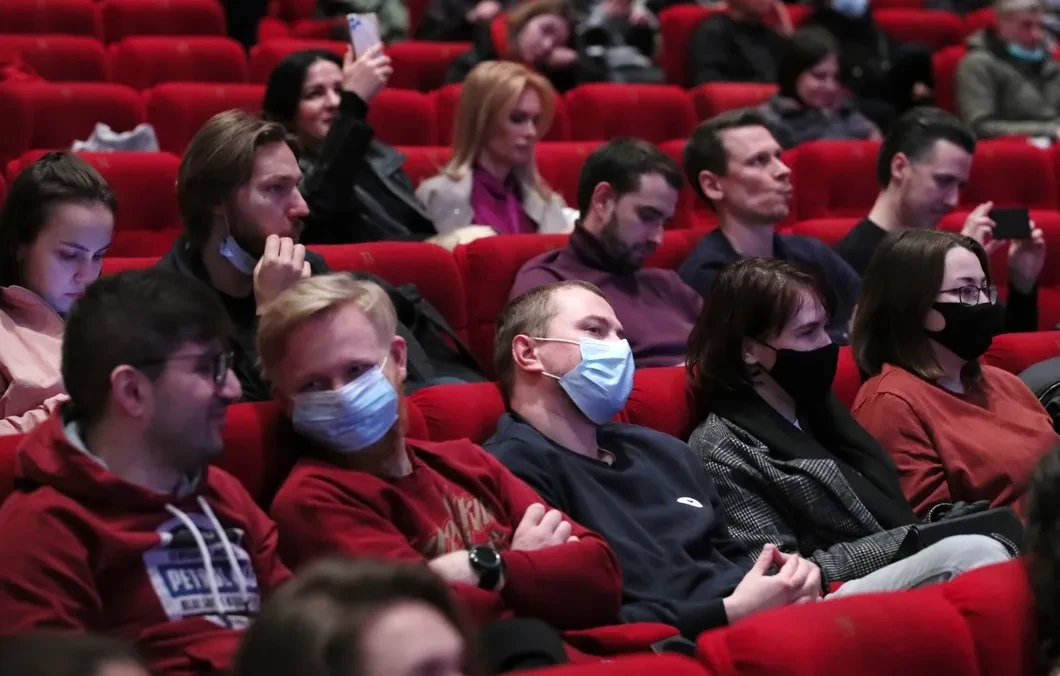
“Undoubtedly, this is the best measure than the complete closure that we survived from March to August,” says Buzenkova. - The main thing is not to close cinemas, let them work. The second wave of the closure of the industry may not withstand. We see that spectators, despite the difficult situation, want to watch a movie on the big screen and are happy to spend time in the cinema. The gradual removal of restriction restrictions seems to be the best development of events, since cinemas that work with festival and independent rental (including Pioneer) really fight for each viewer. ”
“We do not say goodbye to the audience. We are in touch online "
But museums will have to meet with the audience exclusively on online platforms.
Within three days, the Ministry of Culture issued two orders for federal museums subordinate to it. The first-from November 11-museums, museums-reserves and exhibition spaces were banned only temporary exhibitions, leaving the opportunity to invite visitors to permanent exhibitions. The second - from November 13 - chopped off this opportunity.
Now all Moscow museums are closed to the entrance until January 15 - all cultural events have migrated to online.
“This is terrible for us,” says art critic Olga Sviblova, director of Multimedia Art Museum. -The horror lies in the fact that as soon as people are weaned from some habit-and the habit of going to the museum has mastered the masses, we are a very visited museum, one of the most visited museums in Russia-they switch their interest. It is extremely difficult to return them later. ”
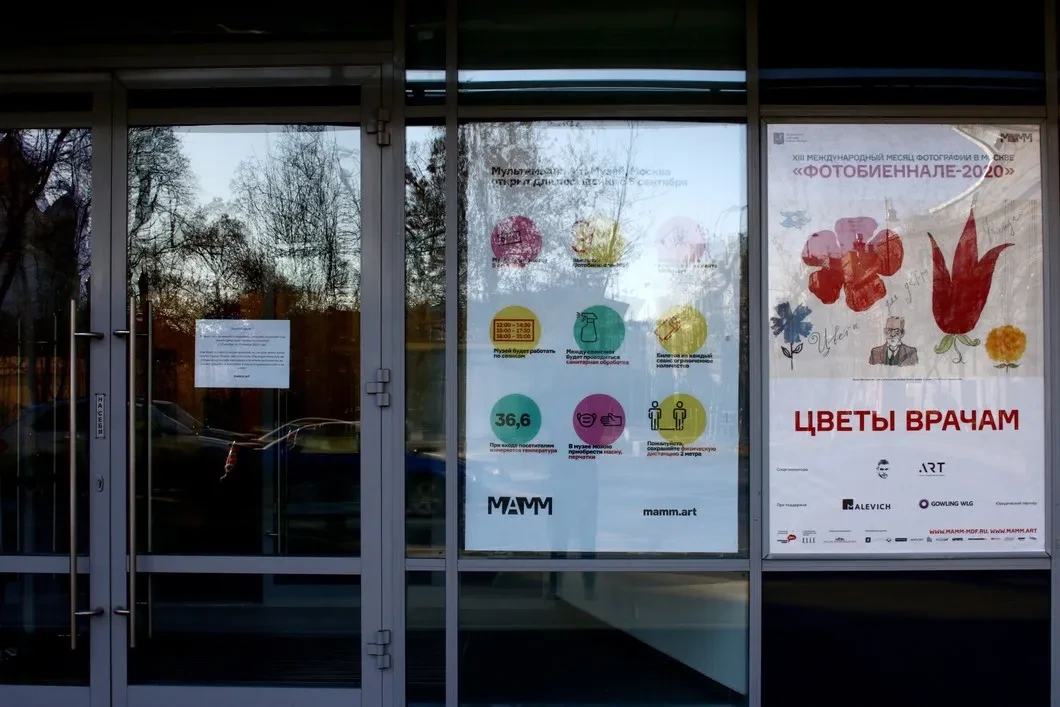
Multimedia Art Museum was closed for six months: after quarantine, he had to go for repairs, and the museum was opened only in September. According to Sviblova, the visitors had to attract for a long time, and only by the end of October something changed-it came from a quarter to a third of the usual number of visitors: “But it took two months of hellish work to return to the museum. And the fact that now museums are closing is dangerous. People then can hardly return to culture. At least to visual art. They find some other entertainment. TV shows are watching. The series are amazing, I myself sometimes watch them. ”
While the museum was working, all possible requirements of Rospotrebnadzor were observed in it. And the same museum workers demanded from visitors. Masks and gloves were given at the entrance, and the premises were disinfected. And even if people, as elsewhere, strove to lower the masks and remove gloves to make a selfie, the number of employees sick in the museum is small.
According to the order of the Ministry of Culture, at least 30% of the museum employees should work on the remote, including everyone who is older than 65 or who has chronic diseases. In multimedia art museum, most employees are transferred to remote mode.
For Olga Sviblova, in this sense, the closure of museums seems to be justified - if only this allows you to maintain life and health to those who work in them. “People of culture are piece people,” she is convinced. - Regardless of whether we are talking about the curator, director, keeper of the collection or representative of the technical team. Despite the fact that they are in masks and gloves, if an epidemic goes, it will be a disaster. Because these people are indispensable. They are brought up in the museum, for years they have been working in it. They are creative accomplices of the process. ”
Museums, like other cultural institutions that are under the jurisdiction of the Moscow Department of Culture, will support the city financially: they compensate for the salaries of employees, utility bills and the maintenance of property. The main way of earnings - the sale of tickets - is lost, but a fixed salary in such conditions means a lot. In this sense, museums are in a “privileged position” - the employees of other industries (for example, entertaining) were less fortunate.
And also an online exit for multimedia art museum ”, and for the industry as a whole - this is a“ challenge ”. The city government promised to help with equipment and attracting specialists.
“We make an opening online. We do not say goodbye to the audience. We are in touch online. In the six months that we were closed, we pumped the muscles. We have learned to make “tasty” formats that cause spectator interest, ”says Sviblova.
For example, more than the current exhibition “Emergency position. The second wave ”is about how artists rethink the phenomenon of isolation.
“If we learn to do online, which will not leave when we return to offline, we will win. There is a saying: there is no thin one without good. Instead of sitting and crying - and we cry, because we, accustomed to enormous attendance, have the feeling that the exhibitions are not reviewed - we must work online. We will work. ”
"Open news - you see an amazing decree of Moscow City Hall"
Timur from the PR Powerhouse club learned about the new restrictions of the PR service of the Powerhouse club: “Like all the representatives of the industry who live mainly in the afternoon, you wake up after an hour or two, the decree comes out in two, and the phone begins to be broken up at 2.30. You still do not understand what is the matter. You open the news - you see an amazing decree of Moscow City Hall. So learned. "
And they were not ready for this at all. More recently, at the end of October, the Moscow authorities introduced a QR code system to visit institutions after 23.00.
It was clear that the measure did not help to protect himself from the disease, but helps business to stay afloat.
According to Timur, this was a “step towards the industry. It seems like everyone believed that they begin to notice us as a separate important sector: both cultural and economic. ” But not even a month has passed since the Moscow authorities refused this idea. At the beginning of the week, the club had to quickly “redraw the program”. A large party was planned for the weekend - it was not canceled, but reduced by time. True, on the eve, in the middle of the week, Powerhouse spent the last two parties of the year - and was able to make good money on it.
Now the club will be very rebuilt. “We will make evening parties. It is ridiculous, it is three hours instead of six to seven, but it is at least something. We will simply be lengthening the weekend-instead of seven, they will begin at five or six, ”says Timur. Compared to a full locaun, this is an opportunity to receive at least some money. “This is at least some kind of cash desk. The lack of a cash register is much worse than at least some earnings. ”
But a very large part of the box office is New Year's parties. These are contracts with alcoholic brands, and invited musicians, and the program until six in the morning. This time will not be such a holiday - at least “in the usual format”.
This is all the worse that usually violent December and New Year's holidays covered the dead January-February in general. Now, until January 15, night life is banned.
In a sense, Powerhouse was more fortunate than some other clubs, since they have the opportunity to earn in an evening format (many clubs work only in night parties). A little more - on delivery. There is still the opportunity to make music concerts.
At the same time, the problem of full payment of rent has not disappeared anywhere. Both during Lockdown, and now an agreement with the landlords - on the shoulders of the industry itself, not the state. And there is no need to wait for help from him, says Timur.
“We were asked about QR codes-will they reduce the incidence? Naturally, no. Will reduce full closure. But then we will all remain without work. Maybe then it would be possible to do how to do in Berlin - close and support? And, of course, we live not in the country where it is possible. ”
PS
If you sit in empty cinemas and wander around the Moscow museums online, the Muscovites will still make online, then they will lose another important part of the New Year's cultural program-this year, because of the pandemic, New Year's walks, Christmas bazaars and festivals will be canceled (last year, for example, the New Year's Festival “Travel to Christmas” was held in Moscow, according to the city hall reports, which, according to the reports of the City Hall 26 million people visited).
The capital for the New Year, of course, will bury - according to the posts of the Moscow opera station, “to create the usual New Year's atmosphere” of the street and square “will be decorated with festive illumination” (last year, by the way, the New Year's design of Moscow cost almost a billion rubles), but for the sparkle of many garlands not to hide the tears of Moscow children - New Year trees will be canceled this year.
Numerous Moscow grandfathers frosts grieve even more on the Christmas trees. And some even rebel in the traditions of time. So, on November 18, on Red Square, the police detained a man standing in a single picket in a single picket in a suit of Santa Claus with a poster “I/we New Year. Santa Claus against the closure of Christmas trees ”and two elves who were hanging near him. With regard to Santa Claus, police drew up an administrative protocol under an article on a violation of the established procedure for a public event, because the law for all is one. The elves were released without a protocol.
It is understandable, the elves are borneal people.