
Translated material
How much is the homeland
It was not possible to stop the flight of capital from the country. The government offers to sell a Russian residence permit
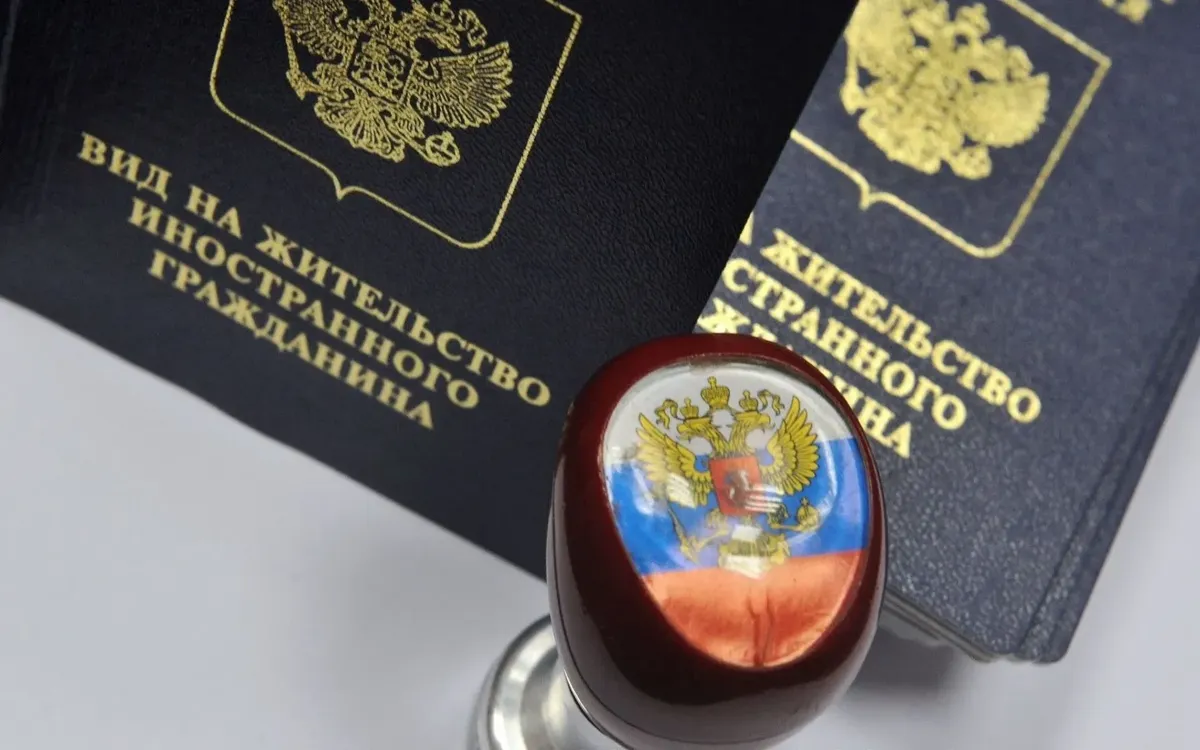
The Ministry of Economic Development has submitted a bill that allows foreigners to get a residence permit in Russia in exchange for investments in the Russian economy. The idea to sell (let's call a spade a spade) a residence permit in Russia for investments in a relatively modest amount - from 10 to 30 million rubles - is clear. Only one question for its authors: maybe first make Russian state billionaires invest in their own economy? Or so that a variety of lieutenant colonels do not store tons of cash in elite apartments instead of investing them “in business”. So to speak, they would prove the attractiveness of investment in the Russian Federation with a personal example.
Magic keys
In fact, the idea of distributing a residence permit to those who are ready to “invest in Russia” a couple of hundred thousand euros lies in the same series of magic keys to economic growth, the search for which the Ministry of Economic Development has been engaged in its creation. This is generally very characteristic of Russian bossy consciousness: how to find (or even buy, or make) some miraculous thing that allows you to solve problems in one fell swoop.
In how officials of the Ministry of Economic Development constitute recipes for economic growth, there are something deeply touching-this is the same girl that dreams of a model’s career when she stands on her heels and tries to walk in front of the mirror.
A good example of this approach is the long -term fuss of the Russian authorities with the Ding Business rating, which was published by the World Bank. There was time, everyone really liked this rating because of its clarity and versatility. We take the main business center of the country, watch the texts of the rules and laws governing the opening of a new business, interview experts. And we look: where is the terms of issuing permits shorter, it is easier to pay documents, and taxes can be paid as easily as paying for a mobile phone - it’s easier to live there.
Indeed, in the Doing Business rating, Russia really rose from one hundred and twentieth place to twenty -eight - in just eight years. But, paradoxically,
This turned out to be years when economic growth in the country, let's say, stopped, and citizens' incomes decreased markedly.
That's why they did everything “like large”: they reduced the terms of registration of constituent documents, and accelerated the receipt of building permits, and made taxes “in one click”, and received high expert estimates, and did not work out economic growth. Even before all quarantine, the number of enterprises falling under the definition of “small and medium” was reduced annually by 6–7%, it is unlikely that at the end of 2020 it will be better. And now the World Bank itself cooled to its rating, in August of this year, suspending the publication of Doing Business because of possible violations in its preparation.
Well, what is wrong, the economists say? In itself, a decrease in administrative barriers to open a “small enterprise” in the capital is a commendable matter, but this is not a guarantee of an economic recovery.
Yes, such long -term Ding Business leaders as New Zealand, Hong Kong, Singapore demonstrate high economic growth rates. But at the same time, in the ranking of economic freedom, calculated by Heritage Foundation (it determines the “degree of non-interference” of the authorities into business processes), the same Singapore, Hong Kong and New Zealand occupy the first three places, but Russia is located in 94 (between Honduras and the Dominican Republic). And in the ranking of non-corrupted countries, New Zealand, for example, is in 2nd place, and Russia is in 137th, between the same Dominican and New Guinea.
Equal to Africa
In general, the fascination of the authorities with a “small business” is explainable: it is pleasant to regulate it-how to play with a kitten, not at all like teasing the oligarch tigers. Moreover, small business joyfully responds to bossy care and is always ready to show elegant microcofene signs, creative pages in social networks, and participants in various “support forums”.
But a small business itself is a dubious driver of economic growth. The world leaders in the share of the contribution of any microbusiness to the GDP and the percentage of the “self -employed” in the able -bodied population are not the United States and not the European Union, but the raw materials of subequatorial Africa - like Uganda and Mozambique. Where, outside the corporations pumping resources for export, almost every person is a self -employed micro -entrepreneur.
By the way, among the commentators, the ideas of the Ministry of Economic Development of “attracting investments” few paid attention to the demand for a residence permit in the sense of “creating jobs”. To get the coveted paper, you need to invest 15 million rubles in the Russian Business and employ at least 25 people. Or open an individual entrepreneur, investing 10 million and hired 10 Russians. The authorities are actually aware that a high-performance workplace (such that is produced by products for one hundred thousand dollars a year) “costs” at least one hundred to two hundred thousand dollars?
And “in a good way”-a workplace at the modern plant “costs” a million dollars. So
For ten million rubles of investment, you can create only something very small and quite simple-well, such as to quickly employ Russians who have lost their jobs.
Maybe this is the secret thought of the Ministry of Economic Development, who knows?
However, it is possible that the Ministry of Economic Development really counts on African investors: the most loyal commentators of the ministerial initiative noted that having 200-300 thousand euros of free money, you can get a residence permit in the European Union itself-on the indicated conditions, such investors will most likely come to Europe for some reason for some reason.
And it cannot be said that the Russian economy so needs “imported” money. In the accounts of Russians, up to 30 trillion rubles accumulated, on the accounts of enterprises - no less. Let us add to this what is hidden “in cash at hand on a rainy day,” will turn out to be almost a trillion dollars. And if you take into account the money evacuated “to the West” by the Russian authorities, is still plus trillion dollars (though this money is unlikely to return to Russia). This year, according to the Central Bank of the Russian Federation, the export of capital from Russia will exceed 50 billion dollars (more than forty has already been taken out). It is clear that not all this money could go “for investments”, but still ...
In order to compensate for 10 billion dollars “exported” from the Russian Federation, it is necessary to attract 50,000 “investors” for 200 thousand euros. It may be easier to make the Russians themselves wanted to invest in Russia, because the Ministry of Economic Development, in theory, should do this? But honest officials are sitting in the Ministry of Economs, who understand that it will, apparently, will sell the Russian residence permit to the Africans.
PS according to the bill, for obtaining a Russian residence permit, it will be possible not to invest “in business”, but simply acquire a real estate worth 30 million rubles. Real estate sites suggest that about this price is offered fifty apartments in Moscow and about forty-in St. Petersburg. Yes, let them be more - it is still not enough for attracting investors, do not you think?