
Translated material
"New" defeated the FSIN
The Supreme Court recognized the refusal of the editorial office to visit the prisoner illegal

On November 25, the Supreme Court of Russia recognized the refusal of the Federal Penitentiary Service to the admission of the new “New” journalist Elizabeth Kirpanova in an interview with ex-mayor of Yaroslavl Evgeny Urlashov. According to lawyers, this decision is of fundamental importance for the freedom of mass media in the country. Now the FSIN will not be able to refuse to reporters to visit the correctional institution without explaining the reasons for the reason.
Two years ago, the country actively monitored the investigation of the torture in the Yaroslavl IR No. 1. It was excited after publishing the “New Gazeta” of video materials on which the FSIN officers beat the prisoner Evgeny Makarov with batons in the legs and watered it with water from the bucket. Group violations were also reported in another Yaroslavl colony - IR No. 2 in Rybinsk. According to human rights activists, in December 2018 an HIV epidemic broke out among prisoners. The FSIN leadership denied this information.
I decided to talk with the former “People’s mayor” of Yaroslavl Evgeny Urlashov, who is now serving a sentence in the Rybinsk IR No. 2. But not through a special network “Zonatelekom” or the FSIN-School system, but personally in the colony, since telephone conversations with prisoners are recorded and listened, and correspondence is often censored.

I submitted an official application for an interview to the FSIN. Such an opportunity is provided for in Part 3 of Art. 24 of the Criminal Executive Code of the Russian Federation and paragraph 2 of Art. 47 of the Law "On Media". But they refused me without explanation, and in April last year, the editorial office decided to sue the Federal Penitentiary Service.
Lawyers Olga Podopolova and Grigory Weipan, representing the interests of the “new”, demanded to recognize the refusal illegal, since he violates the right of journalists to freely search, receive and disseminate information and the right to freedom of expression, which is enshrined in the Constitution. Defenders also indicated the FSIN to the need to motivate their decision.
Representatives of the prison department replied that they were not obliged to explain their refusal, and considered an interview with Urlashov “inappropriate”.
The court sided with them.
In November of this year, our case reached the Supreme Court. Shortly before the meeting, the Federal Penitentiary Service presented her objections to our complaint. It followed from the document that the reason for the refusal was the “complex operational situation”. According to the raids, this is confirmed by the fact that from July to the end of 2018, operational management officers made “trips” to the Federal Penitentiary Service in the Yaroslavl Region, “the last of which was carried out in December 2018”.
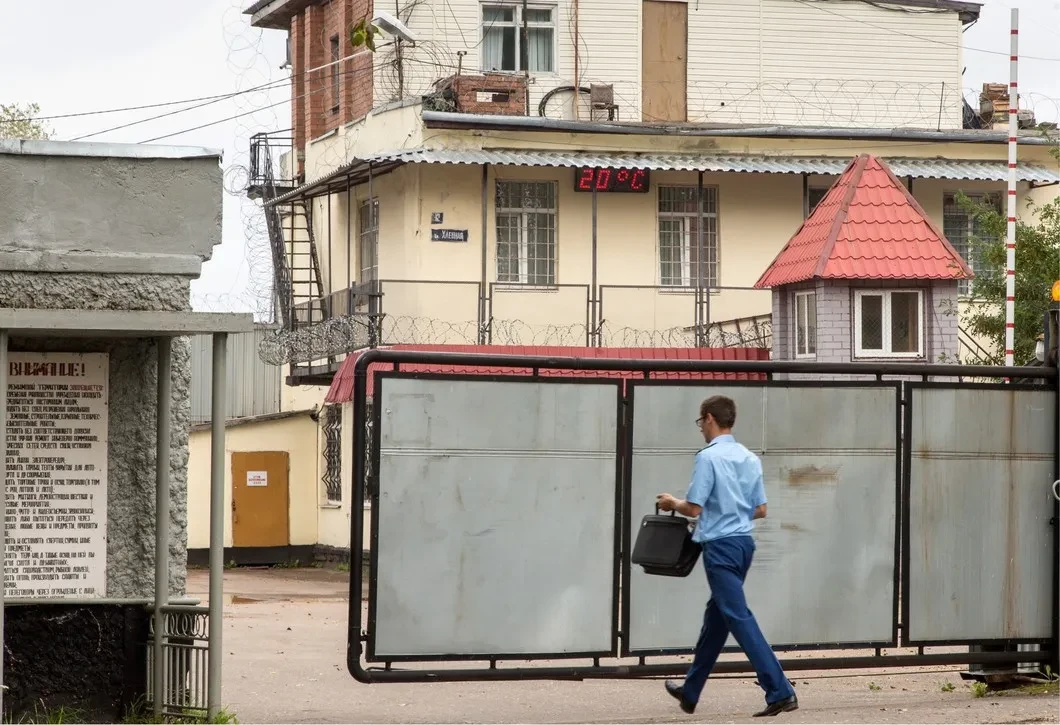
At the meeting, representatives of the FSIN said that they do not intend to motivate their decisions, "because these motives may fall into the media that can further be used to destabilize the correctional institution."
Despite the arguments of the jailers, the Supreme Court sided with the newspaper and recognized the refusal to visit the colony illegal.
“The decision of the Armed Forces is an important step in the struggle for the openness of the places of imprisonment for public control, the space of which only narrows in recent years,” said Olga Podolova. - The Supreme Court, in fact, confirmed that the non -removal in the colony can be caused only by extraordinary and objective reasons. In practice, this means that independent journalists will have an argument for access to the FSIN institution and they will be able to use it in disputes with the department. I believe that real changes will not occur immediately. But the very existence of the position of the Armed Forces and appeal to it can “open” the colony with the active position of independent media and journalists - especially in resonant cases when publicity is required to protect prisoners from the pressure of the administration.