
Translated material
There is a spiritual war
Why is the very existence of the Russian Orthodox Church abroad cause great discomfort of the Russian Orthodox Church
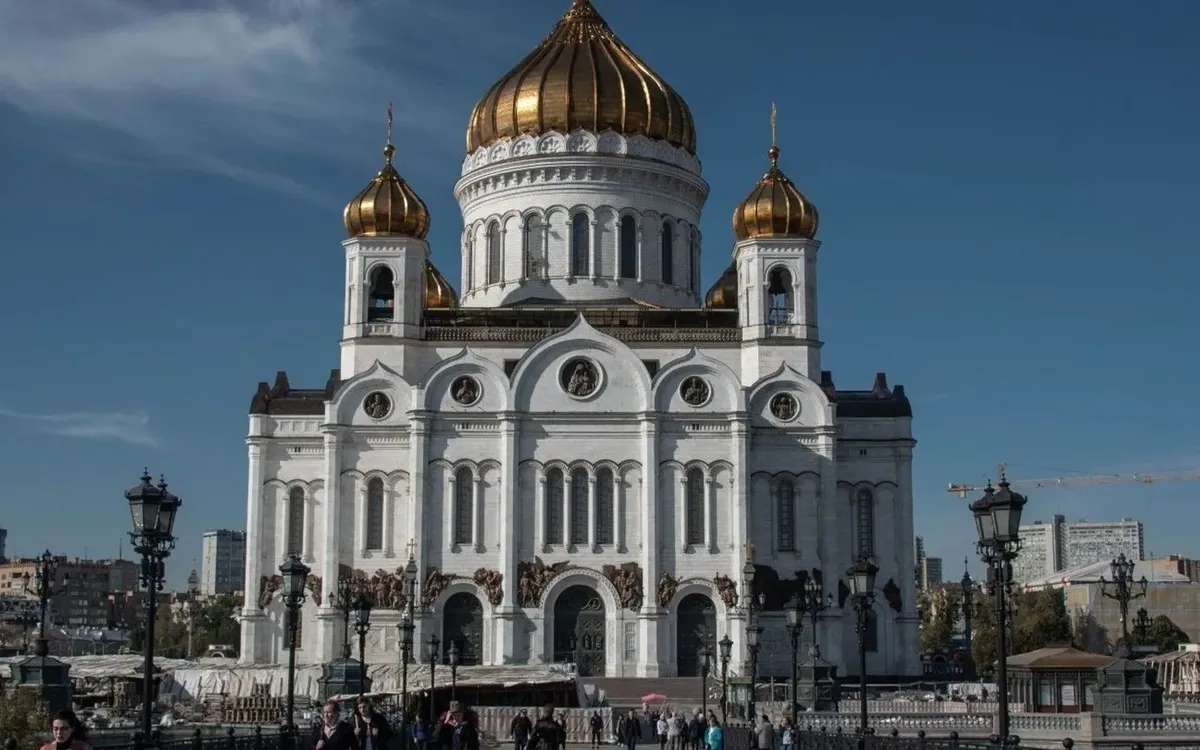
100 years ago in Constantinople, the Higher Russian Church Administration arose abroad, from which the Russian Orthodox Church abroad (ROCZ) grew - the main moral, canonical and administrative alternative to the Moscow Patriarchate in the twentieth century. What path did she go over this century, what remains of the ROCZ today and what can she offer the Orthodox of the future in Russia?
Two paths
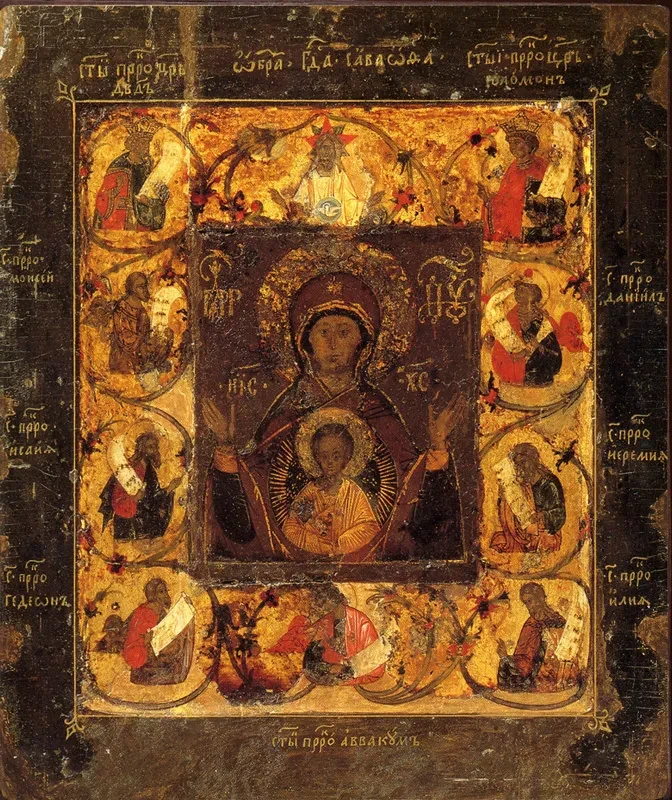
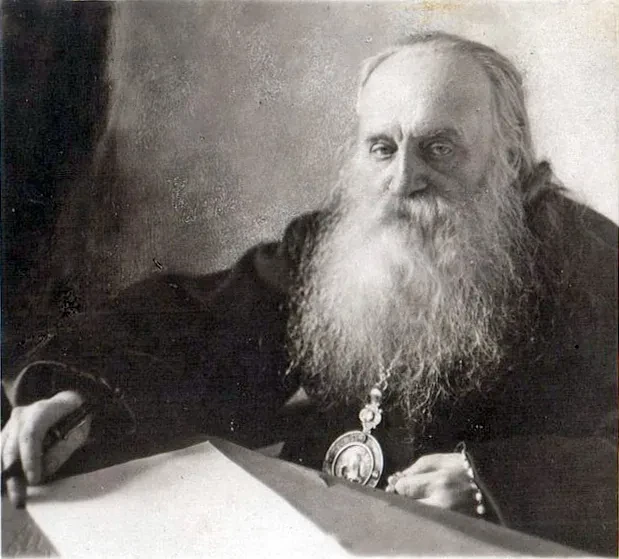
In the second half of November 1920, the White Russia Baby left the Sevastopol Bay ... On 126 vessels unprecedented in the history of the flotilla left the remnants of the army of General Wrangel into the Black Sea. Many civilians joined the military who did not eat illusions about the "power of workers and peasants." Sevastopol also left the Higher Church Administration of the South of Russia, led by Metropolitan Anthony (Khrapovitsky) - a hierarch, who gained the most votes in the Patriarch’s elections in 1917. He took with him the Kursk indigenous icon of the Mother of God, which was later dubbed the "Odigitriya" ("guide") of the Russian abroad. Until now, the icon is in the Synodal Cathedral in New York dedicated to it.
During the Sevastopol outcome, about 150 thousand people left their native land at the same time - in total, the “first wave” of Russian emigration reaches 3 million.
The outgoing army went to Constantinople and its environs, which, after the defeat of the Ottoman Empire in the First World War, were controlled by the Entente. There it was placed in temporary camps, where in the first winter tens of thousands of people died from hunger and epidemics. The church administration was located in the city itself, where there were pre -revolutionary Russian temples - the courtyard of the Athos monasteries.
The first meeting in the new quality - exiles - 4 hierarchs held on the raid of Constantinople on November 19, and the next day, in a distant Moscow, who did not know this Patriarch Tikhon spent one of the last meetings of the legal Russian synod, chosen by the local cathedral of 1917-18. It adopted Decree No. 362, which became a kind of constitution of both the newborn ROCS and the future catacomb church. From the theological point of view, this resolution has not yet been evaluated. In fact, it draws a line under the 1600-year period of the church in a close alliance with the state, when the forms of church organization repeated the centralized imperial “vertical”. The decision legitimized the decentralization of church power and blessed the transition to home service - in the modest dwellings of Christians, in the open air, in the catacombs - wherever external violence or material dependence is not trying to constrain freedom in fidelity of truth.
When in the 1920s the Russian church was divided, groups stood out in it, ready to abandon inner freedom for the sake of external well-being. At first, these were the “renovationists” who acted as prosecutors at the Soviet trials against the “old -church”. Then - “Sergian”, led by Metropolitan Sergius (Stragorodsky), who in 1943, by order of Stalin, became the first patriarch of the recreated patriarchy. He was appointed hastily, without any local cathedral, but the Orthodox, who did not agree to enter the “Sergian” structure, immediately declared outside the law and persecuted until the 80s.
It was with them, catacomb Christians in their homeland, that proclaimed her spiritual and canonical unity of the ROCZ. Its center was not long located in Constantinople-already in 1921, Metropolitan Anthony moved to Serbia at the invitation of Patriarch Dimitry, who provided the Russian hierarchs of the refugees in the Srama Karlovtsi (hence the nickname "Karlovak schism", which was dubbed the supporters of the patriarchy). There, at the end of 1921, the first all-weather cathedral took place, which finally designed the creation of the ROCZ. ROCZ saw her mission in maintaining the continuity of the free church life of Russia until it is impossible in her homeland.
Naturally, the paths of the Moscow Patriarchate and the foreign church dispersed. Under the pressure of the OGPU in the early 1930s. Sergius forbade all Karlovites in the ministry, although he did not have such authority. In turn, the Russian Orthodox Church condemned his course as “heresy of Sergianism” - the doctrine that the church should obey any earthly authority, including frankly praise, and the church can be “saved” by the cost of lies. Later, the ideological gap between the Russian Orthodox Church and the Russian Orthodox Church only increased-since the 1960s. They were also shared by ecumenism, in which the Moscow Patriarchate actively joined, and the veneration of various saints, especially the new martyrs repressed by the Soviet government. In 1981, their canonization of the Russian Orthodox Church in the USSR was angrily condemned as an anti -Soviet act, and the Moscow Patriarchate denounced the “foreigners” in the mixing of religion and politics. After 20 years, she herself recognized some saints glorified abroad, however, with reservations ...
The beginning of the special operation
Of course, the ROCZ did not think of itself in isolation from Russia, so at every opportunity I tried to return to the historical homeland. So it was, for example, during the Second World War, when the liturgical and educational literature of the foreign church was massively sent to the occupied territories where the temples spontaneously opened. Direct a mission and send priests to these territories forbade the German command.
After the war, the clergy and the flock of the ROCZ were replenished with millions of new refugees-the so-called “DI-PI” (displaced persons), which made up the “second wave” of Russian emigration of the twentieth century. For example, the Bishop of the Belarusian Church, who emigrated along with the retreating Germans, joined the ROCZ in full force. Then, in the West, some catacomb priests from the USSR turned out to be about the world about the nightmares of Soviet life and about the scale of the lie of the Moscow Patriarchate.
The very existence of the Russian Orthodox Church, of course, caused great discomfort of the patriarchy, and even more - its curators in Lubyanka and in the Kremlin.
The whole history of the foreign church was accompanied by divisions when the patriarchy and Soviet agents with varying degrees of success rejected certain dioceses or parishes from it. A lot has already been written about these "special operations" now. The FSB officer Konstantin Preobrazhensky, who fled from Russia, issued an investigation into Boston “Poisoning in the Russian Foreign Church”; Several chapters are devoted to the activities of the Soviet intelligence services against the ROCZ in the recently published book by Andrei Soldatov and Irina Borogan “His own among strangers”. The most successful of these operations was the “absorption” of the Russian Orthodox Church by the Patriarchate in 2007, which the start of which was given by Vladimir Putin’s personal visit to the ROCZ Synod in New York four years earlier. At the cost of unprecedented pressure, huge financial injections, Moscow managed to crush the ROCZ and subjugate its significant part of it, which was presented with propaganda as the “reunification of the Russian Church” and the “end of the civil war”. As always, propaganda is very far from reality ...
And what really?
ROCZ never broke communication with the catacomb church in the USSR. But if in the 50s such communication had a purely “theoretical” character, then in the 60s, thanks to the “thaw,” the correspondence begins between the representatives of the two “branches”. This channel is actively used by the KGB. In the mid-70s, a group of catacomb priests in the USSR officially joined the Russian Orthodox Church, and in 1982, a bishop was ordained an apartment in the Moscow district of Tushino. Hirotony, by the decision of the ROCZ Synod, secretly committed Bishop of Cannes Varnava (Prokofiev, d. In 2018). He had the opportunity to come to Moscow to meet with a relative who worked at the French Embassy. A number of researchers are convinced that Barnabas immediately fell under the dense custody guardianship, which was well known about the impending ordination. The candidacy of the “bishop for Russian catacombs” was proposed by the Synod by the Soviet dissident Dimitri Dudko, released from the Lefortovo Specializer two years before, for incomprehensible reasons, which can be guessed. The first bishop of the Russian Orthodox Church in the USSR was Lazarus (Zhurbenko) (d. In 2005), to the biography of which the catacombs had many questions ...
Thanks to perestroika, in 1989, a rather massive transition to the Russian Orthodox Church and clergy of the Moscow Patriarchate in the USSR, as well as partial legalization of catacomb communities, begins. The key point was the transition in April 1990 of a large arrival in Suzdal, led by Archimandrite Valentine (Rusanttsov), who a year later became a bishop (and later Metropolitan), the exarch of the ROCZ Synod in Russia. In Suzdal, a spiritual center was formed, promoted by democratic media, around which by the end of the 91st, up to one and a half hundred communities were united in different regions of the former USSR.
But already in 1992, the new Russian state, instructed by the patriarchy, launched repressions against the "schismatics". Sometimes, after formal judicial procedures, and sometimes without them, riot police expelled clerics and parishioners from the temples who went to the ROCZ. True, Suzdal, thanks to the influential figure of Valentine, remained for a long time the oasis of relative well-being-the communities who left the patriarchy, they transferred 11 temples there, and they took them only in 2009.
Simultaneously with the strengthening of persecution of the ROCZ in Russia, a fraction of supporters of reunification with Moscow is being formed within the very leadership of the foreign church. Its recognized leader is Mark (Arndt) - an ethnic German who was born in the GDR, who received a dignity of the Metropolitan for his labors in the “reunion” case. Starting with a protest against admission to the ROCZ, as he put it, “Homo Soveticus”, Mark gradually moved to the open struggle for the subordination of the Russian Orthodox Church, meeting with the Patriarch, hierarchs and other lobbyists of this process. In 2000-2001, with his active participation, a canonically controversial displacement occurred from the post of ROCZ, Metropolitan Vitaly (Ustinova) (d. In 2006) and replacing him with a loyal brand by Archbishop Lavr (a skirmish). Ethnic Carpathoros from Slovakia, the laurel was not a fan of the Moscow Patriarchate, but was very intimidated. “If I do not sign the union, they will kill me,” he said in private conversations. Nevertheless, the laurel was not destined to survive even before the first anniversary of the signing of the “Act on canonical communication”, which he made on May 17, 2007 together with Patriarch Alexy II in the Cathedral of Christ the Savior in the presence of Putin. Already in February 2008, Lavr suddenly left this world ...
On the Russian side, the reunion was then supervised by Archimandrite Tikhon (Shevkunov), the governor of the monastery in Lubyanka. Gradually - “by office” - the current Patriarch Kirill also joined the process, then the chairman of the department of external church ties. It was evident that he did not like the idea of vaccination to the patriarchy of an ultra -conservative, anti -ecumenical “branch”, because Cyril himself was an ecumenist and a supporter of rapprochement with Catholics. But since the Higher Political leadership saw the absorption of the ROCZ “Ending the Civil War”, Cyril obediently got down to business.
By the time of the “reunification” of the ROCZ, it approached a very reduced form. Since this idea was too clearly contradicting the entire ideology and the historical path of the ROCZ, at different stages of the process - from 1995 to 2007. - Different groups of dioceses and parishes that did not want to obey the Moscow Patriarchate were separated from her. The first to do this was Russian parishes, headed by Suzdal (later they registered under the new name - the Russian Orthodox Autonomous Church).
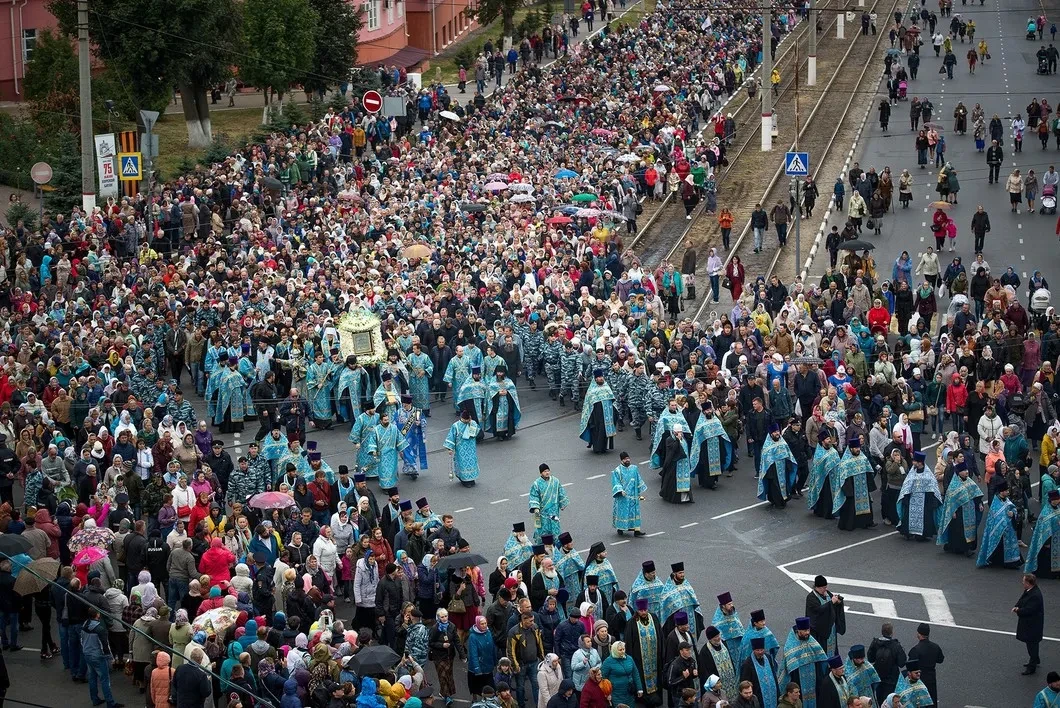
It is not superfluous to remind you that even the IV all-to-Zarabiy Cathedral in San Francisco in 2006, chaired by Metropolitan Lavra, did not vote unequivocally for the “reunion”, putting out a number of preliminary conditions (including the exit from ecumenical structures). The final decision was made kuluarno, at a meeting of a group of bishops, for one reason or another interested in giving positions.
Who stayed?
Today, at least 17 church jurisdictions continue the tradition of the Russian Orthodox Church in Russian Orthodoxy. In 2007, only 7 parishes were found in Russia that moved from the ROC to the Russian Orthodox Church.
The ROCZ (a) today is about 15 dioceses and more than 100 communities
In Ukraine, Russia, Kazakhstan, USA, South America and Western Europe. This jurisdiction supports canonical communication with the "fraternal" truly Orthodox churches of Greece, Romania, Bulgaria and Serbia. Her ideology is considered moderate. The more conservative wing is represented by several branches of the ROCZ (B) (by the names of their leaders to the abbreviations of their names, the second letter is added). The most intellectual branch is considered the bishop's meeting of the RPAC, which is headed by the doctor of philosophical sciences, Bishop Gregory (Lurie).
Each of the jurisdictions offers a program for the development of Russian Orthodoxy, and many of their ideas are adopted by opposition groups within the Russian Orthodox Church: for example, by the movement of Fr. Sergius (Romanova). Although these groups are now marginal, it is in their midst that there is a discussion and crystallization of alternative ideas.
Firstly, it is a criticism of “Sergianism” and ecumenism traditional for the ROCZ. The ecumenism was devoted to anathema in the ROCZ in 1983, the “theory of branches” is criticized in its text, according to which the truth is not preserved in the fullness of one church, but sprayed in parts between many faiths and denominations.
Secondly, the rethinking of the historical experience of the Church after the completion of its "symphony" with the tsarist power. It gives rise to a wide range of ideas - from the “tsarbozhy” (the veneration of the king as “Christ with a small letter”, the “sooking” of the Russian people) to the “Eucharist Ecclesiology” (the idea that the Church is not an administrative vertical, but each individual community where the liturgy is performed).
Thirdly, the very philosophical problem of Imaylavia, which excited the Russian church on the eve of the revolution, and then was slightly forgotten. The dispute between the Imyaslavls (their credo is “the name of God is God, but God is not a name”) and the name (believe that people gave the name of God) concerns the mystical aspects of spiritual life - questions about how “deification” of man and how God acts in the world.
Finally, the independent and persecuted position of the "alternative" communities helped them move away from the inertness and excessive hierarching of the state church. In the “fragments” of the Russian Orthodox Church there is no psychological distance between hierarchs and laity, co -sednation has been preserved, services are usually performed in simple home conditions, often without priests, when the laity stores spare gifts and are communed with them. The practice of confession via the Internet is widespread, and in general, modern forms of communication play a much larger role in this environment than in the official Russian Orthodox Church. Therefore, with the challenges of pandemia and self -isolation, “alternative” Orthodox were able to cope much better than the patriarchy concentrated on the temple and magnificent rituals.
***
The historical path of the Russian Orthodox Church is not completed. Her very peculiar and contradictory experience will still be in demand at the next cool turn of Russian history.