
Translated material
"Every girl with whom he met in Italy immediately lost her head ..."
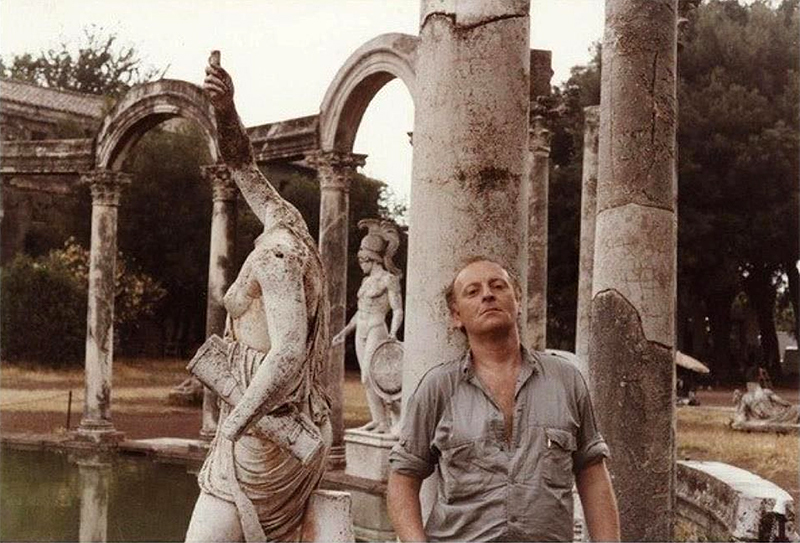
At the St. Petersburg Publishing House, Perlov Design Center was published by the three -volume “Joseph Brodsky in Rome” , prepared and compiled by Yuri Leving. The publication consists of a separate “guide” according to Rome Brodsky, Tom “Poetry, Prose, Graphics”, including drawings and texts - including unpublished - Brodsky, dedicated to Rome, and detailed “labors and days” of the poet in Rome - chronicles, memoirs and interviews of Roman friends and interlocutors of Brodsky from around the world.
For publication on colta.ru, we chose one of the conversations of Yuri Leving from the third volume of the publication - a conversation with Sylvia Ronke, the Italian writer, critic and TV presenter, professor of classical philology and Byzantology of the University. In 1981, Ronkei graduated from the University of Pisa with a degree in Byzantine Philology, subsequently studied Greek church manuscripts and conducted research under the leadership of an outstanding visant historian A.P. Everyone in the Washington Center for the study of Byzantium.
- Let's start from the beginning. Tell us how your acquaintance with Joseph Brodsky happened.
- I was 20 years old, and I graduated from the university, when Brodsky’s poems only appeared in Buttafava’s translation in the Mondadori publishing house Lo SPECCHIO . I read them and admired. It was summer - I can’t remember what year, but I studied in my third year. Most likely, 1979 . Soon after, he came to Rome at the invitation of the American Academy. In general, he came before that - for example, to participate in poetic readings. Then in Italy there was a fashion for poetry, and the organizer of the next festival was Franco Cordelli [1] . He invited Brodsky, but then we did not meet. This happened a few months later, when he arrived again as a scholarship at the invitation of the American Academy. The Mondadori publishing house arranged a party with Maria Stella Sernas - a socialite, although far from intellectuals [2] , where we met. I had with me a book of poems published in Italian. And he was a womanizer, and I think that every girl he met in Italy immediately lost her head. After the first meeting, we had several dates, and I was very interested in his poems about Russia. It should be noted that immediately after my birth, my father was appointed a correspondent and went to live in Moscow with his mother, who received the attachment of culture at the Embassy of Italy. Then it was 1958, the Khrushchev period, a very interesting time.
- What newspaper did he work in?
- La Stampa . He stayed there for three years.
- In Moscow?
- Yes. But not only, of course. He traveled a lot- in my opinion , he went to Siberia three times, attended the funeral of Pasternak. He was one of the few Italian journalists who not only understood the events of that time, but was their witness. He gained experience and was quite famous, wrote a number of books [3] . I have always been interesting to me in connection with my lonely childhood: I read Russian folk tales that my parents sent me, listened to Russian lullabies. I am tenderly about the Russian language and in general atmosphere, because these are my parents, my childhood.
- You stayed in Italy when they left?
- Yes, my father did not want me to go with them. He was afraid that if he was accompanied by a child, then he, as a foreign correspondent, would become a vulnerable target for blackmail or revenge ... But I still went to Russia when it became older. I was sorted out by curiosity; I visited Leningrad, Moscow, but I saw very little, even being a representative of an intellectual profession, and not just a tourist. You yourself know how difficult and dangerous it is to establish ties with the professor there. Therefore, Brodsky was an indispensable source of information. Although our first acquaintance was from the clan “Macho glued the student”, I think that in the end we became friends on the basis of curiosity.
- But what about the age difference?
- I was twenty, he was forty. Not so big. He had many friends in Rome, and I think that I saw, unlike the others, the general picture, and therefore I was also his adviser in love affairs. I was very young, but I knew, I always knew that there was no love between us and that he was a female saint. He was so, in addition, it seems to me that he still loved his Russian wife very much. He did not belong to anyone. We had friendly and, perhaps, partly male relations based on trust. He told me about Russian literature, about Russia, about his life and attitude towards women, to love. We were friends, and in return, I provided him with two response services. Firstly , of course, I showed him Rome. Despite my young age, I was educated and versed in these things. He was also interested in literature - not only Italian, but also modern Greek. For example, in those days he really needed money, and [Janny] Buttafava, his Italian translator, found him a job: regularly write articles for the newspaper L'Espresso ...
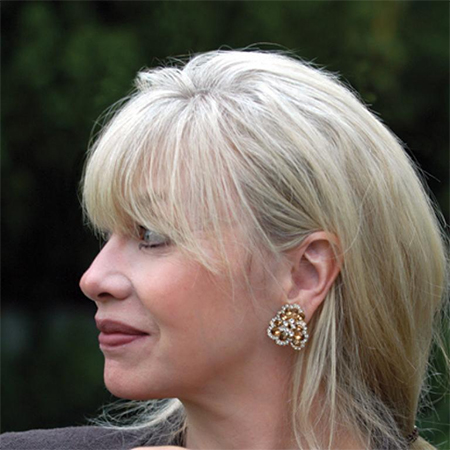
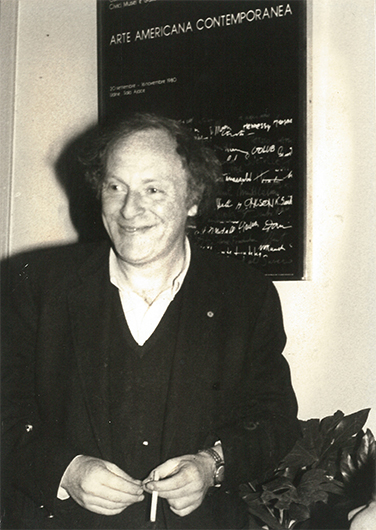 © from the private archive Joseph Brodsky against the background of a poster dedicated to the Exhibition of Modern Art, which took place in Rome in the fall of 1980. 1983 photography of Sylvia Ronkei
- Who exactly found him this work?
- Buttafava, his translator, who himself worked in this edition. Joseph at one time wrote articles weekly, and each time he had to look for a new topic. Either he wrote about Virgil, then about the modern Greek poet Kavafis, and I helped him with advice and looked for materials. I remember that once he wanted to read Marino - a little -known Italian poet of the Baroque era of the XVII century [4] . We pass it at school and know who it is, but his work is so difficult to perceive that it was not easy to get his book. Therefore, I went to the Vatican Library, where I spent a large amount on copying the full works of Marino on a microdillus. And Joseph was very upset and said: “Listen, I want to read only a couple of poems. Choose yourself. " After that, I tried to take the right one in advance. I received a classic education, studied Italian art and literature, Latin classics, and by that time it had already become a Byzantine. Hence, in particular, his knowledge of Byzantium, he sat for hours and read on my couch. I translated, as it seems to me, if not the most important, then one of the most significant and well -known historical works - a chronicle written by Mikhail Psell, the philosopher and politician of the XI century. I was the first to translate it into Italian, it was considerable work, thousands of pages ...
- From Greek?
- From the Byzantine Greek, they do not differ much. Unfortunately, there are no dictionaries, and for the correct translation I had to imagine what was being discussed, but again this was not understood without translation, so I experienced difficulties trying to find the right approach. It was interesting to Joseph; There was a weak translation into English, which I used to verify, and he read it entirely.
-In English?
- Yes. From crust to crust, he read a lot about Byzantium. He knew another Byzantologist, Michael Maas, and our efforts thoroughly plunged into this topic. Sometimes the three of us went somewhere or dinner together. Our friendship lasted several years. It seems that he received the Nobel Prize in the mid -eighties ...
-In 1987.
- Yes. So, we talked about seven or eight years. I flew twice to him in America. Once in New York , he was very happy then because of the novel with the Chinese. He said: “You can’t imagine how different it is, how everything changes. If you switch to Asian, there is no way back. ”
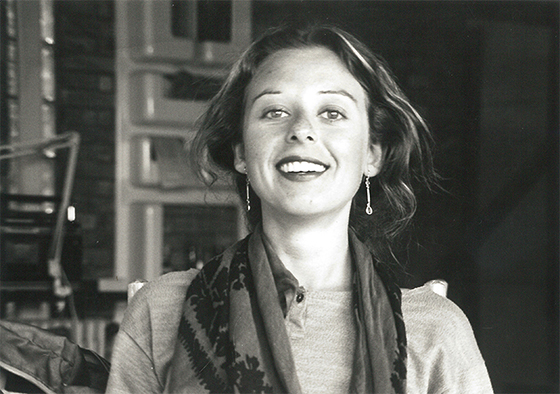 © from the private archive of Sylvia Ronkei, early 1980s
- He quoted long excerpts from Dante on Italian from memory, which, of course, speaks more about his memory, and not about the knowledge of the language.
- Yes, he had a very good memory: he knew by heart a lot of poems in the languages unknown to him. True, his English was magnificent. He was often angry with me for not understanding his Russian poems. Before our acquaintance, I read only those works that were transferred to Italian, so the first thing he gave me collections in English: first only two, and then others. At the same time, he read to me in Russian all his poems, even originally written in English, because he did not like how they sound in foreign languages. He repeated: “I am a Russian poet. My poems are music. They need to be listened to, not read, this is a long -standing tradition. ” Very often he read his poems from memory, although he “read” is a not quite accurate word. Perhaps in the Russian tradition it is customary to read poetry like prayer or a ritual song or it was his individual manner of recitation, which, in my opinion , was more like a spell, and not to music.
- Even for Russian literature, despite its diversity, his style is unusual: the power with which he read his poems is incomparable with nothing.
- Yes, I understood that. However, my knowledge of the Russian language was, of course, not enough: I remembered only a few words from Afanasyev’s fairy tales, although then I was belatedly learned Russian. Over the past twenty years, my Russian friends happened to me to read his poems, which they perceive as music, Litania - I do not know how to describe more precisely; In his verses there is something from the liturgy. It is strange that, despite the freedom - he was a fan of Shorelo de Laco - he had his own sacred values: his own poetry and the art of poetry, as well as poetic recitation.
By the way, about religion - we went around all the churches of Rome, although he treated them with irony. I have never been devout, but in Rome it is impossible to isolate from a religious tradition, which is as strong as the historical one. That is why I had to force him to go to church, from these campaigns he developed the theory that Rome is the city of nurses; He found the architecture of the Roman churches very sexy. It seems he mentioned this somewhere.
- He really compared the domes with the wolf's decks, who nourished Romulus and Rem.
- Yes, it all started with a wolf. There were also street animals-especially the cats that he often saw, walking along Rome-this is how the image of a dangerous mutant beast arose, who had something from the wolf, and something from the cat. Sometimes in museums, looking at the baroque paintings depicting allegorical animals, he exclaimed: “Yes! That is how I see Rome. ”
- That is, he identified Rome with the beast?
“Yes, with a mutant, with an allegorical beast,” he was crazy about Baroque. Once, disappointed in Marino, whom he could not read, he wanted to see all Bernini’s work, because he really liked the baroque architecture of the 17th century. I was unhappy with this - I believed that he should have paid more attention to the Roman Renaissance.
In communication with others, he was somewhat incontinent: his behavior was sometimes indecent, causing and even rude. It was not easy for me to admonish him.
- Can you give an example of such incidents?
- Yes. In Rome, there was one very interesting person who had long emigrated from Russia Jewish Liya Weinstein. From a rich family, she was a philologist and belonged to the intellectual elite. She was born, most likely, in the twenties, as she was the same age as my parents [5] . She left after the war and settled in Rome in a small beautiful villa in the ar-nuvo style in the Monty range, not far from VIA Vittorio-Veneto Street. In this house, I met all the dissidents: with the wife of Sakharov [Elena Bonner], Sinyavsky and many others, whose names were then in hearing. It was not easy to meet them - they behaved very wary, but they were all - like any other Russian who left for the west - they certainly came to Villa Weinstein, where meetings with real dissidents took place. She introduced the newly arrived representatives of the intelligentsia with the Italians - but not with everyone, but only with those who understood the situation and was ready to help Russia and Russian culture. And Leah Weinstein invited him to dinner - it seems that during one of his visits to Rome after being at the academy. She arranged magnificent evenings, investing a lot of efforts in training, and the food prepared by her chefs was amazing. She treated everyone with great participation, was polite, tactful, good. Dinner was scheduled for half a week, Joseph came to half a seven, absolutely drunk, and stated that he was hungry. He was given tea with cookies ...
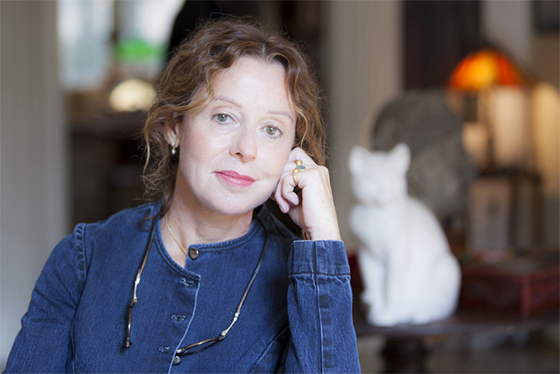 © Leonardo Cendamo Sylvia Ronkei
“Have you been to him?”
- No. I was invited separately, together with my "Russian" father. Of course, I did not want him to learn about our relationship. I arrived an hour earlier than the appointed time because I wanted to help with the preparation, and found the mistress of the house in horror - Joseph was about to leave, saying: “I am fed, I don’t want to get to know anyone. The cookies were quite enough, all the best. ” Of course, a funny story could have turned out from this if his behavior were not so defiant.
By the way, I have preserved diaries that I have been constantly led from ten years old, but I have never re -read it.
- You are behind this and lead them ...
- ... To lay out everything on the shelves and forget, yes.
- In the diaries of Joseph of that period, your name appears quite often: "Sylvia, Sylvia, Sylvia ..."
- You said that these are not quite diaries ...
- Yes, more like reminders - like those that are now written in smartphones.
- Exactly.
- From time to time, he made notes about what he wanted to remember, and, as we will see later, some of them were included in his essay. Others are not, for example, remarks about colleagues from the American Academy or a record of their mood. Funny things are also found, for example: "For a whole week in Rome - I have not yet heard a single smart thought."
- Yes, he was a little arrogant, but we loved him and forgave him it. That case of poor Leah Weinstein ... although he was older than me, in his soul he remained young and immature. He did not have enough experience to understand the difference between Lia Weinstein and just a pompous secular person. I don’t know if he learned this in Russia or in America, but he very subtly felt European differences and characters. He had no equal in communication: he was smart and knew how to recognize the mind in his interlocutor - and at the same time he was very different, he was arrogant, rude, impolite with others, but never with me.
- By the way, this is a very interesting question: how did you and other Europeans see him? He was not an American, but he was not Russians either. In America, many perceived him as a European, but the Americans have certain ideas about what a real European should look like, which do not always coincide with reality.
- Yesenin has a well -known poem "Confession of the Hooligan." “Hooligan” is not a completely accurate word, but it was his ideal. He pretended to be a savage and to some extent was so.
- Do you think he really had such a character or is it just an image that he wanted to support?
- Both.
- That is, he deliberately chose such a model of behavior?
- Yes. I was young and inexperienced and represented him completely differently. I knew and loved Russian literature, poetry, talked with Russians: for example, with Lia Weinstein or my parents' acquaintances, and he turned out to be very unlike them. In addition, he seemed to me more sophisticated, educated, but he was completely different. He learned a lot in Rome, was a capable student. It may seem strange, he taught me a lot, but I taught him the basic things, as well as Michael Maas and others. He had to study as a schoolboy. Of course, it was read, but not as I thought after reading his poems. He wrote more intuitively ... I got the impression that when he came to Rome, he had complexes on this subject. From here, perhaps, this ostentatious image appeared. Then he changed his mask, becoming a sophisticated European. He was such, more than he recognized, so I can’t say that this change was sudden. Perhaps the change occurred just before the presentation of the Nobel Prize. By the way, this is a funny story: he often came to me when I lived by the Trevi fountain, in a very good quarter. Every time he came for at least a few days to Rome, he appeared without warning and asked for permission to call from the threshold: after all, I had a phone, although I was not rich. He probably was more comfortable to call me. Calls to Stockholm began long before the Nobel Prize, in the 1980s . He always repeated: “Yes, I have very good friends in Stockholm ...” I think he wanted to get this award, for him this was not a surprise: you know what was required to win. I do not claim that this was the reason for Joseph's friendship with the Swedes, but he regularly called me only in Stockholm. Sometimes, after an annual separation, he asked me: "Can I come to you?" And I immediately thought: "Surely it will call the Swedes again ...." - It turned out.
“Did he speak English with them?”
- Yes. Although no, in Russian . I can’t say for sure, because I have never eavesdropped, but I have no memories of the topics of conversation, since my language was unfamiliar to me. He did not know Swedish, so most likely it was Russian.
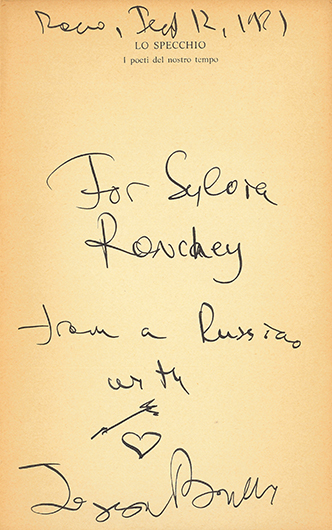 © from the private collection "Sylvia Ronkei from Russian with <love". Feb 12 [Raly] 1981 Rome. ” At the collection "A Part of Spech" for Sylvia Ronke
- Tell us about your apartment. Don't you live there anymore?
- No.
“Could you call the address then?” I would like to photograph this building in which Joseph spent time in Rome.
- VIA in Archone, 98, a very comfortable place. Раньше там был маронитский монастырь, но потом его превратили в жилой дом с садом. Я жила в маленькой квартире-студии.
— Вы снимали ее?
- No. В Италии другое отношение к недвижимости. Здесь легче купить жилье; даже молодежь может позволить себе небольшую квартиру.
Возвращаясь к разговору об общении: мы часто ужинали с разными людьми. Почему-то я никогда не хотела ходить с ним на ужины Американской академии, хотя он посещал их, по его словам, с другими знакомыми. Может быть, я ревновала и, кажется, все-таки присоединялась к нему пару раз. Исключением был Майкл Маас — с ним мы ужинали несколько раз, но он был коллегой и очень интересным собеседником. Однажды, по-моему , во время его третьего или четвертого визита в Рим, случилась забавная история. Мне кажется, она отлично отражает его поведение. Я знала, что он в Риме, мы виделись, хотя отношений у нас не было. Внезапно он начал звонить мне и уговаривать встретиться, что очень меня удивило. Он с восторгом отзывался о Гертруде Шнакенберг, очень хорошей поэтессе. У меня было много друзей в Американской академии, один из них — мой сокурсник из Университета Пизы, который получил стипендию в Академии и жил там. Однажды за ужином я спросила его о Гертруде, на что он ответил: «Она одиночка, не любит общаться с людьми, зачем тебе с ней встречаться?» Но я все-таки разыскала ее и пришла к ней в гости, потому что она повредила ногу и не выходила из дома. Она рассказала мне: «Со мной случилось несчастье. Я не могу видеться со своим любовником, потому что не могу никуда пойти, а он не хочет меня навещать».— «Кто он?» — «Один русский поэт». — «Иосиф?» - "Yes." И тут мы поняли, что он сменил девушку, как меняют лошадей. Нам было смешно, но потом мы решили проучить его — все-таки он поступил очень грубо. Можно подумать, что из-за сломанной ноги нельзя встречаться с девушкой. Через два дня бедный Иосиф уехал из Рима. Это был единственный раз, когда я отчитывала его за его поведение. Но Гертруда была очень интересной девушкой, очень красивой, просто чудо: голубые глаза, светлые волосы и бледная кожа. Хотя ей было чуть больше двадцати, она писала потрясающие стихи. Мы подружились. Иосиф уехал, а мы продолжили общаться, и она объяснила мне то, чего я не видела. В отличие от многих подруг Иосифа, считавших, что каждая из них — единственная для него, мы знали, что он полигамен. Мы разговаривали откровенно, помогли друг другу многое понять. Конечно, он коллекционировал не просто женщин, но женщин талантливых и очень умных.
 © Stanford University Гертруда Шнакенберг
— Для него это был еще один способ познания мира?
- Yes. Я подразумевала именно это, когда говорила, что он приехал сюда дикарем, но жаждал учиться. Несмотря на свой возраст, в Риме он все равно был учеником. Он поглощал историю, европейскую культуру. Я не знаю почему: из-за русской ли или еврейской крови или потому, что он был диссидентом, которому единственным оружием служило творчество. Возможно, у него отсутствовала возможность получить эти знания в России.
— Говоря об открытиях: расскажите, как вы вместе исследовали Рим. Что вы ему показывали?
- All.
— Тогда, наверное, вы можете назвать его любимые места? Вы упоминали, что водили его в церкви и музеи, поэтому у меня к вам два вопроса: почему он не хотел ходить в церкви, что привлекало его внимание? И как он вел себя в музеях?
— Больше всего ему нравились картины, и в каждом портрете он искал лицо своей жены. Еще в самом начале он сказал мне, что она похожа на Мадонну Перуджино. Увидев оригинал, он был несколько разочарован. Кроме того, ему нравились картины Боттичелли. Но он, скорее, искал женский образ, его идеал, а не свою жену. Я видела ее фотографию: она красива, но совсем не похожа на девушек с картин Перуджино. Он подпитывал себя картинами, ему всегда было мало. Мы трижды ходили в Галерею Боргезе — маленький музей, но в нем представлено много шедевров. Он просил: «Ты не могла бы снова отвести меня в Галерею Боргезе?» Она окружена парком Боргезе, где мы подолгу гуляли. Иногда, когда мы отдалялись от самого музея, он спрашивал: «Мы можем снова вернуться в галерею?» — к той самой картине Перуджино.
Как я уже говорила, ему очень нравилось барокко. Он не любил барочные картины — в Риме они преимущественно на религиозную тематику, — но он был восхищен барочной скульптурой и архитектурой, особенно церквями работы Борромини. Он был впечатлен Римским колледжем. Я училась там после того, как его превратили в школу. Он интересовался притчами об иезуитах, святом Игнатии и его последователях, поэтому ему и нравилось это здание. Его интересовало и классическое искусство, поэтому мы обошли все достопримечательности: Музеи Ватикана, археологические выставки, Капитолийские музеи, термы Каракаллы, термы Дионисия. Хотя ничто так не привлекало его, как итальянская портретная живопись.
— Он обычно сосредотачивался на одной картине или быстро проходил по залам?
— Он концентрировался у одной работы. Но ему больше нравились картины, чем археология.
— Вы помните что-нибудь из того, что он говорил о картинах?
— Он был очень саркастичен. Картины Леонардо или Рафаэля с изображениями животных он высмеивал за то, что девушки на них были в кольцах или ожерельях, которые казались ему слишком броскими и мешающими. Только работы итальянских художников трогали его до глубины души. Он считал нелепым, что женщины как на картинах, так и в жизни носят украшения. У меня не было драгоценностей, но я носила кольца, и он всегда смеялся надо мной. Возможно, сказывалось советское воспитание.
Не знаю почему, но он считал, что я похожа на русскую. Может быть, из-за моих длинных волос, которые я собирала назад. Ему очень нравились работы Климта, и я напоминала ему его модель.
— У вас были рыжие волосы?
— Рыжеватые, длинные и кудрявые. Я была очень худой, носила длинные платья. Может быть, поэтому я ему напоминала одновременно и австрийку, и русскую.
Позже, приехав к нему в Саут-Хэдли, я была поражена: он сам застелил нам с мужем кровать, отгладил простыни, приготовил ужин, завтрак. Мне кажется, это еще раз доказывает, что его неряшливость была одной из масок: он мог быть аккуратен, вежлив и гостеприимен.
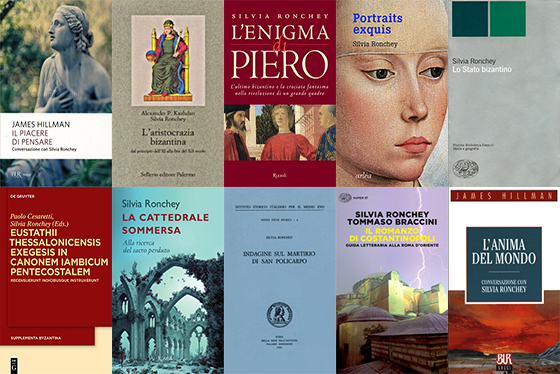 Книги Сильвии Ронкей
— Вы ходили вместе в кино? Хотелось бы поговорить о его отношении к Тарковскому, которого вы, как я понимаю, также знали.
— Однажды мы ходили в кинотеатр «Паскуино» в районе Трастевере, где всегда показывали фильмы на языке оригинала. Фильм был скучный и совсем мне не запомнился. Мы много говорили о кино: тогда был расцвет кинематографа. В отличие от него, мне нравились советские фильмы, поэтому мы спорили о них, в том числе и о картинах Тарковского. Он не считал себя диссидентом и обиделся, когда я сравнила его с кем-то из эмигрировавших на Запад соотечественников. Думаю, одной из причин его нелюбви к Тарковскому было его диссидентство или клише романтического изгнанника (сам Бродский применительно к себе эти нотки приглушал самоиронией). Он также говорил что-то про отца Тарковского…
— Арсения Тарковского, поэта.
— Да, он очень любил стихи Тарковского-старшего. Он говорил, что отец был талантлив, а сын — всего лишь его бледное претенциозное отражение, то есть именно так он, возможно, и не выражался, но таким образом я воспринимала его позицию, будучи страстной поклонницей фильмов Андрея… С другой стороны, зная Иосифа, сейчас я подозреваю, что он говорил о режиссере немного жестче, чем думал на самом деле, просто из духа противоречия (столь для него типичного!).
Он много рассказал мне о поэзии, особенно британской, которую хорошо знал и любил. Я почти не знала Одена — тогда в Италии до сих пор читали Элиота и Йетса, — поэтому он заставил меня прочесть его, а также Филипа Ларкина. Он не любил Джона Донна, говорил, чтобы я выкинула его книги и учила наизусть Марвэла. Они были близкими друзьями с Дереком Уолкоттом, и, конечно же, он познакомил меня с его творчеством. В прозе он очень любил Ивлина Во — по его словам, лучшего романиста [6] . Мне нравился Хаксли, он возражал: «Не Хаксли — Во». Потом я поняла, насколько ценны были его советы, хотя поначалу считала их снобистскими. Благодаря его идеальному вкусу я прочитала Лакло, Во, Ларкина, Одена. Когда он увлекся стихами Кавафиса, я советовала ему подробно изучить его творчество. Не знаю, прислушался ли он.
Перевод с английского Александры Смирновой
[1] Франко Корделли (р. 1943) — итальянский писатель, эссеист и театральный критик. С середины 1970-х годов курировал поэтические фестивали и редактировал сборники на литературные темы с социально-политическим уклоном.
[2] М.С. Сернас (Maria Stella Sernas) — журналист, переводчик на итальянский язык романа М. Твена «Приключения Гекльберри Финна» (Милан, 1978 год), автор книг для широкого читателя по истории гастрономии (например, о происхождении пасты). То, что русского поэта Бродского пригласили на вечеринку именно к Сернас, супруге киноактера Жака Сернаса, похоже, не случайно: незадолго до этого она приняла участие в работе над сценарием для телефильма «Che fare?» (1979–1980) по роману Н. Чернышевского «Что делать?».
[3] Альберто Ронкей (1926–2010) — подробнее о нем см. в комментариях к публикации римского календаря Бродского в книге Ю. Левинга «Иосиф Бродский в Риме» (т. 3, с. 60–61 ).
[4] Джамбаттиста Марино (1569–1625) — представитель поэзии барокко, чьи мадригалы и канцоны отличаются витиеватым стилем с неожиданными метафорами, а также сочетанием метрических и ритмических экспериментов.
[5] Лия Вайнштейн (1919–2001) — подробнее о ней см. в комментариях к публикации римской записной книжки Бродского в т. 3 (с. 89–90) .
[6] Незадолго до этого, говоря о «Мексиканском дивертисменте», Бродский признавался: «Боюсь, некоторые люди в Мексике рассердились, потому что стихи немножко в духе Ивлина Во» ( Eva Burch and David Chin. Interview with Joseph Brodsky (1979) // Columbia. A Magazine of Poetry and Prose. Spring — Summer . 1980).