
Translated material
"Hello, you have HIV"
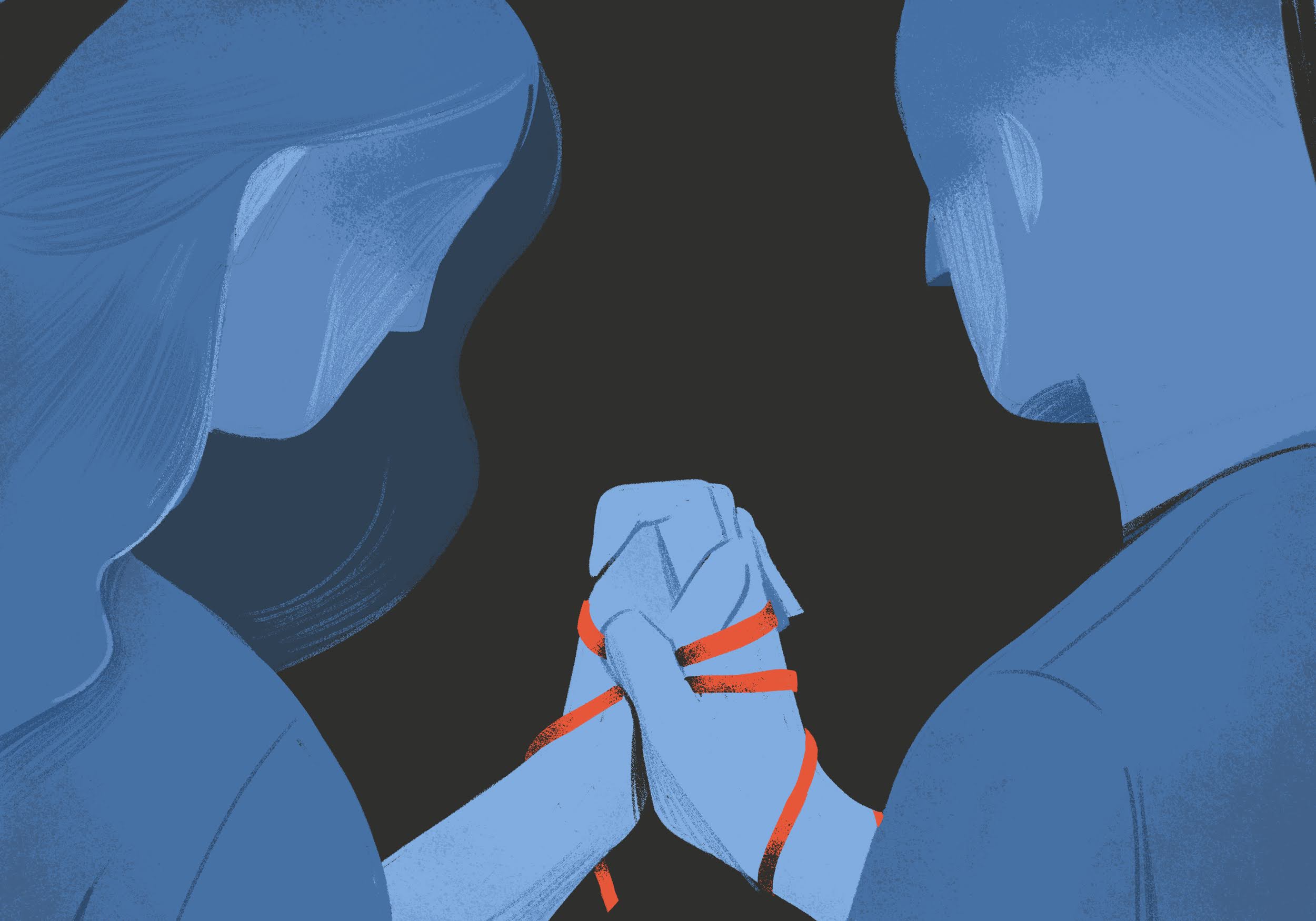
Masha and Kostya met, fell in love with each other, got married. And a few months after the wedding, they learned that they had HIV. And life turned over
At the request of the heroes, their names are changed.
They met at the concert, saw each other and did not let go anymore. Masha lived in the distant northern city, and Kostya - in the suburbs. We corresponded for a long time, tried to come to visit as often as possible. In May 2018, he called her and said: "Move to me." She did not hesitate.
“Things were packed together. Together they loaded into the car, - recalls Maria. - All the way they held hands, like children. We did not know what would happen next, how everything would turn out. There, at home, I had a good job, a rented apartment, a calm life. But I easily left this. ”
In August of that year, they got married. The ceremony was modest. Of the guests - only a couple of closest friends. I didn't want a noise. Happiness loves silence.
And in April 2019, Kostya fell ill. And everything has changed.
Unknown fever
“Everything looked like an ordinary SARS. The temperature is low, runny nose, cough, but nothing serious. Kostya even went to work for the first time. I did not want to lose money, ”Masha smokes. It still cannot speak calmly.
But the "cold" did not pass. Kostya was discharged antibiotics.
“They were changed several times. I drank one course after another, but did not help. There was weakness, an appetite disappeared. I started losing weight. "
Three weeks have passed, then a month, then another. Kostya was sent to one specialist, then to another - no one could understand anything. In the directions there was a wording "Unknown fever."
“In May, we were convinced that the bone has allergies,” Masha recalls. - I had to take tests endlessly, do examinations. The therapist only shrugged. "
Among the recommendations there was no one - to take tests for HIV, hepatitis and tuberculosis. The Pulmonologist suspected was disgraced, which Kostya came to the reception in early June. By that time, he lost 18 kilograms, he could hardly walk, and just lay most of the day.
“It occurred to me to check for HIV. But I drove this thought,-Kostya walks around the room back and forth, folding his arms over his chest. “I wanted to believe that this is an allergy.”
The pulmonologist gave a referral to Monica named after Vladimir. They urgently conducted all the necessary studies. The results came almost immediately. HIV.
“I was told that I had only 21 immunity cells. Against two and a half million viral particles. I was dying. "
Mistakes of the past
Konstantin was hospitalized in one of the clinics near Moscow.
“It's good that it was summer. In winter, I would not stand there - it was through all the cracks. Everything around was old, faded, worn, rusty. It seemed to me that I was a broken mannequin and I was sent to a landfill. ”
The head of the department acted quickly and skillfully. After a couple of weeks, the “dripped” and more or less recovered young man was already at home. Masha did not leave him a single step.
“I passed the analysis simultaneously with the bones. Status: positive. One thing pleased: the initial stage. ”
They registered in the AIDS center in the territory of Monica named after Vladimir and began to receive therapy. At the same time, doctors raised the history of Constantine's disease. It turned out that he could learn about his HIV status back in 2015.
“This is my second marriage,” says Kostya. - The first wife was called Vika. In July 2015, we were expecting a child. It was already a second or third attempt. Vika was offered to go to the hospital for preservation. It was necessary to submit an analysis for HIV. I handed over with her. Her result came first. "
Victoria told her husband that the result is negative. Like most men in Russia, Kostya “checked around his wife” - I decided that if Vika is all right, then with him too. I did not take my result. Victoria could not stand the child.
“Why did she lie? Don't know. She does not speak either. Vika recently wrote to me herself. I asked if she was taking therapy. It turned out that he has been drinking pills since that very July. And I didn't even notice ... "
Learn sympathy
Konstantin still feels his guilt for what happened. But even then and now he is most afraid of one thing - to lose Masha.
“I didn’t even have a thought about leaving,” Masha admits. - Yes, when I found out everything, I wanted to break my head against the wall. But leave Kostya? No".
How difficult it is to accept such a reality, Kirill Fedorov, a psychologist, a well-known LGBT activist and HIV-positive, knows from his own experience.
“When I recognized my status, it seemed to me that a impenetrable glass wall appeared between me and my close people,” says Cyril. “There was a feeling that she would never disappear.”
From the point of view of a psychologist, it is important first of all not to torment yourself, not to engage in self -flagellation.
“It is important to understand why, for example, a person decided not to take the results of the analysis. Was he scared? I must admit this. It's not about self -justification. We just need to add context to our behavior in a specific situation in order to treat ourselves with sympathy. Only this attitude can be constructive. It allows you to develop an alternative to Stigme and a feeling of guilt. Of course, it is still very important that everyone in such a situation has an accepting environment. ”
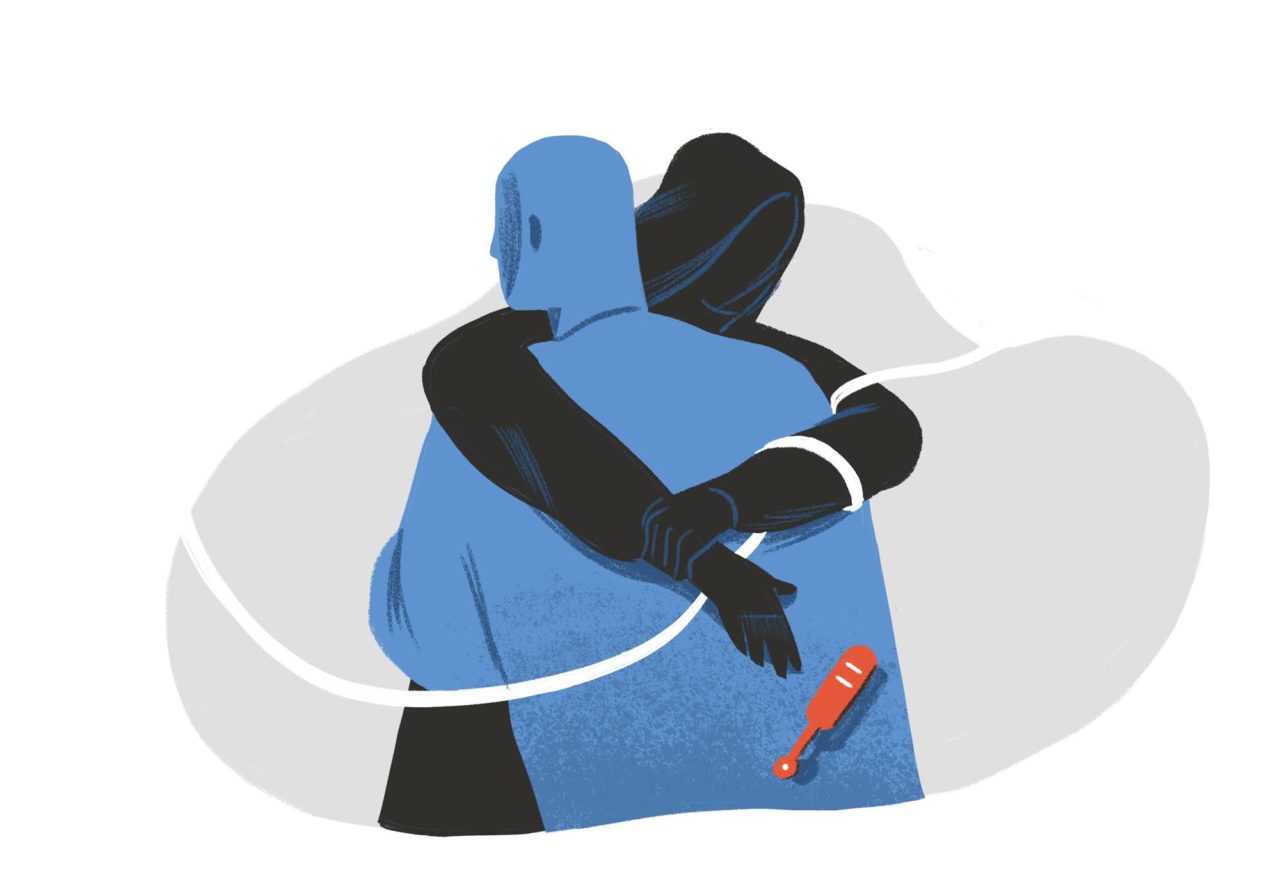 Illustration: Ksenia Gorshkova for TD
Sympathy for themselves and the support of loved ones help to stop endlessly to blame themselves and avoid depression. The next step is the acceptance of responsibility.
“We cannot change the past, but the present and future in our hands,” the psychologist continues. -If we once behaved irresponsibly, this does not mean that we will act like this all our lives. In order to change, of course, it will take time. This is a whole process. When you find out that you have HIV, you cannot stay the same. And here it is important to understand that a person is always more than any diagnosis and any circumstances. You reconcile with a new reality and begin to look for yourself in it. You get therapy, you are alive. With what meaning will you live now? "
Everything is used: goals, ambitions, aspirations, hobbies, work. Some people eventually become consultants. Having learned to live with HIV, they help to adapt to his reality to those who have just received a positive analysis.
Russian roulette
According to official figures in Russia, about 250 people are infected daily by HIV infection and about 100 people die. “It's hard to believe that we are now part of this statistics,” Maria admits. -It was especially shocked that I was checked regularly, I did tests before the wedding in 2018, and in the winter of 2019 too. Everything was negative. "
According to the infectious disease doctor, the H-Clinic specialist Ekaterina Stepnova, the virus may not be transmitted immediately.
“Sometimes one unprotected contact is enough for infection, but there are frequent cases when HIV was transmitted to a healthy partner after a few years of living together with an HIV-positive person who does not accept therapy,” the doctor explains. - This is a Russian roulette. If a person does not know about his status and does not take medicine, if the couple does not use condoms, then this is always a matter of luck. ”
There are also restrictions on HIV tests. According to Catherine, an immunosorbent analysis, for example, can be false positive. This happens when the body has proteins similar to proteins against HIV. “That is why we must analyze the“ immunoblot ”. This is a method that allows you to detect antibodies in the body to HIV and to any other infection. The combination of two methods eliminates errors . ”
If the tablets end
“Thanks to the regular and proper use of therapy, the virus is blocked in the body and immunity begins to recover,” Catherine continues. - Ideally, it rises to the meanings given to man by nature, or rises simply to a safe level. It all depends on a specific situation, a stage, a responsible approach to therapy. ”
If you take the drugs in the wrong dosage or violate the intake schedule, there is a great chance that the virus will begin to play and adapt to drugs . Then they will stop working.
“With proper use, HIV particles cannot“ study ”the blocking drug, which means that the transition of infection to the advanced stage is almost impossible. The viral load on the body is reduced to zero. At the same time, a person can no longer convey the infection to a healthy partner in sexual contact, as he cannot transfer the virus to his unborn child. ”
In Russia, HIV-positive people should receive therapy for free in AIDS centers. At the same time, one of the most common questions in specialized forums: what to do if the clinic ends in the tablets?
“Therapy is issued for several months,” the infectious disease specialist explains. - The main rule is to always have a supply of drugs for at least a month. But, even if for some reason one of them ends in the center, doctors will be able to replace it with the other. There will be no person left without therapy. ”
Maria and Konstantin do not share the point of view of the doctor. According to the couple, if they had not received therapy in the AIDS center under the Vladimir Monica, they would have had to be tight.
“Infectious development at the place of residence was warned immediately: there are no tablets in our town. Buy or negotiate with the regional center, ”says Maria.
In the film, Yuri Dudia “HIV in Russia is an epidemic that they don’t say about”, frightening data sounded: only 50% of the necessary volume of drugs were purchased in the country. The inability to cover all HIV-positive free therapy is recognized in the Ministry of Health of Russia.
“Now 75% of people who are registered receive antiretroviral therapy. In general, this is a lot. The task is to increase coverage, ”said Alexei Mazus, the chief freelance specialist in HIV infection of the Ministry of Health of the Russian Federation and the Department of Health of the Russian Federation and the Department of Health of the Russian Federation, at a press conference on November 27, 2020.
Of course, drugs can be bought. But prices bite. A number of medicines will cost an average of 500 to 2000 rubles per package. But if the recipe has a Kaletra tablets, the pocket will hurt. The average price is 7000 rubles.
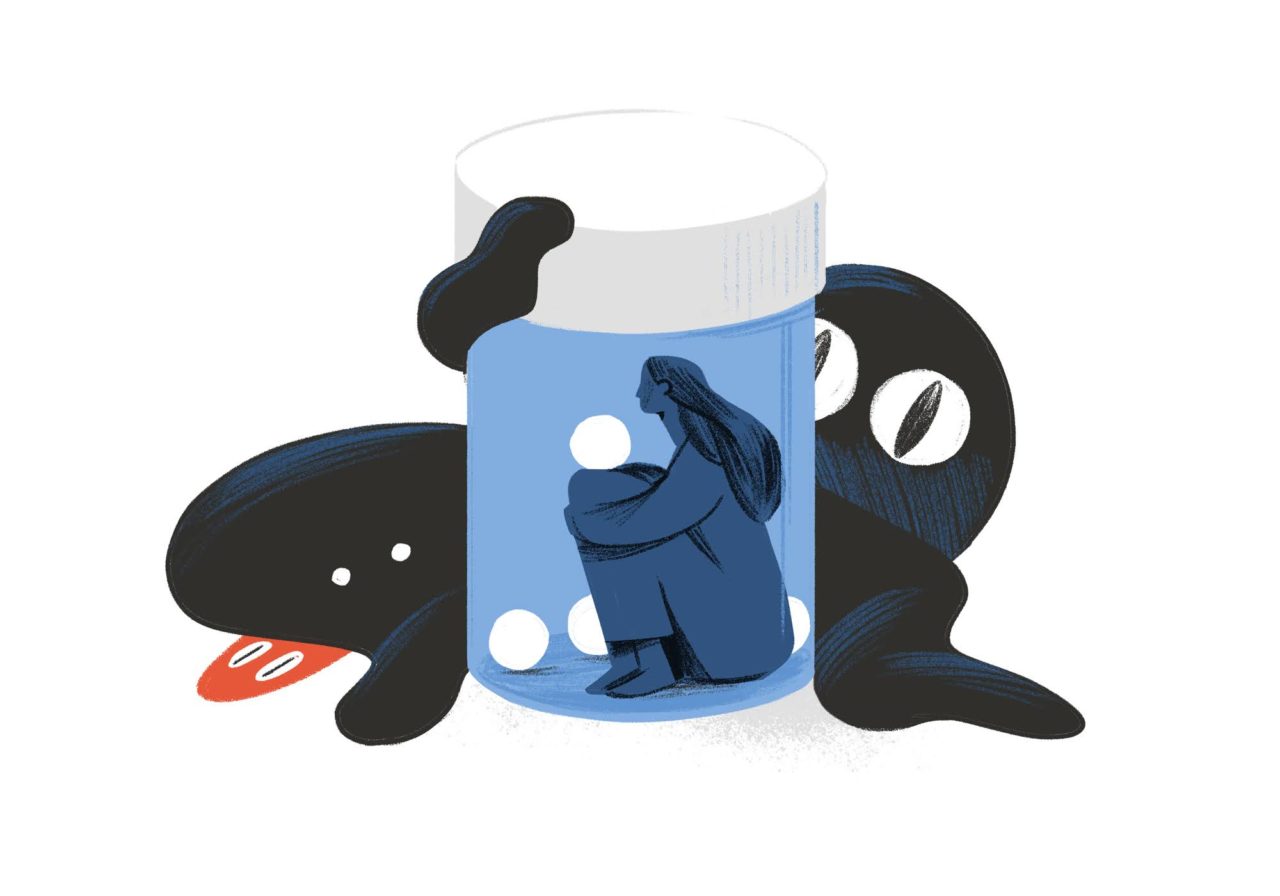 Illustration: Ksenia Gorshkova for TD
There are decent people
Pressing, under which HIV-positive people fall in Russia, Masha and Kostya felt right away. As soon as the doctors of the local clinic learned about their diagnosis, an indifferent attitude was replaced by frank neglect and rudeness.
“Now every trip to the doctor is turning into a battle for his own dignity,” says Masha. - Several times we were told in the face: “There is nothing to treat drug addicts!” Again and again we have to explain that we do not use drugs and actually lead a healthy lifestyle, and according to statistics, the most common way to transmit HIV is ordinary human sex. But they do not believe us. As a result, medical care is formally provided, but disgusting and spitting. ”
Relations with a doctor-infectious disease specialist of the regional AIDS Center developed better, but even here questions appeared that forcing Masha to sleep poorly at night.
“One of the drugs gave a side effect,” says the girl. - I have nightmares, I became aggressive. I was warned that this is possible. They said that the drug can be replaced. But the doctor refused to write out another. This medication was too effective in reducing the viral load. It was ordered to endure. "
If we are talking about replacing the drug, Ekaterina Stepanova and Kirill Fedorov are recommended to contact the head of the AIDS-center, write a statement.
“Now we are already thinking not only about how to extend the life of an HIV-positive person, but also how not to worsen the quality of this life,” continues the infectious disease specialist. “If the doctor refuses to replace the medication that gives strong side effects, you have to go higher, fight, not be shy and not be afraid that you will be refused.”
It is important to explain to the doctor what exactly happens, how side effects are manifested.
“We cannot penetrate the heads of our patients,” says Ekaterina Stepanova. - We can not always imagine how bad a person is. The patient’s task is to convey this information as accessible as possible to explain that it is impossible to live with such side effects. ”
All the right for everyone
None of the colleagues of Mary and Konstantin know about their HIV status. Young people are afraid that if the fact is revealed, they will simply be fired. They are sure: maybe not officially, but in practice they lost many rights. And the most important thing is the right to live openly.
“Citizens with HIV have all the rights and obligations stipulated by the Constitution and other legislative acts of the Russian Federation,” explains the lawyer of the forum of people living with HIV, Alexander Dzdakov. - Dismissal from work on the basis of the diagnosis is illegal. In the same way, patients with HIV have the right to apply for improper provision or refusal to provide medical care only because of the presence of such a diagnosis. ”
Another acute issue of the family history of our heroes is Victoria. Maria and Konstantin are sure: it all started with her.
“We even thought of applying to the police,” Masha admits. “But they abandoned this idea.” In the end, although there is an article for the infection or concealment of information about HIV, Kostya himself decided to remain in ignorance. What to make noise now? "
In the Criminal Code of the Russian Federation there is really article 122, which provides for the punishment for intentional HIV infection, but many lawyers consider it not only poorly thought out, but also frankly discriminatory.
“The sanctions here vary from restriction to imprisonment for a period of 5 years, if an adult has become infected, and up to 8 years old, if a teenager up to 18 is infected,” explains Zalina Kashirskaya lawyer. - In practice, the found guilty receives a conditional term and pays a small moral compensation. Things under this article rarely reach court - too complicated and confusing. The article is completely “not crowded”. ”
“This article criminalizes HIV and strengthens the stigma, identifying HIV-positive citizens as potential criminals,” adds Alexander Vozdakov. - This is a marginalizing, discriminatory norm. Human rights activists advocate the cancellation of Article 122 of the Criminal Code of the Russian Federation and offer to qualify acts under other articles - intentional infliction of light, medium and serious harm to health. With the instructions, the Deputy Prime Minister Olga Golodets addressed a number of ministries to consider the exclusion of this article from the Criminal Code. Unfortunately, it remained on paper. ”
In Russian legislation, there are other norms that discriminate against people living with HIV, for example, a ban on permanent residence in Russia to foreigners and stateless persons with HIV-positive status.
Live and be silent
Masha and Kostya live with the realization that they are HIV-positive, only a year and a half. They admit: they have not yet been used to the end and have not adapted. Outwardly, their life has not changed - both continue to work, communicate with friends and relatives. Masha is increasingly thinking about repairing in their common house, and both are about a new round of search for themselves. While I am writing this text, Maria translates the next manga from Japanese, and in the interruptions she draws the cover of a new album for familiar musicians. Kostya is dealing with sound recording programs and a new microphone - he earnings, recording the houses of friends and acquaintances.
“The most difficult thing is silence,” says Masha. - Only Kostins and a couple of closest friends know about our diagnosis. My mother does not know and, I hope, will never know anything. She will not accept this. Such a person. So for her I always have everything the best. ”
“Of course, HIV changed us,” Kostya admits. -But we somehow survived this news, digested. Now I see that we have become more attentive to each other, to appreciate our family more, our relations, our lives. Probably, if there is at least something good in this story, then this is exactly what. ”
The struggle for the rights of HIV medical care psychology