Date
Author
Катя Бонч-Осмоловская, Артем Щенников
Source

Preserved copy
Translated material
One hundred terrorist attacks up to 18
The FSB felt a promising direction of work: the fight against "children's terrorism." Research "New"
Over the past year, several high -profile detentions of adolescents have occurred in different regions of Russia: according to the power of the security forces, they planned to arrange terrorist attacks in school buildings or law enforcement agencies. Special services began to actively report on the prevention of such attacks since 2018 - before that, only isolated cases came to the media. The "new" was versed in why the security forces became interested in minors and how "terrorism" became a chassis article to intimidate adolescents.
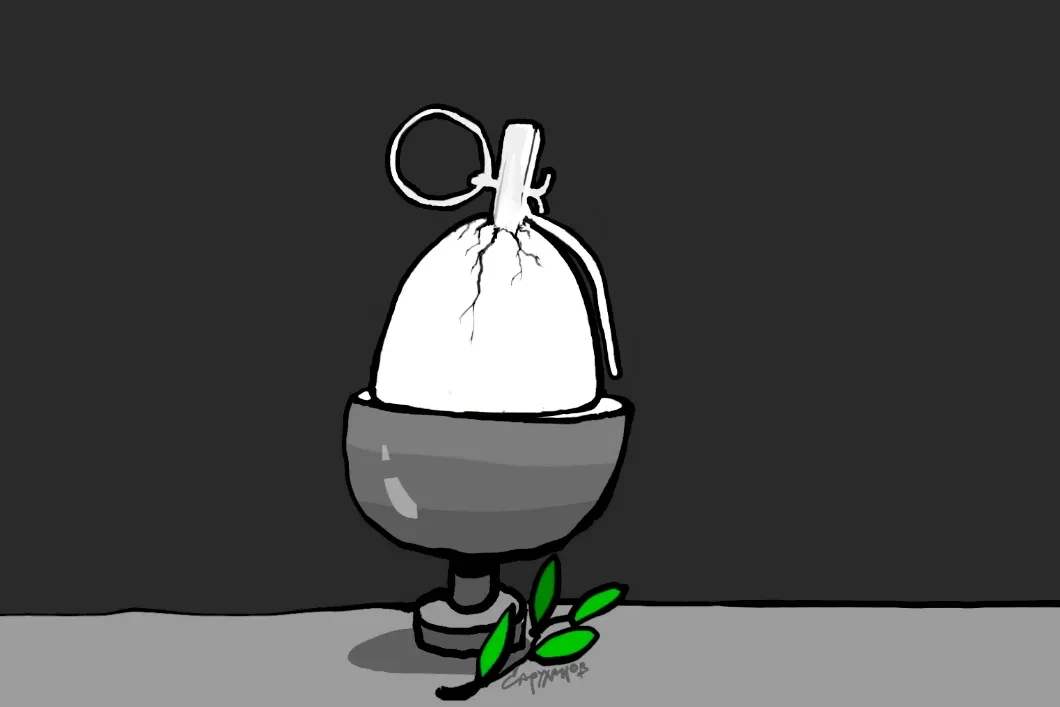
Since 2014, at least 29 attacks with the participation of schoolchildren and adolescents have occurred in Russia - such cases occurred in every third region. 33 people became victims of these incidents, another 137 were injured. Most (21 people) died during mass shooting at the Kerch Polytechnic College, which was arranged by Vladislav Roslyakov in the fall of 2018. Five more attacks were brought to the victims, the rest ended without the dead. Basically, attacks were made in educational institutions - schools or colleges, three terrorist attacks occurred in law enforcement buildings.
If you believe the security forces, such cases could have been at least three and a half times more - almost a hundred. Since 2013, the special services have reported at least 69 attacks planned by adolescents, which managed to stop, the most part (63) over the past two years. The most active security forces work in the Krasnoyarsk Territory - during which time it became known about three failed attacks in this region. In most cases, adolescents who planned the attack found explosive devices, and they initiated cases of preparation for murder or terrorist attack against them.
As we thought
By open sources, we collected cases when schoolchildren or students arranged shooting or explosions in public places, and also attacked people due to racial or religious hatred. We allocated information about the dead and the victims, the region in which the attack used, the weapon and the place of the attack, as well as what happened to the attackers. We excluded cases of household conflicts and careless handling of weapons.According to media reports and law enforcement sites, we collected 25 cases when special services reported on the prevention of such attacks. At the same time, in February 2020, the FSB center reported that more than 50 attacks were prevented in two years, which adolescents wanted to arrange in schools - most likely, some security forces did not publicly talk about some or it was not clear from the messages that we were talking about minors. Excluding duplication from our sample, we received 69 preventions for November 2020.
"New" requested information from the FSB. At the Center for Public Relations, the department promised to answer within a month.
If the details of the attacks almost immediately fall into social networks and the media, then the details of special operations to prevent such cases are usually known only from the words of the security forces themselves.
It is impossible to find out what exactly is hiding behind the reports of the special services - a real struggle against terrorism or the desire to earn a “asterisk”.
“The FSB is a very closed structure. There is no public control, and supervisory authorities are not able to control its activities, so they can draw anything. Each department works, first of all, in its own interests in order to maintain budgets. To do this, you need to present the results so that both the authorities and society understand: if such work is not carried out, dashing times will come in the country. From this point of view, the state is easy to manipulate if you indicate that the country has a very difficult atmosphere with terrorism, ”says lawyer Vitaly Cherkasov.
Doubts about the validity of the accusations presented by adolescents also arise because those
The evidence that falls into open access looks absurd.
Only over the past few months, the reason for the pursuit of schoolchildren was a subscription to a page in VKontakte about the execution at the American school of Columbine or plans to blow up the FSB virtual building in the game Minecraft. The authors of the idea were accused of organizing a terrorist community.
“The chatter on radical topics is a frequent behavior for adolescents. If the leadership requires the operatives to monitor suspicious youth groups-this is normal, but if it is necessary for surveillance to lead to a certain percentage of criminal cases, this does not end with good, ”said Alexander Verkhovsky, director of the SOVA information and analytical center.
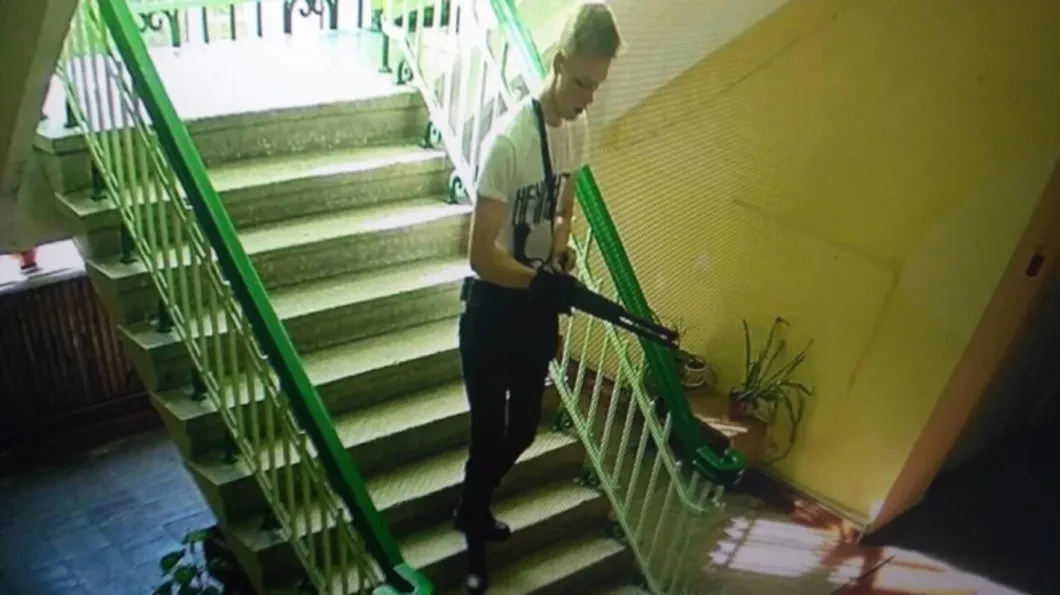
Despite the regular reports of security forces about the prevention of terrorist attacks planned by adolescents, young people still make attacks that could be warned. In October 2020, the 18-year-old student Daniel Monakhov opened fire at a stop in the Nizhny Novgorod region, as a result of which four people were killed. Later it turned out that Monakhov was preparing for the terrorist attack long before that: he planned to arrange a massacre at school in the spring of 2019, which both teachers and law enforcement officers knew, but then they did not start a matter.
Here you are not terror
The security forces began to be actively interested in schoolchildren two years ago: until 2018, “New” managed to find only six cases when special services publicly reported on the prevention of attacks planned by adolescents, while in the past two years they have reported this regularly.
The reason for the close attention of the security forces to adolescents could be protests in the spring of 2017, which began after the investigation of Alexei Navalny “He is not Dimon”.
Then young people massively went to rallies against corruption throughout the country.
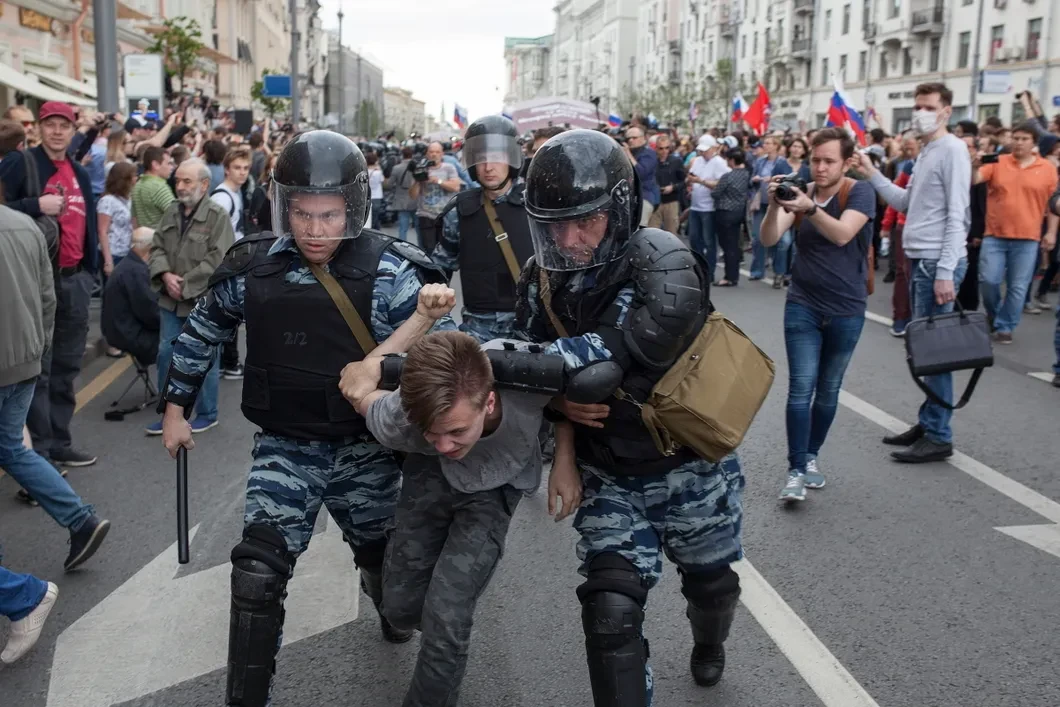
“It seems that after the participation of adolescents in the mass protests of Navalny, the topic rose that they are involved in some kind of political activity. <...> In previous years, the question was not posed so. Previously, if the FSB discovered a group of 14-15-year-old anarchists or monarchists who discuss how to blow up something-and such, of course, is there, then they were limited to preventive measures, they would intimidate them somehow, took them under surveillance and considered their task completed. There would be operational work, but criminal cases, most likely, would not start, ”says Verkhovsky.
After these protests, the first high-profile affairs appeared against schoolchildren and students related to terrorism: in the fall of 2017, the security forces detained the first suspects in the “network” case ( the organization banned in Russia. - Ed. ), In the spring of 2018, the defendants in the “New Greatness” affairs were arrested. Under the investigation were more than 20 people who were accused of organizing a terrorist and extremist community, as well as an attempt to overthrow power. The accused complained about pressure and torture from the security forces.
In 2018, several resonant attacks occurred at once, which were organized by minors: mass shooting at the Kerch Polytechnic College, as well as an explosion in the FSB management in Arkhangelsk. The intelligence service took under tight control everything related to this case: for the comments related to this incident, at least 14 criminal cases on the justification of terrorism were opened.
“Marazm is growing stronger. We are increasingly seeing: everything related to assessing the work of the FSB falls under hard pressure. They believe that such organs are out of criticism, and those who criticize should be teached and showed by their example so that others are disgraced, ” -
Cherkasov notes.
Despite these high-profile cases, there is no real surge of teenage terrorism after these events in Russia-attacks still occur five to six times a year, while the number of reports on the prevention of such crimes has grown sharply. In 2019, the FSB reported six prevented attacks, in 2020-twice as much, despite the pandemic and distance learning.
Terrorism is the new 282th

According to the Ministry of Internal Affairs, about 40 thousand minors commit crimes annually. From the information of the department it is not clear what kind of misconduct, however, it is possible to understand the structure of child crime from judicial statistics - the sentences are carried out by approximately half of the offenders.
Over the past six years, only 2% of adolescents have condemned for crimes related to terrorism, extremism or an attack on a civil servant - despite the fact that it is these motives that the security forces are intently paying attention. Most of the crimes are associated with robberies, theft and robbery - about three quarters of sentences are carried out for this, but attention is almost not attracted to the prevention of such crimes.
In 2018, the judicial department at the Supreme Court began to separately report on minors convicted of articles related to terrorism. For two and a half years, 11 teenagers were convicted of them, they received from two to ten years in a colony.
At the same time, security forces began to regularly report on the prevention of teenage terrorist attacks. During the same period, they reported at least about 59 prevented attacks - five times more than the number of teenagers convicted for this.
Most likely, these cases either ended with preventive conversations, or have not yet reached the sentence. However, if the FSB started a terrorism case, it is extremely difficult to get rid of preventive measures, Cherkasov notes:
“Preventive conversation is possible only in a situation where the competent authorities did not find anything unlawful in the acts of the person. We tried to find at least one example when the court critically reacted to accusations by the FSB and justified the person, but usually one of the two options was selected: either condemnation or its replacement with a long -term content in a medical institution. ”
More often, adolescents fall on court for false messages about terrorist attacks than for a real terrorist attack - there were six times more such cases. However, there would be a good part of minors convicted by the “terrorist” head of the Criminal Code (24th) received deadlines for illegal manufacture, sale or purchase of weapons and explosives.
Every year, several dozen adolescents received terms for crimes related to extremism, but their number fell sharply after 2018. This is due to the fact that after explosive growth of affairs for likes and reposts and harsh criticism of human rights activists, Article 282 partially decriminalized, Cherkasov notes. It is possible that the “terrorist” articles will become the new 282nd for adolescents: the reason for the persecution may even be a subscription to the page on VKontakte, but whether adolescents had real criminal intentions.
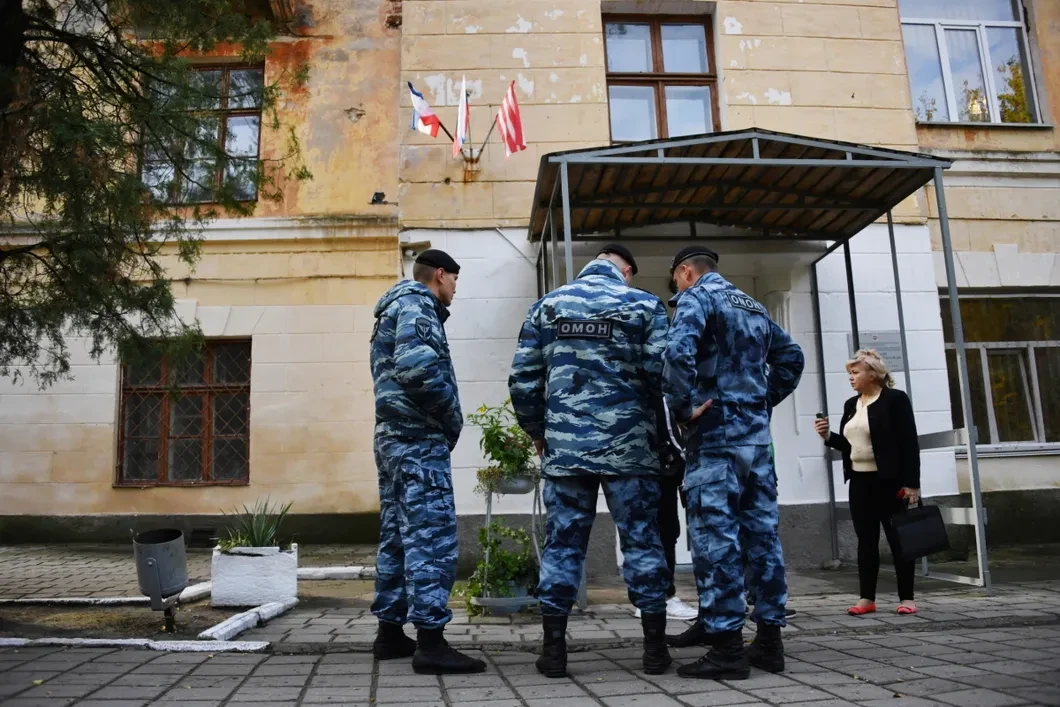
“Our bodies always work according to the established rule: a decision is made that today such and such a preventive or punitive direction of activity is very in demand, and it is necessary to throw all their strength at him,” the lawyer says.
The Russian authorities repeat again and again that the cause of teenage crime is the spread of “destructive ideas” on the Internet. The low standard of living and the difficult conditions that children face are said much less often - more than half of the convicted adolescents were brought up by one parent or outside the family. Despite this, the state continues to spend money on surveillance of schoolchildren in social networks and the program of patriotic education of youth. Read about this in the continuation of the study "New".
with the participation of Anna Titova, Nikita Kuchinsky, Andrei Serebryansky
Editor: Arnold Khachaturov