
Translated material
“Troy” - Konstantin Khabensky, Victoria Isakova and Julia Peresild in the unusual film by Anna Melikyan about a banal love triangle
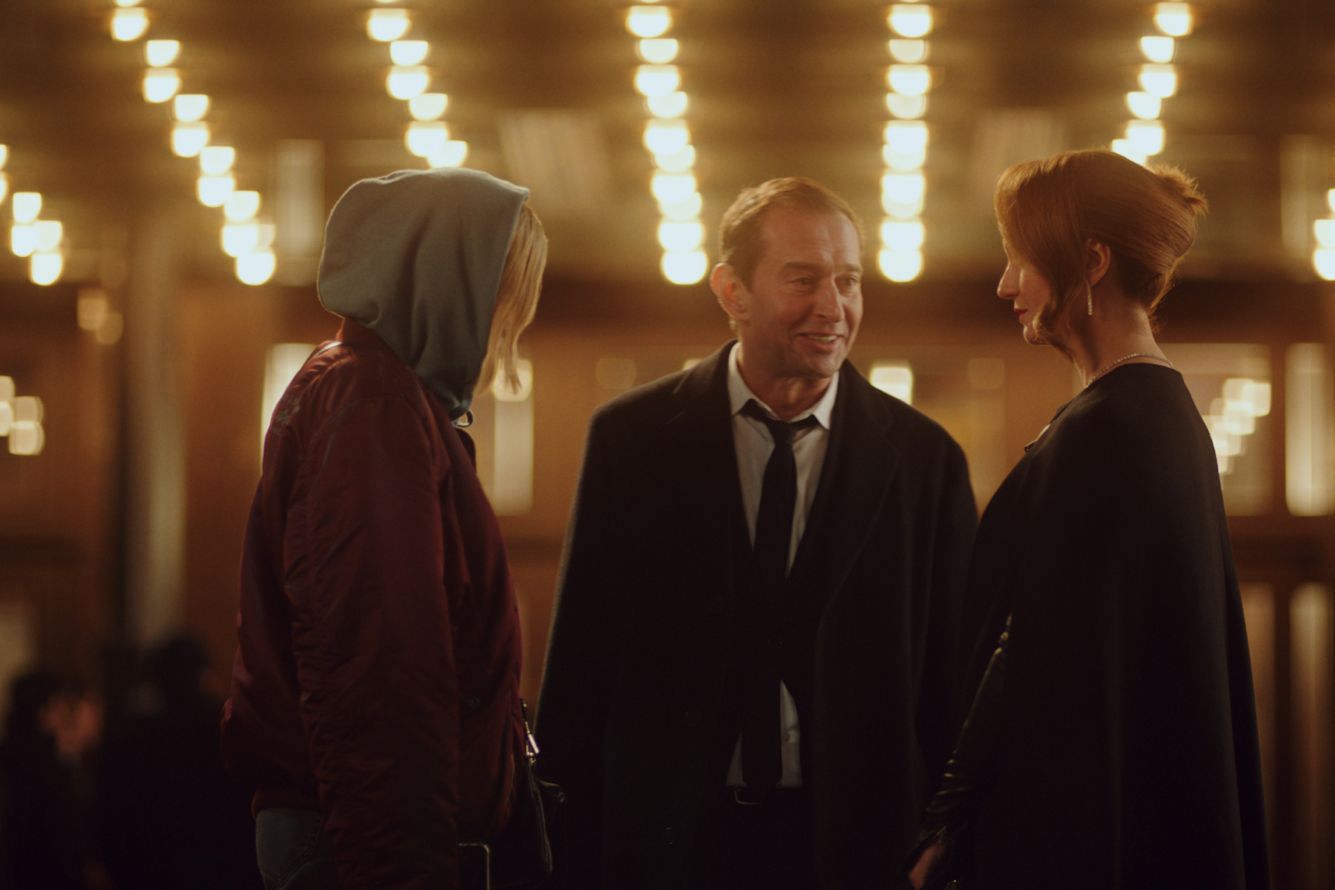
On December 3, Anna Melikyan Melikyan “Three” is released on December 3 - a film about a pair of successful wealthy Muscovites and one Petersburger, between which a love affair is tied. The main characters were played by Konstantin Khabensky, Victoria Isakova and Julia Peresild. In addition to them, no one appears in the frame - for the operator work on the last “Kinotavr” they awarded Nikolai Zheludovich, who shot the picture. The film critic "Medusa" Anton Dolin says that interesting can be found in this classic plot.
The name “three” can cause a wide range of associations - from the “Trinity” by Andrei Rublev, to which Anna Melikyan turned in her previous film“Fairy” (she will show the icon here), to the school Soviet joke: “Three, three and three, what will work? - Nine. “Wrong, hole.” But even the holes are different. Some will call the film itself an empty place, others will pour tears, feeling the holes in the hearts of his heroes.
For Melikyan herself, the number three are undoubtedly magical. Her most famous paintings are in trilogy with obvious autobiographical subtext. In Mermaid, Star and Frame, the strange, not adapted to the life of the girls with varying success tried to change reality for themselves. In the Romkom “About Love”, who won the “Kinotavr”, Melikyan herself pretended to be such a young sorceress, shamelessly and exclusively varnishing modern Moscow for her lyrical needs, to the public for joy. “Three” is already an adult view of love, folded in the simplest geometric figure - a triangle. You can’t pretend to be a small one, the author grew up.
A man named Sasha (Konstantin Khabensky) works leading in an entertainment television program. His wife named Zlata (Victoria Isakova) is a popular motivational psychologist, earns trainings and books. Both are childless, successful, Muscovites; He pulls to add “typical”, although this is unfair. Once he will almost commit suicide after another meaningless ceremony - the prize will become a stone around his neck - but will rise to a new life, having met another woman, Veronica (Julia Peresild). She is a guide and poetess, lives in St. Petersburg. Between the two capitals, as was the case with the "irony of fate" itself - or before? - From now on, all three will be torn in a futile search for an answer to the question about the finale of this banal and eternal history.
“Three” - light target so much that it is uninteresting to aim critical arrows in it. Yes, this is a story from the world of wealthy prosperous people living in their information bubbles and who do not want to know anything about the rest of the country and the world (Veronica, of course, is slightly poorer and spiritual, she is from St. Petersburg, but her daughter is studying in London). Yes, the rich also cry and love, childlessness or betrayal experiences in the same way as the rest. Yes, Melikyan gives the “love mood” with glossy: sometimes the heroes turn into a kind of defendants in a fashionable shooting in Rapid. Yes, all three actors are superstars that, if necessary, can pull out even weak material. Nevertheless, the “three” emit the neophy and anxious, but a living and genuine feeling of vulnerability of both the author and its characters. It makes the film fascinating and, apparently, personal, regardless of obvious shortcomings.
At the Kinotavra, the jury awarded the prize to the young operator Nikolai Zheludovich, who had previously shot documentary cinema. This is not just a polite nod addressing to a picture that did not have enough advantages for the main prizes: operator work is the form that determines the content of the “three”. Zheludovich and Melikyan set and managed to solve a rather original problem: in the frame there should be the faces of only three main characters. The rest are present in fragments and fragments: fragments of bodies, backs, blurry figures in the background, orders. This applies to Sasha’s colleagues on his television program and even her guests, the audience of Zlata, excursionists or listeners of Veronica poems - in short, to everyone. The trick, but extremely meaningful. In an unusual way, Melikyan concentrates the audience attention on the solipsism of three lovers (each in his own way, each is unhappy) who cease to see and hear the rest.
I wonder how it works. Separately, the heroes of the film cause clear irritation. Sasha is an unsuccessful balagur, tired and contaggering, his transfer is full of sexist stamps (for example, there is a silent animation assistant-eateression of Klava, which the presenter claps the ass). Zlata lies to others and itself, dating the day after day beaten common places, and also manages to earn on this. Veronika, of course, is not such a burner of life, but she also hangs on the ears of a Susal noodles about Ksenia Petersburg and the ghost of Paul I in the window of the Mikhailovsky castle. In addition, her poems are infuriated - old -fashioned viras, which they do not write now. The promotion of the poet, through a poem read out by the TV presenter in love, also seems to be a plot course from the distant past (or, on the contrary, from Hollywood).

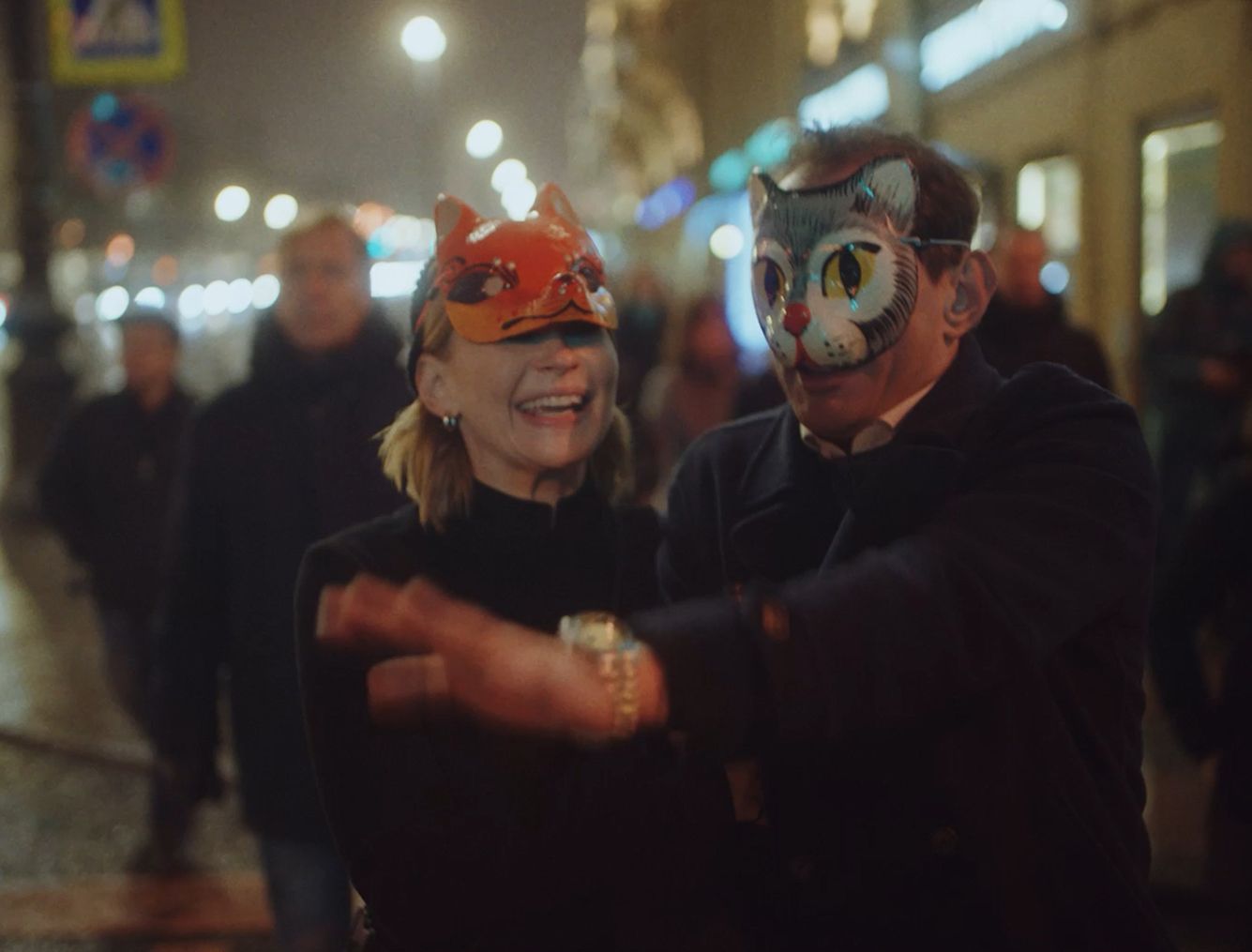
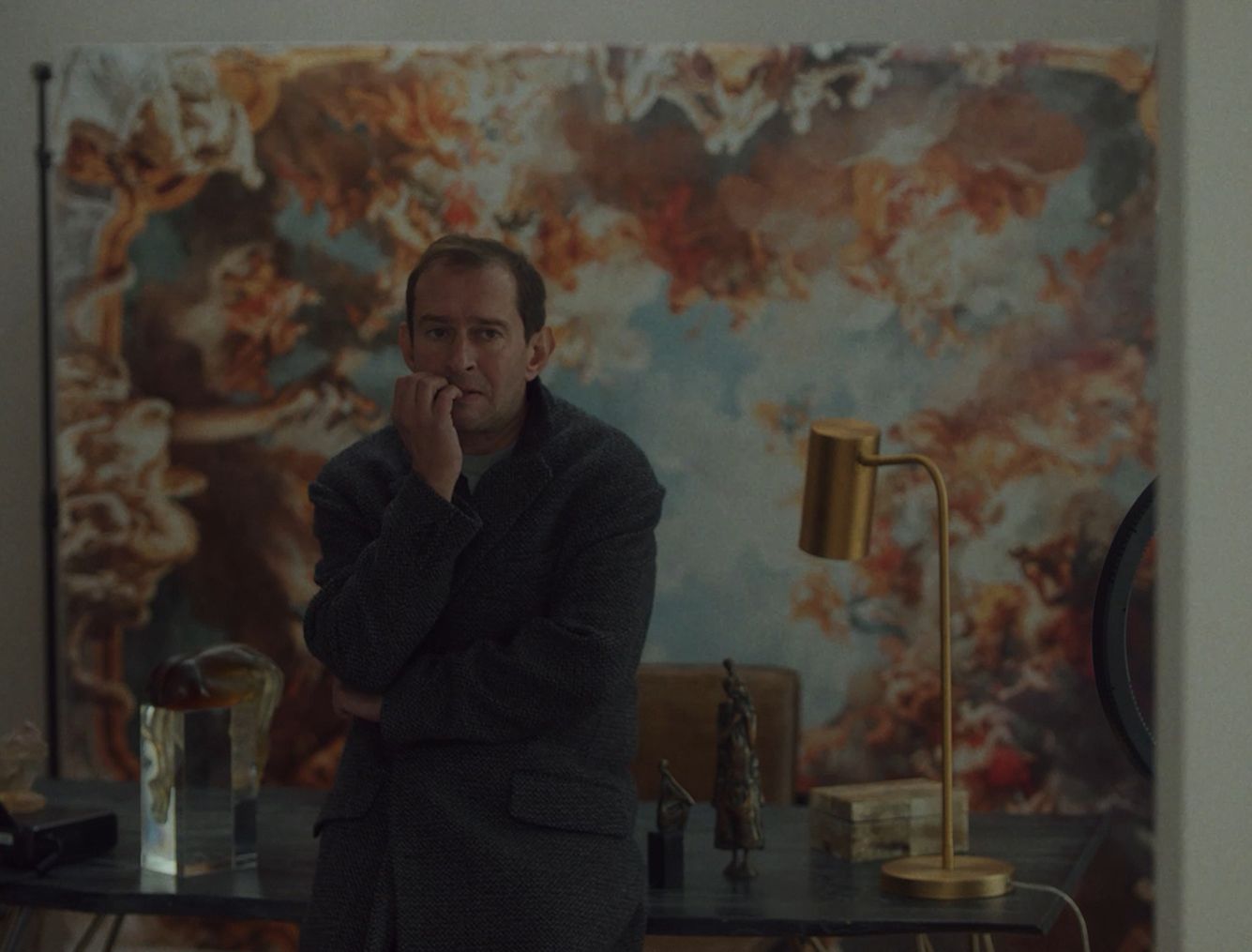
However, Melikyan does not aim to fall in love with the audience into his heroes. On the contrary, the film works to overcome distrust. Already not young, conceited, weak, unhappy, even miserable in some ways (the low growth and Lysin Khabensky have never been focused in the cinema), because they also fall in love. And they are more defenseless. In any case, their defenselessness-the material is especially touching and in some ways tragic. After all, the conflict does not imply any resolution. The finale will remind the dead end of the “autumn marathon”, to which, as well as “flights in a dream and in reality,” Melikyan refers quite consciously. Even the film poster is stylized under Soviet cinema.
By the way, about poetry: Veronica is so named so by chance - in the frame she reads the verses of her namesake Veronika Tushinova. “We are not destined to meet forever, but I don’t care, but I don’t care!” “There is something in this ... vintage,” Sasha uncertainly formulates, hearing these lines. Tushnova was born before the revolution, she created her first escapated poems about love during the years of large terror, gained popularity in a thaw time, passed away in 1965 - and already posthumously became All -Union famous for songs performed by Alla Pugacheva and Sofia Rotaru. “Do not renounce, loving” she wrote. In essence, the “three” Melikyan can be considered a film adaptation of this line. Yes, this is a poetry of a different standard than the usual cultural public: there is too much rhythm, rhyme, naive feeling. However, love, according to Melikyan, comes that way. A person shakes off his social luggage, remaining naked in front of his feeling in hostage.
As if experiencing our patience, the “three” leave us in the same place where the film began - in the cold font, where the hero will have to go through a new life. Behind the scenes, another Soviet hat, “winged swings” are tearing. Some courage is required to admit that this song in childhood seemed to us the most beautiful of the created by humanity. It is possible that at a painful moment we will also unconsciously hum her melody. Of course, to yourself, otherwise awkward.
Anton Dolin