
Translated material
Russia was recognized as a poisoner
58 countries from the OPCHU have no doubt that Navalny was poisoned by the “novice”, and demand assistance from the Russian Federation in the investigation
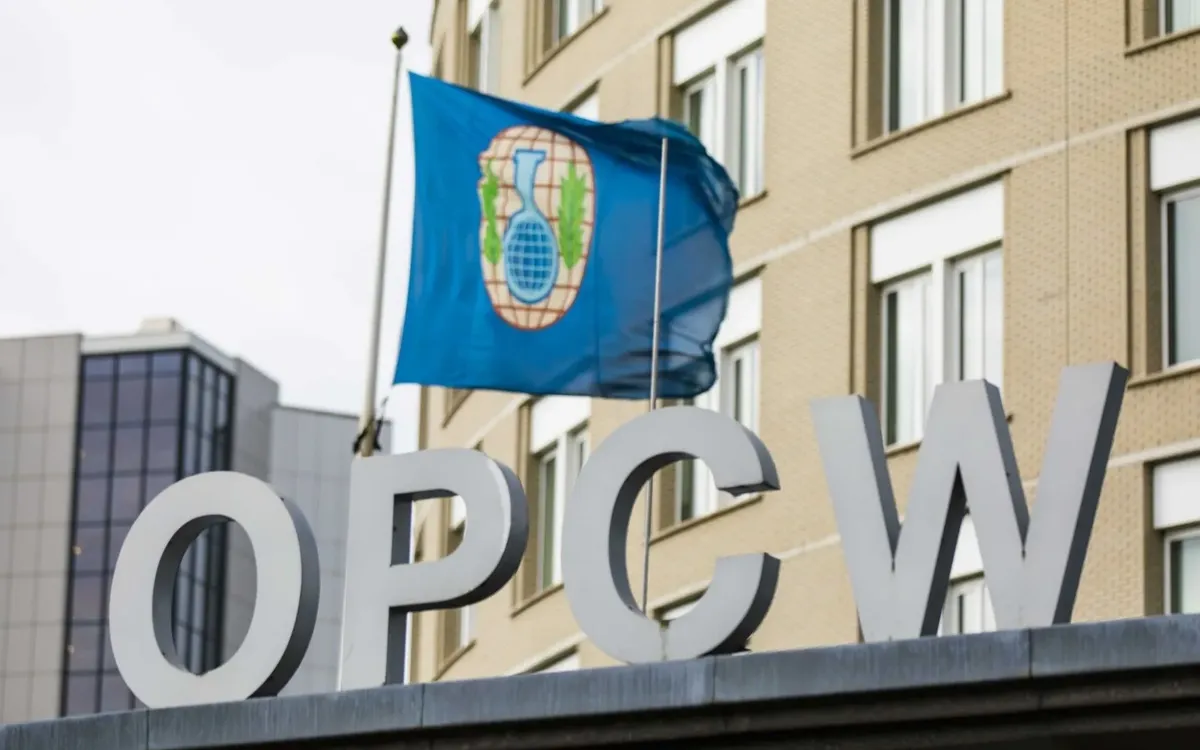
On Monday, the next annual meeting of the organization to prohibit chemical weapons (OPCO) opened in the Hague. This year, one of the topics on the agenda was the poisoning of Alexei Navalny as a poison of the "Novice". Several dozen OPCO members signed a joint statement in which Russia was called to cooperate for the "as fast as possible and transparent clarification of the circumstances of the use of chemical weapons."
This year, due to the coronavirus epidemic, the OPCWA meeting was divided into two parts-the first was held on November 30-December 1, the second should take place in 2021, the exact dates have not yet been scheduled. Traditionally, before the meeting, representatives of OPCW members can send letters addressed to the representative of the organization with questions that are proposed to include in the agenda. This time, Navalny's poisoning appeared in many letters.
“Any use of chemical weapons is the subject of international concern and is completely contrary to international standards,” wrote a representative of Germany at OPCO Gudrun Lingner. -Therefore, the use of a neuro-paralytic agent against Alexei Navalny on August 20 in Russia undermines the principles of the Convention on Chemical Weapons and our overall security. <...> Germany is convinced that in the twenty -first century there is no place for chemical weapons. "
A similar message-in a letter to Canada, Lisa Hellfand: “Ozkho confirmed that a neuro-paralytic agent, very similar to the agent of the Novice, was used to try to kill Alexei Navalny in the Russian Federation. The use of any chemical toxins for the purpose of killing is a violation of the Convention.
We repeat our call to Russia from 2018 to fully reveal our program for the "beginner".
Russia in its letter by the beginning of the annual meeting indirectly responds to accusations, although it does not directly mention Navalny's poisoning. “We completely condemn the threats of the use of chemical weapons from someone, including in relation to civilian objects. The use of any dangerous chemicals, including white phosphorus, is unacceptable, ”the letter directed by the Russian delegation says.
The Russian delegation also calls on representatives of other countries "to refrain from attempts to politicize the activities of the OPCU." “Such actions can only aggravate a split in the ranks of its members instead of leading to search for compromises for the implementation of the goals and objectives of the Convention. In this context, we express concern in connection with the interpretation of certain provisions of the Convention in the interests of individual countries, ”the Russian delegation says.
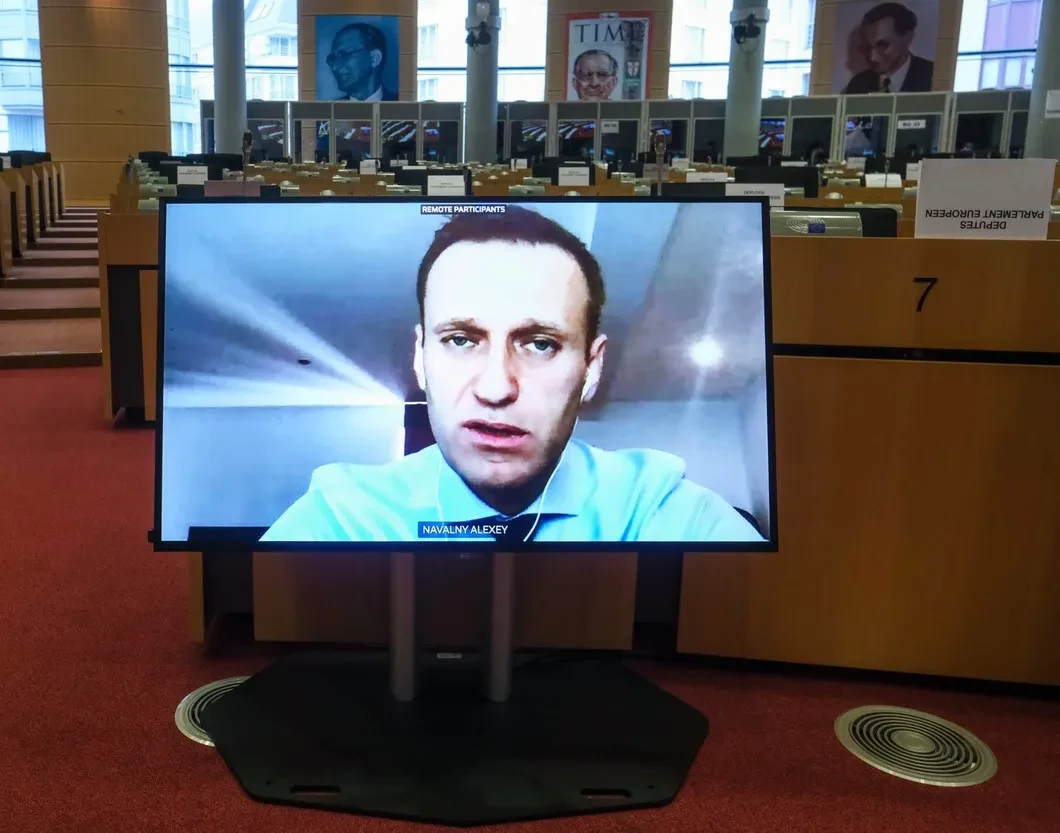
On November 30, 56 members of the OPCU accepted a joint statement on the poisoning of Navalny - including all countries - members of the EU, Great Britain, Ukraine, the USA, Canada, Australia, New Zealand, Peru, Japan, Korea. Here are the main points of the document:
The listed countries classify Navalny's poisoning as the use of chemical toxin as a weapon.
They emphasize that the used cholinersterase inhibitors belong to the Novichok class, which was also used in the poisoning of Skripal in 2018.
They call on Russia to cooperate for the fastest and most transparent clarification of circumstances.
“Any human poisoning using a neuro-paralytic substance is the use of chemical weapons,” the document says. - The use of chemical weapons anywhere, at any time, any side, in any circumstances is unacceptable and contradicts international norms and standards.
After the first part of the meeting, many official Russian media, after the first part of the meeting, wrote that less than a third of OPCW members believed in the Navalny poisoning version. This is not entirely true. Firstly, Navalny’s poisoning appeared on the agenda of even those countries that did not sign a joint statement. Thus, the representative of Thailand at Ozchu Exir Pintaruchi said that “Thailand expresses regrets about the growing number of cases of using chemical weapons” and “took note of the OPCHO report to investigate the case of Alexei Navalny”.
Secondly, from the moment of publication of a joint statement, he was supported by two more countries (Nauru and the islands of Cook), now the number of signatories is 58, and it can grow if other delegates decide to join him. The decision whether to join the application or not is made individually, at the level of foreign ministries. In the representative offices of Bosnia and Herzegovina, Monaco and Chile, Novaya Gazeta replied that so far they could not comment on plans for this statement.
Sanctions against Russia at the OPCU level for Navalny’s poisoning were not discussed at this meeting. Theoretically, they are possible. So, in the second part of the current meeting, it is planned to discuss options for sanctions against Syria for the use of chemical weapons against their citizens - in particular, this may be a ban on any positions in the OPCW structures.
Official Russia categorically disagree with the position of the OPCO to poison Navalny. In mid -November, the Russian Permanent Representative to the UN said that Western countries - members of the organization “use this organization, its authority, its name in order to nail to the shameful pillar of the countries that are obscured by them,” and admitted that “if it loses all authority and will become a place for stamping decisions on objectionable regimes”, Russia can think about leaving the OPPU.