
Translated material
“Filelin” is a novel about the Ural Warrior, who fights for the independence of Greece from the Ottoman Empire
Yuri Saprykin - About the new book by Leonid Yuzefovich
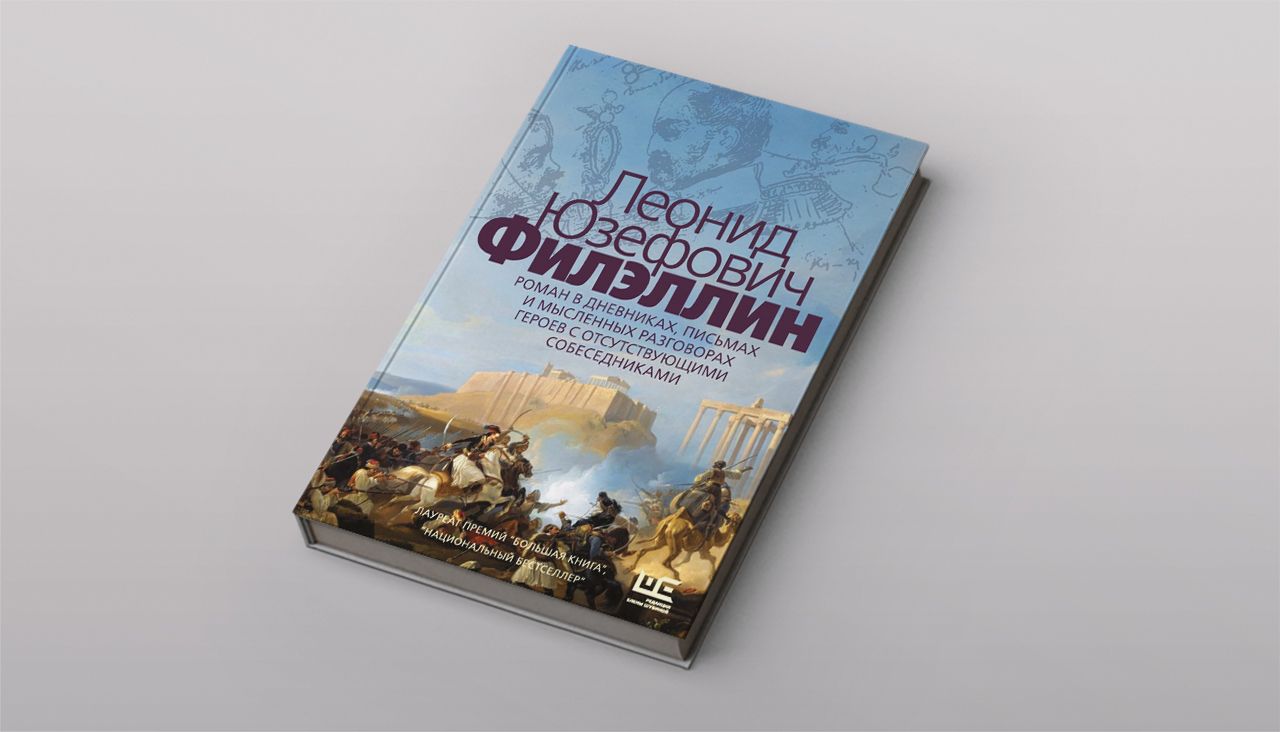
In the editorial office of Elena Shubina, the novel by Leonid Yuzefovich Philelin, whose events took place in the 19th century, was published. The author of the Winter Road this time describes the war for the independence of Greece from the Ottoman Empire. The main character of the novel, the Ural headquarters captain Grigory Moscepanov decides to participate in this war (in honor of it, the name, “Philelin” is a person sympathizing with the Greeks). At the request of Medusa, journalist Yuri Saprykin read this novel about the war - and told how he turned out.
There is one spoiler in this text, we highlighted it with a yellow marker. If this is important to you, skip it while reading.
20s of the XIX century. In Greece, a war is unfolding for independence from Ottoman rule. From all over Europe, phylellins flow to the aid of rebels - volunteers full of love for ancient culture, or led by the dream of the revival of ancient greatness, or simply looking for new adventures in a new war. At the Russian top, everything is louder about the need to support the Vera brothers - but Emperor Alexander I is in no hurry to get involved in someone else's war. Meanwhile, a backward headquarters from the Nizhny Tagil mountain plants is revealed an important secret that can deploy the course of the war: it is necessary, without delay, to tell it to the sovereign.
Like the previous books of Leonid Yuzefovich “The Author of the Desert” and “The Winter Road”, the new novel “Philelin” is a historical chronicle, but now in a completely different register. The Greek war from us separates twice as much time than the Russian civil, there are fewer opportunities to rely on the document and more space for fiction. Readers, for whom Yuzefovich, is, first of all, the black and white severity of the “winter road” will be surprised: “Philelin” changes the usual settings modes, voices, paints, and sounds burst into the text; Next to historical figures inside documented events, people and situations arise that were not - but they could be.
“Philell” is a novel in letters (as well as excerpts from diaries), the voices of many characters, people from different nations and social strata sound here. On one flank is a retired Ural Warrior (he is also a crimson teacher who suffers a persecution of, in today's language, anti-corruption investigations), a timid widow attached to him, engaged in his affair. On the other, the emperor’s environment: a secretary who is in love with him in love, hiding the secret plans of the Greek-Elek, obsessed with the mystical visions of the baroness. The war about which at the beginning of the novel we learn from the reports of the tired of the Frenchman-prinurgent, remains on the periphery for the time being.
The novel initially looks like an elegant stylization in the old spirit-the vice of the Ural truth-seeker is recognizably comical, the syllable of the courtiers is recognizably noble, the shadows of the unfortunate Gogol officials, then the echoes of the tender correspondence of the heroes of the “poor people”, other aphorisms and knuckles from the diary of the Imperial State Secretary, as if Specified in the notebooks of Prince Vyazemsky. But gradually, this cozy language environment, in which you are arranged, as in your favorite chair, begins to contract, falls into an invisible force field, and stretches into one - we can assume that the main line is the main line for the author.
“Filelin” - from those novels where unrelated characters and fate are gradually gathering in one ornament; Watching how this drawing comes up is a special reader's pleasure. They bind them here not just the author’s whim: they are slowly but inexorably attracting, organizing a war around him. The armed conflict, which occurs on the border of the Christian Oikumena, turns out to be a powerful magnet, collecting a certain gigantic pattern from the chaos and aspirations of the chaos and aspirations. Even trying to move away from this center of the All-European attraction, dreaming of some higher truth, Alexander is infected with this war, surrounded by the magnificent shadows-in his fate, lifetime and posthumous, the fate of another, ancient emperor Alexander, then rhyme to the death of Byron in the Greek Missolgos. The war, its myth, its shadows attract the actors of the novel, they seem to circle around the invisible center, approaching the very magnetic pole - the legendary hill from which the history of Europe, the ancient acropolis began, on the top of which the Parthenon rises. He is seen in a dream, he is in revelations, they say about him, they dream of seeing, they break through with weapons in his hands; In the end, he will collect the key characters of this drama on his slopes - and decide their fate.
However, you can look at the plot of the novel differently: another of its energy center is the same restless Ural warrior, the typical “little man” Grigory Moscepanov, exposing the bespectacles of mining managers, who arranges in his own bath a minister of “naphtha” and thirsty to convey to the emperor fateful time that. The power of his obsession (which at first seems to be ridiculous, if not crazy) throws him into the Perm prison, in an inconceivable way attracts the emperor to him, makes the hero himself die several times (in the eyes of others) and resurrect him, throws him all on the same slopes of the acropolis and (attention, the spoiler) makes an involuntary culprit of the turning event in the Greek war. His little inconspicuous fate is inextricably linked with the fate of all of Europe: a member person, a man-saw man and an eternal holy city-two that are not comparable in scale to the universe of this novel (if not the Universe at all).
The closer to the acropolis of the heroes of the novel, the more clearly it manifests itself - the main one can be assumed for the author - the topic: that begins as a sweet stylization, “Philelin” turns into a thought about the war, about its mysticism and secret. The war, as we see her in “Philell” is not just a battle between the Greeks and the Turks, or Orthodox and Muslims: in a sense, this is a conflict between the clarity of dreams and the complexity of reality. Any human ideas and aspirations that explain the war lead people to war - only an illusion: "Philelin loves not Greeks, but his dreams of them." The closer the battlefield, the tougher the reality: the Greeks are not much different from the Turks, both can be equally prudent and cruel - or brave to self -sacrifice. The majestic contours of Hellas turn around the loud eastern bazaar, the ancient city of dreams looks like a miserable parody: “Circle is dirty, slop, stinks of a latrine place, Parfenon stands a purebate, scary, marble virgins on the Erechtheion Noses hung who they have.”
The Heroes of Philelin following their dreams come to the wrong place where they expected to be: the only irrefutable reality in this deceptive world is the war itself, its fatal inexorable move. She bred people in different camps, as if obeying the blind lot - “In this war, the more the enemy looks like you, the more hateful he is”; It destroys all the supports invented by civilization, dumps a person several spans down the evolutionary ladder (“The exorbitant meaning that the Greeks give a national feeling, turning it into unbridled passion, proves that they return to a state of savagery”) - but also show the most important presence of death and makes geopolitical meaningful geopolitical Considerations, the only thing that matters is how calmly you can look in her face. No matter how people explain to themselves, why they go to war - ultimately they come for this.
The shadows of the Hellas dissolve in powder smoke - but at the same time they set the rhythm and pace the narrative: in the final part of “Philelin”, a magnificent tread of the epic is heard, and many different in sounds of the vote, as it were, tune in one tone - in which the author’s calm sad intonation is accurately recognized. This is a heroic procession in the shadow of death, as in an ancient legend, balanced by another eternal force-a quiet and timid feeling of an unremarkable woman who continues to love her retired headquarters captain, not believing in parting and not hoping for a meeting. Small and Great are reflected in each other, the fate of European civilization is predetermined by the ridiculous passion of a small person, and death, always soaring over the battlefields, retreats before a tear of an abandoned but not ceasing to believe the widow. Each of us is only a grain of sand that found himself in a inexorable magnetic field, a grain in the millstones of history, but this grain is able to move the mountains, or at least see the ancient temple on the mountain - this is the comforting result of this exciting and wise book.
Yuri Saprykin