
Translated material
Meet the "multipsychometer" - Soviet development, with the help of which the security forces are tested in Russia
Where did she come from and who makes it earn
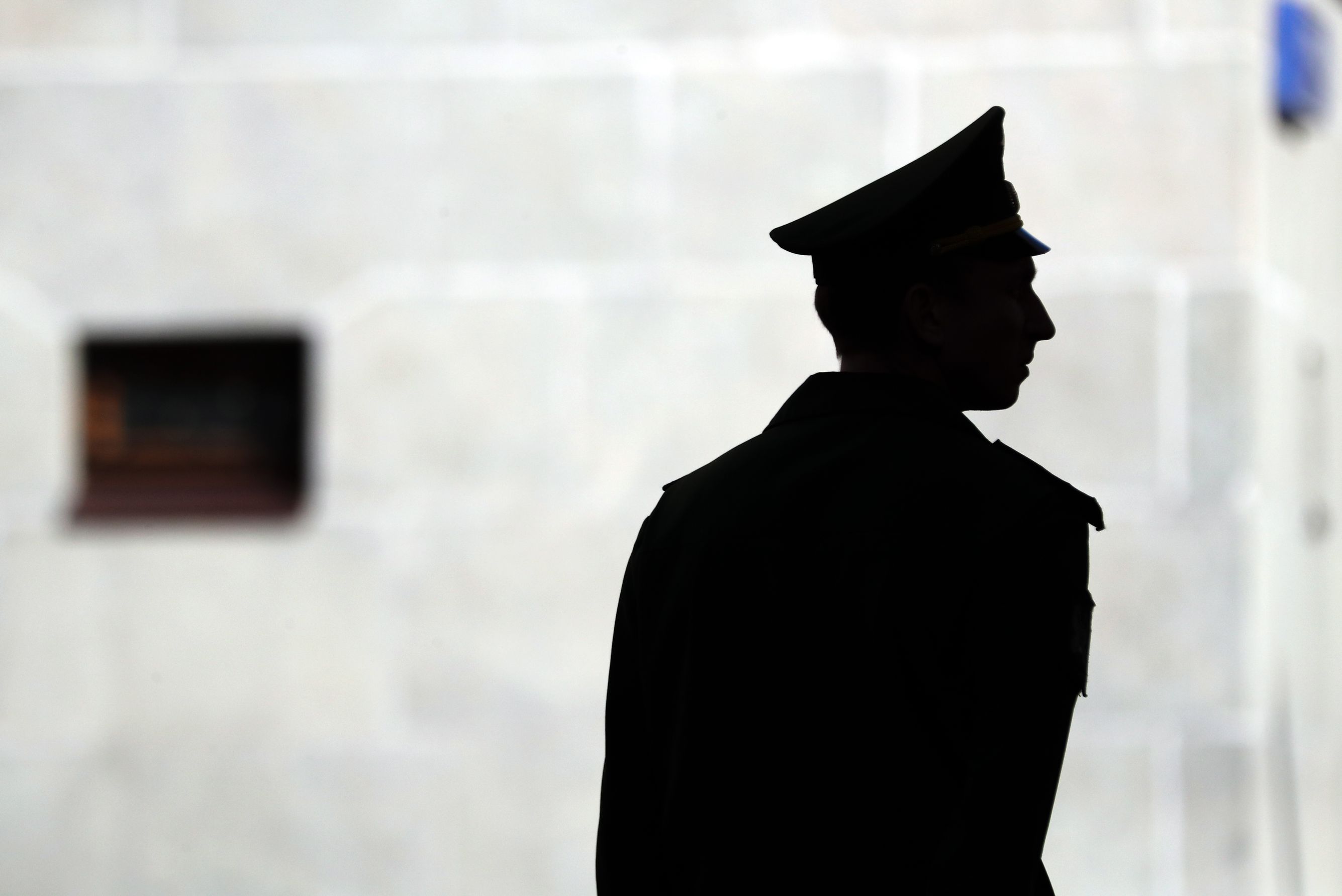
After the suicide of the FSO officer right on the territory of the Kremlin, the Special Corps of Medusa Maxim Solopov became interested in the problem of the psychological stability of the security forces - and discovered a company that supplies the Russian special services, the police and the military “multipsychimeters”. This is the name of the "hardware-programmic psychodiagnostic complex", developed back in the 1980s in one of the Research Institute of Missile Forces of Strategic Purpose. The business on it was built by a non -public entrepreneur from Rublevka with good ties to the Ministry of Defense and among the security forces.
On November 30, an employee of the Federal Security Service (FSO) committed suicide right in the Kremlin, Baza reported . The publication assured that he was an employee of the President’s personal protection, and the reason for his act was the “indifferent attitude of the FSO leadership to the conditions of his work, as well as numerous processing.” TASS sources confirmed the suicide of an intelligence officer, but denied that he was working in the personal protection of the president-and they called experiences a possible cause of suicide due to a divorce from his wife.
There is no open statistics on suicides in power structures and using service weapons; The public becomes known, as this time, only individual cases. But each of them is considered an extraordinary incident, which the psychological services of power structures are called to prevent.
When entering the service, the FSO employees undergo psychological selection, as a rule, in departmental medical institutions at the FSB, a source in the FSO explained to Meduza. An annual planned psychological tests are also held there; employees of law enforcement agencies, including the FSO, told Medusa about them. Testing looks like filling out forms with a large number of monotonous simple questions and different answers. Details of the results are usually not reported to the tested; The psychologist makes special notes on the personnel category for personnel.
The special services and full -time psychologists themselves are examined by the departments themselves, although many methods for them have been developed by private companies. Medusa found and studied one of them - creating a product that almost all security forces in Russia use. A small company entitled “Scientific and Production Center of DIP” (NPC DIP) has been supplies to power departments for the methodology of psychological examination and selection of candidates, as well as equipment for this- the multipsychometer and its modification hardware and software complex.
The non -public businessman from Rublevka Vladimir Burlakov, the former owner of the NPC DIP and the current owner of the Innovative Psychotechnologies associated with her, managed to earn at least 100 million rubles on contracts with security forces.
Life -affirming attitudes of employees of power structures
Only in the published part of the procurement of various power structures can contracts with the NPC DIP for the supply of psychodiagnostic complexes for tens of millions of rubles. For example, specially for the FSB, the company developed the Granit complex, and for the Ministry of Defense-an automated workplace (AWP) of a military psychologist 83T379 , as well as Army specialist of professional selection of Selection-V . Moreover, skills in working with these complexes are required for military specialists in psychological selection.
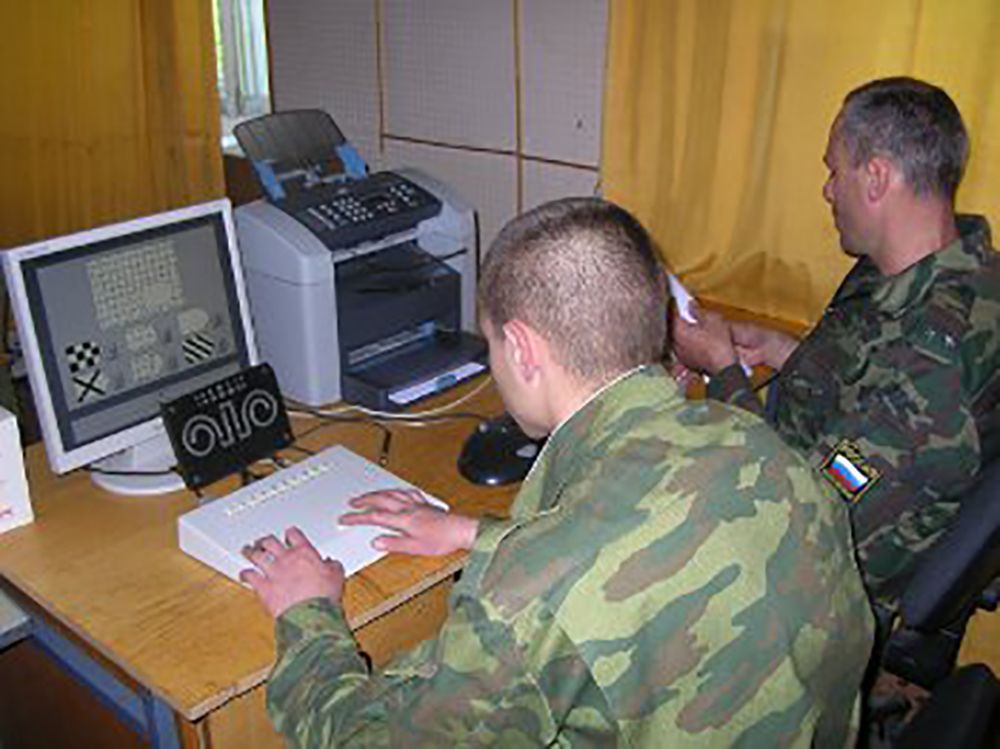
The website of the company itself among its customers lists the Ministry of Defense, the FSB, FSO, the Ministry of Internal Affairs, the Rosgvardia, the FSIN, the Ministry of Emergencies, the liquidated FSKN and the special construction, as well as the law enforcement services of Belarus and Kazakhstan. Numerous thanks from the generals, including the deputy head of the General Staff of the Russian Federation, the commanders of the internal troops, military districts and missile troops of strategic purposes, heads of higher educational institutions and personnel units of the Ministry of Internal Affairs and the Russian Guard, were also published there.
Even on the website of the DIP NPC, you can read supposedly scientific articles on psychology - taking into account the specifics of special services and law enforcement agencies. For example, Mikhail Burenkov, a member of the Academy of Pedagogical and Social Sciences, writes about the prevention of suicides: “According to religious views, suicide occurs after faith in God and terry egoism masters the soul of man. Modern psychiatry agrees with this vision, considering the concept of “faith” as a component of universal, moral values. ”
For the prevention of suicides, the author of the article offers not to give the personnel of the lecture on the problem - this can once again “provoke the weak” to voluntary care - and direct the main efforts to “the formation of life -affirming attitudes”. “An approximate description of life -affirming attitudes of employees of Russian law enforcement agencies can be as follows: life is worth living; Life difficulties temper a person; The Lord is gracious and does not close the doors without opening others; Look and distribute, ”writes Burenkov.
The signature under the article states that Burenkov is a candidate of psychological sciences, but there are no information about his dissertation in the electronic catalog of the Russian State Library. But in the RSL, you can find two of his books: “Memories of Zhukov’s personal security officers” and “The traditions and professional values of the Russian Imperial Protection”.
Innovative psychotechnologies
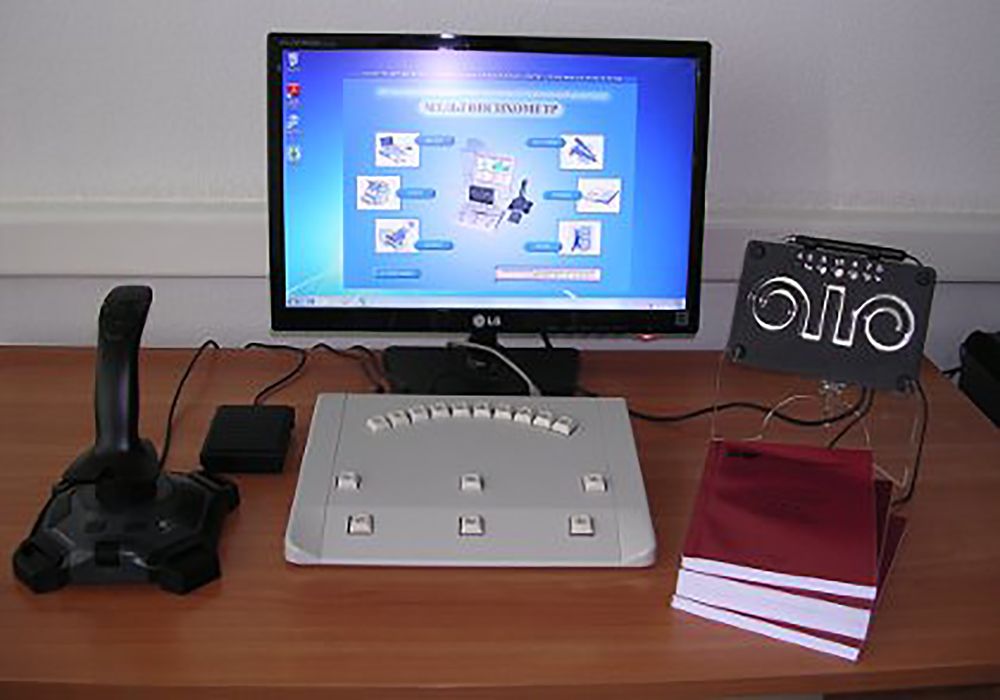
The flagship product of the NPC DIP for special services and power organs- the Multipsihometer hardware and software psiDagostic complex-is a computer with special software and basic periphery: “Specialized psycho-diagnostic keyboard, a block of psychomotor tests, an analog manipulator of the Jaeustic type, and a football, and a foot pedal, and a foot pedal head phones. " “Head phones” are headphones (in English Headphones), and the “psychodiagon” keyboard looks as if someone had deleted all the keys with ordinary buttons, except for buttons with arrows and numbers.
For mass testing, the manufacturer offers to put a “multipsiometer” complete with a printer and a scanner with which you can print test tasks on the forms, and then load the results into the program for automatic processing.
Programs for psychodiagnostic complexes contain a library of several hundred tests that should identify mental deviations, depression, conflicts in the team in the subjects, evaluate their psychological stability.
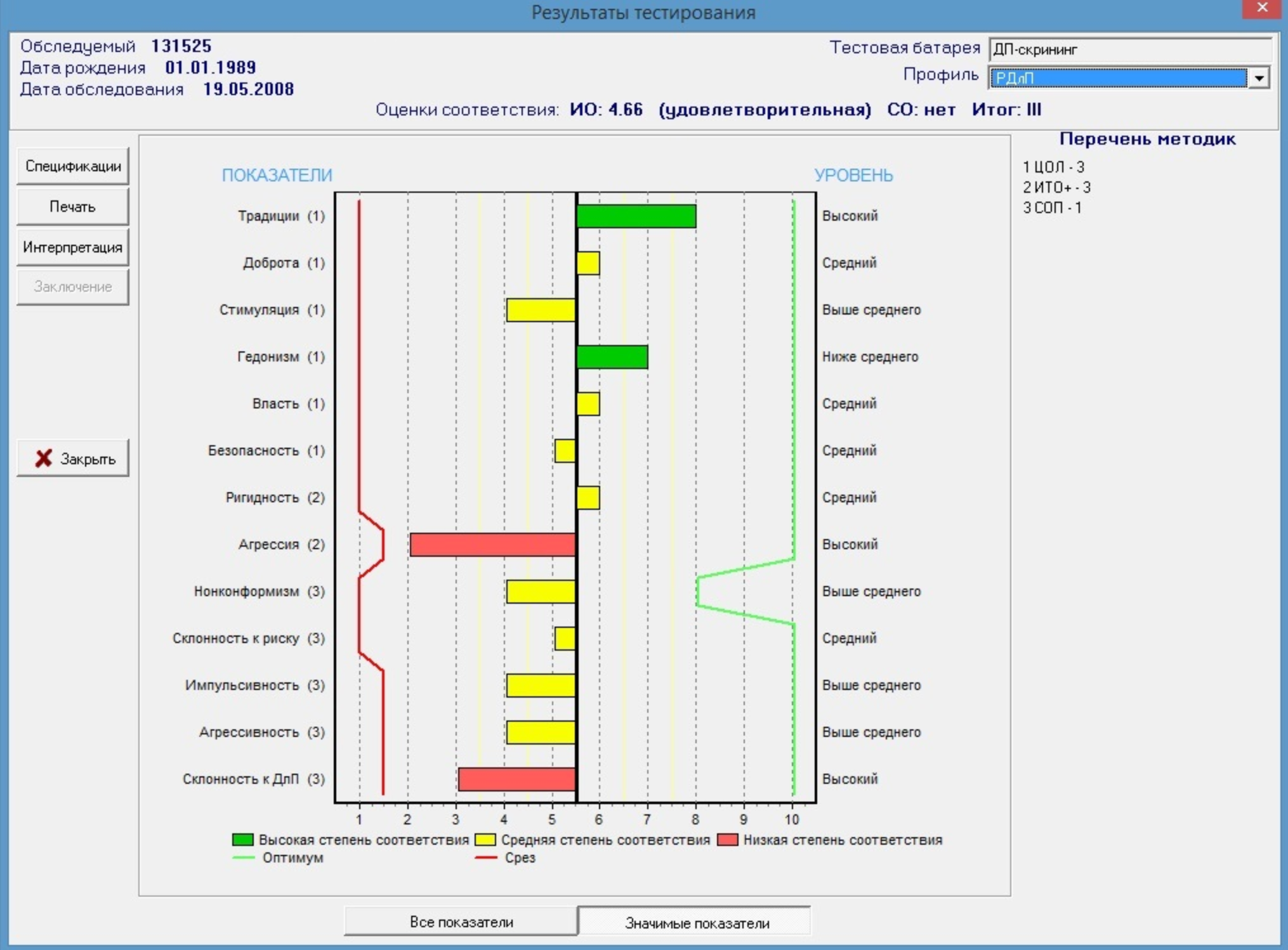
Prices for the base model "Multipsychometer" on the company's website start at 183 thousand rubles. In published state contracts, the cost of one complex in the maximum configuration (with steering wheel and pedals) reaches 300 thousand.
According to the SPARK-Interfax service, the annual revenue of the DIP NPC, whose staff has 16 people, reached 100 million rubles in 2015 (this is the maximum level), but in 2019 it fell to 21 million, and the company showed a loss. At the same time, all intellectual ownership of psychodiagnostic complexes used by the DIP Software, patents and trademarks - belong to the company "Innovative Psychotechnologies", which is the delivery of software.
The main owner of “Innovative Psychotechnology”, according to the Unified State Register of Journinations, is the former co-owner and founder of the NPC DIP, a 58-year-old native of the city of Zlatoust Chelyabinsk Region Vladimir Burlakov, who now lives in the village of Gorki-2 on the Rublevo-Uspensky highway.
Among the customers of “Innovation Psychotechnology” the website lists the Investigative Committee, Rosatom, Russian Railways, Moscow and St. Petersburg metro. The company also has many thanks from high -ranking security officials: for example, there are letters from the chairman of the UK Alexander Bastrykin and the commander of the internal troops of Viktor Zolotov, who is now heading the Russian Guard. The company proudly declares that with the help of its techniques, more than a million specialists have been tested.
A former employee of the DIP NPC told Medusa that every deal with the security forces for the sale of psychodiagnostic complexes brought Burlakov “at least 200% of profit”, and the businessman himself loved to boast of large connections in government agencies. “How far is his connections upstairs - I don’t know, maybe this is more than a bluff than reality,” says the interlocutor of Medusa.
Burlakov himself did not respond to the request to his “jellyfish” to his request. The representative of his “innovative psychotechnologies” at the same time warned the correspondent that the founder was unlikely to want to communicate with the media.
Judgment Day psychology
On the website of the Ministry of Defense and in the Loyal Media Department, the mentions of the psychodiagnostic complexes of the NPC DIP with the epithets "Modern" and "The latest" can be found. But the section “Encyclopedia of the Strategic Missile Forces” tells about the development of “multipsychometer” back in the 1980s.
Then, in the 4th Central Research Institute of the Ministry of Defense of the USSR, which was engaged in various studies in the interests of the strategic missile forces (Strategic Missile Forces), there was a special "Division of the Objects of the Strategic Missile Forces". In it, scientists tried to think over and regulate acceptable service conditions for people who were supposed to guarantee the causing “unacceptable damage” to a potential enemy in nuclear war 24 hours and 365 days a year.
A separate team of researchers took up the creation of technical means of professional selection of personnel for the Strategic Missile Forces. Among the people who dealt with this issue, E. G. Cherepanov, the creator of the “mobile psychophysiological laboratory PFL-1”, S. E. Poddubny, is the author of “original methods of socio-psychological studies” to improve the psychological climate in units, as well as K.V. Sugonyaev-the developer of “multifunctional hardware of pseons” complex "Multipsychimeter-01". "
Sergei Poddubny, who worked with Sugunaev in the 4th Central Research Institute of the Ministry of Defense, is now heading the department of general and social psychology of MGIMO. The laureate of numerous FSB prizes, Poddubny in co-authorship with Sugonyaev, compiled in 2011 “Methodological recommendations for determining professional suitability for military service under a contract, the Federal State Civil Service and Work” for the Central Scientific Research Laboratory of Psychophysiology and Labor Psychology of the FSB (Tsille PFPT).
In the same year, the director of the FSB Alexander Bortnikov approved by his order instructions for organizing psychological selection to the special service, in which he assigned the authority of the key structure that oversees this work for the centrality. From 1993 to 2015, the FSB Laboratory of Psychophysiology was headed by another old Sugunaev colleague at the 4th Central Research Institute of the Ministry of Defense-Evgeny Cherepanov.
"Medusa" managed to get acquainted with the articles and reports of Konstantin Sugonyaev published in specialized collections. They say that in the 1990s and in the early 2000s, the Signal plant in Tambov was engaged in the release of small batches of “multipsychimeters”, and the same employees of the 4th Central Research Institute “within the framework of the experimental design work” were developed by the methods based on publicly available software and psychological tests.
These works at the Military Research Institute continued the entire 2000s. “To this day, these developments provide prosperity ... NPC DIP, which has taken over the burden of registering property rights, replication and promotion of the 4th Central Research Center developed in the MPI [Medical and psychological department of the 4th Central Research Center; Later, the name of the inhabitability department of the Strategic Missile Forces] of products, ”Sugonyaev writes at the end of 2016 in the article for the collection of materials of the scientific and practical conference, held at the Academy of the General Staff.
However, Konstantin Sugonyaev himself was closely connected with the DIP NPC, as can be seen from the decision of the Arbitration Court in the claim for violation of intellectual property rights. From the document it follows that from 2006 to 2011, Sugonyaev worked in the NPC DIP as the head of the R&D department, the director for scientific work. But “due to unbearable conditions for work, he was forced to resign in January 2011 of his own free will,” the court’s decision said.
Medusa contacted Sugunaev, but the colonel explained that he continues to cooperate with the Russian Ministry of Defense and could not give a media comment.
Gratitude of the general
Before the start of cooperation with Sugonyaev, who in the 1980s worked on the “multipsychimeter”, the DIP NPC did not have a special specialization . His business began with the supply of computers for educational institutions of the Ministry of Defense and the Russian Border Service, then the supply of equipment for video conferences and livals for departmental sanatoriums was added to him.
“Until 2004, inclusive [the former owner of the NPC DIP Vladimir] Burlakov and his company was practiced almost the same as many technically advanced tenth graders at that time were used,” they faded computers and sold, and at the same time laid out communications to unite them into some systems. You can’t earn much, the competition is huge. The only peculiarity was that Burlakov had licenses to work in “closed environments”, ”a former employee of the NPC DIP tells Medusa.
According to the interlocutor of Medusa, the company began selling its “complexes for psychological testing” just in 2005, when Sugonyaev began to cooperate with it (combining this with work in the 4th Central Research Institute of the Ministry of Defense), and the Ministry of Defense transmitted the production of complexes and all technical documentation in the NPC DIP.
A former employee of the NPC DIP believes that the company's management could receive state orders from the security forces with the assistance of the leadership of the General Staff. From the General Staff, the earliest of the gratitude posted on the website of the NPC DeP was also received-a letter from 2006 from Colonel General Vasily Smirnov, who from the mid-1990s to 2013 oversee work with conscripts and reservists.
Finally, in 2012, Vadim Shatalov, a former employee of the Main Directorate of the Ministry of Defense for working with personnel (Gurls), became deputy director of the NPC DIP - it is it that oversees the work of military psychologists.
By 2012, different versions of the “multipsychometer” became one of the main means of diagnostics for psychological selection in the Ministry of Defense, the Ministry of Internal Affairs, the FSB and other law enforcement agencies. The company "Innovative Psychotechnologies" (owns software, patents and trademarks using the NPC DIP) with a staff of five people brought Burlakov more than 100 million rubles of net profit in five years-from 2013 to 2018, follows from the company's reporting in the Spark-Interfax database.
The company showed a sharp drop in revenue and loss only at the end of 2019. It was during this period that the reorganization of the personnel was held in the Russian armed forces, and Shatalov left the DIP NPC (now he serves in the structure of the Academy of the General Staff, which oversees the scientific research on psychological selection in the troops).
But Burlakov, by that time, ceased to be a co -owner of the NPC DeP: in December 2018, he handed over his share to the younger partner, general director of the company Sergei Kuznetsov, remaining the owner of only “innovative psychotechnologies”. Two of his houses with plots on Rublevka are also sold - each of them realtors estimated at one and a half million dollars ( one is decorated on the entrepreneur himself, the second - to his wife).
At the same time, the former director for the scientific work of the NPC DIT and developer “Multipsheometer” Konstantin Sugonyaev criticizes the current practice of psychological testing of security forces.
“The situations were ordinary when the psychologist is involved in the“ dragging ”candidates for the passage of qualifying procedures (for example, entering the military academy). Such a practice not only profanates professional psychological selection, but also destroys the validity of tests, ”he wrote in the publication following the conference in the RANEPA in 2016. “Today we have to state: qualifying measures as a process in Russian law enforcement agencies are carried out, but whether they achieve goals - at best it is unknown.”
At the time of the publication of this material, Medusa could not get comments from the Ministry of Defense, the Ministry of Internal Affairs, the FSB and the FSO about how widely they use the “multipsyhmoter” - and what is the effectiveness of this system.
Author: Maxim Solopov with the participation of Ivan Golunov
Editor: Valery Igumenov