
Translated material
No cakes - eat sugar
The indicative struggle of the authorities with high prices is an attempt to close the eyes of the impoverishment of Russians
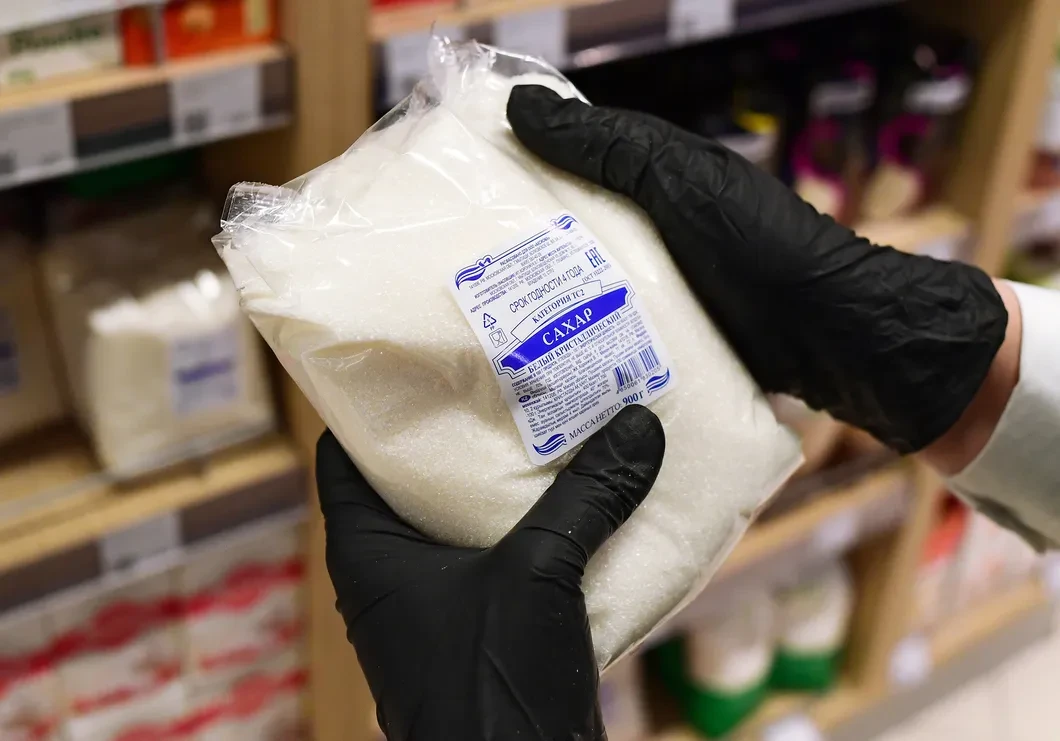
The Russian government began to develop measures to limit the growth in sugar prices and sunflower oil. But this news did not bring joy to the Russians. Rather, on the contrary. Many of our compatriots began to buy goods, the prices for which the government decided to freeze. And oddly enough, there is a rational grain in this.
The idea of legislatively limit the increase in prices for primary goods and, above all, food is not new. The first attempts were made by the Roman emperor Diocletian. They tried to limit the rise in prices during the Great French Revolution: a “decree on the maximum of prices” (Maximum Général), which legislatively determined the upper bar for some types of primary products, went down in history. The goal was good: to facilitate the life of the poorest and deceit.
The result of such a restriction in the entire era is one: deficiency and the emergence of the black market.
People who remember life in the USSR not according to films, perfectly imagine a Soviet deficit, when the price of the goods is low, but it is impossible to buy it freely. And the point is not the malicious of the manufacturer or trade (although Soviet trade itself is unforgettable). The case is absolutely objective economic laws.
It is especially funny that in the USSR the foundations of the classical economy (including market balance as a balance of demand and proposals) were studied as part of a course in political economy. Karl Marx respected Adam Smith, so the classic economy in the Union was not only not forbidden, but even quite actively studied. The expression “invisible market hand” remembers almost everyone. As well as about the "Balance of Demand and Proposal." Namely, he explains the nature of the occurrence of a deficit.
Consider the drawing: the price is displayed along the PO axis, the number of Q - quantity. Crush S demonstrates the offer of goods: the higher the price, the more goods are offered by manufacturers. The curve D demonstrates demand: the lower the price, the higher the desire of consumers to buy the goods.
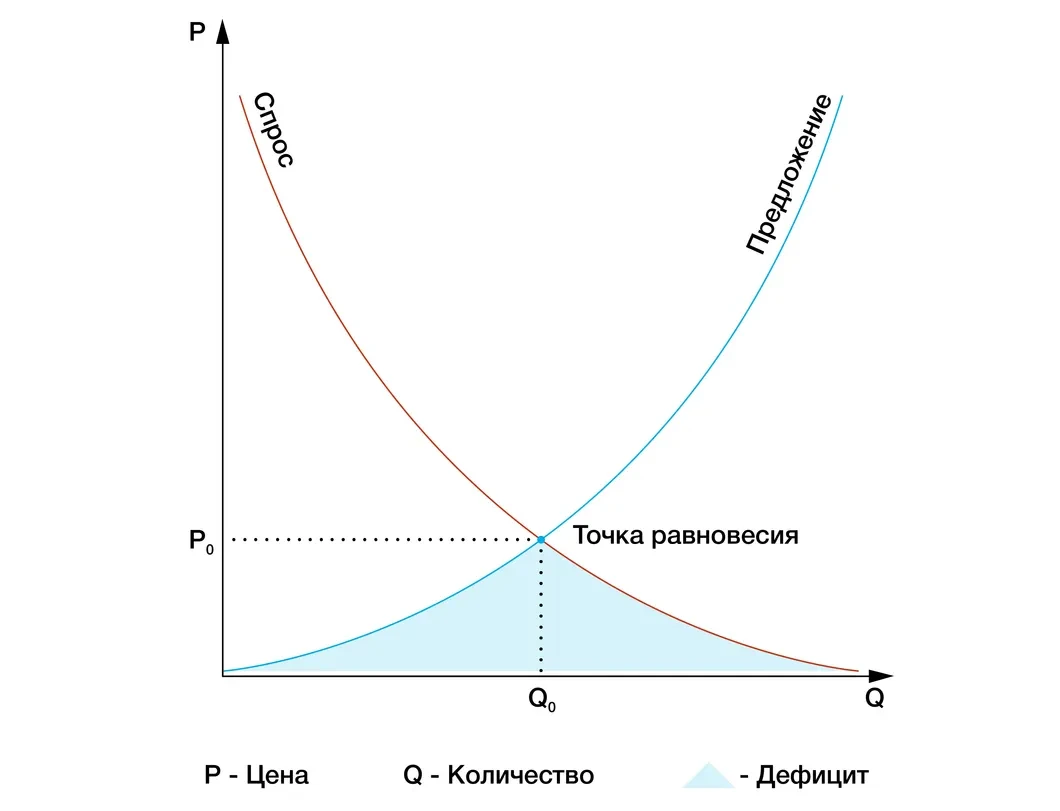
Everything is natural and well consistent with common sense. The intersection of curves and gives a market balance - at this point, demand is equal to the proposal. The price at this point (PO) is the same market price. In free markets, demand and supply are changing all the time, which leads to the fact that the market price also changes all the time, striving to the point where demand and supply balances each other.
What is the reason for the growth of food prices that so angry the Russian authorities? This is a combination of two quite objective factors. Both of these factors are external to Russian food producers.
Rising prices in world markets. Russian agricultural producers are serious participants in the global food market. There are years when our country takes an honorable second place among grain exporters. This is a significant achievement. And when the prices of the global market are rising, the manufacturer’s desire to sell there is quite normal and natural. In the end, the slogan about the development of non -enjoyed export has been sounding for a long time.
And any restrictions will hurt the loss of export potential in the future.
Weakening of the ruble. In many food products that are perceived as purely domestic, there is a serious share of costs in currency. It falls on seeds, plant protection products and animals, equipment depreciation. The weakening of the ruble automatically increases the cost.
Attempts to administratively reduce the price (lower the equilibrium line below PO) will lead to the fact that some of the manufacturers will simply refuse to supply the goods at an administratively reduced price - there will be a deficit. If administrative pressure is very strong, manufacturers are also possible. But in practice, this is unlikely, they try not to bring administrative pressure to such a scale.
It is impossible to reduce prices with strong -willed effort without doing significant harm to the economy. Well, if the problem of impoverishing citizens really strongly bothers the authorities, then you can raise pensions, state employees and children's benefits. This will reduce poverty without a blow to agriculture. Yes, and the budget will cost cheaper than the growth of unemployment, the loss of tax revenues and the fall of the area of cultivated lands.