
Translated material
Who will not be taken to Mars?
Starship starts the era of cheap development of the space frontier. There are no places in it in it
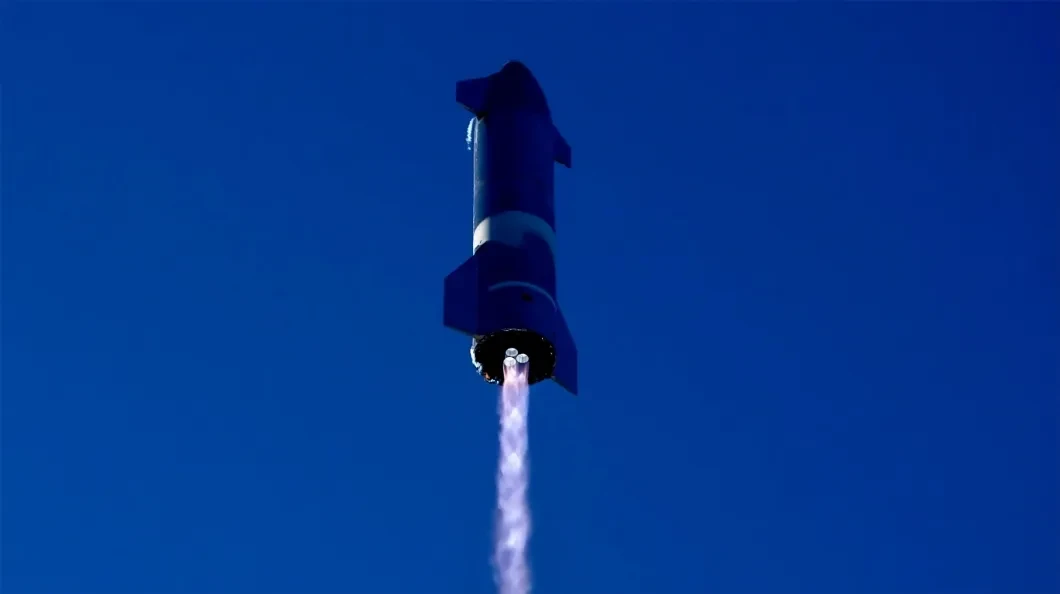
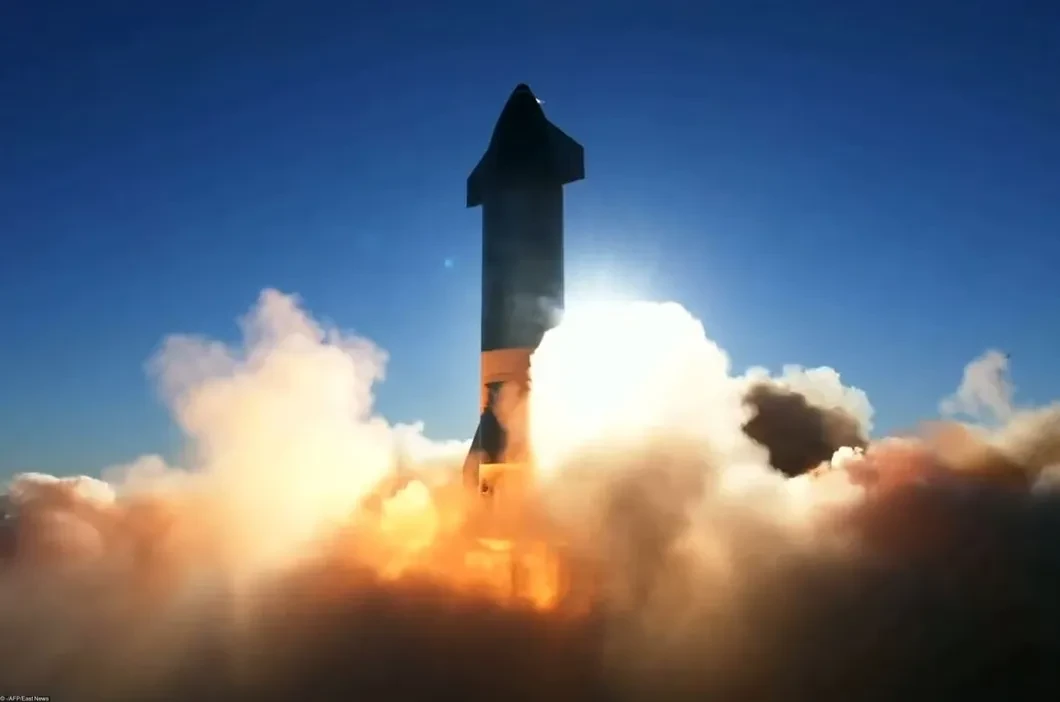
On December 10, Elon Musk launched the second step of his new Starship spacecraft. Almost all news reports about this event looked the same. Something like this: "The prototype of the StarsHip missile exploded in flight tests, unable to extinguish the speed when trying to land vertical landing."
The ship rose by 12.5 km, began to fall, turned on the engines, but earned only two out of three. The rocket began to decline, sat at a terrible speed on the edge of the landing site and exploded.
I report: this is all garbage. The fact that the rocket exploded is not so important.
Flight Starship:
a) worked out a completely different maneuver;
b) opens a new era in the history of mankind. The era of the space frontier, which will be mastered by brisk private companies, and not clumsy fatty states.
First of all, I will give a presentation to readers what Starship is. This is the second stage of the rocket (that is, what will be directly thrown into space).
This step is a height of a 16-story building and a diameter of 9 meters. Its payload is 100-150 tons. The sealed volume of this thing is more than that of Boeing 747.
The main difference between Starship and all other missile missiles is that the “foreman” should be reusable completely and work like a plane: it went down - and can immediately refuel to fly again. In one of his interviews, Musk said that Starship should fly three times a day. “Shuttle” was also reusable, but it had to be prepared for six months to launch, and the price of preparation was comparable to the price of the construction of a new shuttle. And here
We are talking about a ship that will open access to space for everyone.
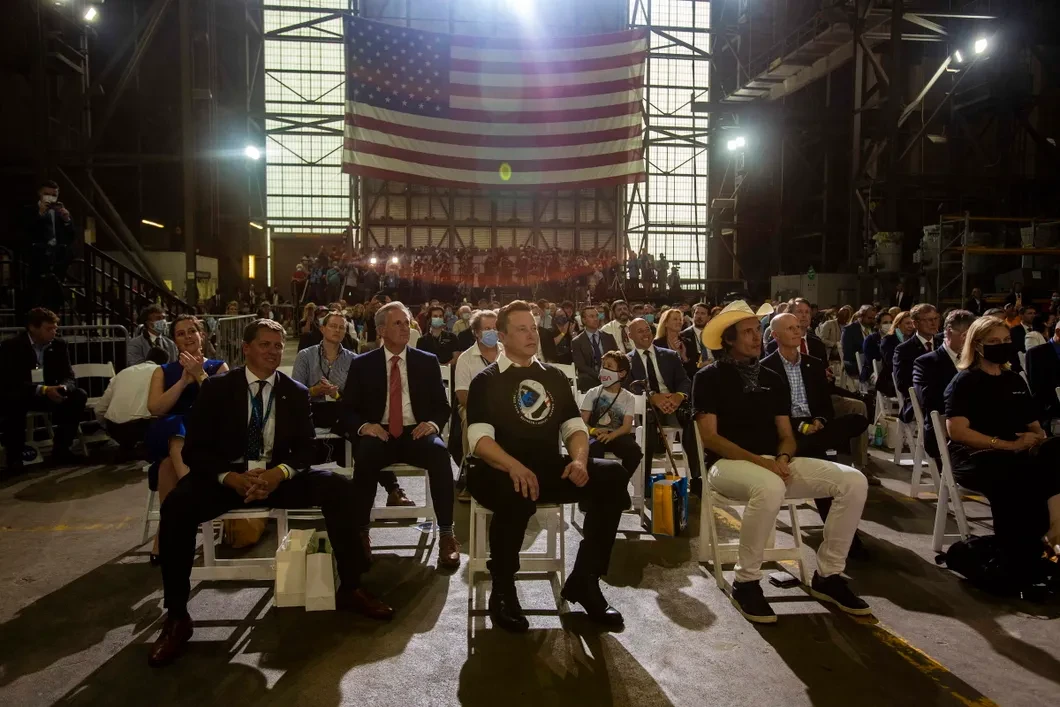
Until recently, it cost 50 thousand dollars per kilogram of beneficial cargo to orbit. Musk has already reduced this price to 3 thousand dollars. With Starship, he wants to reduce this price to $ 10 per kilogram. If you send the book from the continent to the continent by mail, you have the same prices!
And these ten dollars per kilogram will be carried by more than one rocket and not two. The plant that builds Musk will produce not 10 missiles per year in the future and not 50. It will produce them as cars - a thousand. And these missiles will fly three times a day.
10 dollars per kilogram - this is the case when in full accordance with the laws the number turns into quality. And humanity, which until recently mastered Siberia and the Wild West, has a new frontier: cosmic.
Now, the higher orbit we want to raise the load, the more it is. In near -Earth orbit, we can raise 60–70 tons. We can deliver five, at best, 10 tons to the moon.
But Starship is made in such a way that after it reaches low near -Earth orbit, it can be referent. And after he was finished, he with his cargo - 150 tons - can fly even to the moon, even to Mars.
Now we can deliver one and a half tons of cargo to Mars. With Starship, this amount increases exactly 100 times, due to the fact that it is referred in orbit. Where does fuel come from? Very simple: it will deliver it the same Starship refueling. Not to mention the fact that as soon as the "foremen" flood the near cosmos, a lot of other private companies that offer their services will immediately appear.
In Russia, for example, there was a private space company Dauria, which launched nanoseters. The FSB naturally ate her.
The founder of the company Mikhail Kokorich went to California, continued to engage in space and created there, among other things, Momentus, which is now entering the IPO and develops elements of space infrastructure, space towing for the “last mile” - engines that disperse the neglected object even when it went out (or almost went) outside the gravity well. There will be dozens of such companies as Momentus, and Kokorich will still have to tell the authorities that they pushed him to California just by the beginning of the space fever. As Cokorich himself exactly formulated, what is happening before our eyes is the industrialization of the cosmos. Private industrialization.
The entire current capitalization of the space industry is $ 100 billion, or 0.1% of the global GDP. With Starship, this capitalization will jump in dozens, if not hundreds of times.
StarsHip began to design seriously in 2017 (!). Back in 2018, Musk was going to build it from carbon fiber $ 200 per kilo. Now he is building it from simple stainless steel of 3 dollars. Unlike state corporations, Musk always chooses the simplest of all solutions.
Why steel? Because it is cheaper. Why is the new Mask engine - Raptor - works on methane? Because methane can be mined on Mars.
Why will the refuelines themselves Starship and do not need to build any station that will be pouring from empty to empty? Because it is easier.
The task of the mask is not just someone to fly to Mars once, like Armstrong on the moon. His task is a million people on Mars.
Where did he get money for this?
Yes, everything from there, from the space. The global satellite communication system - Starlink - will bring a mask of several tens of billions of profit (and at the same time will end all the attempts of Roskomnadzor for censorship on the Internet). Starship will make it unfolding fabulously cheap (and all the laws of the Duma about the restriction of YouTube will go to the bathhouse). If Starlink shoots, then its income will double the NASA budget.
Starship can be used as a plane. The path from New York to Paris will occupy 30 minutes. From London to Hong Kong - 34 min. There is one Starship to Mars, ”says Musk,“ will be able to take 100 people. On the route "Earth - Earth" - over 800.
Yes, all these are still plans. But Ilona’s plans are still implemented.
Now about what task the test solved on December 10. This task was not at all a landing of the ship. If nothing exploded, it would be a cherry on the cake. Musk has tested a completely new principle of maneuver of a spacecraft during landing.
Starship will consist of two steps.
One - the first - will be called Super Heavy and will be made in principle just like Falcon 9. It already has completely new developed Raptor engines, which the best engines created by the Soviet Union surpassed in terms of indicators.
The second step - actually Starship - will have six engines: three optimized for take -off and three for landing. In the same way, she will have two sets of tanks with an oxidizing agent and fuel. One - for take -off, and the second set - especially for planting. Before the start of planting, the tanks should be complete, otherwise the engine will not turn on.
How will Starship sit in a low near -earth orbit sit down? He must turn around by engines against the movement, slow down and, as a result, get off the orbit. Then start to decline, gain speed and enter the atmosphere.
Its speed at this moment is about 8 km/s, and at such cosmic speeds, the entrance to the atmosphere is comparable to the blow not even about water, but about the wall. That is why the missiles that leave orbits simply burn in the atmosphere. The task of Starship is not to burn and not collapse. This can be done in two ways: either passive protection - that is, using a thermal shield, Heat Shield, or just turn on the engine and drop the speed. Musk uses a combination of both.
The “belly” of Starship - that is, roughly speaking, the half of the ship is covered with heat -resistant plates. At the entrance to the atmosphere, it turns so as to contact the air with these plates and so that this contact has the largest area. If in space he flew forward, now, in the atmosphere, he falls “a belly” forward, controlling his position with four small wings.
Starship does the same thing that Skydivers do. He does not fly, he falls. But this, like Skydaever, is controlled by the fall. Then he turns over again - and sits on the engines.
Here is such a Skydiving maneuver on December 10 and worked out.
It was a completely new thing that no one had ever done and which the only one allowed to solve the problem. If such braking and descent did not work, it would mean that the whole concept should be thrown into a landfill.
And it turned out that it works. And how!
It is absolutely amazing how much this test turned out to be successful. He showed that
SpaceX has advanced much further than one could imagine even in the most daring dreams.
In the end, the first Falcon 9 deviated when landing by 10 km, and StarsHip crashed at the edge of the landing site. That is, he first went up (and flew a little to the side), and then fell, very slowly, slowing down the “belly” and wings - and in this controlled fall he managed to fly up to several meters. This means that the mathematical models that the mask had and which expected how the ship behaves in a fall (a thing that no one has ever checked in practice) were amazingly accurate.
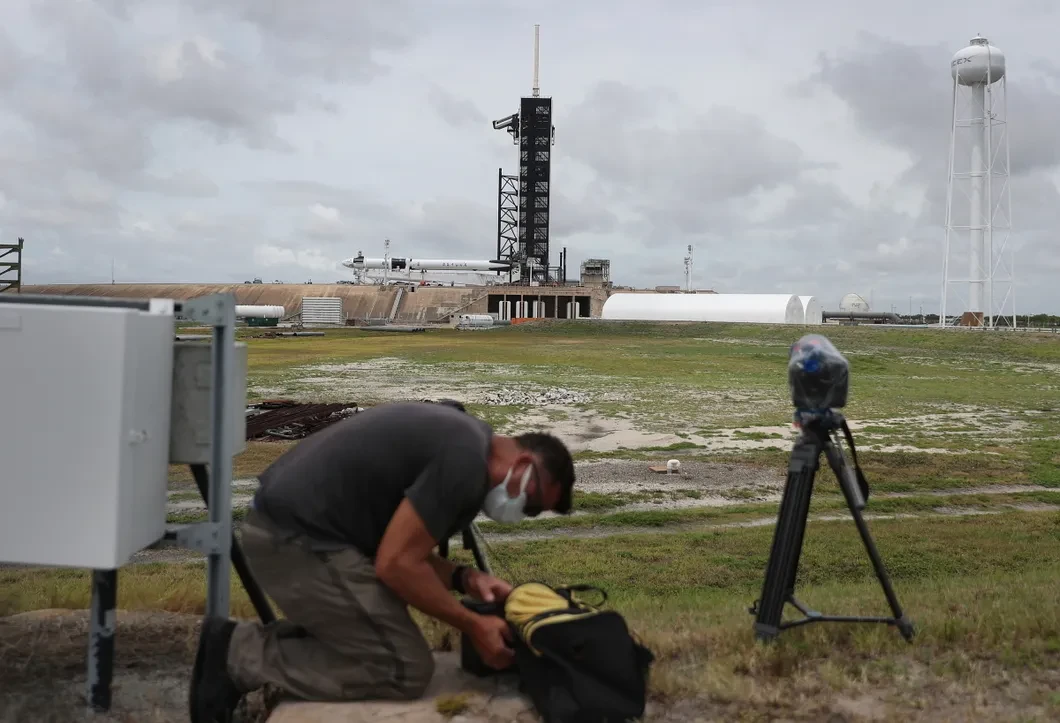
Before our eyes, a new - space - frontier opens. The idea that after 20 years humanity will live in Mars and in orbit from science fiction become a reality.
And this technological coup, as always, entails two deepest social coups.
Which?
The space race began as a race of states. For many decades, we have been explained that space is so expensive, so difficult and so difficult that only the state can finance it. Now it turns out that the situation was exactly the opposite. This is not the state financed space, because space was very expensive. This cosmos was very expensive because it was financed by the state. Because everything that the state touches is immediately turned into bureaucracy, red tape, monstrously swollen bones and immovably expensive solutions.
Space colonization can be compared with the colonization of America. The fact is that, as we have reason to suspect, shortly before Columbus, Americans opened America in the 15th century. They equipped state expeditions on giant ships under the leadership of the court eunuchs. The cost of expeditions went off scale. Gifts that were brought by expeditions for local kings were ruined for the treasury. Rare animals that were the only prey expedition were not suitable for anything but to decorate the imperial menagerie. In the colonization of America, as well as Sumatra and Java, Chinese emperors did not need. In the end, the expedition was simply banned.
But what was unprofitable for the gigantic Chinese state "treasury" turned out to be super -free for a private European initiative and rival European states.
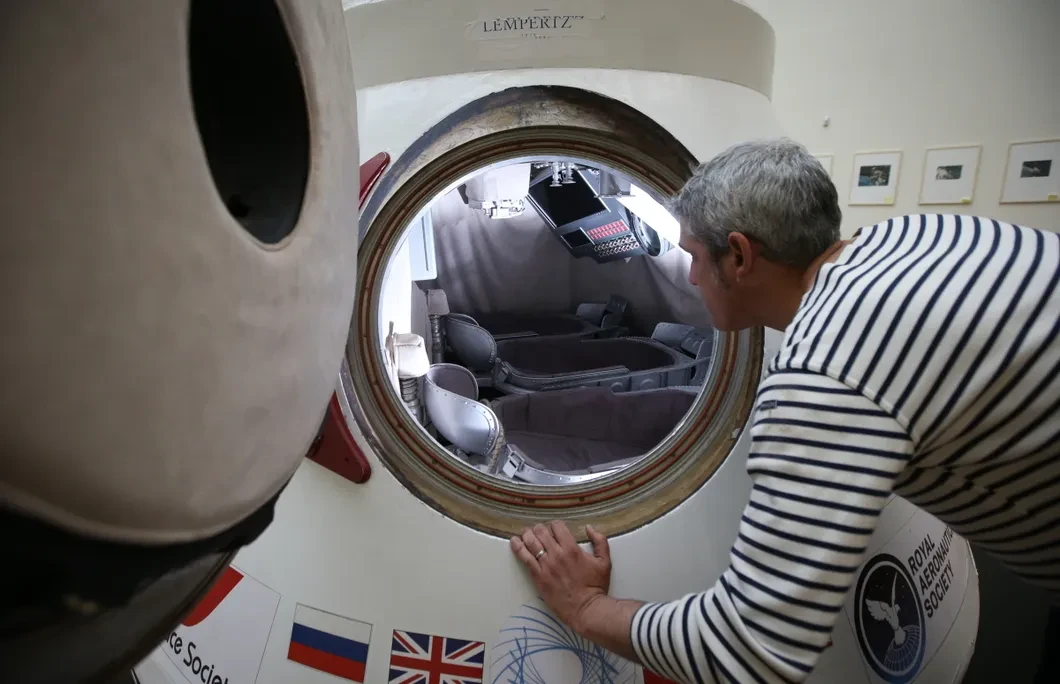
It’s like a frontier: can you imagine how many centuries would the United States be needed if they had formed a state -owned company to settle the Wild West at the beginning of the 19th century? And so, thanks to the gold fever, California was populated instantly and private. Ironically, Russia finally returned our space industry to the state stall at the moment when this stall is fundamentally obsolete. Soon, the state corporation engaged in space will look as ridiculous as a state corporation engaged in lamp production of computers.
And the second point, which is rarely talked about, but which is no less, if no more important. Suppose Musk will deliver a million people to Mars.
What do you think, how many of these people will be BLM activists? Or how many Russian officials who have made a fortune on bribes and kickbacks will be there?
Will Gender Studies specialists get there in the first wave? Our crossbars? Bureaucrats from the UN?
Do they need their ideas and skills there?
No. Scientists and engineers fly to Mars. And this will be a social experiment that cannot be put on Earth, a real revolution in the structure of mankind. Because no change of regimens, no reform is not able to fundamentally change humanity. Only technological progress is capable of this.