
Translated material
Absolute enemy
I grew up in Nalchik. And I do not remember the first Chechen. But I know exactly how she influenced my life and the life of the country
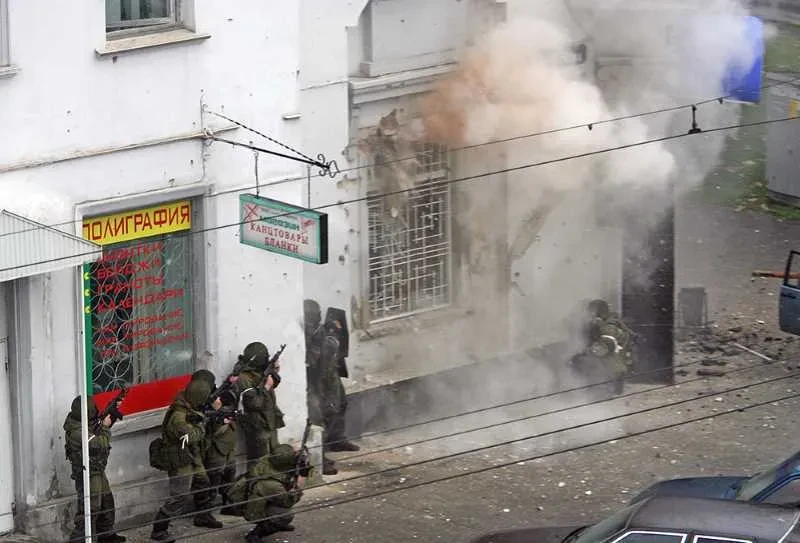
On the morning of October 13, 2005, a group of armed people, according to various estimates, were from 200 to 300 people, attacked Nalchik. Attacks were subjected to the Center for Combating Extremism of the Ministry of Internal Affairs, the Republican Federal Penitentiary Service, the Federal Security Service and the buildings of other power structures of the Ministry of Internal Affairs in Nalchik. From civilian facilities, the airport and a hunting store were attacked.
I remember that day, we then lived Zalukokoage, this small village near Nalchik, I went to the 4th grade. Immediately after the start of the attack, my parents took me from school. When I saw in the news what happened, I realized that war was going on very close and people die. I was worried that my relatives who live in Nalchik may suffer. My great -grandmother or my uncle, whom she was visiting. But I was not yet able to comprehend the motives and causes of this war.
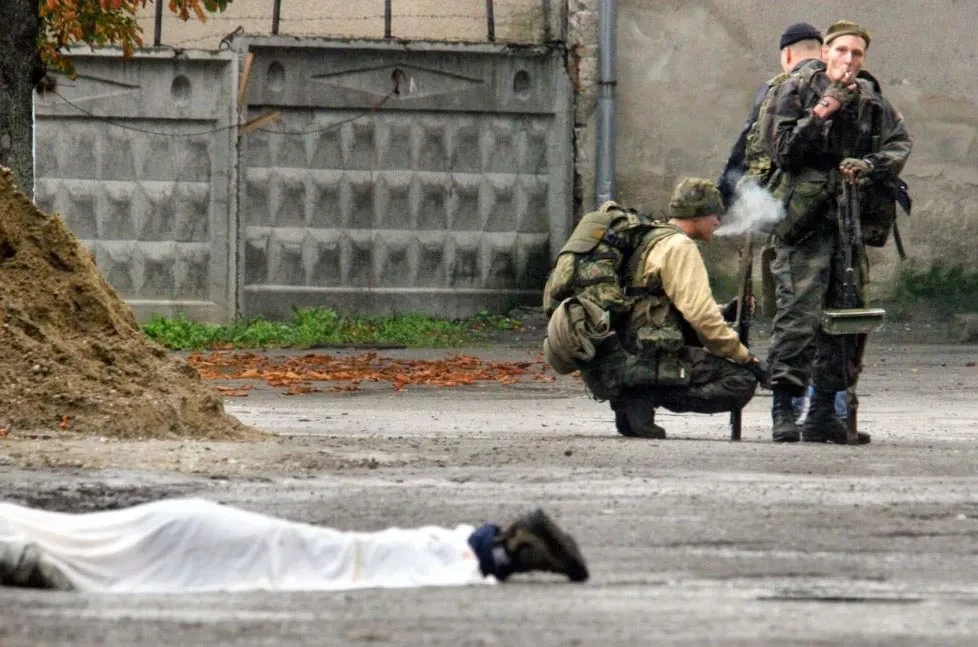
The battles in the city lasted until October 14, as a result, more than 100 people died on both sides. According to the attackers, according to official figures, 97 people were killed. Another 70 surrendered.
Now, after so many years, I have the opportunity to look more than what happened that day, and what happened to him in my republic. Today I understand that an attack on Nalchik and a further military confrontation between law enforcement officers and Muslims of the republic was a lot of retaliatory, mutual nature. But the main thing is that I understand:
It was the events in Nalchik that became the starting point in the current relationship between the special services and society.
And it is important for us all to learn this lesson.
Here is just one example that took place a year before the events of October 2005. On the morning of September 27, 2004, Rasul Tsakoev, a resident of Kabardino-Balkaria, was detained by Sobr employees near the store where he worked. They put a bag on his head and took them to the department, where they had previously been interrogated earlier. He was tortured for three days, demanding to confess to the illegal armed formation of Yarmuk. He was beaten with rubber batons, stewed cigarettes on his face, head, neck and shoulders, put the needles under his nails, twisted their arms and legs with a steel wire and beat with electric shock. Only on September 29, Rasula was taken out of the department and thrown next to the landfill near the city of Hasanya. There, passers -by found him, taken home. The ambulance, which relatives caused, diagnosed a closed head injury, a concussion, multiple bruises, closed fracture of the ribs and bud bruises in Rasul. He was hastily hospitalized, but on October 4, 2004 he died in the hospital. According to a medical opinion, his death occurred as a result of renal failure, right -sided pneumonia and multiple serious injuries.
On October 7, a criminal case was instituted under the death of Rasul under Art. 111 of the Criminal Code - intentional infliction of grievous bodily harm, resulting in the death of the victim by negligence. On February 7, 2005, the case was suspended "in connection with the impossibility of identifying persons to be held accountable." And in the same 2005, the Ministry of Internal Affairs found out that Rasul allegedly collected money to organize terrorist acts.
In the period from 2005 to 2009. Five friends of Tsakoev were killed as a result of special operations conducted by law enforcement agencies. Some of them were first interrogated and tortured, just as it happened to Rasul. So oppression and torture became a working tool of law enforcement agencies to combat “Wahhabis and radicals”.
Before moving on to military resistance with law enforcement officers, Musa Mukozhev, leader of Jamaat Kabardino-Balkaria, and other leaders of the Muslims of the republic publicly declared the need for “mercy and tolerance for society, which directly or indirectly takes part in the war against our brothers (having a war in Chechnya).” “Speaking in the media, we always tried to emphasize that we were not related to the Mujahideen and do not pose a threat,” said Mukozhev. But at some point, his sermon of the world has already stopped working.
The investigation in the case of an attack on Nalchik was conducted by the Main Directorate of the General Prosecutor's Office of the Russian Federation in the Southern Federal District. The indictment was approved in August 2007, the arrested were charged with a terrorist act, the seizure of hostages, illegal storage of weapons, encroachment on the life of employees of the Ministry of Internal Affairs, murders and armed rebellion.
In March 2008, it became known about the formation of a jury. For this, 34 out of 58 defendants spoke. However, on December 30, 2008, changes were made to the Code of Criminal Procedure according to which jurors could no longer consider cases related to terrorism and extremism. In the current legal and political system
Accused of terrorism and extremism in Russia are absolute enemies of the state, the concept of universal and adversarial law cannot be applied to them.
The very nature of the prosecution is such that the state does not allow the application of the necessary legal methods to these defendants. And even more so the jury ships. Suspicion of such crimes, and even more so the charges for law enforcement officers, is equivalent to guilty.
On August 20, 2013, the state prosecution announced the complete evidence of the guilt of the defendants. The sentence was announced on December 23, 2014. Five defendants (Rasul Kudaev, Eduard Mironov, Anzor Mashukov, Murat Bapinaev and Aslan Kuchmenov) received life sentences. Three were released from the courtroom in connection with the expiration of the term of imprisonment. All the rest received terms from 10 to 23 years in prison. Nine years passed from the attack on Nalchik in October 2005 to the announcement of the court sentence in December 2014. During this time, during the investigation, more than one and a half thousand examinations were conducted, almost two and a half thousand witnesses were interrogated and about 120 inspections of scenes were performed.
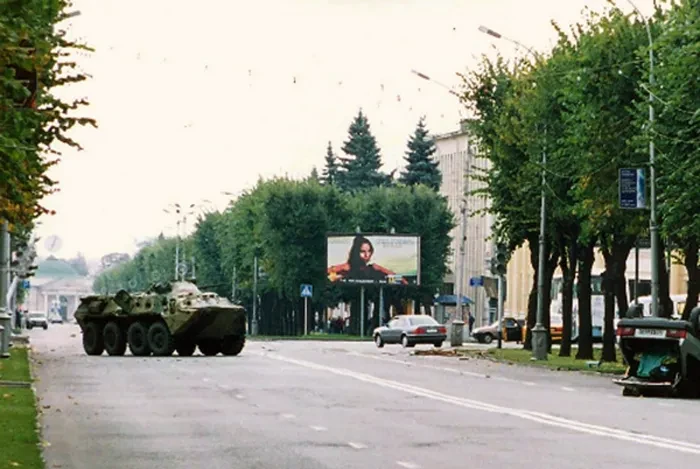
The trial on the attack on Nalchik received the name “Case 58” in the media - strictly personified, indicating the personal moral responsibility of the attackers. So, as if it were these “58” that were the only ones in the then Nalchik who encroached on the things protected by law: on human life, to human law and freedom.
All 58 accused acted as personal enemies of the political regime. Their accusation and detention was a matter of primary state importance. 57 out of 58 defendants pleaded guilty, but this did not happen because of the conscientious work of the investigating authorities and the actual guilt of the interrogated. From their letters you can understand the horror of the torture they encountered.
From the letter of Eduard Mironov
“... the device with which they tortured me with electric shock broke. There were a lot of them (employees of the Organization), they killed my legs, then they began to hang around the neck ... Then they began to beat very much in the same place, after which one touch to this place was enough to cause severe pain. When they were tired, they just poked a baton into this place ... "From the letter of Anzor Mashukov
“Rustam (employee of the Organized Crime Control Department) took my head by the back of his head with his left hand, and with his right he began to beat in the left side of my face. This continued until Rustam had a fist of Rustam ... After that, he continued to beat his elbow in his chest, forcing me to say what I did not know. ”
There are countless such confessions, and we do not know how many defendants actually participated in the attack on Nalchik, and how many were convicted “for the company”. To pass the conviction, the court was quite just the fact that the defendant went to a certain mosque, not controlled by the spiritual administration of Muslims of the republic, or had a relationship with one of the attackers. Here, for example, convicted Ruslan Nogers. He was at home during the attack, and this was confirmed by eight witnesses. But he was familiar with Rustam Mameev, who really took part in the attack.
Since 2005, on the facts of the torture of the defendants in the “case 58” during the investigation, not a single criminal case was instituted.
“Case 58” was of particular symbolic importance in Russia's relations with Muslims. On June 5, 2005, the International Helsinki Federation of Human Rights published a report “Ingushetia, North Ossetia, Kabardino-Balkaria: the spread of human rights violations similar to violations in Chechnya”. This name reflects a fracture: in the case of Chechnya, the “Wahhabits” acted as external enemies, but then this approach was projected to other Caucasian republics.
The first Chechen war began in December 1994, its purpose was to restore the constitutional order in the territory of the Chechen Republic. Three years after the end of this war, the Second Chechen, but then it was not about the restoration of the constitutional order. This war was already officially called the "counter -terrorism operation." In the two Chechen wars of the spread of Wahhabism and Radical Islam, foreign militants from the Arab countries were accused. The transfer of the categories of “terrorism” and “radicalism” to residents of other Caucasian republics automatically launched new methods of combating them, including torture and extrajudicial persecution.
The peculiarity of the struggle of the Russian law enforcement system with the terrorist organizations and communities of the Yarmuk or Jamaat KBR recognized by it is manifested in a group orientation: an individual and its innocence mean nothing. The group orientation is convenient and acts quickly. Having highlighted only a few characteristic qualities, such as opposition mood, for example, or sincere faith, you can delay crowds of “dangerous criminals”. And the mistake will think that this applies only to the Caucasus. If this approach was previously used in most cases to Muslims, now we can see how the Ministry of Internal Affairs finds new “terrorists” among anti -fascists or simply random citizens. The case of the “network”*, for example, in many ways as if under tracing paper is written off from “business 58”.
*The organization is recognized as terrorist and prohibited in the Russian Federation.