
Translated material
Flash will finally die on December 31. While there is time, enthusiasts save his digital heritage in the form of thousands of flash-games
Once upon a time, the Internet did not just hold on to Flash-he helped people embody their ideas in animation. And now the main thing is that these "monuments of the era" do not disappear forever.
On December 31, Flash will finally “die”: 2021 will begin with a complete rejection of Flash Player, termination of support and deleting the program from the Adobe website, and from January 21, a blocking of reproduction of the remaining Flash content will also be added. Users already receive reminders that they should remove the plugin from their devices.
On December 8, Adobe released the last update of the player, in which she thanked users for everything that they created using Flash. This is especially true for thousands of games and cartoons of the late 90s and early 2000s: we can say that the platform greatly helped to form the Internet that we know now. Adobe in the final circulation also emphasized the key role of Flash in the development of modern web content.
“Death” Flash is the final transition from the “Old Internet” era with the Winamp player, flash player and other classic elements. But the rejection of the platform also means that thousands of legendary Flash projects can disappear forever. Fortunately, Adobe announced her plans back in 2017, and for three years now enthusiasts have been trying to preserve the “Flash Heritage” for history and nostalgia.
Take -off and deafening fall Flash
Flash in 1996 was created by American Jonathan Gay. At school, he dreamed of being an architect, but then he found out that architects did not build anything themselves, and switched to computers. Programming seemed to Jonathan an ideal mixture of design and “construction”. Already in high school, he created a graphic editor in Pascal and put it at the school fair.
In 1993, already as a programmer, Gay and colleagues founded Futurewave Software with plans for the dominance of graphic software in the market. First, the SmartSketch program was released, and in 1996 - a service for creating animation for the FutureSplash Animator World Wide Web. A few months later, Gay bought Macromedia and renamed FutureSplash Animator to Macromedia Flash.
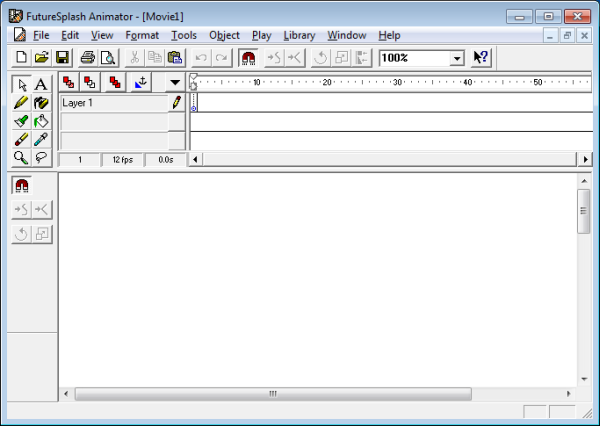
In the following years, Flash was rapidly gaining popularity on the network: it was built into many popular sites and main browsers to correctly reflect interactive web pages and downloaded video with music. By the beginning of the 21st century, it was difficult to find a computer on which there was no support for Flash in any form.
“[Flash] was one of those programs that had to be installed so that the Internet works correctly. If you didn’t have it, you could not watch a video or listen to music, ” recalled the journalist The Next Web Owen Williams. And the active distribution and development of the Internet in the early 2000s made the program even more important.
In 2005, Adobe acquired Macromedia, and Macromedia Flash turned into Adobe Flash. It seemed that it was impossible to shake the platform’s positions: if it was originally created as a tool for development and animation, then by that time it had turned into the most important element of playing multimedia on the network.

Then the era of smartphones came, and at the same time - the sunset Flash. Steve Jobs spoke out against him: the first iPhones did not receive the support of Flash (and the rest too), and in 2010 he also released the “ Thoughts of Flash ” column, where he greatly criticized the platform. The developers, meanwhile, began to include to other standards like HTML5.
In the future, all news about Flash is the news of the fall. The technology was dying for almost 10 years: platforms, sites, browsers and developers refused it, it was accused of numerous vulnerabilities and safety problems. It is because of this that Adobe asks users to remove Flash, and not save it after the termination of support.
For modern Internet, Flash is not needed - it was gradually replaced by other technologies. But for the Internet of the past, it is necessary, which threatened everything that people created 15-20 years ago.
Golden era of Flash-game
Speaking of Flash, people often recall it as a platform for creating games and cartoons. The “Golden Age” of this era is considered to be the beginning of the 2000s, and not only professionals, but also tens of thousands of lovers who created millions of small projects created projects.
“Flash offered tools for creating animation and developing games to people who have never had them,” the creator of Newgrounds Tom Fulp emphasizes. There were a lot of projects, they were very different, from standard puzzles and races to experimental projects. Some of them are still remembered on the Internet.
Any flash game had the opportunity to get very popular. Flash Player stood on most computers either in the form of a separate program, or in the form of a plugin for a browser. At home, at school, university, office - everywhere you could start playing a couple of clicks. The authors of the games did not need the publisher - they spread either through sites or locally between users.
Then, in the early 2000s, there was an idea that everyone could just go to the browser and turn on the game. And the point is not that there is nothing like this now. Just at the time when Flash was at the peak, he was really everywhere.
Jason Coos
The popularity of the game gave rise to large flash portals like Addicting Games, Kongregate and NewGrounds, they eventually began to go towards license content from studios. The head of Addicting Games recalled that several dozen games appeared on the site a week, and each release led to a large surge in traffic. Was any of the projects unsuccessful? Not a problem, in addition to him, there were already hundreds of games on the site, which you can switch by clicking.
By the end of the 2000s, the largest flash games brought the creators up to 100 thousand dollars, and the states of developers were recruited to work on projects. Game purchases were introduced even inside-the ancestor of the Free-to-Play system. But what seemed to the beginning of the formation of a full -fledged industry was, in fact, it turned out to be the era of the sunset of the Flash era. “When a lot of money came, everything else has collapsed,” says Edmund McMilllen, author of Super Meat Boy and The Binding of Isaac.
As a result, about 2012, the number of players on flash portals has been rapidly reduced. Browser games switched to HTML5, the developers went to make games for social networks, mobile platforms, Steam or consoles. And prominent flash animators opened the channels on YouTube or went to a professional industry.
Co-authors of the book “Flash: Construction of an interactive network” John Murray and Anastasia Salter emphasize -Flash game helped to create the Internet that we know now. The Indie-IGR boom with distribution through Steam is largely similar to a Flash epoch, and the developers of the flash game became the authors of noticeable indie projects. The creators of games such as Hollow Knight and Super Meat Boy came out of the flash community, and amateur experiments with the gameplay resulted in part of the industry (the Crush The Castle flash group is called Angry Birds.
Flash was most attracted to the opportunity to create something in a short time, and this was sometimes visually impressive. Thus, you could almost instantly do something affordable and exciting, and then also immediately upload it to the network. And hundreds of thousands of people began to play your project.
Edmund McMilllen
Moreover, the Golden Flash Time predetermined the mobile era: as before the overwhelming number of PCs could launch flash games, and now the overwhelming number of smartphone owners can get any game through the App Store or Google Play. “Now many games are at risk of disappearing forever, as a fleeting phenomenon of the era of the growing Internet. And for many, this will be a loss, an irreparable gaming culture gap, ”Wared writes .
Salvation of Flash
In July 2017, Adobe announced that she would finally “finish” Flash on December 31, 2020. This threatened a whole layer of digital culture, which, although objectively outdated, but had the right to stay in the history of the network. With flash multphilms, it’s easier-the most popular of them were transferred to YouTube. But enthusiasts volunteered to save from the destruction of flash games.
Among the "rescuers" is the 26-year-old Australian Ben Latimor . He found the golden era of Flash at school: according to him, he did not have a console, and numerous sites in browser games could not block in the school network. “For one click on the mouse, I got access to thousands of games that could be played through the browser,” Latimor recalled .
Having learned about the imminent refusal of Flash, in 2017 Ben began to sit more often on forums dedicated to nostalgic games. There he met like-minded people-programmers who did not want Flash Contain just disappeared that he had never been. Together they came up with Flashpoint-“A complex archival project with a playable museum, which is most protected from death and turning off the flash-game from servers.”
Now a team of 100 developers-volunteers is engaged in the project, and several thousand enthusiasts participate in the life of Flashpoint on a discord server. “Curators” find games that are worth saving in history, and programmers do everything so that they can be discovered after the “death” of Flash Player. By the end of 2020, the authors of Flashpoint retained about 70 thousand games.
Latimore explained to reporters from Polygon the Flashpoint system, and it is more complex than it might seem at first glance. In fact, this is a combination of three programs that are “pretending to be the Internet” together, forcing a flash to think that it is launched on the original server.
The first part - the launcher - sees the player, and the server downloads the "fake Internet". And the redirector is already connecting them together. The creator of Flashpoint notes that the archive could be easier to implement on some major website with the Flash-Girl catalog, but resources like Newgrounds "do nothing for this."
In addition to technical obstacles, enthusiasts face a different barrier - copyright. Some studios are unhappy that their projects are distributed for free, even with a good purpose. “The fact that you are engaged in a noble business still does not give the right to assign content without the consent of its creators,” says Annal, head of Nitrome, the head of the Nitrome studio. According to him, the company is studying the opportunity to archive their games themselves, but before turning off Flash, they would like to earn on them.
Piracy is an inevitable measure when it comes to archiving games, said Alex Handy, director of the Museum of Arts and Digital Entertainment. It recalls that the entire software from the 1980s for Atari ST was preserved only thanks to the pirates who rewrote it to the floppy disks. If you do not take care of flash games in advance, then the fate of mute films in the 20th century can befall them: 75% of them are lost forever.
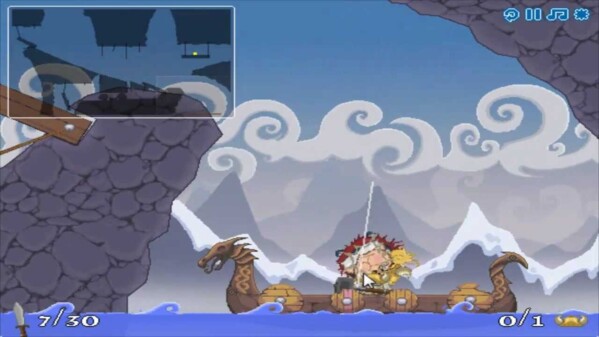
Latimor says that he is not difficult to understand the arguments of the studios, which are against the free spread of his creatures. And the general catalog of Flashpoint does not enter projects, the authors of which are opposed to archiving. But part of the Nitrome Games still plans to save: "Just in case."
Other projects to save the flash-game and memory of them
- One of the largest repositories of the Flash-IGR Armor Games announced the transition to emulation to “soften the consequences” from the disconnection of Adobe Flash. To do this, the Ruffle project will use the Open-Source, but the company expects that not all projects on the site will remain playable;
- Developer Jonas Richner created the site " How Flash Gigra formed a game industry ." This is a kind of digital monument of the era: he briefly talks about the history of the flash-game, and the author arranged two thousand sign projects in a chronological order, graphically showing which were most popular. In addition, Jonas spoke with dozens of creators of the cult flash-game and asked them to tell about that time;
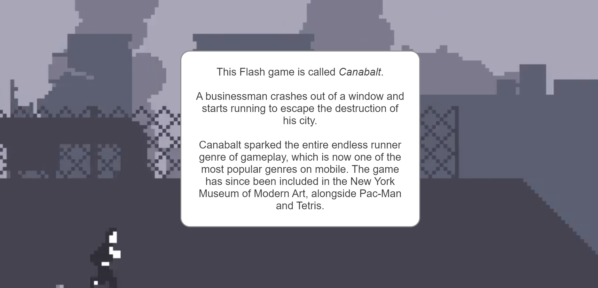
- In November, the Internet Archive began to maintain a flash animation and game on his site. They also work on the Ruffle emulator, and the authors of projects offer to download their work on the site on their own in order to save them in history.
#stories #social networks #Internet