
Translated material
Art on quarantine
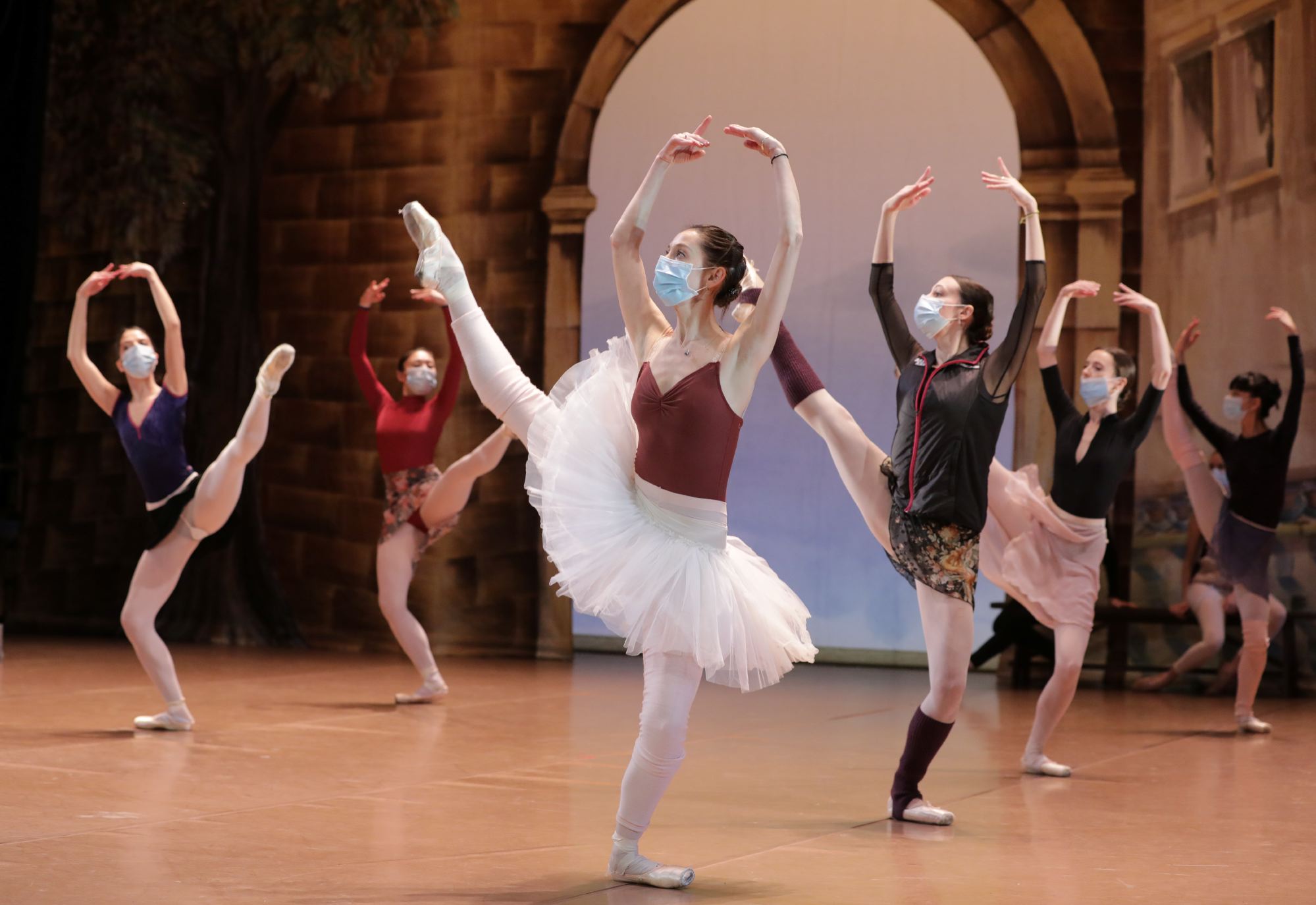
Meeting 2020, we could not imagine that we would accompany him with closed museums, three quarters of empty theaters and cinemas, without corporate parties and parties
When we were put on the first quarantine almost nine months ago, it seemed to many that this was nothing more than a temporary precaution, a short pause that we had to take life so that there was no more death around. Today, even the most violent Covid-dissidents reconciled with the fact that in online we all have to sit for more than a month and better adapt to a new reality than to scold it. Cultural figures around the world are also forced to adopt and invent new formats, but so far few of them are optimistic to look into the future.
Play or not play
The transfer of the country's main theater award in the online theater award (in fact the Golden Masks was distributed this year not only virtually, but also six months later than usual, in November instead of April). The abolition of the legendary NET festival, which has been bringing the best foreign performances to Russia for twenty years. The transition of the Summer Festival of Arts "Access Point" from street format to full digital. The transfer to Zoom rehearsals by the miracle of the performance of the performance “Gorbachev” with Evgeny Mironov and Chulpan Khamatova, who was still released on October 10. The death of Roman Viktyuk, Armen Dzhigarkhanyan, Boris Plotnikov, Valentina Gaft. Local scandals in large and small theaters, from the BDT to them. G. A. Tovstonogov to the Krasnoyarsk Puppet Theater, who unexpectedly became public.
As you can see, Koronavirus hit the spectacles as much as on bread, that is, economics, education and medicine, although, perhaps, this is not so obvious. And if at the beginning of the first wave of pandemia it seemed that the widespread closure of theaters would lead, if not to change and healing the system, then at least to the expansion of the audience through the avalanche of endless online broadcasts, it is now clear that some groups-especially independent ones-may simply not survive. The point is not only that many of them are deprived of the possibility of fully (that is, in the previous mode and with the usual - not chess - seedling) play performances and rehearse almost during the year, but also how the viewer will react to all these antiviral measures: does he want to endure constant cancellations and transfers, and wait for unused tickets to the end, will not lose after all. The desire and skill of going to the theater.
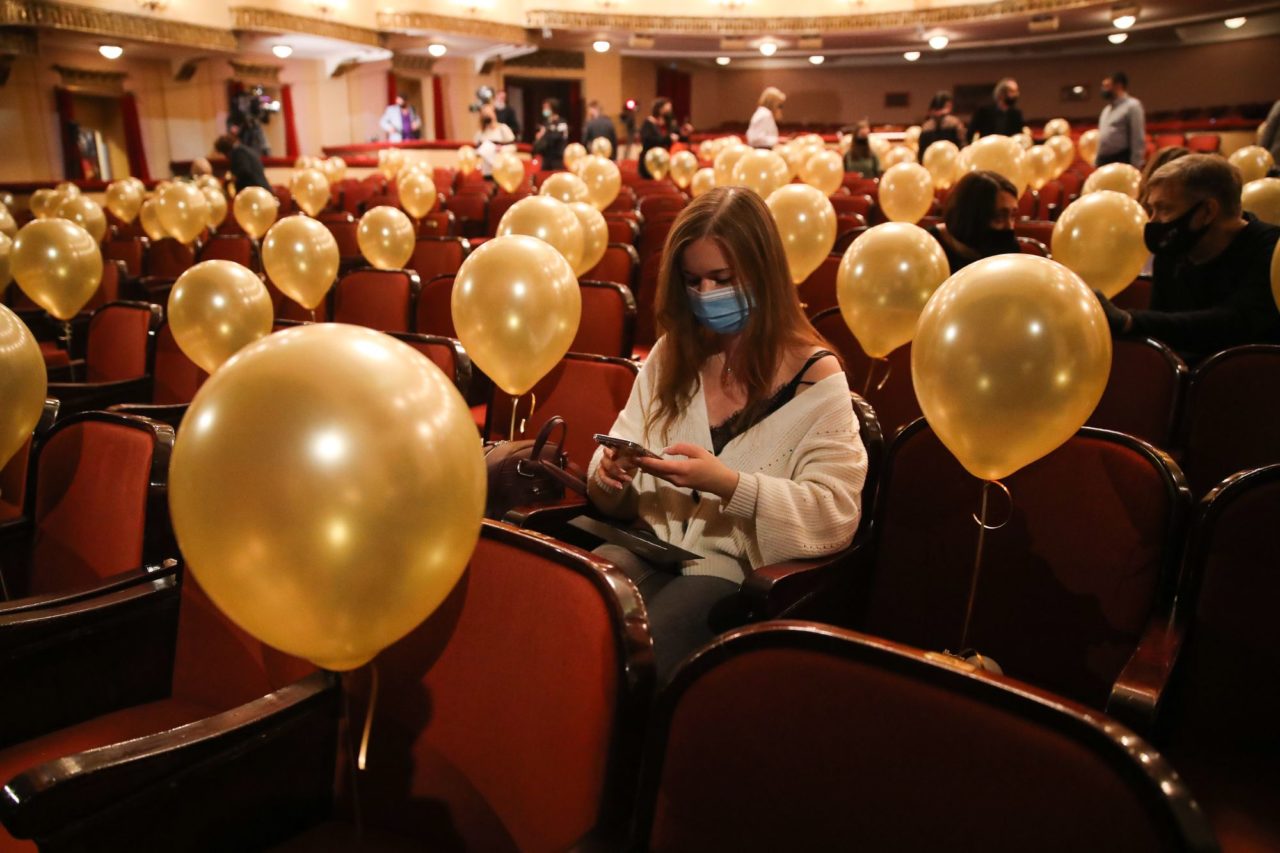 At the 13th ceremony of the "Star of theater" award at the Evgeny Vakhtangov Theater : Vyacheslav Prokofiev/TASS
Not to mention the fact that the theater actually cannot exist without live human contact, without the connection between the auditorium and the scene, wherever it is-indoors or outdoors, in the buffet or in the basement, in the park or at the factory. And when at the performance instead of a hundred people - twenty -five (these are the rules in accordance with November 13 in Moscow and on December 1 in St. Petersburg; in many regions of the authorities, they are waiting with fear from day to day, and in most European countries, including such theatrically oriented as Germany and France, theaters are generally closed), and those who play, and those who are looking at: the first time we need to be the first time. “Pump energy” and fill it with empty space, and the second to react for himself and “for that guy”.
In addition to ideological issues (what to put during the plague, what to talk about and to whom to contact) and economic (from state -owned ones - how to compensate for losses from unsold tickets, where to find additional funding, how to save the staffing with a possible reduction in subsidies and subsidies; independent and private ones - how to survive in the principle), the question of theaters faces the question and is it purely ethical: is it safe to let the spectators into the halls at all, if it is safe. Some of them can be a carrier of the virus; Is it possible for actors to start rehearsals if they have just been ill and still feel weak; What to do if someone from the staged group of the play has elderly relatives? There are no unequivocal answers here, and everyone decides for himself, but in social networks and in the professional community, battles on the topic regularly occur, play or not play.
There will be no kina
The most important of the arts suffered from pandemia almost more than theaters, which at least actively introduced into their repertoire a ZOOM spectacle, online performers, gaming trainings for one viewer or “fermentation” for small companies, and also engaged in high-quality documentation of the production process, master classes for non-factory and educational cycles. Cinema in 2020 rapidly lost the audience.
The shooting of many blockbusters and - especially - low -budget films have stopped. The deadlines for the release of the most high -profile premieres (the fourth part of the “matrix”, the ninth “Fast and the Furious”, the new “Batman” and so on) were significantly moved. Tens of thousands of people who previously worked in the film industry on a permanent or temporary basis lost their income - from Hollywood to Eastern Europe, from England to Latin America.
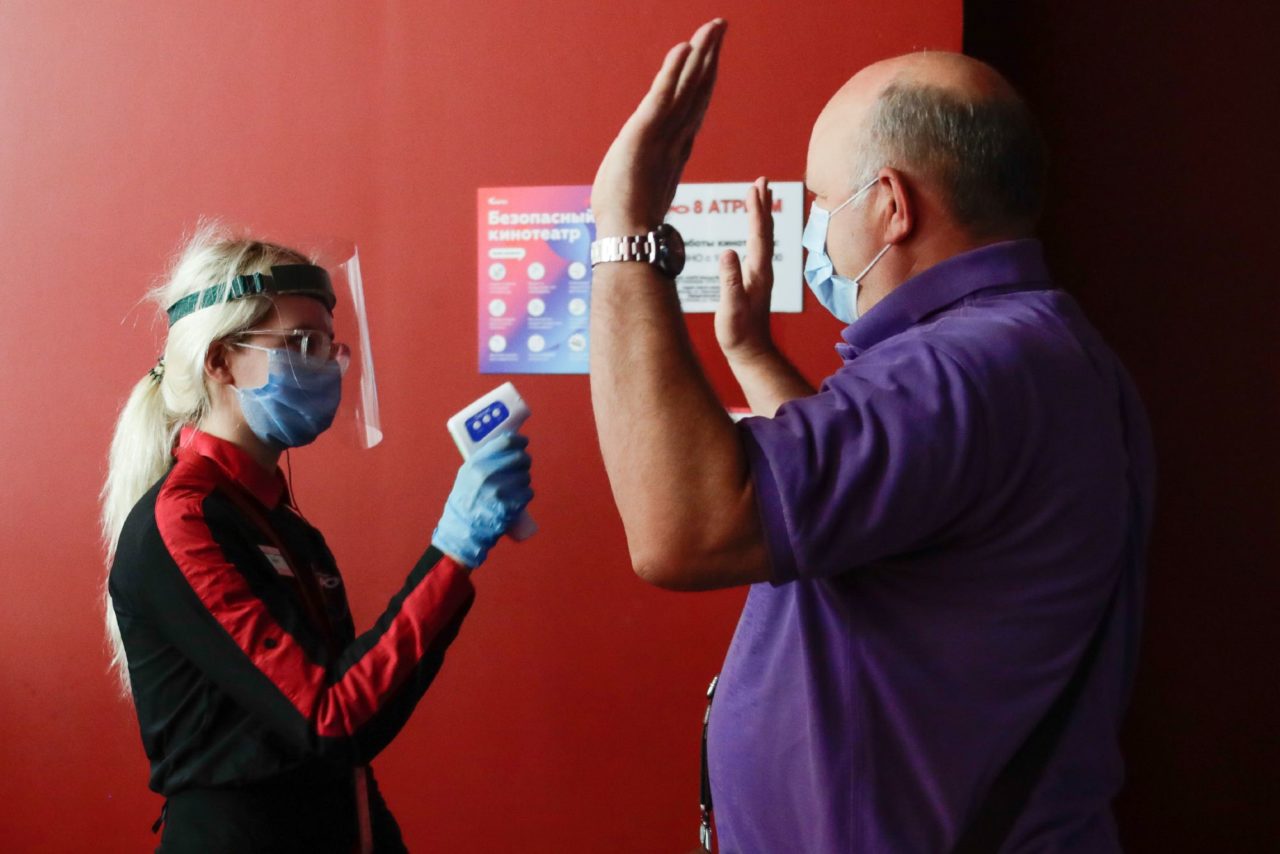 During the measurement of temperature to visitors to the KARO cinema at the Atrium shopping and entertainment center photo: Mikhail Metzel/TASS
Coronavirus affected not only production, but also rental: already during the first wave around the world, thousands of cinemas closed, and many of them have not yet opened. Moreover, in some countries - as, for example, in Bulgaria - cinemas do not work even in conditions when theaters (albeit with many reservations) are still allowed to let spectators. As the film distributors themselves say, the current epidemic threatens if you do not destroy, then take the industry seriously: in the situation when the films are made much less, and many important festivals are not held (in 2020, the Cannes festival was canceled at all, and the Venetian, although it passed, but in a more restrained format), have every chance of not reaching the screens and,, and, and, it was all chances and, and, and, and, and, and, and, and, and, and As a result, not to find your viewer, destroying the whole chain of the film - the viewer is a new film.
The question of piracy arose no less acutely: if in the entire civilized world it was not only strictly forbidden, but it was not particularly practicing (it doesn’t matter, out of fear of punishment or from some other considerations), now the filmmakers are not ready to be content with the possibility of visiting cinemas (who was enriched at the expense of quarantine, it is various television networks and this is various television networks and this is a different television networks. Streaming services like Netflix and HBO), even the most starry and fashionable, are gradually leaning to begin to download content illegally.
In our country, on the contrary, there are fewer relevant new products on the so-called torrent trackers-simply because there is nowhere to take them. And in still open ones (in different regions with different capacities) cinemas there is a very sad picture: it seems that the people are gradually forgetting that the movie exists at all, and switches to less sophisticated television formats.
At this exhibition of paintings, the plot is missing one
Art Basel Fair in Hong Kong and the exhibition “Alexander Benois and its“ World of Art ”” in the Tretyakov Gallery, the long -planned “Robert Falk” and “Dreams of Freedom. Romanticism in Russia and Germany ”, on which the greatest architect of our time Daniel Libeskind (ibid), a large joint project with the Neapolitan Museum Kapodimont and the exhibition of the famous American video artist Bill Viola in the State Fine Arts Museum named after Pushkin ... This is far from a complete list of museum cancellations of this year. If we add to them the transfer of the deadlines for the Venice Architectural Biennale, instant closure due to the new restrictions on the newly opened exhibition “Vhutemas 100. The Vanguard School” at the Moscow Museum and billion losses due to downtime, then in the museum sphere the picture is dull.
Just as performances are impossible without live contact, and films are meaningless without point on the viewer, so museums do not exist without visitors. However, from the outside it seems that the pandemic hit them in the smallest degree: most collections have long been digitized and, if desired, can be posted into the network, educational courses are developed and can be quickly adapted to online. But in fact, a virtual visit to a museum or a lecture on the history of fine art, no matter how sensible it is-is, although a way out, but still insufficient. If only because there is no - even the most perfect technique - so far it is not possible to convey the game of light and shadow, the depth of color and the movement of the smear, the composition of one individual picture and its perception in the context of many others. Even ultra -modern installations and media objects lose a lot, being on the screens of monitors instead of real gallery halls.
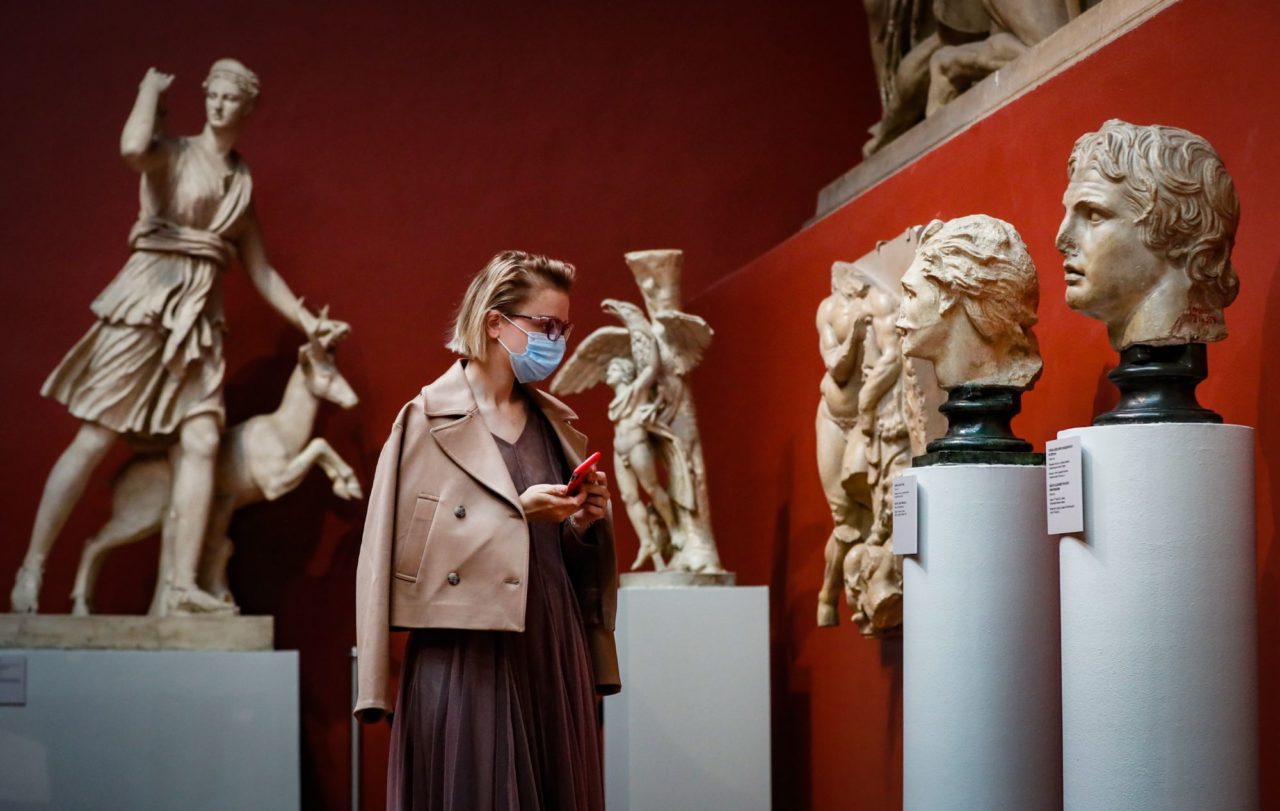 In the State Museum of Fine Arts. A. S. Pushkin in Moscow Photo: Yuri Kochetkov/EPA/TASS
In addition, art historians have long established that the paintings also need us as we are in them: without a spectator, they dull and lose expressiveness. But we need visual art to abstract from our own (sometimes completely colorless) everyday life, turn on imagination and imagination, change the picture - especially in conditions when we are deprived of the opportunity to travel.
For many, museums are associated with loneliness and meditation: they are usually calm, quiet and rather deserted, even without any anti -icing measures. But unfortunately, the Moscow authorities have a different opinion.
Now that the expositions were closed in many cities and countries, private museums are on the verge of ruin. Large international and small local exhibitions were postponed to a later date or canceled at all; the exchange of exhibits (by the way, the most important communication moment in the interaction of institutions of different status and level) does not occur; Foreign employees are dismissed due to lack of funds, and with full-time they reduce salaries; At an indefinite time, numerous circles and studios for children and adults suspended their activities, including disabilities and from other socially unprotected groups, which are especially intensively growing and developing just on nutrient museum soil. It is clear that most state museums will survive, the question is how they will survive the violent and, apparently, absolutely meaningless separation from visitors.
Music tied us up
Concert halls in many countries of the world closed the same as theaters: at the very beginning of the first wave. Now, in some places, concessions have been made and in some cities concerts are held either in full, or with 25-50 percent leaves. But still, the pandemic made serious adjustments to the concert life, and in the field of both academic music and pop. Most of the tour tours are canceled. Popular festivals were reformatted or transferred: from the famous “Invasion”, which passed on the dates announced in advance, but not in the fields of the Tver region, as usual, but on the portal “Our.ru” and “Yandex.Phir”, to the legendary Salzburgsky, which in 2020 celebrated its centuries, but instead of two hundred performances, spent only nine for only six for only six. sites (compare with the announced sixteen!).
Concerts of classical music in Moscow, according to eyewitnesses, gather less and less spectators. Probably, the attendance of the Zaryadye, the Concert Hall named after P. I. Tchaikovsky, the conservatory and the house of music are affected not only by the constant transfer of events with the participation of foreign musicians and cancellation due to illness of performers, but also the average age of their main audience, sometimes clearly exceeding the officially permitted 65 years.
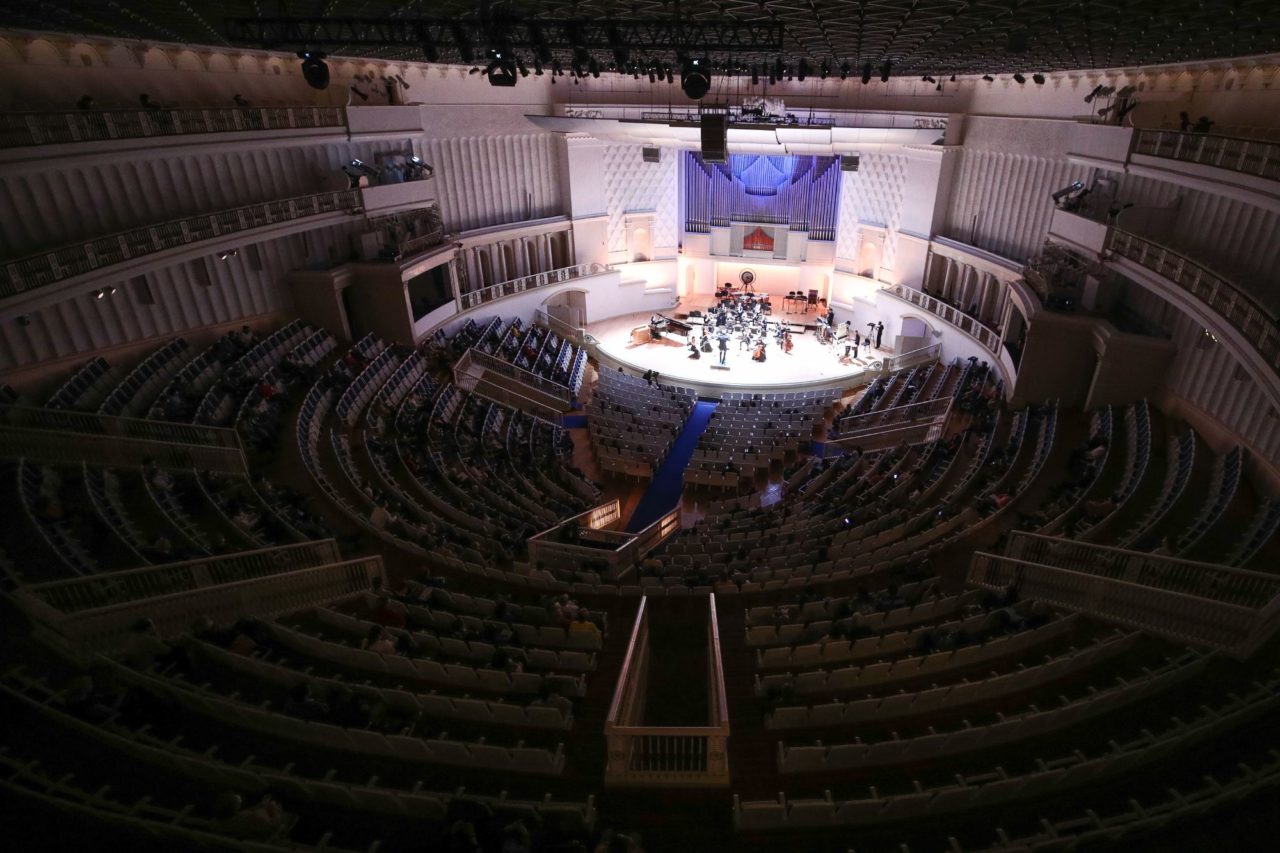 Conductor Valentin Uryupin and musicians during a performance at the festival of the Moscow Philharmonic "Another Space" in the concert hall named after P. I. Tchaikovsky photo: Sergey Bobylev/TASS
The elderly spectators complain about the absurdity of the “age” restrictions and they say that in the case of concerts they lost not just the opportunity not to sit alone and at least from time to time to go to the city to listen to their favorite music (recall that free travel in public transport for this category of citizens is still canceled), but also lost money for pre-acquired submarines.
As for young music lovers, their coronavirus also touched, as they say, in full. Fans of club life had to forget about what it means to meet the dawn outside the house - all the establishments in Moscow and many other cities are now closing at exactly 23:00, and not a minute later, otherwise they are threatened with serious fines and sanctions up to the recall of the license. Fans of foreign stars are forced to be content with covered and singles available on the Internet. Fans of domestic performers can, of course, try to travel around the province after their idols (the most brave of them), but even here there is always a risk of sudden abolition of the event right before the start.
Then silence?
The question of whether the culture will cope with the adversity that has fallen on it and all of us is open. Do not forget about the economy of the process. Without the support of the state and charitable foundations, many independent companies and private initiatives in the field of art will simply die.
One of the groups now being developed by the group of initiatives concerns the introduction of an unconditional basic income for those independent artists who are involved in performing activities. Its essence is to provide everyone who is involved in the creation of performances or performers - from actors to mounters - if not constant work, then at least a constant minimum income that will allow them to live and not survive at the moments of downtime. In order to take part in the program, its creators propose to provide contracts with previous employers and guarantee the transparency of future tax deductions, ensured, in particular, by the transition to self -employment. Similar experiments with the basic income were conducted both in rich countries like Finland and in the poor like Kenya, but before the target group of the project were people.
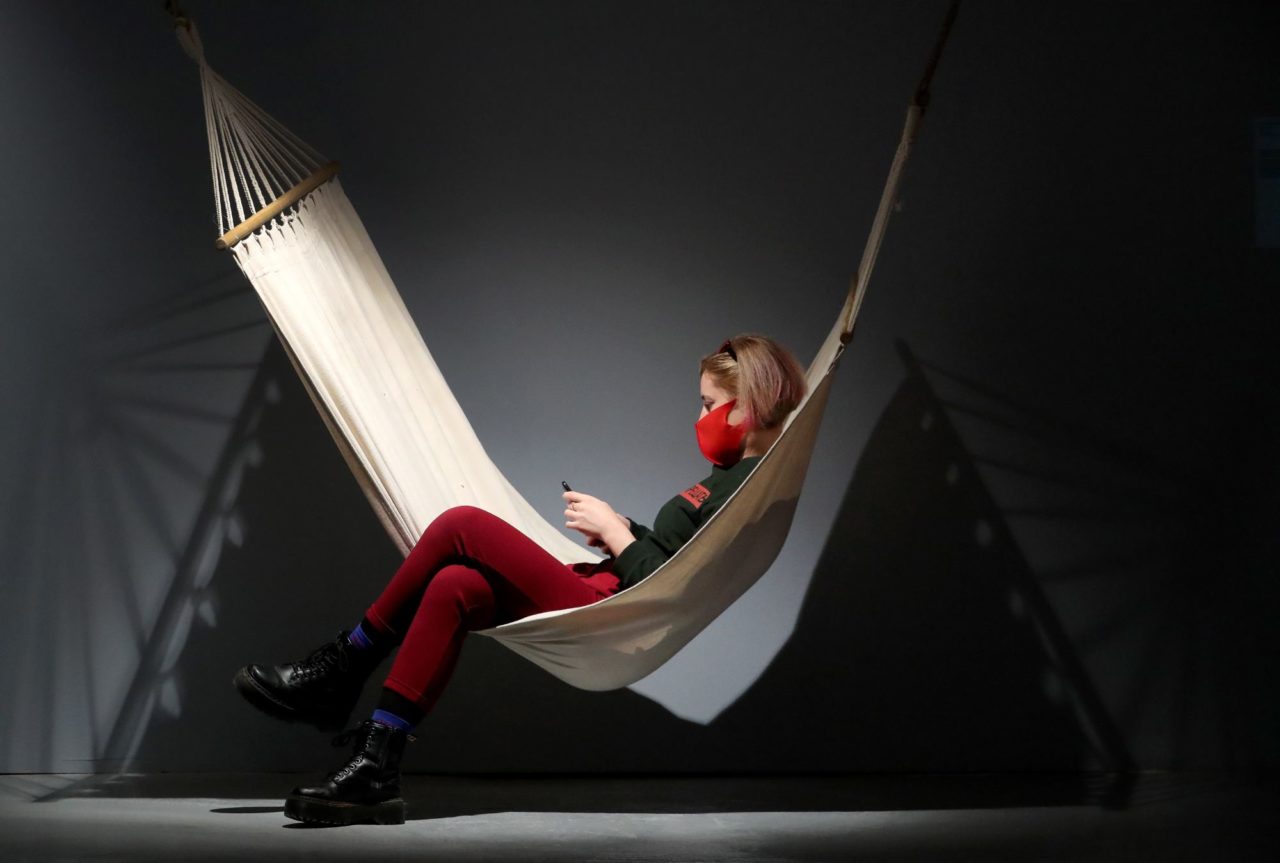 A visitor during the press order of the exhibition "Museum of Self-Island" at the Moscow Museum. The project "Museum of Self-Insulation" began work in the online mode, for the public the exposition will open on January 15, 2021 Photo: Sergey Karpukhin/TASS
It is quite obvious that culture is vital for both new methods of communication with the audience and new forms of interaction between artists among themselves and with institutions. In fact, Koronavirus made a secret obvious and raised questions that we did not want to raise too much: why there are so many theaters around and who walks in them; why there are no young at all at classical music concerts; Why the average viewer rather downloads pirate content than goes to the cinema; Why provincial museums are empty, and library funds are not replenished; Why is the budget of federal cultural institutions ten times higher than the amount of funds allocated to everyone else? Without thoughtful, honest, possibly painful answers to these questions, our culture, most likely, does not have a future: the world changes right before our eyes and not to notice this and it is impossible to continue.
Coronavirus Culture Pandemia